


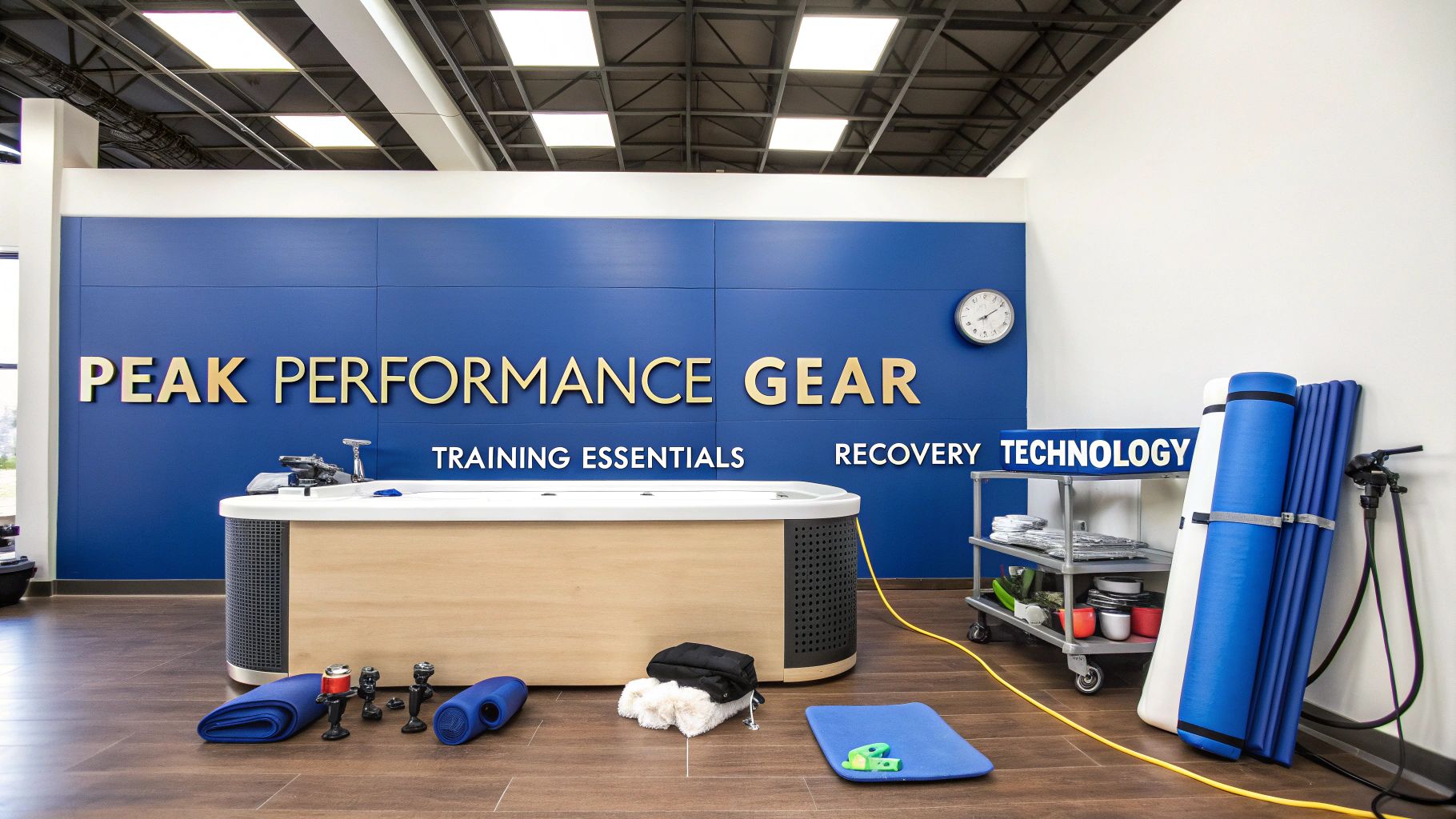
When we talk about athletic training room equipment, we're covering a huge range of gear. It’s everything from the simple stuff like taping supplies and exam tables to the really advanced therapeutic modalities and rehab equipment that define elite-level care. This guide will provide an in-depth look at everything you need to build a comprehensive, high-performance facility.
This equipment is the absolute backbone of any facility serious about athlete care, injury prevention, and performance optimization. A modern training room is so much more than a glorified first-aid station; it's a strategic investment in an athletic program's most valuable asset—its athletes. Properly equipping this space ensures that athletes not only recover from injuries but also build resilience to prevent future setbacks, ultimately keeping them on the field where they belong.
Designing a High-Performance Athletic Training Hub
Think of your athletic training room as the central nervous system for your entire athletic department. Gone are the days when it was just a place for ice bags and ankle tape. Today’s top-tier facilities have evolved into sophisticated centers that actively drive athlete health, speed up recovery, and build real resilience against future injuries. These hubs integrate technology, evidence-based practices, and a deep understanding of sports science.
This shift is critical. It transforms the training room from a purely reactive space—somewhere you go after something goes wrong—into a proactive hub. It’s where data from assessments shapes personalized care plans, where post-injury interventions begin immediately, and where structured rehab programs guide athletes all the way back to full strength. This proactive approach is what separates good programs from great ones, fostering a culture of health and high performance.
The Four Pillars of a Modern Training Room
A truly state-of-the-art training room operates on four essential functions. They all work together, supporting the athlete through their entire lifecycle, and each one relies on specific categories of equipment to be effective. Understanding these pillars is the first step toward building a facility that addresses every aspect of athlete well-being.
- Prevention and Evaluation: This is the foundation. It’s all about identifying potential risks before they become injuries and accurately diagnosing issues when they do pop up. Equipment in this category, from movement screening tools to diagnostic ultrasound, gives you the critical data needed to make smart, informed decisions. This proactive stance significantly reduces the number of preventable injuries.
- Immediate and Acute Care: When an injury happens, this is your first line of defense. The goal here is to manage pain, control swelling, and stabilize the area to set the stage for effective treatment. Having the right supplies and equipment, from splints to wound care kits, is non-negotiable for providing immediate and effective care.
- Rehabilitation and Reconditioning: This pillar is all about the journey back to competition. It involves systematically restoring mobility, rebuilding strength, and regaining function through targeted exercises and therapeutic tech. This is often the longest phase of recovery, requiring a diverse range of equipment to address every stage of healing.
- Performance Optimization: It’s not just about healing anymore. The modern training room helps athletes get better. This means using equipment that accelerates recovery between training sessions, which allows for more consistent and higher-quality work over time. Modalities that enhance circulation and reduce muscle soreness are key here.
A Strategic Investment in Athlete Availability
Building a facility with the right mix of equipment isn't an expense; it's a direct investment in the one metric that coaches and administrators value above all else: athlete availability. When athletes are healthy and recovering efficiently, they can train more consistently and perform at their peak when it actually counts. The return on investment is measured in wins, championships, and the long-term health of the athletes.
The ultimate goal is to create an environment where athletes don't just recover from injuries but actively build robustness. A well-equipped training room gives your staff the tools to implement effective injury prevention strategies, reducing the likelihood of those frustrating setbacks in the first place. You can learn more about how to prevent sports injuries in our detailed guide.
By understanding how evaluation tools, therapeutic modalities, and rehab equipment all fit together, you can design a space that delivers tangible, game-winning returns. This guide will walk you through the essential equipment categories, layout considerations, and advanced technologies you need to build a truly high-performance athletic training hub that serves as the heart of your program.
The Foundational Equipment Every Training Room Needs
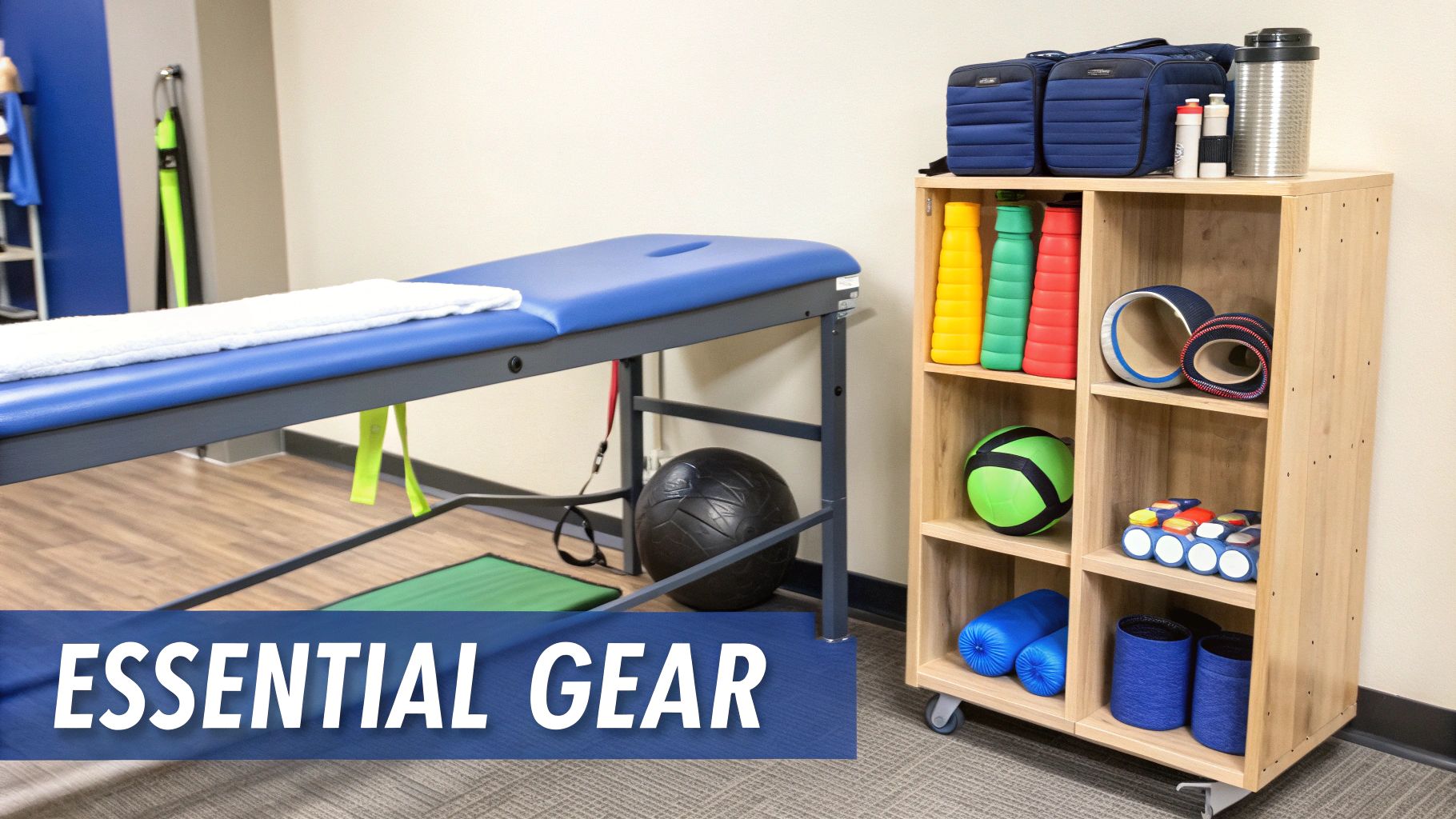
Putting together a truly functional athletic training room is a lot like building a high-performance engine. Every single component has to be chosen with purpose, installed correctly, and ready to work in harmony with the others. To create a space that can handle everything from a minor pre-game tape job to a long-term post-op rehab, you need a core set of equipment. This is the non-negotiable gear that forms the very backbone of athlete care.
The best way to think about this is to follow the typical path an athlete takes. It all starts with a proper assessment, moves into immediate care, shifts into therapeutic treatment, and finally, culminates in a full return to strength. Each one of these stages demands specific tools to make the process safe, efficient, and ultimately, successful. Neglecting any one area creates a weak link in the chain of care.
Evaluation and Assessment Tools
Before you can even begin to formulate a treatment plan, you need good intel. Evaluation and assessment tools are the diagnostic instruments that give trainers objective data to measure an athlete's condition, track their progress, and make informed calls. Think of this as the "intelligence-gathering" phase. Without accurate data, treatment becomes guesswork.
The most fundamental piece of athletic training room equipment here is the examination table. A sturdy, adjustable table gives you a safe, stable surface to work on. Beyond that cornerstone, a whole host of smaller tools are vital for collecting precise data.
- Goniometers: These measure joint angles and range of motion—critical data for tracking progress after injuries like an ACL tear. This objective measurement is essential for making return-to-play decisions.
- Stethoscopes and Blood Pressure Cuffs: Absolute essentials for checking vitals during an initial injury assessment or as part of a return-to-play protocol. They are crucial for assessing overall health and detecting potential red flags.
- Reflex Hammers and Penlights: Basic neurological screening tools used to assess nerve function and response. You can't skip the basics, especially when dealing with potential head or spinal injuries.
- Dynamometers: Hand-held devices used to objectively measure muscle strength, providing a baseline and tracking progress throughout rehabilitation.
Without these tools, you’re flying blind. An accurate diagnosis is the first and most critical step on the road to recovery.
Taping and Wound Care Station
Immediate care is what most people picture when they think of a training room. Your taping and wound care station is the high-traffic hub for pre-practice support and instant attention for cuts, scrapes, and sprains. This area needs to be immaculately organized and constantly stocked to handle high volume efficiently.
And it’s not just about having tape and bandages on hand. It's about having the right supplies ready to go at a moment's notice to manage the countless common injuries that pop up. A well-oiled station is a clear sign of a program's preparedness.
Key supplies always include various types of athletic tape, underwrap, bandages, gauze, wound cleaners, and topical antiseptics. Additional essentials include blister care kits, scissors, and adhesive removers. This station is your first line of defense, providing the stabilization and protection that stop minor issues from turning into major setbacks.
Therapeutic Modalities for Healing
Once an injury is assessed and stabilized, the real healing begins. Therapeutic modalities use different forms of energy—like cold, heat, electricity, or even sound—to manage pain, knock down inflammation, and kickstart tissue repair. These devices are the true workhorses of any modern training room, bridging the gap from acute injury to active rehabilitation.
Therapeutic modalities are the bridge between passive rest and active rehab. They create the ideal physiological environment for the body to heal itself, helping athletes get back to functional movement faster and with a lot less pain.
This category of equipment really breaks down into three primary types:
- Cryotherapy and Thermotherapy: This is your classic temperature therapy, including ice machines, cold whirlpools, and hot packs (hydrocollators). These tools manipulate tissue temperature to control blood flow, crush swelling (cryotherapy), and boost circulation to promote healing (thermotherapy). Contrast therapy, alternating between hot and cold, is also a highly effective technique.
- Electrotherapy: Devices like TENS (Transcutaneous Electrical Nerve Stimulation) and NMES (Neuromuscular Electrical Stimulation) units use electrical currents to manage pain signals or trigger muscle contractions, which is crucial for preventing atrophy while an athlete is recovering. Interferential current (IFC) is another popular choice for pain modulation.
- Hydrotherapy: Whirlpool tubs and aquatic therapy pools are game-changers. They use water's natural buoyancy, resistance, and temperature to create a low-impact environment for rehab, allowing for pain-free movement that would be impossible on land in the early stages.
Rehabilitation and Strength Equipment
The final stage in this journey is all about restoring function and rebuilding strength so the athlete doesn't get hurt again. This is where your rehabilitation and strength equipment comes in. These tools are built for progressive resistance and functional movement, helping athletes safely get their power, stability, and confidence back.
This category of athletic training room equipment is incredibly diverse, from simple bands to complex machines. The key is offering enough variety to challenge an athlete from the very first days of rehab all the way to their triumphant return to competition.
- Resistance Bands and Tubing: Perfect for those early-stage, low-impact strengthening exercises and for targeting specific, smaller muscle groups.
- Foam Rollers and Massage Tools: Essential for myofascial release, improving flexibility, and helping athletes manage muscle soreness. Percussion massagers have also become a staple for targeted therapy.
- Balance and Stability Tools: Items like wobble boards, BOSU balls, and balance pads are non-negotiable for retraining proprioception—the body's awareness in space—which always takes a hit after an injury.
- Light Dumbbells and Kettlebells: Allow for the gradual reintroduction of load as the athlete gets stronger and closer to their goal. An adjustable dumbbell set can be a space-saving and cost-effective option.
- Plyometric Boxes and Agility Ladders: Crucial for late-stage rehab to reintroduce explosive movements and sport-specific coordination.
By outfitting your room with these foundational pieces, you're not just buying equipment; you're building a complete ecosystem of care. Each tool has a specific job, guiding the athlete from the moment of injury right back to peak performance.
To help you get started, here is a quick-reference checklist of the essential equipment every athletic training room should have.
Essential Athletic Training Room Equipment Checklist
| Category | Essential Equipment Examples | Primary Function |
|---|---|---|
| Evaluation & Assessment | Examination Table, Goniometer, Stethoscope, Blood Pressure Cuff, Reflex Hammer | Initial diagnosis, measuring range of motion, and tracking recovery progress. |
| Taping & Wound Care | Athletic Tape, Underwrap, Gauze, Bandages, Antiseptics, Scissors | Immediate injury care, joint stabilization, and prevention of infection. |
| Therapeutic Modalities | Ice Machine, Hot Packs, Whirlpool Tubs, TENS/NMES Units, Ultrasound | Managing pain and inflammation, accelerating tissue healing. |
| Rehabilitation & Strength | Resistance Bands, Foam Rollers, Balance Boards, Light Dumbbells & Kettlebells | Restoring strength, improving stability, and preventing re-injury. |
This checklist covers the absolute must-haves. As your program grows, you can expand on this foundation with more specialized equipment, but these core categories ensure you are ready to provide comprehensive care from day one.
Optimizing Your Layout for Workflow and Athlete Care
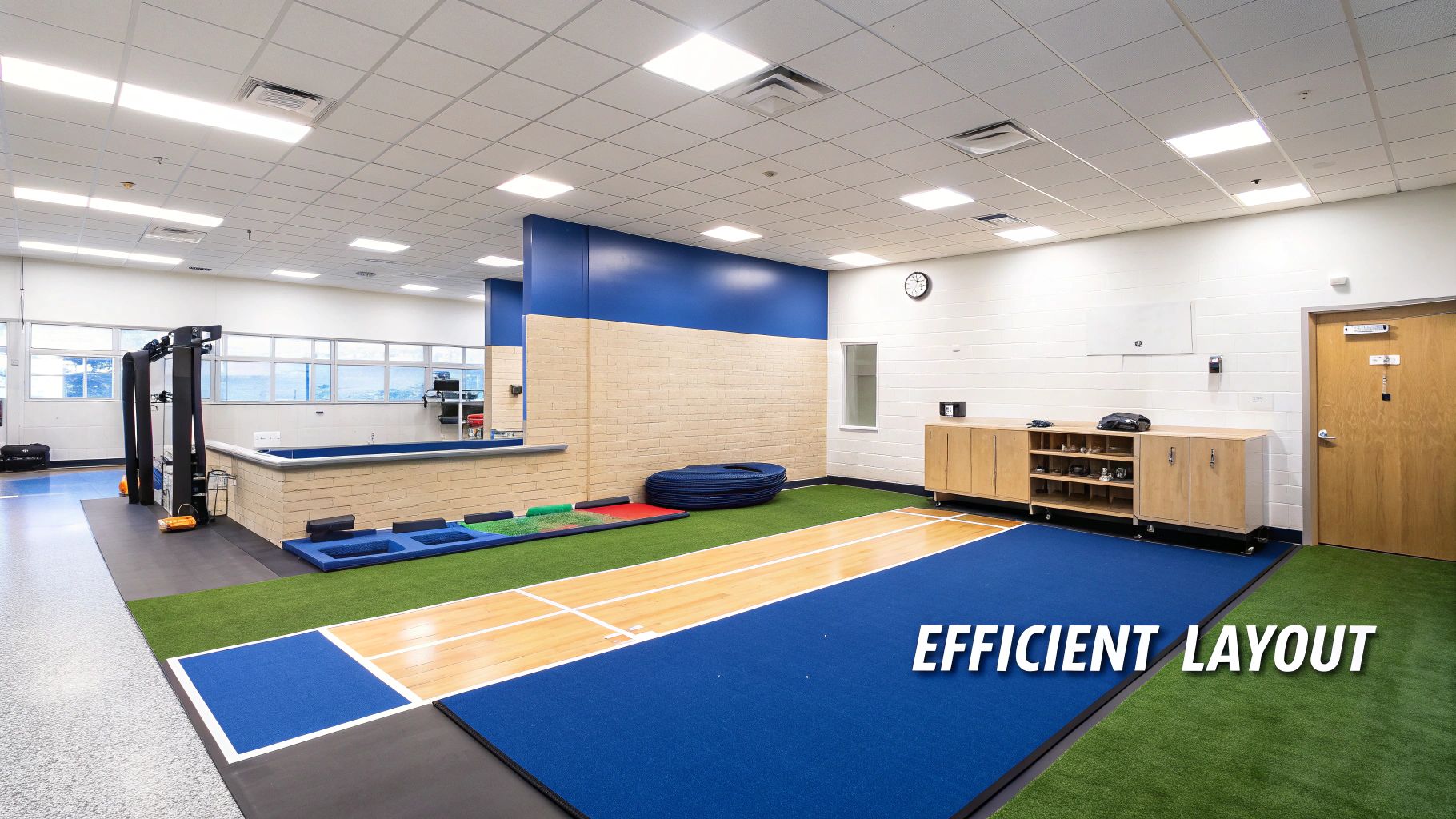
Owning the best athletic training room equipment is one thing. Unlocking its true potential is another—and that comes down to a smart, thoughtful layout. An inefficient layout can create safety hazards, waste valuable time, and undermine the quality of care.
Think of your training room like the kitchen of a high-end restaurant. Every station, from prep to the line, is placed with absolute intention to maximize efficiency, cut out the chaos, and deliver a perfect result. A well-designed training room does the exact same thing for athlete care, ensuring a seamless flow for both athletes and staff.
A strategic layout just works. It eliminates bottlenecks, keeps everyone safe, and creates a professional atmosphere where athletes and staff can perform at their best. It's about designing a space where traffic flow is second nature, every tool is an arm's length away, and distinct zones prevent people from tripping over each other. This is what separates a merely functional room from a truly elite facility.
Creating Dedicated Zones for Peak Efficiency
The secret to a great layout is zoning. By carving out distinct areas for specific functions, you streamline every single process, from the pre-practice taping frenzy to focused post-injury rehab. Each zone has its own needs for space, privacy, and infrastructure, making this the most critical part of your planning.
At a minimum, your layout must be built around these non-negotiable zones:
- The Taping and Bracing Station: This will be your highest-traffic area, especially before practices and games. It has to be near the entrance for quick in-and-out access, with tons of counter space and meticulously organized storage for tape, scissors, and wraps. Multiple taping tables are a must for busy programs.
- The Private Evaluation Area: Confidentiality is everything. This zone needs to be a separate, enclosed space with an exam table, diagnostic tools, and a desk for records. It’s where you ensure athlete privacy during assessments and sensitive conversations.
- The "Wet Area" for Hydrotherapy: This is home to your whirlpools, ice machines, and any aquatic therapy gear. It demands specialized non-slip flooring, serious drainage, and heavy-duty ventilation to manage moisture and prevent accidents. Electrical outlets in this area must be GFI-protected.
- The Open Rehabilitation Space: This needs to be the biggest part of your room, period. It requires wide-open floor space for functional movements, balance drills, and strength work, all on durable flooring that can handle dropped weights and high-impact activity. Mirrors on one wall are also highly beneficial for providing visual feedback to athletes.
Infrastructure: The Unseen Foundation
Beyond just placing equipment, the unseen infrastructure is what makes or breaks a layout. Power, water, and data access are the lifelines of your facility. When you’re mapping out your zones, you have to think about what each piece of athletic training room equipment actually needs to run.
A great layout anticipates future needs. Placing extra electrical outlets and data ports now prevents costly renovations later and ensures your facility is ready to accommodate new technologies as they emerge.
Drill down on these crucial infrastructure details:
- Electrical Outlets: Modalities like e-stim units and therapeutic lasers are power-hungry. Plan for more outlets than you think you need, especially in the rehab and modality areas. You'll thank yourself later. Ensure outlets are placed strategically to avoid long extension cords, which are a trip hazard.
- Flooring: Use different materials for different zones. Rolled rubber is perfect for the rehab area, while slip-resistant tile is a non-negotiable for the wet area. Carpet is generally not recommended due to hygiene concerns.
- Ventilation: Proper air circulation is absolutely essential for keeping odors and humidity under control, particularly in the hydrotherapy zone. A robust HVAC system is a must.
- Lighting: Good lighting is crucial for both safety and accurate assessments. Use bright, clear lighting throughout the facility, with focused task lighting over examination and taping tables.
The market reflects this growing focus on specialized facilities. The global athletic training equipment market was valued at USD 673.9 million in 2024 and is projected to hit USD 823.3 million by 2030. This boom is driven by a simple fact: athletic departments understand that facilities with specialized zones and advanced equipment are vital for improving athlete performance and recovery. To see the data for yourself, you can explore detailed market analysis and trends.
By combining smart zoning with a solid infrastructure plan, you create a space that doesn’t just house your equipment—it actively makes it more effective, leading directly to better outcomes for your athletes.
Gaining a Competitive Edge with Advanced Recovery Technology
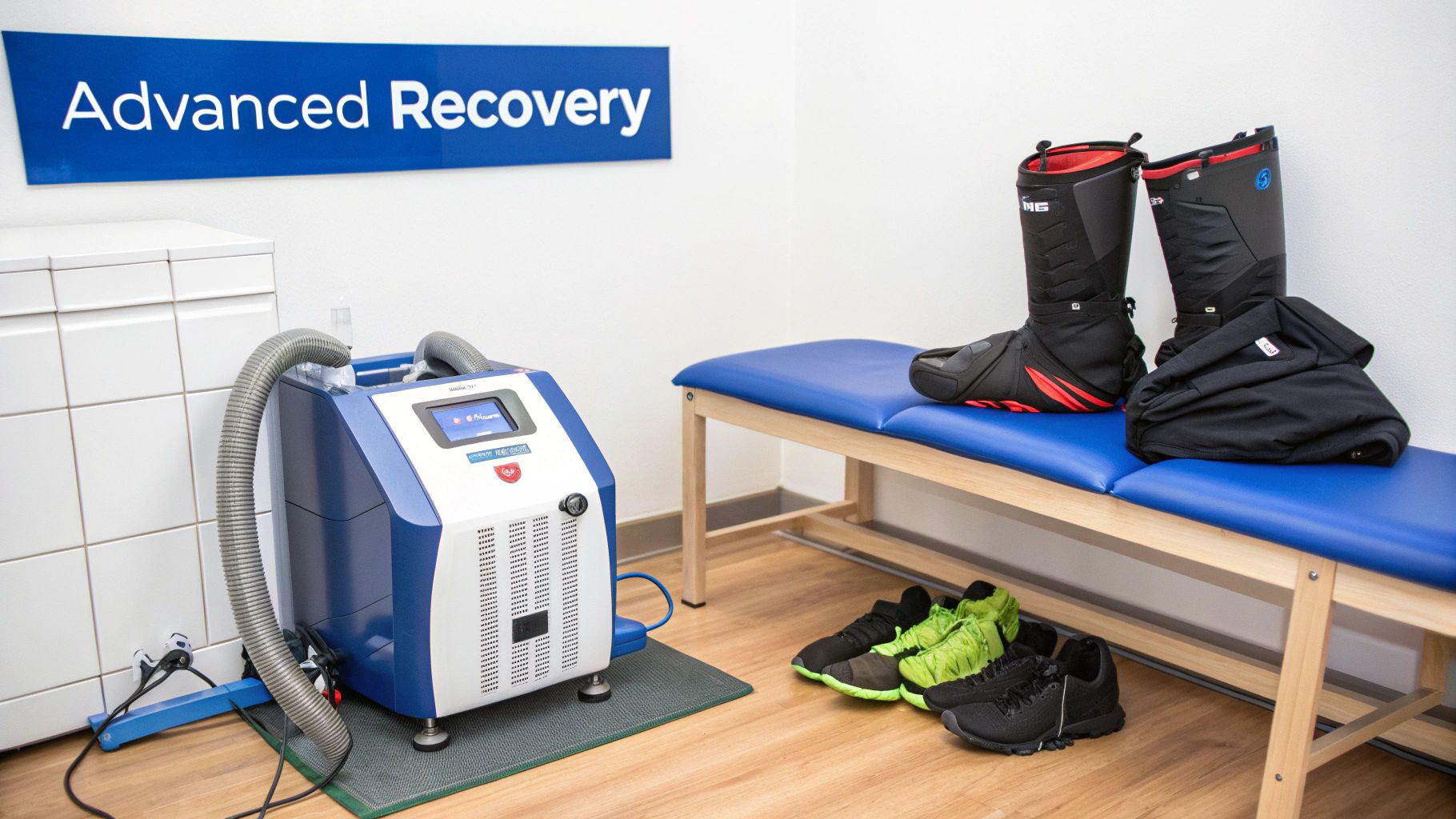
While the essentials cover immediate care, the real game-changer for elite programs is investing in advanced recovery technology. This is where modern science stops treating recovery as a passive waiting game and transforms it into an active, strategic advantage. It's the differential that allows athletes to handle higher training loads with lower injury risk.
These tools are designed to work with the body's natural healing processes, but on an accelerated timeline. The result? Athletes bounce back faster, train harder, and stay in the game more consistently. By integrating this level of athletic training room equipment, you shift from just treating injuries to proactively optimizing the body’s entire performance cycle.
The New Wave of Recovery Modalities
Today's recovery tools offer targeted, efficient, and often unattended sessions. This is a massive win for athletic trainers, freeing them up from supervising basic modalities to perform more critical, hands-on work like manual therapy or movement analysis. Instead of just reacting to soreness, athletes can now manage fatigue and enhance physiological repair on a daily basis.
This creates a powerful feedback loop: better recovery leads to higher-quality training, which leads to superior performance and a lower risk of those frustrating non-contact injuries. This investment pays dividends throughout the season.
Here are a few of the key modalities defining the modern recovery space:
- Pneumatic Compression Boots: These systems use waves of compressed air to massage the limbs, boosting circulation and helping flush out metabolic waste that builds up after a tough session. They are excellent for reducing delayed onset muscle soreness (DOMS).
- Cryotherapy Chambers: Exposing the body to extremely cold temperatures for a few minutes can significantly reduce inflammation and the perception of muscle soreness. This is a more systemic and time-efficient alternative to traditional ice baths.
- Red Light Therapy (Photobiomodulation): Using specific wavelengths of light, this technology helps stimulate cellular energy production (ATP) within the mitochondria, which can support tissue repair and calm inflammation at a cellular level.
- Targeted Vibration Therapy: Devices like percussion massagers or vibration plates deliver localized vibrations to muscles, which can help increase blood flow, release muscle tension, and improve flexibility.
These tools aren't just for the pros anymore; they're becoming standard issue for any program serious about winning. You can discover more about the best recovery tools for athletes and see how they create a complete wellness strategy.
Intermittent Vacuum Therapy: A Breakthrough Technology
Among these advanced tools, one technology truly stands out: intermittent vacuum therapy. The Weyergans Vacustyler, for instance, uses a system inspired by space research to cycle between negative and positive pressure around the lower body. Think of it as a powerful external pump for your circulatory and lymphatic systems.
This technology effectively enhances blood flow and lymphatic drainage far beyond what passive rest can achieve. By pulling fresh, oxygenated blood into the lower extremities and pushing out waste, it creates an ideal environment for accelerated muscle and tissue recovery.
The process is incredibly simple. An athlete lies comfortably in the device for a 20-30 minute session that requires almost no supervision. This makes it an unbelievably efficient addition to any training room, allowing multiple athletes to get top-tier recovery while trainers focus on other high-value tasks. This combination of powerful physiological effect and operational efficiency is what makes it a standout investment.
Beyond Athletics: New Revenue Opportunities
Here’s the thing—the appeal of this technology extends far beyond the locker room. For facilities like medspas, high-end gyms, and wellness centers, this same equipment opens up powerful new revenue streams. The very devices that help athletes recover are in high demand among everyday clients looking to reduce fatigue, improve circulation, and simply feel better.
This dual-use potential makes advanced recovery tech a brilliant investment. The broader fitness market backs this up, with North America alone valued at USD 7019.28 million in 2024 and representing over 40% of the global market.
That massive consumer base is hungry for solutions that blend training and recovery. By offering services like intermittent vacuum therapy, your facility can attract a whole new clientele, create recurring revenue through memberships, and maximize the return on your initial investment, making a cost center a potential profit center.
Budgeting and Maximizing Your Equipment ROI
Outfitting a modern athletic training room is a serious capital investment. Let's be honest, the price tags on high-end equipment can be intimidating. But with a smart roadmap for budgeting, sourcing, and proving its value, this cost becomes a strategic asset—one that directly contributes to winning.
The key is to think beyond a simple shopping list. You need a financial game plan that separates your big, one-time purchases from the day-to-day operational costs. This approach brings clarity, prevents you from running out of essentials like tape mid-season, and ensures your facility stays fully functional year after year.
Creating a Tiered and Strategic Budget
Think of your budget in two distinct layers: Capital vs. Operational.
First up is Capital Expenditures (CapEx). This bucket is for the big stuff—the major, long-lasting equipment that forms the backbone of your facility. We’re talking about your treatment tables, hydrotherapy units, and advanced recovery technologies. These are the foundational investments that define what your training room can do. These items are typically budgeted for over a multi-year plan.
The second layer is Operational Expenditures (OpEx). This covers all the consumables and recurring costs needed to keep the doors open every day. Think athletic tape, gauze, cleaning supplies, and annual calibration services for your modalities. These smaller costs are constant, so they need to be forecasted accurately to avoid any surprise shortfalls when you can least afford them. Underestimating your operational budget is a common and costly mistake.
The most effective way to justify a budget is to frame it in terms of 'athlete availability.' By showing how specific equipment reduces time lost to injury, you connect the investment directly to on-field success—a metric that every administrator and coach understands.
Smart Sourcing and Procurement Strategies
Once your budget is locked in, it’s time to go shopping. But sourcing high-quality equipment doesn't always mean paying the sticker price. Smart negotiation and exploring alternative financing can stretch your dollars much, much further.
Building strong relationships with vendors is your first move. They can often offer package deals or bundle pricing if you're outfitting an entire room from scratch. Never hesitate to ask for discounts, especially for bulk orders. Beyond buying direct, consider these powerful alternatives:
- Leasing Options: For high-cost technology, leasing can be a game-changer. It gives you access to top-tier equipment without a massive upfront capital hit, turning a huge one-time expense into a predictable operational cost and keeping your tech from becoming outdated.
- Seeking Grants and Funding: Countless foundations and organizations offer grants for sports safety and health initiatives. A little research and grant writing can provide a major financial boost, especially for schools and non-profit programs. Look for grants focused on concussion prevention, youth sports safety, or community health.
Proving the Value of Your Investment
Ultimately, the best way to secure future budgets is to prove the return on investment (ROI) from your current equipment. This is where you pivot the conversation from cost to value. Instead of just listing what you bought, you need to show what it achieved.
Start tracking the direct impact on athlete availability. How many competition or practice days were saved because a specific modality helped an athlete recover faster? For example, if your new compression systems cut recovery time for minor strains by 25%, you can translate that directly into more training hours and a better shot at winning. This data-driven approach reframes your training room from a cost center into a performance-driving asset.
This intense focus on recovery isn't just happening in elite sports; it's a massive consumer trend. The home fitness equipment market, valued at USD 12.26 billion in 2024, is projected to hit USD 19.79 billion by 2032. This explosive growth shows a clear public demand for effective recovery solutions, which you can learn about the home fitness equipment market growth. By investing in recovery, you’re not just supporting athletes—you’re aligning with a major market shift that reinforces the value of your services.
Common Questions About Athletic Training Room Equipment
When you're in the thick of planning, building, or upgrading a facility, the questions start piling up fast. This last section is dedicated to giving you clear, straightforward answers to the most common things we hear from athletic directors, coaches, and facility managers about athletic training room equipment. Think of it as a practical FAQ, built to help you navigate the details and make decisions with confidence.
Getting the right gear, managing a budget, and planning for maintenance can feel overwhelming. Our goal here is to cut through the noise and give you direct advice on what really matters, ensuring your investment serves your athletes and staff for years to come.
What Are the Most Overlooked Pieces of Equipment?
It's easy to get focused on the big-ticket items like hydrotherapy tubs and fancy modalities. They're impressive, no doubt. But in my experience, it's the smaller, less glamorous gear that makes or breaks the daily workflow. Forgetting these items creates frustrating bottlenecks and makes the whole space feel unprofessional.
One of the biggest culprits is a lack of good portable storage. Rolling carts for supplies, mobile racks for braces, and lockable cabinets for sensitive materials are absolute game-changers for keeping a room functional and organized. Along the same lines, ergonomic stools for trainers are often an afterthought but are crucial for preventing staff burnout and injury during long hours of taping and treatment.
Finally, proper sanitation stations are non-negotiable but are too often shoehorned in at the last minute. This isn't just a single hand sanitizer bottle. It means:
- Hand sanitizing dispensers placed at every key touchpoint.
- Wipe dispensers right next to every piece of equipment for quick cleaning between uses.
- Designated biohazard disposal for the safe handling of any medical waste.
- A dedicated data management system to track treatments. This is critical for managing athlete care plans and proving the value of your services. Electronic health records (EHR) software designed for athletics is a modern necessity.
How Should I Prioritize Purchases on a Tight Budget?
Let's be real—most programs are working with a tight budget. The secret isn't just about being frugal; it's about being strategic. You need to prioritize purchases based on a clear hierarchy of needs, making sure every dollar has the biggest possible impact on athlete safety and care.
Start with the absolute must-haves for safety and immediate care. This is the foundation. Your first buys should always be a high-quality examination table, core diagnostic tools like stethoscopes and blood pressure cuffs, and a fully stocked first aid and wound care station. You simply can't provide basic care without them.
The next tier should target the most common injuries your athletes actually face. If you're running a football or soccer program, for instance, a reliable commercial ice machine is non-negotiable. After that, look for versatile, multi-use rehab tools like resistance bands, foam rollers, and stability trainers that can support a wide range of recovery protocols.
For the expensive modalities that are out of reach right now, think in phases. Plan to get one major piece of tech each budget cycle. You can also look into leasing options to manage cash flow without sacrificing access to high-end equipment.
What Is the Best Way to Handle Equipment Maintenance?
Proactive maintenance isn't just a "best practice"—it's a core part of risk management and protecting your investment. A well-maintained machine performs better, lasts longer, and is a whole lot safer for your athletes. Waiting for something to break is always more expensive and more dangerous.
First things first: create a detailed inventory of all your athletic training room equipment. Log the serial numbers, purchase dates, and warranty info in one central spot. From there, build out a simple inspection schedule.
- Daily Checks: Quick visual scans of high-use items and sanitation checks for treatment tables and hydrotherapy units. This includes wiping down all surfaces after use.
- Weekly Checks: More detailed inspections of cables, straps, and moving parts on rehab equipment. Test all electronic modalities to ensure they are functioning correctly.
- Monthly Calibrations: Professional calibration for electronic modalities like ultrasound or e-stim units to make sure they're delivering accurate therapeutic doses. Follow manufacturer guidelines precisely.
It's also essential that you train all staff on proper daily use, cleaning, and how to spot early signs of wear and tear. A detailed maintenance log is your best friend here, creating a paper trail for every inspection and service call that is critical for safety and liability.
How Can I Justify the Cost of Advanced Recovery Technology?
To justify a big investment in advanced recovery tech, you have to change the conversation from cost to value. Don't present it as an expense. Frame it as a strategic investment in performance, efficiency, and the prestige of your program. You need to build a business case with tangible benefits.
First, zero in on the concept of "athlete availability." Figure out how many practice or competition days are lost to minor injuries, then show how better recovery can shrink that number. If a new technology can speed up recovery from muscle fatigue by 30%, that's a direct line to more training hours and healthier athletes. You can learn more about how to speed up muscle recovery with modern techniques.
Second, talk about the boost in operational efficiency. Many advanced systems, like intermittent vacuum therapy, run unattended sessions. This frees up your athletic trainers to do more valuable, hands-on work with other athletes, effectively multiplying your staff's impact without growing the payroll. Finally, position the technology as a powerful recruiting and retention tool—it signals a modern, sophisticated commitment to athlete wellness that can set your program apart from the competition. Top athletes want to train at facilities with the best tools.
At Weyergans HighCare US, we provide advanced recovery technology designed to elevate athlete care and generate new revenue streams for your facility. Discover how the Vacustyler can become a cornerstone of your modern training room. https://weyerganshighcareus.com