


At its core, that heavy legs feeling is usually a traffic jam in your circulatory system. When blood has trouble flowing from your legs back up to your heart—a condition known as venous insufficiency—it can pool in your lower limbs. This backlog leads to fluid retention and muscle fatigue, creating that frustrating sensation of dragging around anchors instead of your own two legs.
Of course, your daily habits play a huge part in this common complaint, too. From the food you eat to how long you sit at your desk, many factors can contribute. Understanding these triggers is the first step toward finding lasting relief and reclaiming the feeling of light, energetic legs.
The Hidden Weight Behind Heavy Legs
It’s a familiar feeling many athletes and busy professionals know all too well. You finish a long day on your feet or a tough workout, and instead of relief, your legs feel weighed down, almost like lead. This sluggishness is more than just being tired; it’s a distinct sensation of pressure, aches, and deep-seated fatigue that can impact your daily activities and overall quality of life.
Think of your circulatory system as a bustling, two-lane highway. One lane, the arterial system, brings oxygen-rich blood down from your heart to your legs. The other lane, the venous system, is responsible for the return journey, bringing deoxygenated blood back up to the heart. When traffic flows smoothly, everything works perfectly. But if there’s a slowdown—maybe from weakened vein valves (like faulty on-ramps) or long hours of sitting that create a roadblock—blood gets backed up.
This circulatory traffic jam is what causes that uncomfortable pressure, swelling, and heaviness. Your body is sending a clear signal that fluid isn't moving efficiently, leading to a build-up in your lower extremities.
Primary Causes of Heavy Legs at a Glance
This table summarizes the main culprits behind the heavy legs sensation, giving you a quick reference guide. By identifying which category your symptoms might fall into, you can better understand the root cause and seek the most effective solutions.
| Cause Category | Specific Trigger | Who Is Most Affected |
|---|---|---|
| Circulatory Issues | Poor venous return, weakened vein valves, and blood pooling. Also known as Chronic Venous Insufficiency (CVI). | Individuals with a family history of vein issues, pregnant women, older adults, and those with a sedentary lifestyle. |
| Muscular Strain | Intense exercise causing micro-tears and lactic acid buildup. This leads to Delayed Onset Muscle Soreness (DOMS). | Athletes, fitness enthusiasts, and anyone starting a new or more intense workout routine. |
| Lifestyle Habits | Prolonged sitting or standing, dehydration, a high-sodium diet, and wearing restrictive clothing or high heels. | Office workers, retail employees, frequent travelers, and most modern professionals. |
| Underlying Conditions | Varicose veins, Peripheral Artery Disease (PAD), Restless Legs Syndrome (RLS), and lymphedema. | People with known vascular conditions or those experiencing persistent, unexplained symptoms. |
By pinpointing the likely cause, you can start taking targeted steps toward relief, whether that involves simple lifestyle changes or consulting with a healthcare professional.
Common Triggers for Leg Heaviness
That weighted feeling doesn't just appear out of nowhere. It’s almost always the result of specific triggers—often working in combination—that throw your body's natural circulatory balance off-kilter. Identifying these triggers is crucial for effective management.
Here are the key contributors in more detail:
- Circulatory Issues: Poor venous return is the number one suspect. When the veins in your legs struggle to push blood back up against gravity, it lingers in the lower extremities, leading to pressure and heaviness. This is the hallmark of venous insufficiency.
- Muscular Strain: Overdoing it at the gym or engaging in unaccustomed physical activity creates micro-tears in muscle fibers and a buildup of metabolic waste like lactic acid, leading to fatigue and a heavy sensation.
- Lifestyle Habits: Too much sitting or standing prevents your calf muscles from contracting and helping pump blood. Not drinking enough water thickens your blood, making it harder to circulate. A diet high in salt causes your body to retain fluid, which often settles in the legs.
- Underlying Conditions: Medical issues like varicose veins are a visible sign of venous insufficiency. Peripheral Artery Disease (PAD) involves narrowed arteries and restricts blood flow to the legs, causing pain and fatigue. Lymphedema involves a blockage in the lymphatic system, leading to fluid buildup.
This sensation is incredibly common. A massive global study across 23 countries found that Restless Legs Syndrome (RLS)—which often presents as heavy, uncomfortable leg sensations—affects an estimated 7.12% of adults. That’s over 356 million people worldwide feeling that same discomfort. You can learn more about the global prevalence of these symptoms in the full study.
Understanding these root causes is the first real step toward finding relief. By figuring out whether your heavy legs stem from your workout routine, daily habits, or a deeper circulatory issue, you can stop guessing and start addressing the problem directly.
Understanding the Role of Circulation
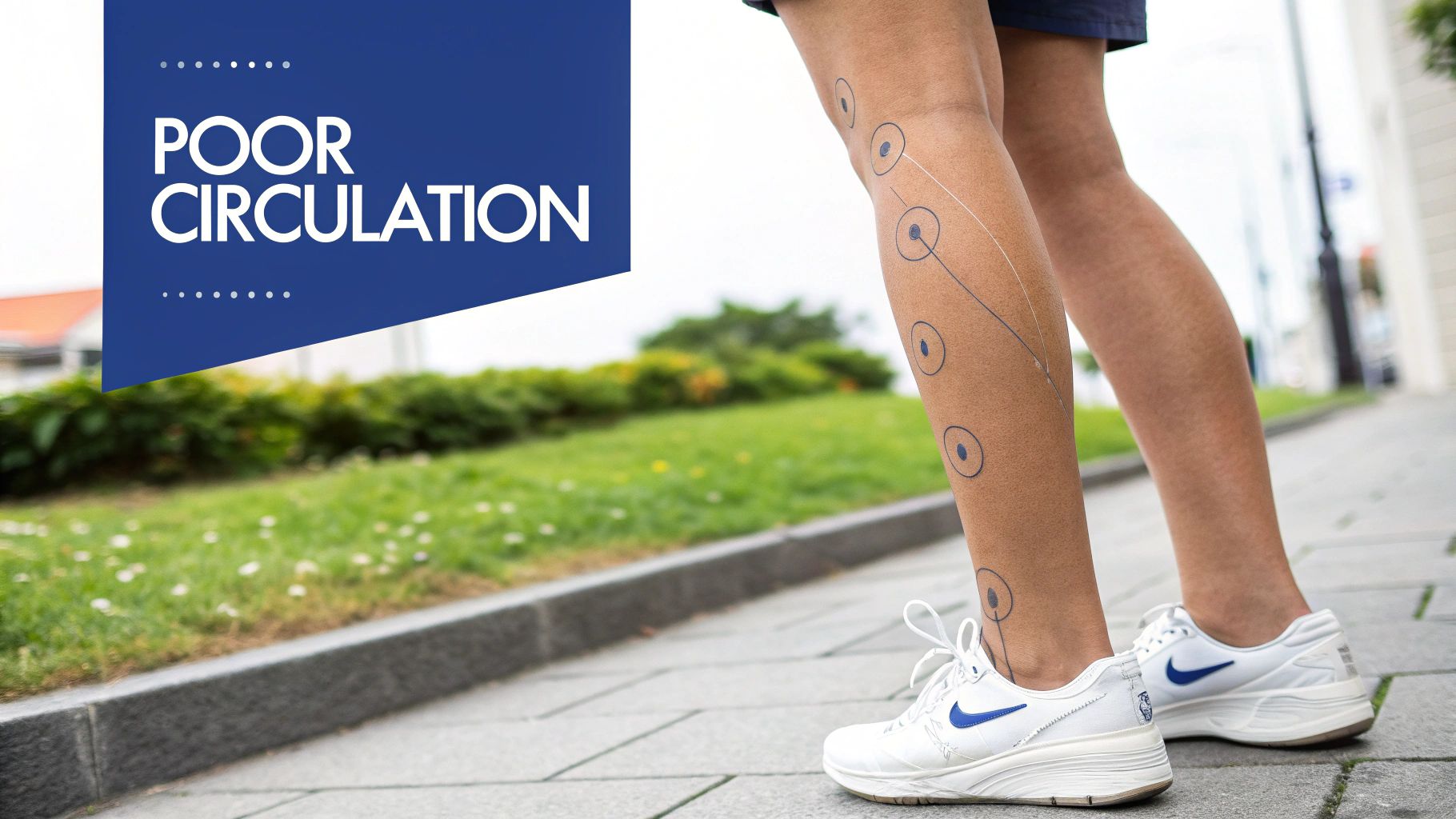
To really get what's behind that heavy, dragging feeling in your legs, you first have to appreciate the incredible circulatory system working inside you. Think of your veins as a sophisticated highway system designed to carry blood from your feet and legs all the way back up to your heart. This entire journey is a constant, uphill battle against gravity.
To win this fight, your veins are equipped with tiny, one-way valves. These valves act like locks in a canal, opening to let blood flow toward the heart and then snapping shut to stop it from sliding backward. Your calf muscles also play a critical role, acting as a "second heart." Every time you walk or flex your ankles, these muscles squeeze the veins, propelling blood upward. It’s a brilliant system that, when it works, keeps everything moving in the right direction.
When these valves are doing their job and your muscles are active, your legs feel light, energized, and ready for anything. But when they start to weaken or get damaged, the whole seamless process gets thrown off. This is a common condition known as venous insufficiency.
The Breakdown in Blood Flow
Venous insufficiency is the real culprit behind most circulation-related leg issues. When those one-way valves in your veins don't seal properly, gravity starts to win the war. Instead of making its way back to the heart, blood begins to pool in your lower legs, a condition called venous stasis.
This pooling cranks up the pressure inside the veins, causing fluid to leak out into the surrounding tissues. The result? Swelling (edema), aches, cramping, and that unmistakable sensation of heavy, tired legs. It's like a major traffic jam on the highway back to your heart, causing a complete backup in your lower limbs.
Several everyday factors constantly put this system to the test:
- Prolonged Sitting or Standing: Staying in one position for hours makes it incredibly hard for your calf muscles—your "second heart"—to help pump blood upward. This forces your veins to work overtime and allows blood to pool.
- Intense Exercise: While great for circulation overall, tough workouts produce metabolic waste that needs to be cleared out fast. An already challenged circulatory system can struggle to keep up with the cleanup, leading to post-exercise heaviness.
- Gravity: The simple act of being upright means your circulation is always working against a force that's pulling fluid down toward your feet. Over time, this constant battle can take a toll on your veins.
- Hormonal Changes: Fluctuations in hormones, particularly during pregnancy or menopause, can relax vein walls, making them more susceptible to stretching and valve failure.
From Minor Annoyance to Chronic Concern
That feeling of heaviness is often a signal of deeper circulatory trouble. In fact, heavy legs and similar symptoms are incredibly common and often point to conditions like Restless Legs Syndrome (RLS), which is closely linked to venous insufficiency.
The landmark REST General Population Study found that a staggering 7.2% of people in the US and Europe deal with RLS symptoms, with rates nearly twice as high in women. North American studies show even higher numbers, underscoring just how widespread these circulatory challenges are.
A key takeaway here is that good circulation isn’t just for elite athletes. It’s fundamental for everyone—from office workers wanting to avoid end-of-day swelling to anyone looking to simply feel lighter and more energetic.
Understanding this mechanism is the first step toward finding relief. Whether you're an athlete who needs efficient oxygen delivery for peak performance or just someone who is tired of leg fatigue, supporting your circulation is essential. For those ready to take proactive steps, it helps to explore different ways to get your blood flowing. You might find our guide on how to improve circulation in your legs full of practical, easy-to-implement strategies.
How Daily Habits Affect Leg Fatigue
While your body’s internal circulatory system is a major player, it’s often your daily habits that tip the scales toward leg fatigue. The simple choices you make—from what you drink to how much you move—can either promote light, energetic legs or directly cause that heavy, dragging sensation. These choices compound over time, making a significant difference in how you feel day-to-day.
Think of your circulatory system like a plumbing network. When you’re well-hydrated, your blood is fluid and flows easily through your vessels. But dehydration makes your blood thicker and more viscous, forcing your heart to work overtime to pump it through your body, especially fighting gravity to get it out of your lower legs. This increased effort can lead to a feeling of sluggishness throughout your system.
Likewise, a diet loaded with sodium signals your body to hold onto excess fluid. This water retention often pools in your legs and ankles, creating visible swelling and adding real, physical weight that makes every step feel like a chore. Over time, this chronic fluid retention can further strain your veins.
The Impact of Activity and Inactivity
Your activity level is another huge piece of the puzzle. Whether you're an elite athlete pushing your limits or someone sitting at a desk for hours, your daily routine presents unique challenges to your legs. The surprising part? Both extremes—too much movement and not enough—can lead to the exact same heavy feeling, just through different mechanisms.
A long flight or an eight-hour day chained to a desk creates a nearly identical problem for your circulation: inactivity. In both situations, your calf muscles are dormant. These muscles are often called the body’s "second heart" because when they contract during activities like walking, they squeeze the veins and actively pump blood back up toward your chest. When they aren't working, blood flow slows to a crawl, leading to pooling and that all-too-familiar heaviness.
For athletes, the cause is different, but the result feels strikingly similar. Intense exercise creates muscle fatigue, micro-tears, and inflammation. In the aftermath of a tough workout, metabolic byproducts like lactic acid and other cellular waste build up in the muscle tissue. This accumulation is a well-known culprit behind soreness, stiffness, and that lead-pipe sensation in your legs. Efficient circulation is required to clear these byproducts, and if recovery is inadequate, the heavy feeling can persist.
This link between lifestyle and leg heaviness is incredibly common. One systematic review found that restless legs syndrome (RLS), which often includes symptoms of heavy legs, affects around 11% of people worldwide. These symptoms are very often tied to lifestyle factors like obesity and inactivity.
This is a widespread problem, but it frequently flies under the radar. Another review pointed out that while RLS affects between 4-29% of people in North America and Europe, fewer than 10% of them ever get a formal diagnosis. This leaves millions of people struggling with heavy, uncomfortable legs without knowing why. You can read the full research on this topic to get a deeper look at its prevalence.
The great news is that these factors are almost entirely within your control. Once you understand how your diet, hydration, and activity level impact your legs, you can start making immediate, simple changes to find relief and prevent the feeling from returning.
Practical At-Home Strategies for Immediate Relief
When your legs feel heavy and achy, you don’t have to just wait it out. Several simple yet powerful strategies can bring you relief right in the comfort of your own home, helping you ease the discomfort and get your circulation moving again.
Think of these techniques as your first line of defense against the sluggishness caused by poor fluid dynamics and muscle fatigue. The best part? They aren’t complex medical procedures. They’re practical habits you can easily build into your daily routine to restore that feeling of lightness to your limbs and improve your vascular health over the long term.
Use Gravity to Your Advantage
One of the quickest and most effective ways to combat heavy legs is simply by elevating them. When you raise your legs above the level of your heart, you give your circulatory system a much-needed assist.
Gravity, which normally pulls fluid down into your legs, suddenly starts working for you, helping drain that excess fluid and pooled blood back toward your body’s core. This reduces the pressure inside your veins and can provide almost instant relief from aching and swelling.
For the best results, lie down comfortably on your back on the floor or a bed and prop your legs up against a wall or on a stack of pillows. Aim for 15-20 minutes at the end of a long day or whenever that familiar heaviness creeps in. You might be surprised by how quickly this simple act can relieve swelling and pressure.
Gentle Stretches to Boost Blood Flow
Stretching isn't just about flexibility—it's an active way to encourage blood flow. By contracting and releasing your muscles, you're essentially giving your vascular system a manual pump, pushing stagnant fluid out of your lower legs and activating your calf muscle pump.
These gentle movements can be done almost anywhere, anytime, making them perfect for breaking up long periods of sitting. Here are a couple of my go-to stretches:
- Ankle Pumps: While sitting or lying down, just point your toes away from you, hold for a moment, and then flex them back toward your shins. Repeat this 10-15 times on each foot. This activates your calf muscles, which play a huge role in venous return.
- Calf Stretches: Stand facing a wall, placing your hands on it for support. Step one foot back, keeping the leg straight and your heel flat on the floor. Gently lean forward until you feel a good stretch in your calf. Hold for 20-30 seconds, then switch legs.
- Walking Breaks: The simplest solution is often the best. If you sit for work, set a reminder to get up and walk around for a few minutes every hour. This engages the leg muscles and gets blood moving.
These movements are the perfect antidote to a sedentary workday, directly combating the fluid stagnation that happens after long periods of sitting or standing.
The Power of Compression and Hydration
Compression socks or stockings apply gentle, steady pressure to your legs. This external support helps your veins and muscles move blood more efficiently, preventing it from pooling and causing that heavy, tired feeling. They work by providing graduated pressure, tightest at the ankle and looser up the leg, which helps push blood upward. They’re especially helpful during long flights or for anyone who spends most of their workday on their feet.
Finally, never underestimate the simple power of hydration. Drinking plenty of water keeps your blood at the right consistency, making it easier for your heart to pump it around your body. When you get dehydrated, your blood actually thickens, which is a major contributor to what causes that heavy legs feeling. Aim for consistent water intake throughout the day, not just when you feel thirsty.
For a deeper dive into managing fluid retention, our guide on how to reduce leg swelling offers even more practical strategies.
When to See a Doctor About Heavy Legs
Most of the time, that heavy, tired feeling in your legs can be handled with simple at-home care and lifestyle adjustments. But it's crucial to know the difference between everyday fatigue and a sign that something more serious is going on. Paying attention to your body's signals is the first step to protecting your long-term health.
Think of it like this: occasional heaviness after a long day on your feet is like your car’s “low fuel” light—just a reminder to rest and recharge. Persistent, sudden, or severe symptoms, however, are more like the “check engine” light flashing urgently. That’s a signal you need a professional to look under the hood and diagnose the root problem.
Learning to recognize these red flags ensures you get the right help exactly when it matters most, potentially preventing more serious complications down the road.
Key Symptoms That Warrant a Medical Opinion
While there's no need to panic, certain signs definitely mean it's time to book an appointment. These symptoms can point to underlying issues like Deep Vein Thrombosis (DVT), which is a blood clot in a deep vein, or Peripheral Artery Disease (PAD), a condition where narrowed arteries choke off blood flow. Both of these conditions require prompt medical attention.
You should call your doctor if you’re experiencing any of these:
- Swelling in Only One Leg: This is a big one. While general swelling can be from inactivity, if one leg is noticeably more swollen than the other, it’s a major red flag for a localized problem like a clot.
- Skin Discoloration: Keep an eye out for skin that looks unusually pale, bluish, reddish, or has even developed a brownish stain, especially down by the ankles. This can be a tell-tale sign of chronic circulation problems and venous stasis.
- Legs That Are Warm or Red to the Touch: If an area on your leg feels unusually warm or looks red—particularly if it’s also swollen and painful—it could signal an infection or a clot (thrombophlebitis).
- Painful, Bulging Varicose Veins: Many varicose veins are just cosmetic, but if they become hard, tender to the touch, or downright painful, it might be a sign of vein inflammation (phlebitis) or a more serious issue.
- Sores That Won’t Heal: Any ulcer or wound on your lower legs or feet that stubbornly refuses to heal is a classic symptom of poor arterial blood flow, often associated with PAD.
- Sudden or Severe Pain: Leg heaviness is usually a dull ache. If you experience sudden, sharp, or cramping pain, especially during walking (claudication), it's a reason to see a doctor.
Pro Tip: Before your appointment, jot down a few notes about your symptoms. When did they start? What makes them feel better or worse? Is the feeling constant or intermittent? Any other changes you've noticed? Giving your doctor this clear timeline is incredibly helpful for getting an accurate diagnosis.
Modern Recovery for Light and Restored Legs
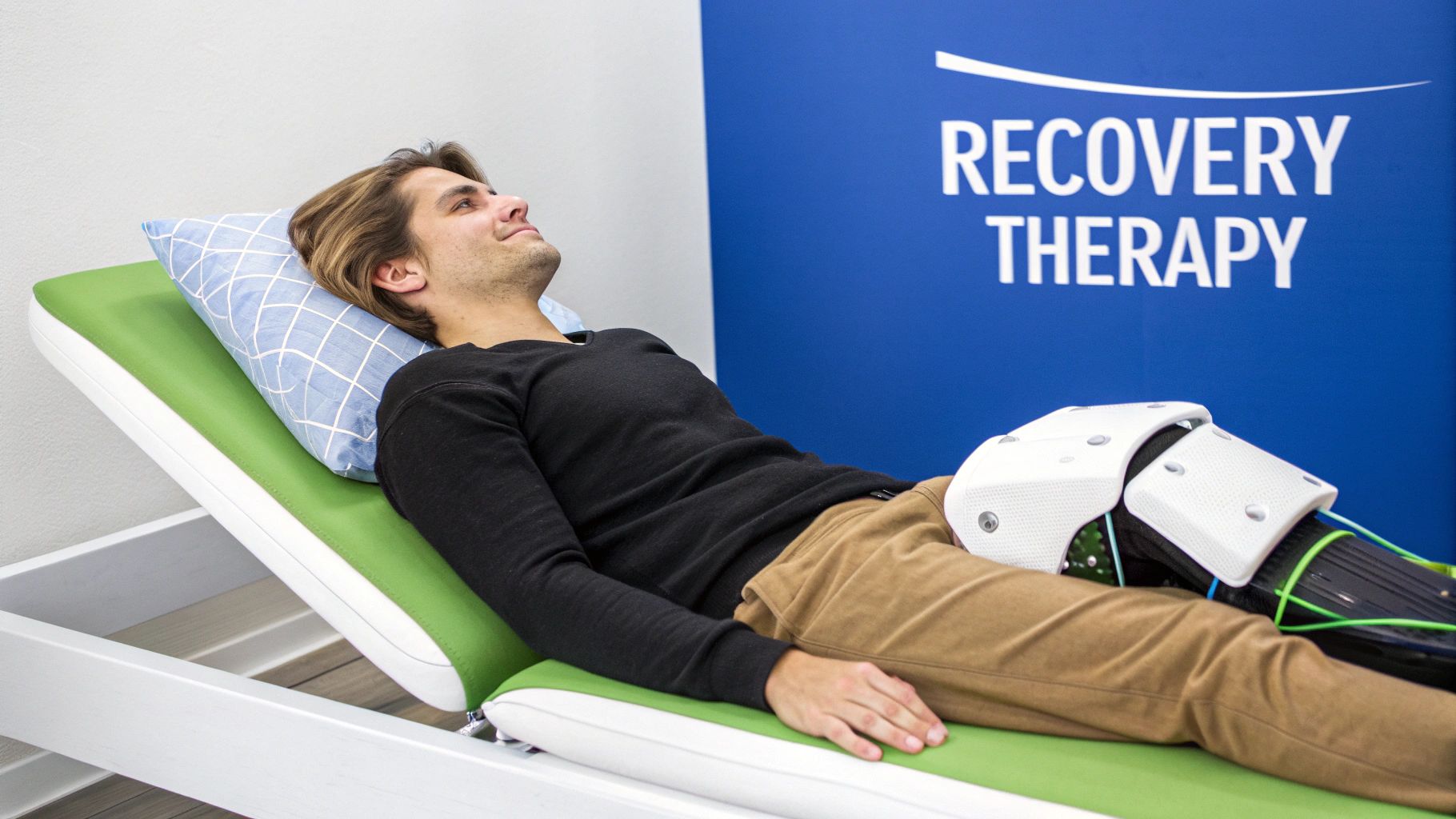
While the at-home strategies we've covered provide crucial day-to-day relief, modern wellness technology offers a much faster path to restoring that feeling of lightness. Advanced systems, like the Vacustyler Avantgarde, use science-backed methods to get right to the circulatory issues behind heavy, tired legs.
This technology is built on a concept called intermittent vacuum therapy—an idea first pioneered to help astronauts deal with the circulatory effects of zero gravity. Think of it as a gentle but powerful external pump for your lower body. By cycling between phases of negative and positive pressure, it gives your body’s circulatory and lymphatic systems a serious boost, helping them do their jobs far more efficiently.
This process gives your veins and lymph vessels the assistance they need to finally push stagnant fluid and metabolic waste out of your lower limbs. The best part? It’s a completely passive and relaxing experience that provides immediate relief from that draining, heavy-leg feeling.
A Deeper Look at the Technology
The Vacustyler works by enclosing your lower body in a chamber where the air pressure is systematically changed. This creates a "vacuum wave" that gently pulls on tissues during the negative pressure phase, dilating capillaries and increasing blood flow. This is followed by a positive pressure phase that helps push deoxygenated blood and lymphatic fluid out of the extremities. It essentially creates a passive vascular workout.
A typical 20–30 minute session delivers some powerful benefits:
- Enhanced Venous Return: The alternating pressure helps push deoxygenated blood back up toward the heart, directly fighting the pooling that causes heaviness.
- Lymphatic Drainage: It powerfully encourages the removal of excess fluid and waste products that lead to swelling and discomfort, effectively detoxifying the lower body tissues.
- Improved Microcirculation: The therapy ramps up blood flow to the tiniest capillaries, bringing vital oxygen and nourishment to skin and muscle tissue, which can aid in recovery and cellular repair.
For medspas and wellness centers, this technology is a game-changer. It offers a non-invasive service that delivers an immediate and noticeable sensation of lightness. Clients walk out feeling refreshed and restored, making it an incredible complement to other aesthetic and recovery treatments.
More Than Just Pressure
Many of today’s recovery systems don't stop there. They often integrate other beneficial therapies to create a more holistic experience. For example, some devices include red and near-infrared (NIR) light therapy during the session. This light energy penetrates the skin to support cellular health, reduce inflammation, and promote collagen production, which can also improve skin tone and texture for a complete wellness and aesthetic boost.
This smart combination of therapies makes it an invaluable asset for anyone looking to feel better. It’s perfect for athletes who need to bounce back faster from intense training and for individuals just wanting to combat the effects of a sedentary lifestyle. For those chasing peak performance, discovering the best recovery tools for athletes can make all the difference.
Common Questions About Heavy Legs
Even after understanding the basics, you probably have a few specific questions. That's a good thing. It means you're connecting the dots between your daily life and how your legs feel. Gaining this clarity helps you build sustainable habits for long-term relief.
Let's tackle some of the most common questions we hear. Getting clear on these points can reinforce just how much power you have over this feeling through simple, consistent habits.
Can My Diet Really Affect How Heavy My Legs Feel?
Absolutely. What you eat has a direct and often immediate impact on fluid balance and circulation. Think of it this way: a diet high in sodium is one of the fastest ways to tell your body to hold onto excess water. And where does that fluid often end up? Pooling in your lower legs, creating that noticeable bloating and swelling that feels heavy and sluggish.
The good news is that the opposite is also true. Staying well-hydrated and focusing on potassium-rich foods—like bananas, sweet potatoes, spinach, and avocados—helps your body find its natural fluid balance by counteracting sodium's effects. Simply cutting back on salty, processed foods and increasing your intake of fresh, whole foods is a powerful first step toward better circulation and lighter-feeling legs.
How Often Should I Elevate My Legs?
For general relief after a long day on your feet, elevating your legs above heart level for 15-20 minutes is a game-changer. This simple act uses gravity to help drain pooled blood and fluid from your lower extremities. If you’re an athlete or someone who deals with that heavy feeling more often, making elevation a daily ritual, especially after a workout or before bed, will give you the most significant benefits.
The key is consistency. Think of it as a way to counteract gravity's effects from the entire day. Making it a regular part of your evening routine helps prevent fluid from pooling in the first place, rather than just dealing with it after the fact.
Does Hot Weather Make Heavy Legs Worse?
Yes, and you're not imagining it. Many people find their symptoms of heavy legs, swelling, and achiness flare up during the summer. Heat causes your veins to naturally dilate, or expand. While this is a normal cooling mechanism to bring blood closer to the skin's surface, it can make it harder for the tiny one-way valves inside your veins to close properly.
This inefficiency allows more blood to pool in your lower legs, which is why that heavy, tired, and swollen feeling can feel so much more intense in warm weather. During warmer months, it’s even more critical to stay cool, drink plenty of water to avoid dehydration (which thickens blood), and elevate your legs to give your circulatory system the support it needs.
At Weyergans HighCare US, we believe that modern recovery science should be accessible to everyone seeking relief. Our Vacustyler Avantgarde offers a relaxing, non-invasive way to support your body's natural circulation and feel immediately lighter. Discover how our German-engineered technology can transform your recovery experience.