


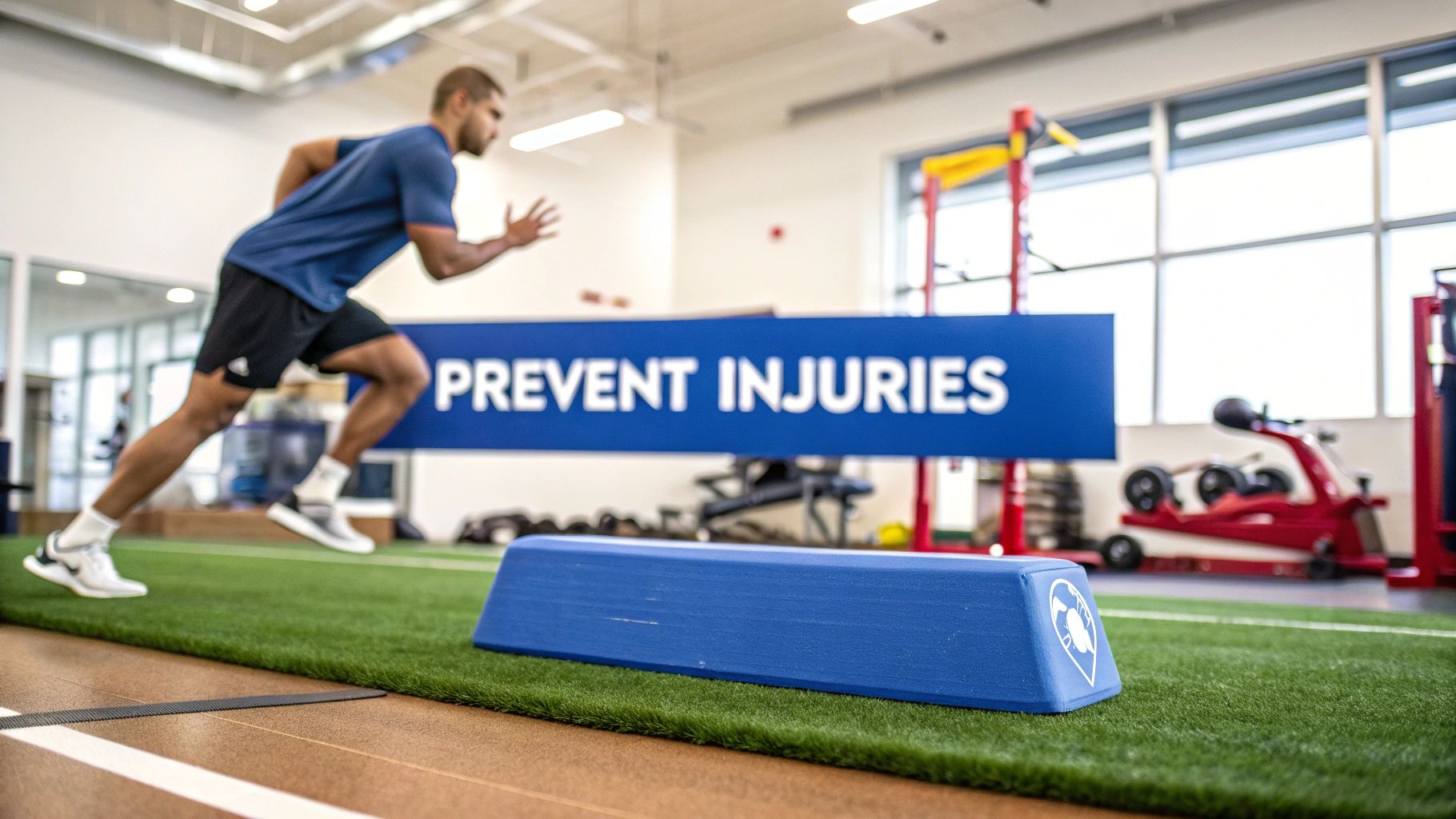
Preventing sports injuries isn’t about bubble-wrapping athletes or avoiding hard work. It's a strategic, science-backed discipline focused on building a body that’s resilient enough to handle the incredible demands of sport. This is achieved through a combination of smart training, clean movement, and strategic recovery. The core of modern injury prevention is a proactive mindset—shifting the focus from treating injuries after they happen to consistently preparing the body to avoid them in the first place.
This comprehensive guide will walk you through the key pillars of this modern approach, providing actionable strategies to keep you on the field, in the gym, and performing at your peak.
Rethinking Injury Prevention from the Ground Up

For decades, the standard approach to staying healthy in sports was almost entirely reactive. An athlete would feel a twinge of pain, be encouraged to "play through it," and only seek professional help when the pain became a significant, performance-limiting problem. In this outdated model, "prevention" advice was often limited to a few basic static stretches and the vague, unhelpful guidance to "listen to your body"—leaving far too much to chance and guesswork.
That reactive model is finally being replaced by a much more systematic and proactive framework. The modern goal is no longer just to avoid getting hurt, but to forge a robust, durable athlete capable of withstanding the intense, repetitive forces of competition. This guide moves beyond isolated tips and lays out an integrated system where every component—from warm-ups to nutrition to recovery—works together to build resilience.
The Modern Approach to Athletic Resilience
This new philosophy is built on a few core principles that elite athletes, top-tier training facilities, and smart coaches are using to keep athletes on the field, season after season. It’s all about being proactive and strategic, not reactive and lucky.
The pillars of this modern system include:
- Proactive Preparation: This involves focusing on pre-habilitation exercises that identify and strengthen the weak links in the kinetic chain before they can become liabilities. This means building stability in key joints and ensuring muscles are firing in the correct sequence.
- Intelligent Training and Load Management: This is the science of carefully managing workout intensity, frequency, and volume to stimulate positive adaptation without causing systemic breakdown. It's about finding the "sweet spot" of stress that makes you stronger, not injured.
- Strategic Recovery: Utilizing targeted methods and advanced technologies to accelerate the body's natural repair cycles. This isn't just about rest; it's about actively enhancing the physiological processes that rebuild tissue and reduce fatigue.
- Movement Quality and Biomechanics: Emphasizing perfect technique in every drill, lift, and movement to slash unnecessary stress on joints, ligaments, and tendons. Efficient movement is safe movement.
This entire shift is powered by a massive evolution in sports science and medicine. The field of injury prevention has transformed over the past decade, with research on the topic accelerating significantly between 2015 and 2023—with the United States leading the charge in scientific output. This data-driven approach, which often utilizes tools like wearable motion monitoring systems and AI-based risk prediction models, is pushing sports medicine beyond reactive treatment and into a truly proactive, evidence-based discipline. You can explore more about these research trends to see just how far the science has come.
The biggest change in injury prevention is the mindset shift from "avoiding getting hurt" to "building a body that's hard to injure." It's an offensive strategy, not a defensive one.
By adopting this integrated approach, you stop leaving your health and athletic career to luck. Instead, you start building a durable, high-performance machine ready for anything. Each section of this guide will give you the actionable steps to build your own comprehensive prevention program, starting with the foundational elements of smart warm-ups and prehab routines.
Mastering the Dynamic Warm-Up for Peak Readiness

A proper warm-up does a lot more than just get you warm. Think of it as a critical conversation between your brain and your body, methodically prepping your muscles, joints, and nervous system for the specific chaos of your sport. For too long, the old advice was to hold a few static stretches for 30 seconds each. We know better now. That passive approach can actually dial down your power output and does very little to prevent the types of injuries common in dynamic sports.
The real key to effective preparation is the dynamic warm-up. This isn't about holding a position; it's a series of controlled, sport-specific movements that actively guide your body through its full range of motion. This is a non-negotiable component of any serious training session because it primes the entire system for both resilience and peak performance.
Why Dynamic Movement Is Superior
Static stretching is passive—you hold a position and wait for the muscle to lengthen. A dynamic warm-up is active. You're constantly moving, engaging muscles and joints in a way that directly mimics what you're about to do on the field, court, or track. This "rehearsal" of movement patterns is fundamental to learning how to prevent sports injuries.
Here’s a good way to think about it: static stretching before a workout is like pulling on a cold, stiff rubber band. At best, it's ineffective; at worst, it might even snap. A dynamic warm-up, on the other hand, is like gently warming and stretching that rubber band through movement, making it pliable, strong, and ready for explosive action.
A well-designed dynamic routine nails several crucial physiological goals:
- It Wakes Up Your Nervous System: Dynamic movements fire up the neuromuscular pathways, sharpening your coordination, proprioception (your sense of body position), and reaction time.
- It Boosts Blood Flow and Temperature: It increases heart rate and core temperature, getting oxygen-rich blood to the working muscles, which makes them more efficient and far less likely to strain or tear.
- It Enhances Mobility and Flexibility: The movements lubricate your joints with synovial fluid and improve the functional range of motion you actually need for your sport, rather than just passive flexibility.
Building Your Pre-Habilitation Routine
A truly effective warm-up is never one-size-fits-all. It should be a personalized pre-habilitation ("prehab") routine built to target your common weak points and prepare you for the unique stresses of your sport.
For instance, a basketball player needs to prep their body for explosive jumps, rapid changes of direction, and sharp cuts. Their focus should be on exercises that promote hip mobility, ankle stability, and thoracic spine rotation. A distance runner, facing a different set of demands, needs to prime their hamstrings, glutes, and hips for thousands of repetitive forward motions, focusing on drills that reinforce proper running mechanics.
The goal of a warm-up isn't just to "get warm." It's to sharpen performance and build a buffer against injury. Every single movement should have a clear purpose that ties directly back to the demands of your sport.
To help you structure this, here’s a breakdown of the key elements every solid dynamic warm-up should include.
Components of an Effective Dynamic Warm-Up
| Component | Objective | Example Movements | Recommended Duration |
|---|---|---|---|
| General Aerobic Activity | To elevate heart rate, increase core body temperature, and initiate blood flow. | Light jogging, cycling on a stationary bike, or jumping jacks. | 3-5 minutes |
| Mobility and Activation | To open up key joints (hips, shoulders, ankles) and activate stabilizing muscles (glutes, core). | Hip circles, leg swings (forward and side-to-side), cat-cow stretches, and glute bridges. | 5-7 minutes |
| Dynamic Stretching | To actively move muscles through their full, functional range of motion, preparing them for athletic movements. | Walking lunges with an overhead reach and torso twist, high knees, butt kicks, and inchworms. | 3-5 minutes |
| Sport-Specific Drills | To rehearse movement patterns specific to your activity at a lower intensity, priming the nervous system. | For soccer: short sprints and cutting drills. For tennis: practice swings without a ball. For weightlifting: bodyweight squats and hinges. | 2-3 minutes |
Pulling these pieces together ensures your body is firing on all cylinders. Improving how you move is essential, and advanced methods can take your routine to the next level. For athletes looking to optimize every aspect of their preparation, you can learn more about how to enhance joint mobility and flexibility in our related guide.
By integrating these practices, you transform your warm-up from a tedious, often-skipped chore into your most powerful tool for injury prevention and performance enhancement.
Smart Training and Load Management
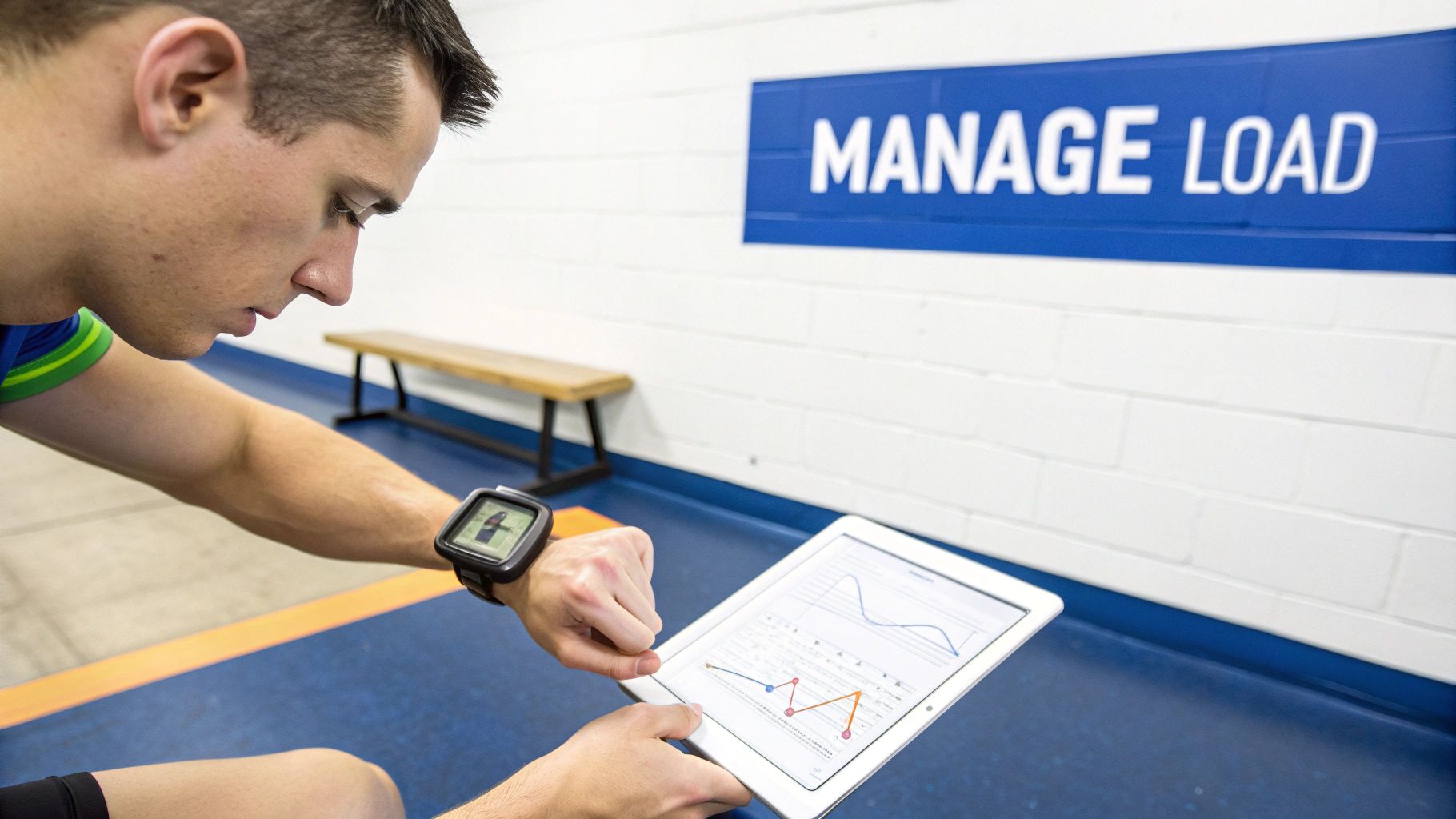
There's a fine line between getting fitter and getting hurt, and smart training is what keeps you on the right side of it. We all know that pushing hard is part of the game, but the classic "too much, too soon, too fast" approach is a surefire recipe for a breakdown. This is where the principle of load management becomes your single most powerful injury prevention tool.
Think of it this way: every workout adds a little bit of stress and causes micro-damage to your tissues. Recovery is the process that builds you back stronger than before. If you keep piling on stress without giving your body adequate time to adapt and rebuild, the structure gets unstable. Sooner or later, it collapses. That collapse is an injury, whether it’s a sudden tear or a nagging overuse condition.
Understanding Your Workload
At its core, load management is about finding the sweet spot between the stress you apply (training load) and your body's ability to handle and adapt to it. A key concept used by sports scientists is the acute-to-chronic workload ratio (ACWR). It sounds technical, but the idea is actually pretty simple and intuitive.
- Acute Load: This is your recent training stress—what you've done in the last week. It represents your current level of fatigue.
- Chronic Load: This is your fitness base—what your body has become accustomed to over a longer period, typically averaged over the last four weeks. It represents your fitness.
The ideal zone for making progress without a huge spike in injury risk is an ACWR between 0.8 and 1.3. This means your current weekly workload is roughly in line with, or slightly higher than, your monthly average. When you push past an ACWR of 1.5 (meaning your current week's training is 50% higher than your average), your injury risk can skyrocket. This is the science that explains why ramping up your training too quickly after a break is so dangerous.
The goal isn’t to avoid stress; it’s to apply the right amount at the right time. Your body is incredibly adaptive, but it hates surprises. Gradual, consistent progression is the secret to building long-term resilience.
This principle is absolutely vital for athletes at all levels, but the stakes are particularly high for younger athletes whose bodies are still developing. Recent data shows an estimated 5.2 million sports injuries happen among U.S. high school athletes alone each year. Even more concerning, the injury rate among teens shot up by a staggering 58% in 2021, and 20.9% of high school sports injuries lead to medical disqualification for the season—or for good. You can read the full analysis on sports injury trends to get a better sense of the risks associated with poor load management.
The Critical Role of Technique
Managing how much you train is only half the battle. The other, equally important half is managing how well you move. Flawed technique is a silent career killer, creating tiny amounts of cumulative trauma that build up over thousands of repetitions until something finally gives.
When your mechanics are off, you put unnecessary and inefficient stress on joints, ligaments, and tendons that weren't designed to handle that kind of load. It’s like driving a car with misaligned wheels—you might not notice it on a short trip, but over thousands of miles, the tires wear out unevenly, and you're headed for a blowout.
Common Technique Flaws and Their Consequences
Think about these real-world scenarios where bad form leads directly to chronic, preventable problems:
- The Runner with Knee Pain: A runner whose foot collapses inward on every stride (a movement pattern called overpronation) puts a ton of rotational stress on their knee joint. Multiply that small stress by thousands of steps over a 5-mile run, and you've got a recipe for common overuse injuries like patellofemoral pain syndrome or IT band syndrome.
- The Weightlifter with a Sore Back: An athlete who rounds their lower back during a deadlift or squat instead of maintaining a neutral, flat spine places massive shear force on their lumbar discs. This is a direct path to disc bulges, herniations, and nagging, chronic low back pain.
- The Pitcher with Shoulder Issues: A baseball pitcher with poor scapular control—meaning their shoulder blade doesn't move correctly in sync with their arm—ends up overloading the small, delicate rotator cuff muscles. This leads to impingement, tendinitis, and eventually, career-threatening tears.
These aren't just unlucky breaks. They're the predictable, physiological outcome of repeating a faulty movement pattern until the body's capacity for adaptation is exceeded and it breaks down.
How to Refine Your Form
Your first line of defense is objective self-assessment. Recording yourself during training sessions is a simple but incredibly powerful tool. Watch the playback in slow motion and compare what you see to videos of elite athletes or expert instructional guides. Are your knees caving in on your squat? Is your back rounding at the bottom of a lift? Is your running form choppy?
But sometimes, you're just too close to the problem to see it clearly. That's when getting an expert eye becomes invaluable. A good coach, physical therapist, or biomechanics expert can spot subtle inefficiencies you'd never notice on your own. They can give you targeted cues and corrective exercises to rebuild your movement patterns from the ground up, turning a biomechanical weak link into a source of strength and efficiency.
When you combine smart load management with clean, efficient technique, you're not just training to perform—you're training to last.
Accelerating Recovery with Modern Technology
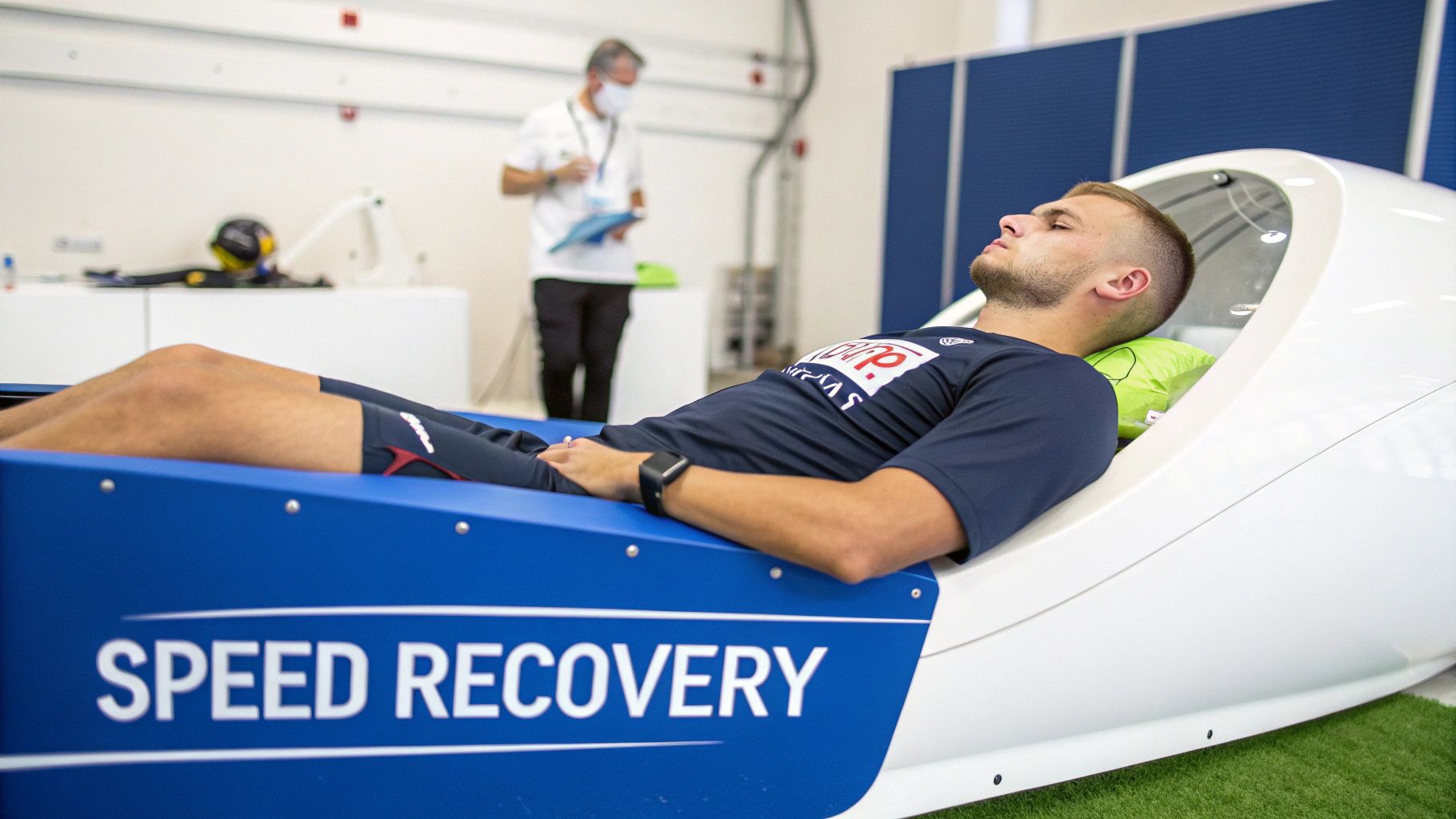
In today's competitive landscape, how you recover is just as critical as how you train. The real gap between a good athlete and a great one often boils down to who can bounce back faster and more completely from strenuous workouts. Smart recovery isn't just about feeling less sore for the next session—it's a non-negotiable pillar of any serious injury prevention strategy.
When you push your limits, you’re creating micro-damage in your muscles and connective tissues. Recovery is the physiological process that repairs that damage, making you stronger and more resilient. But if that repair process is slow or incomplete, you carry residual fatigue and stress into the next workout. That’s how injury risk quietly stacks up over time. This is exactly where modern recovery technology gives athletes a decisive, science-backed edge.
Enhancing Your Body's Natural Repair Systems
Your body’s recovery is driven by two superstar physiological systems: the circulatory system, which delivers the oxygen and nutrients needed for tissue repair, and the lymphatic system, which acts like a sophisticated cleanup crew, flushing out metabolic waste products like lactic acid and inflammatory byproducts. When these systems are firing on all cylinders, tissue repair speeds up, inflammation stays under control, and you return to baseline faster.
The latest non-invasive recovery modalities are engineered to supercharge these natural processes. They aren't magic. They simply create the perfect internal environment for your body to do its job better and faster than it could on its own.
Think of it this way: your body is a high-performance engine that produces exhaust (metabolic waste) when it works hard. If that exhaust system gets clogged, performance plummets, and the engine eventually breaks down. Recovery tech is like a professional detailing service that keeps that system clean and running efficiently, ensuring everything runs smoothly.
Effective recovery is proactive, not reactive. It’s the daily maintenance that keeps small issues from becoming season-ending problems. Investing in recovery is investing in your availability and consistency as an athlete.
The Science of Intermittent Negative Pressure Therapy
One of the most powerful and innovative methods for boosting both circulation and lymphatic flow is intermittent negative pressure therapy. This advanced approach uses cycles of gentle vacuum pressure to actively stimulate the entire lower body, essentially giving your circulatory and lymphatic systems a potent, passive workout.
A device like the Vacustyler encapsulates the lower half of the body and alternates between normal atmospheric pressure and negative pressure. This rhythmic cycling creates a powerful push-pull effect on your blood vessels and lymphatic channels, far beyond what passive recovery methods can achieve.
During the negative pressure phase, arteries and capillaries expand, creating a pressure gradient that floods the muscles with fresh, oxygen-rich blood. Then, as the pressure returns to normal, the veins and lymphatic vessels are gently compressed, powerfully pushing out deoxygenated blood and metabolic junk. This cycle directly supports the cornerstones of effective recovery:
- Improved Blood Flow: Rushes vital nutrients like oxygen and amino acids to damaged tissues for faster repair.
- Enhanced Lymphatic Drainage: Actively flushes out the waste products that cause delayed onset muscle soreness (DOMS) and fatigue.
- Reduced Inflammation and Swelling: Helps manage the body's natural inflammatory response to intense training, preventing chronic inflammation.
For an athlete, this translates to less muscle soreness, quicker clearance of fatigue, and a faster return to peak condition. For a training facility, it’s a cornerstone of a sophisticated prevention and recovery program that delivers real, measurable results for clients. You can explore how to integrate the best recovery tools for athletes into your existing protocols.
Comparing Modern Recovery Modalities
To put this into perspective, let's look at how different popular recovery technologies contribute to the goal of proactive recovery and injury prevention. Each has its place, but understanding their core mechanisms is key to using them effectively.
| Modality | Primary Mechanism | Key Benefits for Prevention | Best For |
|---|---|---|---|
| Intermittent Negative Pressure Therapy | Rhythmic pressure changes to dilate/compress blood vessels and lymphatic channels. | Actively enhances systemic circulation and lymphatic drainage system-wide. | Systemic fatigue, reducing muscle soreness, post-training flush, improving overall tissue health. |
| Pneumatic Compression Boots | Sequential squeezing pressure up the limbs (distal to proximal). | Pushes out stagnant fluid and metabolic waste from the extremities. | Reducing swelling in legs/arms, localized fluid buildup, post-travel recovery. |
| Cryotherapy | Exposure to extreme cold temperatures for a short duration. | Constricts blood vessels (vasoconstriction) to reduce acute inflammation and numb pain signals. | Managing acute inflammation post-injury, reducing immediate soreness after a particularly brutal session. |
| Infrared Sauna | Radiant heat penetrates tissues to increase body temperature. | Increases blood flow (vasodilation) and promotes muscle relaxation and tissue extensibility. | General muscle tightness, promoting relaxation, pre-workout loosening to improve mobility. |
While all these tools are valuable, intermittent negative pressure therapy stands out for its active, systemic impact on both the circulatory and lymphatic systems—the foundational engines of physiological recovery.
A Growing Market for Prevention and Recovery
The intense focus on advanced recovery isn't just a trend; it's a fundamental shift in the sports and wellness industries. The global sports medicine market was valued at USD 7.30 billion in 2024 and is projected to hit an incredible USD 15.25 billion by 2033. This explosive growth is fueled by a clear, data-backed understanding that investing in prevention and recovery pays massive dividends.
Consider this staggering statistic: in 2023 alone, an estimated 3.7 million people landed in emergency rooms for sports-related injuries in the United States. That number, combined with the market's explosive growth, shows that teams, individuals, and health systems are finally prioritizing the development of robust prevention infrastructure.
This industry-wide shift is making technology that was once reserved for elite professional athletes accessible to a much broader range of athletes, fitness enthusiasts, and wellness clients. For coaches, athletic departments, and facility owners, incorporating these advanced tools is no longer a luxury—it’s a necessity for keeping athletes healthy, happy, and performing at their absolute best.
The Hidden Pillars of Resilience: Nutrition, Sleep, and Hydration
The most advanced training plans and recovery technologies in the world will ultimately fail you if your lifestyle foundation is weak. While fancy gadgets and complex workout schedules get all the attention, the real, foundational work of building a resilient body happens behind the scenes, 24/7. This is where nutrition, sleep, and hydration come in—the three non-negotiable pillars of staying in the game for the long haul.
These aren't just minor details to be overlooked. They are the raw materials your body uses to repair, rebuild, and adapt to training stress. Ignoring them is like trying to build a brick house without any mortar. Sooner or later, under enough pressure, the whole thing will crumble. Let's move beyond generic advice and get into actionable strategies you can start implementing today.
Fueling for Repair and Resilience
What you eat directly impacts your body's ability to manage inflammation, repair tissue, and synthesize new muscle. We all know that macronutrients like protein and carbs are crucial for energy and muscle synthesis, but it's the micronutrients and anti-inflammatory compounds that are your secret weapons in the fight against nagging, chronic injuries.
Focus on building a diet rich in whole foods that actively support tissue health and combat inflammation. This means prioritizing things like:
- Omega-3 Fatty Acids: Found in fatty fish like salmon, as well as walnuts, chia seeds, and flaxseeds, these are absolute powerhouses for tamping down systemic inflammation that can lead to overuse injuries.
- Antioxidant-Rich Fruits and Vegetables: Berries, leafy greens like spinach and kale, and colorful bell peppers are loaded with vitamins C and E and other phytonutrients, which help fight off the oxidative stress that comes from hard training.
- Lean Proteins: Essential for rebuilding damaged muscle fibers, high-quality options like chicken, fish, eggs, and legumes provide the full spectrum of amino acids your body desperately needs to repair those micro-tears.
Think of your diet as a constant, low-level recovery session. By consistently giving your body anti-inflammatory, nutrient-dense fuel, you create an internal environment that is far less susceptible to the strains, sprains, and chronic pain that sideline athletes.
The Ultimate Recovery Tool: Sleep
Sleep is, without a doubt, the most powerful and criminally underrated performance-enhancing tool available to any athlete. Period. During the deep stages of sleep, your body releases human growth hormone (HGH), which is absolutely critical for tissue repair, bone building, and muscle growth. Skimping on sleep short-circuits this natural repair cycle, leaving you physically and cognitively vulnerable.
The research is clear and compelling on this. Athletes who consistently get less than eight hours of sleep a night have a significantly higher risk of injury. One landmark study found that student-athletes who slept under eight hours per night were 1.7 times more likely to get injured than their peers who slept for eight hours or more.
Sleep isn't passive downtime; it is an active and essential state of physiological and neurological recovery. Prioritizing it is one of the highest-impact, lowest-cost ways to prevent sports injuries.
Creating an optimal sleep environment is key to maximizing its benefits. This means turning your bedroom into a sanctuary for rest:
- Keep the room cool (around 65°F or 18°C), completely dark, and quiet.
- Get off all screens (phones, tablets, TVs) for at least an hour before bed. The blue light emitted from these devices can crush your body's production of melatonin, the hormone that signals sleep.
- Establish a consistent sleep schedule by going to bed and waking up at roughly the same time every day, even on weekends.
Hydration: The Overlooked Performance Metric
Even minor dehydration can have a massive, negative impact on your performance and injury risk. Water is essential for maintaining blood volume, regulating body temperature, lubricating your joints, and ensuring proper muscle function. When you're dehydrated, your heart has to work harder, your muscles fatigue faster, your tissues become less pliable, and your cognitive function nosedives—a perfect storm for a misstep, a muscle pull, or a poor decision on the field.
A simple way to calculate your baseline daily hydration needs is to aim to drink half your body weight in ounces of water. For a 180-pound athlete, that’s a baseline of 90 ounces per day, and that's before you even start sweating during a workout.
From there, you need to replace what you lose. A good rule of thumb is to drink 16-20 ounces of fluid for every pound of body weight lost during exercise. This ensures you're rehydrating effectively and prepping your body's tissues for the next session. Proper hydration is a non-negotiable part of any plan for how to speed up muscle recovery and keep your tissues pliable and injury-resistant.
By mastering these three foundational pillars, you build a truly resilient body from the inside out, making you fundamentally harder to injure.
Frequently Asked Questions About Preventing Sports Injuries
Even with the best plan in place, questions are going to pop up. Moving from theory to the real world—applying these prevention principles to your specific sport, body, and schedule—is where the real work begins. Let's tackle some of the most common questions I hear from athletes, coaches, and parents who are serious about building durable, high-performance routines.
My goal here is to give you clear, no-nonsense answers that you can actually use. We'll cut through the noise and get straight to the practical challenges you'll face on the path to becoming a more resilient athlete.
What Are the Most Overlooked Factors in Sports Injury Prevention?
Everyone knows about warming up and stretching. But a few key areas are consistently neglected, and they have a massive impact on an athlete's overall health and injury risk. The first one is mental and psychological stress. High levels of academic, work, or personal stress aren't just in your head; they lead to elevated cortisol levels, constant low-grade muscle tension, and a divided focus. That's a perfect storm for on-field mistakes, poor movement patterns, and subsequent injuries.
Another significant blind spot is nutrition beyond just the basic macronutrients of carbs and protein. Micronutrients are critical for tissue health and repair. For example, a deficiency in Vitamin D or calcium can compromise bone density, increasing the risk of stress fractures. Not getting enough Vitamin C can impair collagen synthesis—the protein that keeps your ligaments and tendons strong and elastic.
Finally, most athletes and even coaches completely underestimate the cumulative damage of low-grade, chronic inflammation. A diet heavy in processed foods, sugar, and unhealthy fats keeps the body in a constant state of mild inflammation, making it far more vulnerable to overuse injuries like tendinitis and fasciitis. A truly bulletproof prevention plan has to address the whole athlete: mind, body, and fuel.
How Can a Sports Facility Implement a Scalable Injury Prevention Program?
For any gym, studio, or athletic department, the secret to a successful program is building a culture of prehab and recovery that's both effective for the client and efficient for the business. The first step is to standardize your warm-up and cool-down protocols. Make a structured, dynamic warm-up and a post-workout mobility session a mandatory, non-negotiable part of every training session you offer. No exceptions. This sets the standard and educates clients on best practices.
Next, bring in simple, low-friction monitoring tools to track athlete readiness. This could be as basic as a digital wellness questionnaire on a tablet that athletes fill out before a workout, rating their soreness, sleep quality, and stress levels on a scale of 1-5. This data is gold—it helps your coaching staff flag at-risk individuals and modify their training for the day before a small problem becomes a season-ending injury.
The smartest investment a facility can make is in accessible, efficient recovery technology. Tools that require minimal staff supervision but deliver consistent, high-value results are the key to a scalable and profitable program.
For instance, incorporating a system like the Vacustyler allows multiple athletes to get a top-tier, automated recovery session with almost no hands-on time from staff. You can offer this as a standalone membership, part of a premium training package, or on a per-session basis, creating a new revenue stream while building the consistent recovery habits that keep your clients healthy, training consistently, and seeing better results.
What Is the First Thing to Do After a Minor Injury to Prevent It from Worsening?
The absolute first, most important step is to stop the activity immediately. The "push through the pain" mindset is the fastest way to turn a minor tweak that might sideline you for a few days into a major injury that could take you out of your sport for months. Just stop. Don't test it, don't stretch it, don't finish the game.
For the initial 24-48 hours, the classic R.I.C.E. principle (Rest, Ice, Compression, Elevation) is still a solid guideline for managing acute symptoms. It's not a cure, but it helps manage that initial acute inflammation, controlling the swelling and pain so the body can begin the real healing process.
But the most crucial action you can take in the days following the injury is to get a professional assessment from a physical therapist or sports medicine doctor as soon as you can. Self-diagnosing on the internet is a gamble you don't want to take with your body. A professional can accurately identify the nature and severity of the issue and, more importantly, create a specific, targeted rehabilitation plan to get you back in the game safely and stronger than before. This expert guidance helps you avoid developing those bad compensatory movements—like favoring one leg after an ankle sprain—that almost always lead to a second, more serious injury somewhere else down the line.
At Weyergans HighCare US, we are dedicated to providing the tools that help athletes and wellness enthusiasts recover smarter and perform better. Our Vacustyler system is engineered to support the body's natural recovery processes, helping you stay healthy, resilient, and ready for your next challenge.
Discover how the Vacustyler can elevate your recovery program at weyerganshighcareus.com