


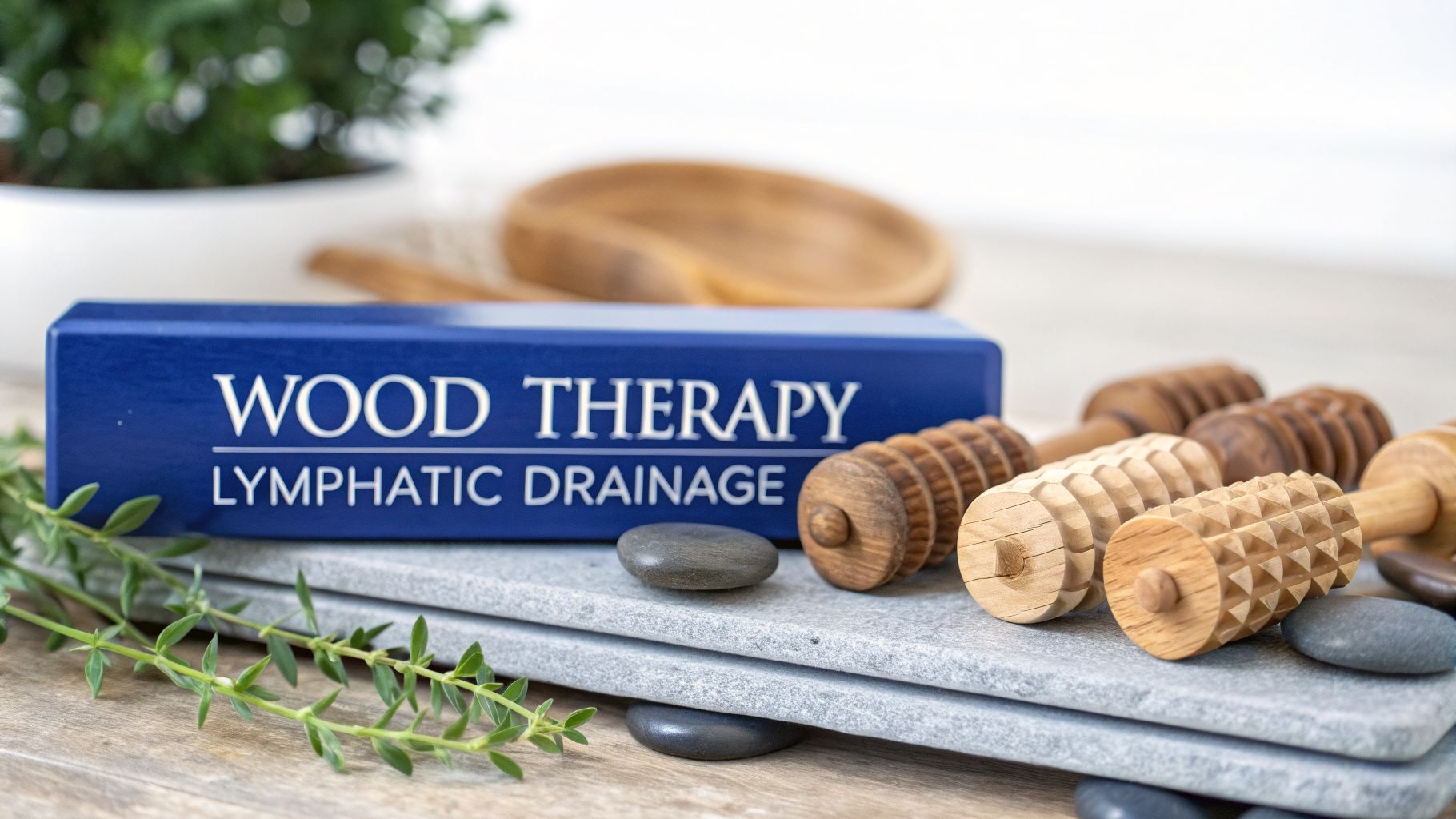
Wood therapy for lymphatic drainage is a hands-on massage technique that uses a collection of specially shaped wooden tools to apply targeted pressure. The goal is to gently persuade your body's natural drainage network to do its job better, encouraging the movement of lymph fluid to reduce puffiness and flush out metabolic waste.
How Wood Therapy Stimulates Your Lymphatic System
Imagine your body's lymphatic system is a slow-moving river, responsible for clearing away debris and waste from your cells. When that river gets sluggish or blocked, you can feel it—that sense of heaviness, puffiness, and general fatigue. Wood therapy is a targeted method designed to get that river flowing freely again.
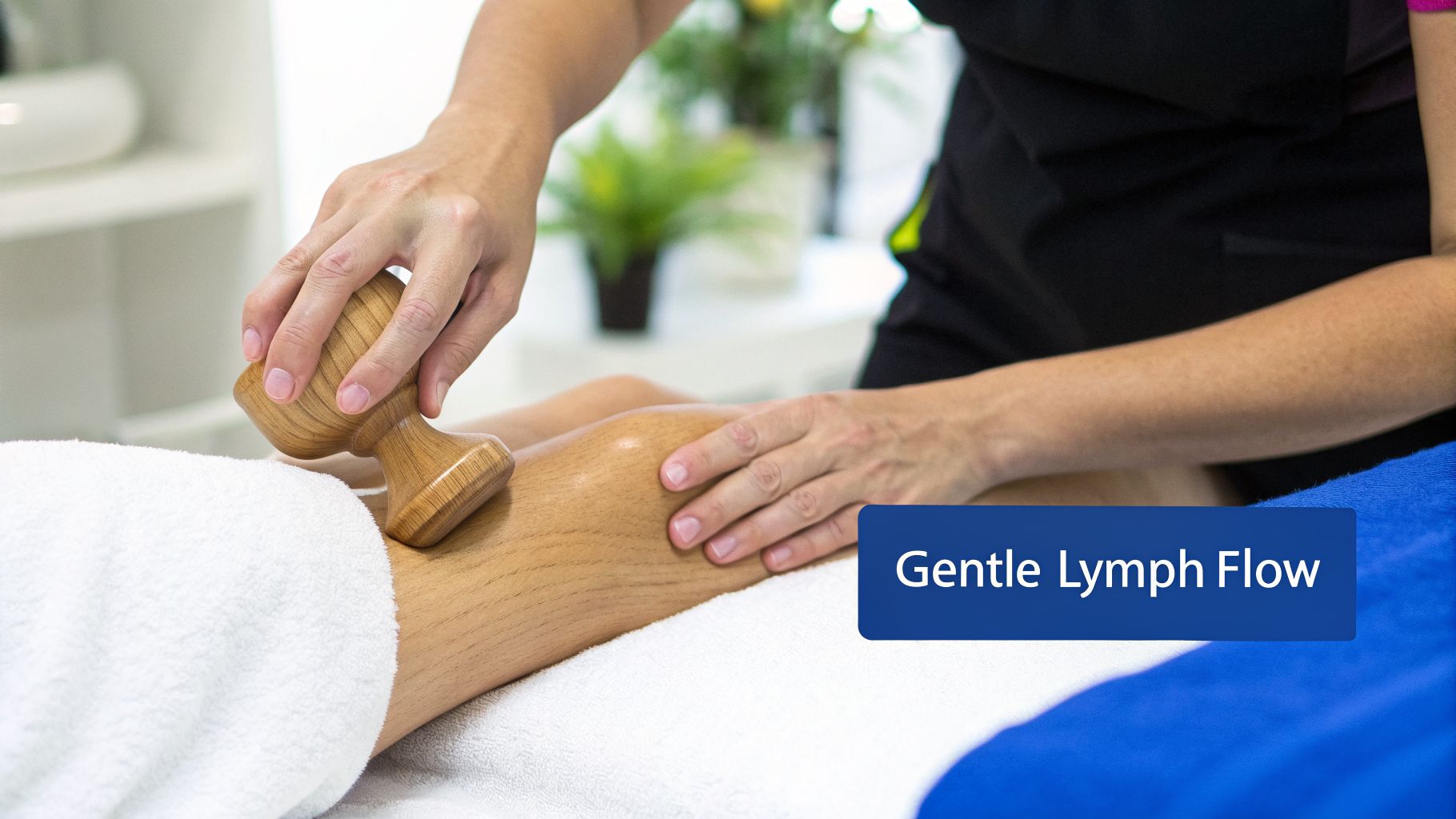
This isn't your typical massage. The technique relies on a curated set of anatomically-designed wooden instruments. Each tool, from grooved rollers to smooth, contoured boards, is crafted to fit specific areas of the body. A skilled therapist uses these tools to apply firm, repetitive strokes that mechanically guide stagnant lymph fluid toward your lymph nodes, where it can be filtered and expelled.
The Core Mechanism of Action
The primary purpose of wood therapy lymphatic drainage is to activate the lymphatic system. The firm, gliding pressure from the wooden tools creates a gentle "pumping" action right at the surface tissues. This directly encourages the superficial lymphatic vessels, which sit just below the skin, to contract and get fluid moving along.
This process is often more direct and targeted than what can be achieved with manual massage alone. The wooden tools allow a therapist to distribute pressure more evenly and deeply, which helps to:
- Break Up Congestion: The tools are excellent at addressing areas where fluid has become stagnant or where fibrous tissue contributes to a bumpy, uneven appearance.
- Direct Fluid Flow: Therapists follow specific patterns and directional strokes, using the tools to guide lymph toward major drainage points in the body, like the lymph nodes in the groin, armpits, and neck.
- Improve Circulation: All this stimulation at the surface also boosts blood flow. This brings fresh oxygen and nutrients to the area while helping to carry away more metabolic waste.
Connecting to Historical Techniques
While the tools are modern, the principles behind wood therapy are well-established. They are an evolution of Manual Lymphatic Drainage (MLD), a gentle massage technique first developed in the 1930s. Danish pioneers Dr. Emil Vodder and his wife Estrid created MLD using light, rhythmic, circular hand movements to stimulate lymph flow, applying pressure of less than 9 oz per square inch (about 4 kPa).
Wood therapy takes these foundational principles and applies them with purpose-built instruments. This allows for a similar, and sometimes more intense, effect with precision.
Wood therapy is the application of foundational lymphatic principles with modern tools. It translates the light, rhythmic hand movements of traditional MLD into a structured, repeatable service that uses instruments to achieve consistent pressure and direction.
This link to MLD is key to understanding its practical role today. Medspas and athletic programs have embraced wood therapy lymphatic drainage because it's a repeatable, non-invasive service that produces a noticeable feeling of lightness and detoxification for clients. By understanding how to move fluid effectively, a therapist can help clients reduce temporary puffiness, improve skin tone, and support their body's natural recovery processes. You can learn more about the broader benefits of lymphatic drainage massage in our related article.
The Science Behind Improved Lymphatic Flow
It’s easy to see wood therapy as just a body sculpting tool, but the real work happens just beneath the surface, within the body’s fluid pathways. The results are not just cosmetic; they stem from a direct influence on your lymphatic system's core functions.
This isn’t just about feeling good. It’s about creating measurable, physiological change, with principles that echo the gold standard of Manual Lymphatic Drainage (MLD).
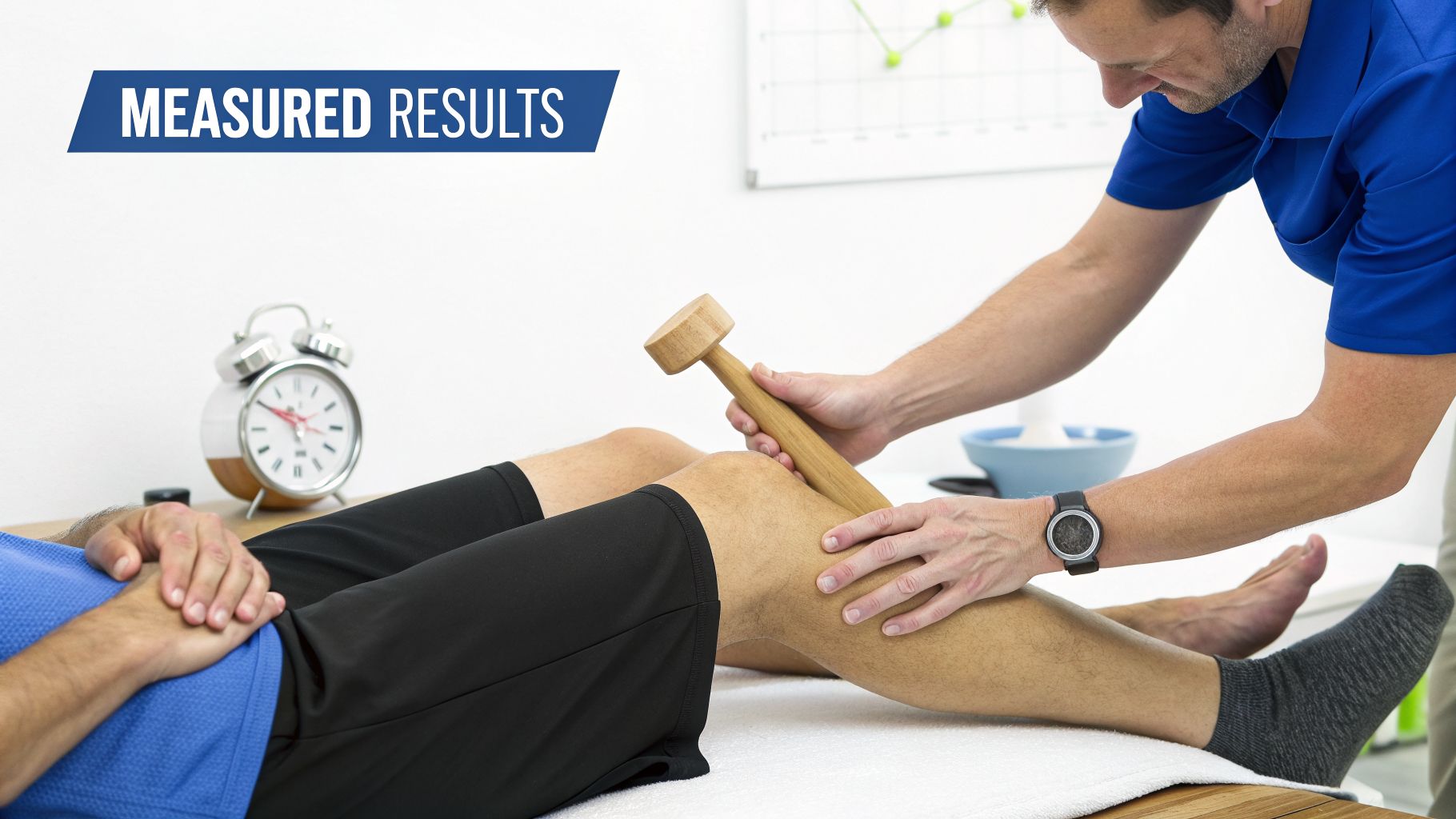
The firm, repetitive strokes of the wooden tools are what get things moving. By applying targeted pressure around 4 kPa, a level similar to that used in clinical MLD, the tools mechanically stimulate the delicate lymph vessels lying just under the skin. This external push encourages the vessels to contract more rhythmically, moving stagnant fluid out of tissues and back into circulation.
A few wood therapy lymphatic drainage sessions don't just provide a temporary flush; they can start to build lasting improvements in how your body manages fluid.
Activating Drainage and Clearing Waste
One of the first things you’ll notice is how efficiently the body starts to clear out metabolic waste. For athletes, this is significant. Strenuous workouts produce byproducts like lactic acid, the culprit behind that familiar muscle burn and next-day soreness.
By kickstarting lymphatic circulation, wood therapy helps shuttle this waste away from muscle tissue faster than the body could on its own. The direct result is quicker recovery times, less post-workout soreness, and a body that’s ready for the next challenge. Because the tools are so precise, a therapist can zero in on hardworking muscle groups like the quads, hamstrings, and calves.
Encouraging New Lymphatic Pathways
Consistent lymphatic work can prompt the body to create new, more efficient drainage routes. It’s like a city’s road network; when a major highway gets congested, smart city planning builds alternate local roads to bypass the traffic jam. Your body can do the same.
This process, known as lymphangiogenesis, is the body’s way of building a more resilient and effective drainage network. By promoting the growth of these new vessels, regular treatments help the body become better at managing fluid, reducing the likelihood of future congestion.
A major review of 457 cases of breast cancer-related lymphedema (BCRL) showed that MLD groups required over 20 sessions to achieve significant reductions in swelling compared to controls, underlining the need for consistency. Other research confirms that MLD helps create these new collateral pathways, a factor for the 1 in 5 post-cancer patients who struggle with this condition. You can explore more on these MLD research findings and their impact on massagemag.com.
This regenerative ability is why wood therapy lymphatic drainage is more than a quick fix. It’s a way to train your body’s internal systems to function at their peak over the long haul.
Comparing Wood Therapy and Manual Massage
While both manual massage and wood therapy are designed to get the lymphatic system flowing, their tools and techniques are quite different. Understanding these distinctions shows why wood therapy has become a go-to for targeted body contouring, athletic recovery, and aesthetic wellness.
Here’s a quick breakdown of how they stack up:
Wood Therapy vs Manual Massage for Lymphatic Drainage
| Feature | Manual Lymphatic Drainage (MLD) | Wood Therapy Lymphatic Drainage |
|---|---|---|
| Tools Used | The therapist’s hands, using light, circular, pumping motions. | A variety of anatomically-shaped wooden tools (rollers, cups, sculpting boards). |
| Pressure | Very light and gentle, designed to stretch the skin and stimulate superficial vessels. | Can range from light to deep, allowing for both superficial and deeper tissue work. |
| Technique | Rhythmic, precise hand movements that follow established lymphatic maps. | Repetitive, firm strokes and rolling motions that cover large areas efficiently. |
| Typical Use | Clinical settings for lymphedema, post-surgical swelling, and delicate conditions. | Medspas and athletic facilities for body contouring, cellulite reduction, and muscle recovery. |
The key advantage of wood therapy is the tools' ability to apply consistent, even pressure over large areas and go deeper into the tissue. This makes it very effective for breaking up stubborn fluid retention and fibrous tissue linked to cellulite.
A therapist can achieve a level of intensity and uniformity with wooden tools that’s tough to replicate with hands alone. This makes it a great service for clients who want to see and feel tangible results, both aesthetically and functionally.
So, who is the perfect client for a wood therapy lymphatic drainage service? The first thing to understand is that this is a wellness service, not a medical treatment for conditions like lymphedema. It’s designed for a broad audience seeking everything from aesthetic touch-ups and faster physical recovery to a general feeling of lightness and detoxification.
Pinpointing these client groups is important. When you know who you're talking to, you can craft a message that speaks directly to their goals, whether they're stepping into your medspa or your athletic training facility. The service resonates most with healthy individuals looking for a natural, non-invasive edge to either fine-tune their appearance or supercharge their body's own recovery systems.
The Medspa and Aesthetics Client
Your biggest audience will almost certainly come from the aesthetics world. These are clients who are already committed to their self-care routines and are actively searching for natural ways to address common body concerns. They aren’t looking for a magic weight-loss solution; they’re focused on refining body contours and improving skin quality.
Ideal profiles you'll see in a medspa setting include:
- The Post-Procedure Patient: Anyone recovering from procedures like liposuction or a tummy tuck is a prime candidate. Wood therapy is fantastic for helping manage the inevitable post-op swelling and fluid retention, which can lead to a smoother and faster healing journey.
- The Body Contouring Enthusiast: This client is focused on sculpting their shape and minimizing stubborn pockets of fat on the abdomen, thighs, or arms. For them, wood therapy is a powerful, non-surgical tool for refining their silhouette.
- The Cellulite-Conscious Individual: Many clients walk in the door with one goal: reducing the dimpled appearance of cellulite. Wood therapy's ability for breaking down tight, fibrous bands and boosting local circulation makes it an attractive option for this specific concern.
These clients understand that consistency is needed for visible results and are often ready to commit to packages of 6-10 sessions.
The Athlete and Fitness Enthusiast
The next key demographic is athletes and everyday fitness lovers who put a premium on performance and recovery. For this group, the appeal is functional, not just aesthetic. They demand a lot from their bodies and need to bounce back quickly between training sessions, practices, and competitions.
Wood therapy offers athletes a tangible edge by accelerating the body's natural clean-up crew. By flushing metabolic waste like lactic acid from muscle tissue, it helps reduce soreness and gets them back to training faster and more effectively.
This group includes:
- Competitive Athletes: From D1 college teams to the pros, any athlete undergoing intense training can benefit from reduced downtime and quicker muscle repair.
- Weekend Warriors: Those fitness buffs who go all-out at the gym or on the court often battle with delayed onset muscle soreness (DOMS). Wood therapy can be their secret weapon for mitigating that post-workout pain.
- Endurance Athletes: Runners, cyclists, and triathletes push their bodies to the limit. This service can help keep their legs feeling fresh and combat the "heavy leg" sensation that plagues so many.
For athletic programs, incorporating wood therapy lymphatic drainage into a recovery protocol is a strategic move. It can directly impact athlete availability and help maintain performance consistency all season long.
The Wellness and Biohacking Community
Finally, a growing and highly engaged audience is emerging from the wellness and biohacking space. These are people who take a proactive, systems-level approach to their health. They're constantly seeking ways to optimize their body's functions, and they see lymphatic health as a core pillar of overall well-being.
This client might not have a specific aesthetic complaint but often reports feeling "sluggish," "puffy," or "stuck." They’re looking for a way to feel lighter, more energetic. They gravitate toward therapies that support the body’s innate intelligence, and your marketing to them should emphasize the internal benefits—like improved circulation, a supported immune system, and a deep sense of detoxification.
Combining Wood Therapy with Other Recovery Technologies
Wood therapy is a fantastic standalone treatment for lymphatic drainage, but its real power comes to light when you pair it with other advanced recovery technologies. Think of it as creating a complete protocol—a one-two punch that addresses your body’s circulation and fluid management from every angle. By layering these modalities, you deliver faster, more comprehensive results that set your services apart.
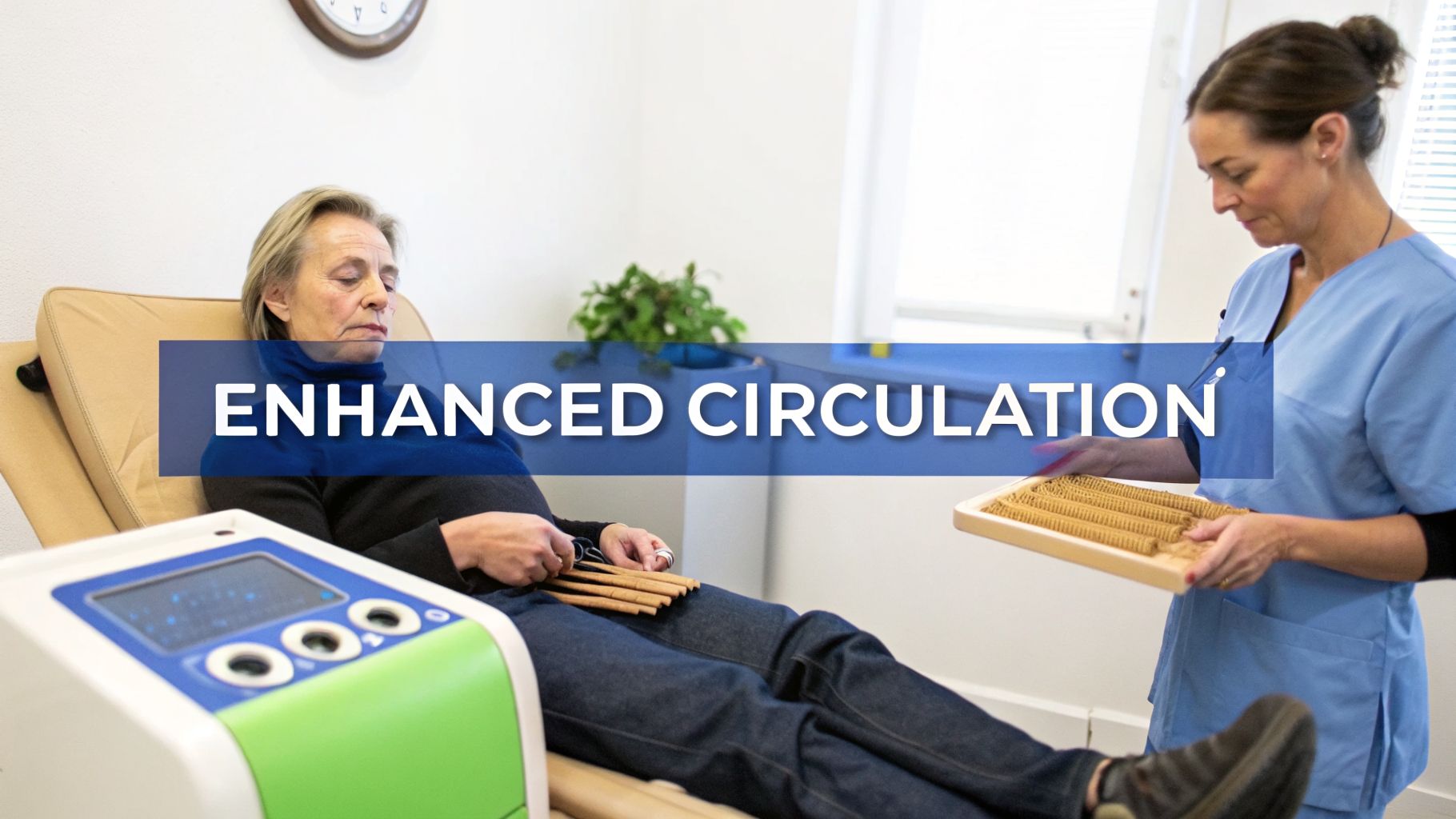
This synergy works because each treatment plays a specific, complementary role. Wood therapy is the targeted, hands-on work that gets things moving. A device like the Vacustyler then comes in to provide a systemic, automated flush that clears everything out.
The Power of a Two-Step Protocol
This approach creates a far more complete treatment than either modality could achieve alone. Wood therapy acts as the manual "prep work," while the Vacustyler delivers the powerful finishing touch. It's a combination that elevates the client's experience and, just as importantly, maximizes your business's efficiency.
Here’s a practical look at how this synergy unfolds in a session:
- Step One: The Manual Tune-Up. A therapist performs a 30 to 45-minute wood therapy session, zeroing in on specific areas of concern like the thighs, buttocks, and abdomen. Using the wooden tools, they manually break up stubborn fluid pockets and work on fibrous tissue. This step effectively "loosens" the congestion, priming the body for a much more effective systemic flush.
- Step Two: The Systemic Flush. Immediately after, the client moves to the Vacustyler for a 20 to 30-minute session. Inside this pod, intermittent negative pressure waves are applied to the entire lower body. This creates a passive but powerful "pulling" effect, accelerating circulatory and lymphatic flow from the feet upward and efficiently flushing out all the fluid that the wood therapy just mobilized.
This combination is so effective because it tackles lymphatic drainage on two fronts: locally and systemically. You can learn more about using technology to support lymphatic flow in our guide on lymphatic drainage and light therapy.
Maximizing Results and Efficiency
The operational genius of this combined protocol is its efficiency. While the wood therapy portion requires the hands-on time of a skilled therapist, the Vacustyler session is almost entirely unattended. This immediately frees up your staff to begin with another client while the first one completes their recovery session.
This unattended time is a massive business advantage. It lets you stack appointments and significantly increase your facility's daily capacity without having to hire more staff.
The combination of hands-on wood therapy and automated vacuum therapy creates a superior client outcome. Wood therapy provides the targeted, manual work to break up specific problem areas, and the Vacustyler follows with a systemic flush that enhances the overall effect, giving the client an immediate feeling of lightness and detoxification.
This two-step process doesn't just produce better results; it transforms the service into a premium experience. Clients feel they are getting a comprehensive, multi-faceted treatment that addresses their goals from multiple angles. This perception naturally justifies a higher price point and makes package deals an easy sell.
That immediate sensation of lightness clients feel post-session is your most powerful marketing tool. It’s a tangible result that reinforces the value of the treatment, driving repeat business and word-of-mouth referrals. It shifts the conversation from a simple "massage" to a sophisticated recovery protocol designed for peak wellness and aesthetic improvement.
How to Implement Your Wood Therapy Service

Adding a wood therapy lymphatic drainage service to your menu is about more than just buying a set of tools. It's about creating a complete client experience built on a solid protocol, from the first conversation to post-session care.
A successful program hinges on safety, clear client education, and a structured session that delivers consistent results. This approach ensures clients not only feel the benefits but also understand the why behind the process, building the trust that turns first-time visitors into loyal regulars.
Conducting the Initial Client Consultation
Before a single tool touches the skin, a detailed conversation is non-negotiable. This is your chance to understand what your client is hoping to achieve, whether it's reducing the appearance of cellulite, speeding up athletic recovery, or just feeling less sluggish.
Your role here is to set realistic expectations. Be upfront that wood therapy is a cumulative process. While a client might feel lighter and more refreshed after one session, visible changes in body contour or texture take time and a series of treatments.
This is also the moment to screen for contraindications. Client safety is always priority number one, and wood therapy isn't for everyone. Key conditions to watch for include:
- Active Infections: The treatment could potentially spread the infection systemically.
- Deep Vein Thrombosis (DVT): Applying pressure could dislodge a blood clot, which is a serious medical risk.
- Certain Cardiovascular Conditions: Always get clearance from a client's physician if they have a history of heart issues.
- Pregnancy: Abdominal work is off-limits, and you should proceed with caution on other areas.
- Active Cancer: The increased circulatory and lymphatic activity could interfere with medical protocols.
Always start with a detailed intake form. Documenting a client's health history and getting signed consent protects both your business and your client, making sure everyone is on the same page before you begin.
A Step-by-Step Wood Therapy Session Flow
A well-defined session flow is the key to consistency and effectiveness. While every session can be customized to target specific concerns, the foundational steps should always remain the same.
-
Prepare the Skin: Begin by applying a high-quality massage oil or cream to the area you'll be working on. This is essential—it allows the wooden tools to glide smoothly over the skin, preventing any uncomfortable friction or irritation.
-
Begin with Broad Tools: Start with larger, gentler tools like the grooved rolling pin. Your goal here is to warm up the tissue and gently wake up the surface-level circulation. Use long, rhythmic strokes, always moving in the direction of the body’s lymphatic pathways—toward the closest cluster of lymph nodes (for example, moving up the legs toward the groin).
-
Introduce Sculpting and Deep Work: Once the tissue is warm and prepped, you can switch to more specialized instruments like the sculpting board or the "mushroom." These tools allow you to work on specific areas of congestion, help break up fibrous tissue, and address the dimpled look of cellulite. The pressure can be firmer here, but it should never be painful.
-
Finish with Calming Strokes: End the session by returning to the broad rollers. Use lighter, soothing pressure to calm the treated area and give the lymphatic system one final, gentle push. This helps reduce any redness and leaves the client feeling deeply relaxed.
Research backs up this methodical approach. One analysis of 457 cases showed that over 20 sessions were needed to significantly reduce edema, proving the value of a consistent treatment plan. By encouraging muscle fiber regeneration and clearing out waste, wood therapy directly addresses the symptoms of poor drainage that affect up to 80% of clients looking for these kinds of services. You can dive deeper into the research on how manual techniques support lymphatic health at LymphaticHealthClinic.com.
Setting the right treatment frequency is needed for seeing these results. For an initial series, recommend sessions 2-3 times per week. Once a client has completed their package, a monthly maintenance session is a great way to preserve their benefits, making service packages a natural and effective part of your business model.
Packaging and Marketing Wood Therapy Services
Mastering the technique of wood therapy lymphatic drainage is just the first step. To make it a success, you need a smart business strategy. How you package, present, and price this service will make all the difference for your client retention, revenue, and overall profitability.
The key is to move your clients beyond thinking of it as a one-time treat. You want to frame wood therapy as an essential part of a cumulative wellness or aesthetic program. This encourages commitment and ensures clients get the consistent treatments they need to see incredible results—which, in turn, proves the value of what you do.
Building Compelling Service Packages
Single sessions are your foot in the door, but packages and memberships are how you build a loyal following. They secure future revenue and give clients a clear, structured path to reaching their goals. Think about who you're serving and build your offers around them.
- The Body Contouring Starter: This is a package of 6 to 10 sessions, offered at a slight discount over paying one by one. It’s the perfect entry point for new clients focused on aesthetic improvements like cellulite reduction, where consistency delivers visible changes.
- The Post-Procedure Recovery Plan: A focused series of 4 to 6 sessions is ideal for clients healing from procedures like liposuction. You can market this as a part of their recovery, helping to speed up healing, reduce swelling, and refine their final results.
- The Athlete Recovery Membership: A monthly membership offering weekly or bi-weekly sessions is a huge draw for athletes and dedicated gym-goers. It becomes part of their regular maintenance for easing muscle soreness and boosting performance.
- The Detox & Debloat Duo: This is your premium combination. A hands-on wood therapy session followed immediately by time in the Vacustyler. It’s a powerful one-two punch, offering both a targeted manual flush and a deep, systemic cleanse. This combo delivers an immediate "wow" factor that easily justifies a higher price.
By bundling services, you shift the client's mindset from "Should I book another session?" to "When is my next scheduled session?" This simple change is fundamental to creating recurring revenue and maximizing client lifetime value.
Marketing That Connects and Converts
Your marketing has to be clear, honest, and focused on the benefits. Talk about the real, tangible feelings and visible improvements clients can look forward to. Always stress that wood therapy is a non-invasive, natural method that helps the body do its job better.
One of your most powerful marketing tools is the immediate feeling of lightness and reduced puffiness clients get right after their first session. That instant gratification is what gets them excited for more. In your ads, social media, and website, use phrases that speak directly to their goals, like "sculpt your body naturally" or "accelerate workout recovery." Of course, visuals are everything—compelling before-and-after photos (with client consent!) showing a visible reduction in fluid retention can be incredibly persuasive. For more ideas, take a look at our guide to effective marketing strategies for beauty and wellness businesses.
Finally, you have to know your numbers. Use a simple ROI calculator to see how profitable this service can be. Model out your costs, from staff time to supplies, against different package prices and your client capacity. Understanding your potential return on investment gives you the confidence to price your packages effectively and shows exactly how wood therapy lymphatic drainage can become a high-margin cornerstone of your business.
Your Top Questions About Wood Therapy, Answered
When people first hear about wood therapy, a few key questions always come up. It's a hands-on, physically intensive treatment, so it's natural to wonder what it feels like and what to expect.
We've put together answers to the most common queries to give you a clear picture of the experience, from the first session to long-term results.
Is Wood Therapy Painful?
A professionally performed wood therapy session should never be painful. The best way to describe the sensation is as an intense, deep-tissue massage. While the pressure is firm and targeted, it’s always meant to be therapeutic, not uncomfortable.
You might feel some tenderness, particularly in your first few sessions or on areas with more stubborn cellulite or fluid retention. This is completely normal and fades as your body adapts. The key is communication—always let your therapist know how you're feeling so they can adjust the pressure for your comfort.
What Does a Session Feel Like?
A wood therapy lymphatic drainage session is a unique blend of invigorating and relaxing. Your therapist starts by applying oil to your skin, which allows the specialized wooden tools to glide smoothly without friction.
They'll then use a series of different instruments in rhythmic, repetitive motions. You'll feel a combination of deep rolling, focused sculpting, and firm pressure that works through specific muscle groups and areas of lymphatic congestion. Most people walk out of a session feeling noticeably lighter, less bloated, and with a warm sense of increased circulation.
How Many Sessions Do I Need to See Results?
While you'll likely feel lighter and less puffy after just one session, visible, lasting changes are all about consistency. For goals like significant cellulite reduction and body contouring, a dedicated series of treatments is the only way to go.
- Initial Series: Most clients see distinct, measurable improvements after a series of 6 to 10 sessions.
- Frequency: For the best outcomes, these initial sessions are typically scheduled 2 to 3 times per week.
- Maintenance: Once you've achieved your desired results, a monthly session is a fantastic way to maintain tissue health and keep your lymphatic system running smoothly.
The benefits of wood therapy are cumulative. Each session builds on the last, helping to retrain your lymphatic system and reshape connective tissue over time. Consistency always wins over intensity.
What Are the Side Effects?
The side effects are almost always mild and short-lived. The most common things you might notice are:
- Mild Bruising: Some light bruising can happen, especially in areas with significant fluid buildup or fascial adhesions.
- Tenderness: The treated areas might feel a bit sore, much like they would after a challenging workout.
- Redness: Your skin may look flushed right after the session. This is just a sign of increased blood flow to the area.
- Increased Urination: This is actually a great sign! It shows your lymphatic system is working overtime to successfully flush out the excess fluid and waste that was mobilized during the treatment.
These effects usually vanish within a day or two. Drinking plenty of water after your session is important—it helps your body process the released fluids and minimizes any temporary discomfort.
Ready to experience the powerful, non-invasive benefits of lymphatic drainage for yourself? The Vacustyler at Weyergans HighCare US offers a German-engineered approach to boost circulation, accelerate recovery, and improve aesthetic results in just 20-30 minutes. Discover how our vacuum and red light therapy pod can complement your wellness routine and provide that immediate feeling of lightness and refreshment. Learn more about the technology at weyerganshighcareus.com.