


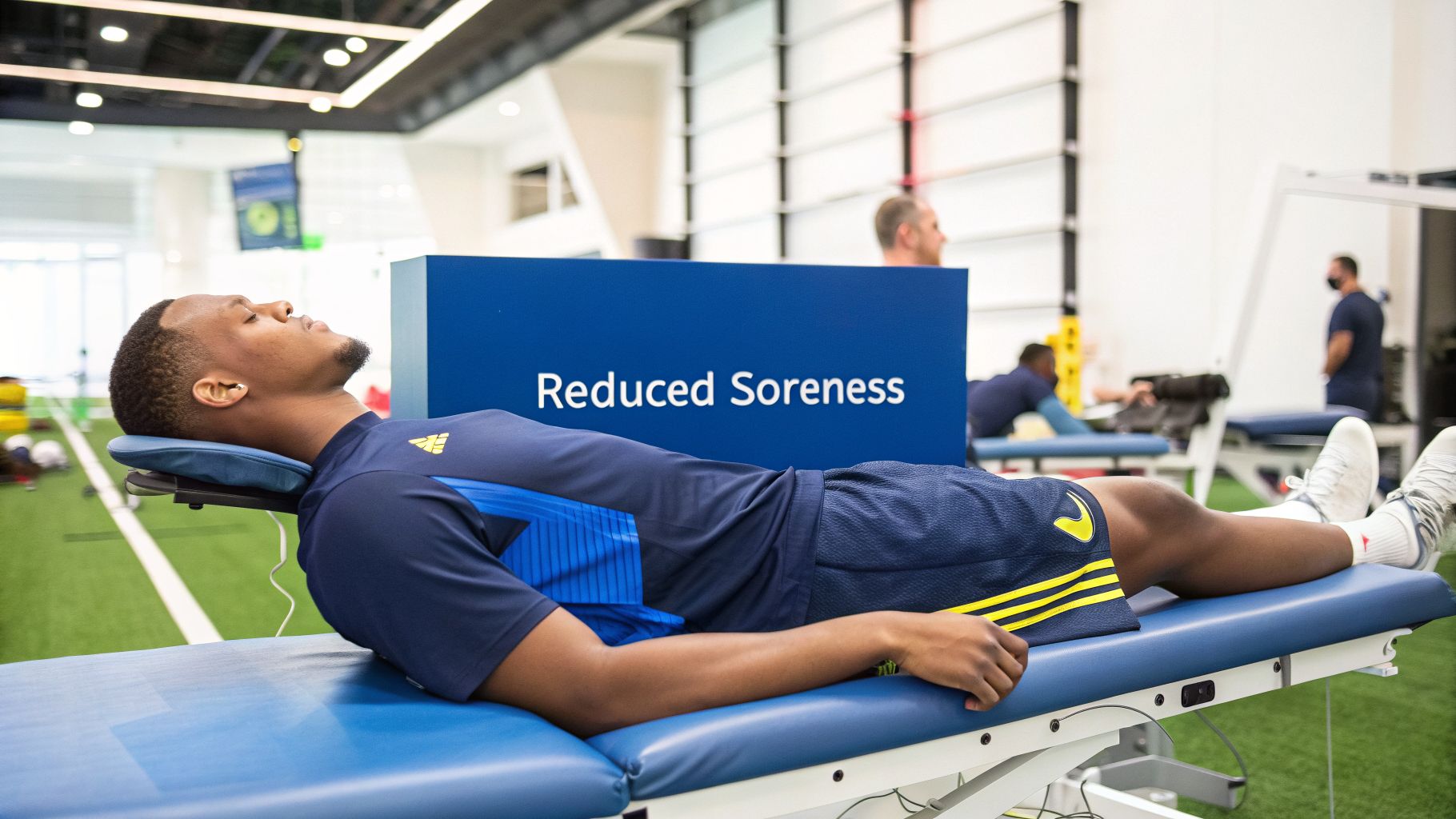
That familiar, satisfying ache you feel a day or two after a good workout is a sign of progress. Your muscles are adapting and getting stronger.
This feeling is called Delayed Onset Muscle Soreness (DOMS), and while it’s a positive signal, you don’t have to suffer through it. With the right strategies, you can manage it, get back to your routine faster, and keep your training consistent.
Why your muscles ache after a workout
When you challenge your body with a new exercise or push the intensity, you create tiny, microscopic tears in your muscle fibers. This is exactly what you want. It signals your body to rebuild the muscle stronger.
The soreness that kicks in 12 to 48 hours later is the feeling of your body’s natural repair crew at work. This includes some inflammation and fluid rushing to the area to start the healing process.
While some soreness shows your training is effective, too much can interfere with your next workout or even just walking up stairs. The goal isn't to eliminate the feeling entirely, but to keep it manageable so you can stay active.
Foundational strategies for recovery
You're not alone in looking for a solution. The global market for muscle pain treatment was valued at USD 4,531 million in 2023 and is on track to more than double by 2033. This growth is driven by people looking for effective ways to manage soreness from workouts and daily life. You can look at the trends in muscle pain treatment to see how big the demand for relief has become.
Fortunately, the best ways to start are often the simplest. It’s about creating the right environment for your body to repair and rebuild.
Here are four simple, essential habits to improve your recovery:
- Active Recovery: Gentle movement is one of the best things you can do for sore muscles. Think light walking, easy cycling, or a relaxed swim. This gets your blood flowing, delivering a fresh supply of oxygen and nutrients to your tired muscles while helping to flush out metabolic byproducts that make you feel stiff.
- Proper Hydration: Being even slightly dehydrated can make muscle soreness feel much worse and slow your recovery. Your body relies on water to transport healing nutrients and clear out waste products from damaged tissue. Keep a water bottle handy and sip consistently, especially after you train.
- Smart Fueling: Your muscles are hungry after a workout. Giving them the right fuel is necessary. A combination of protein and carbohydrates right after you train provides the building blocks to repair muscle fibers and restock the energy you burned.
- A Solid Cool-Down: Don’t just finish your last rep and leave. Taking five or ten minutes for a proper cool-down helps your body transition from all-out effort back to rest. Gentle stretching can improve flexibility and help prevent blood from pooling in the muscles as they begin to repair.
These foundational strategies are the basis of any good recovery plan. Before looking into advanced therapies, make sure these simple but powerful habits are in place. They cost nothing and make a big difference.
Foundational strategies for reduced muscle soreness
Here’s a quick summary of the most effective and accessible ways to manage that post-workout ache. These should be your first line of defense.
| Strategy | How It Works | Simple Application |
|---|---|---|
| Active Recovery | Increases blood flow to deliver oxygen and nutrients while flushing out metabolic byproducts. | Go for a 20-minute walk or a light bike ride the day after a hard workout. |
| Hydration | Helps nutrient transport and waste removal, preventing cramps and reducing soreness intensity. | Drink water consistently throughout the day, not just when you feel thirsty. |
| Nutrition | Provides protein (for repair) and carbs (for energy replenishment) to rebuild damaged muscle fibers. | Have a protein shake with a banana or a meal with chicken and rice within an hour of training. |
| Cool-Down | Gradually lowers heart rate and helps prevent fluid pooling, promoting flexibility during recovery. | Spend 5-10 minutes doing gentle static stretches for the muscles you just worked. |
Mastering these basics will dramatically improve how you feel day-to-day and set you up for long-term success in your training. They are essential for anyone serious about performance and feeling good.
How circulation speeds up muscle repair
Think of your circulatory system as a logistics network for your body. When you push your muscles hard and create those tiny micro-tears, this network kicks into high gear. It’s a system of delivery trucks and waste disposal crews, all working to get you back on your feet.
If that network is slow or congested, the entire repair process slows down.
On the delivery side, oxygen-rich blood rushes nutrients like amino acids directly to the damaged muscle fibers. These are the building blocks your body uses to patch things up, rebuilding the tissue stronger than it was before.
At the same time, the waste removal crew is just as important. Intense exercise creates metabolic waste, like lactate and other cellular debris, that builds up and leaves your muscles feeling heavy and sore. Efficient circulation flushes that stuff out, which is the key to achieving reduced muscle soreness and losing that heavy feeling in your legs.
Manually boosting your body’s repair system
Most popular recovery methods are all designed to do one thing: manually kickstart this circulatory process. They give your body's natural system a helping hand.
- Massage Therapy: The pressure from a massage physically pushes congested blood out of the way, allowing fresh, nutrient-rich blood to flood in as soon as the pressure is released.
- Contrast Therapy: Switching from a hot shower to a cold plunge forces your blood vessels to expand and constrict. This creates a natural pumping action that pushes blood through your tissues.
- Foam Rolling: Much like massage, a foam roller applies targeted pressure to break up adhesions and get blood flowing into tight areas. You can learn more about improving blood circulation naturally right here.
The global demand for muscle pain relief is a large, expanding market, projected to hit USD 42.38 billion by 2025. This growth is driven by people looking for easy, effective ways to manage their own soreness, with self-care technologies leading the charge.
This trend points to a need for smarter, more efficient recovery tools. Modern technologies that can optimize circulation without requiring more physical effort from a tired body are the next step. They work on the same principles of delivering nutrients and clearing waste, but with more precision and ease than old methods.
Using pressure and light to improve recovery
We've all used a foam roller or booked a massage to work out kinks in sore muscles. These methods work by manually pushing blood and fluid through tissue. But what if you could automate that process, making it more efficient and targeted?
That’s the idea behind the Vacustyler Avantgarde. It uses a combination of pressure and light to tackle muscle soreness at its source by improving circulation without you having to do anything.
At the heart of this technology is Intermittent Negative Pressure (INP), which has roots in space medicine. Instead of compressing your legs like traditional boots, INP creates gentle, rhythmic vacuum waves around your lower body.
Think of it as a passive circulatory pump. During the vacuum phase, the negative pressure gently pulls fresh, oxygen-rich blood into the smallest capillaries of your legs and lower torso. When the pressure returns to normal, this fresh blood flow helps push out the metabolic waste products that cause post-workout ache. It’s an effortless ebb and flow that cleanses your tissues from the inside out.
The power of two technologies in one
The Vacustyler also integrates medical-grade red and near-infrared light therapy directly into the chamber, creating a one-two punch for recovery. The light works in sync with the pressure changes to support your body's repair processes at the cellular level.
- Red Light (635 nm): This wavelength primarily works on the surface layers of the skin, where it's known to support collagen production and improve skin tone.
- Near-Infrared Light (850 nm): This is the heavy hitter for muscle recovery. It penetrates deeper into your muscle tissue to reach the mitochondria—the power plants of your cells. This helps boost cellular energy production and reduce inflammation, a driver of muscle soreness.
The demand for effective recovery is growing. The global market for recovery tools is projected to grow from USD 1.5 billion in 2025 to an estimated USD 3.5 billion by 2035. This growth is driven by athletes and everyday fitness enthusiasts who want to minimize downtime and stay consistent.
This dual-action approach makes the system effective. The pressure waves handle the circulatory flush, while the light therapy works on a microscopic level, giving your cells the energy they need to repair. You can take a deeper look at the science behind how negative pressure supports circulation in our detailed guide.
The best part? The entire session is over in just 20 minutes. You simply lie back and relax while the technology does all the work. Users often report feeling noticeably lighter and more refreshed immediately after, making it an efficient way to supercharge your body's natural recovery cycle.
Who benefits most from this technology?
While anyone can feel the difference better circulation makes, this technology is a game-changer for specific groups who put their lower body through intense work. Because the sessions are passive, it’s a powerful tool for anyone needing efficient recovery without adding more physical stress.
Let’s look at a few examples of how different people can fit this into their routines.
The competitive cyclist
A cyclist’s performance comes from their legs. After hours hunched over the handlebars, muscles feel heavy, turning back-to-back training days into a grind. A Vacustyler session is the perfect post-ride protocol to get ahead of that fatigue.
- Primary Goal: Flush out metabolic waste from the quads, hamstrings, and calves to feel fresh for the next day's training.
- Recommended Use: A 20-minute session within a few hours of a tough ride or race. This helps clear the byproducts that cause deep leg fatigue and soreness, which is needed for stacking quality training blocks.
The result is less forced downtime and the ability to maintain a higher level of performance all season.
The marathon runner
For marathoners, logging high mileage is necessary, but that volume takes a massive toll. Soreness and general leg fatigue are constant battles. This technology is a smart way to manage the cumulative stress that builds up week after week.
By proactively managing circulation and inflammation, runners can address the micro-damage from long runs before it becomes a bigger problem. It’s about staying ahead of the fatigue curve to avoid overtraining.
- Primary Goal: Alleviate the deep muscle ache from running on pavement and improve overall tissue health.
- Recommended Use: One to two sessions per week during peak training, especially after a long run. A pre-race session can also help the legs feel light and ready to go.
The busy executive
You don't have to be a professional athlete to feel the benefits. Consider the busy professional who squeezes in high-intensity interval training (HIIT) classes or the person who spends all day on their feet. They also deal with significant leg fatigue and soreness.
- Primary Goal: Quick, efficient recovery that fits into a packed schedule and combats the effects of both intense workouts and a demanding job.
- Recommended Use: A 20-minute session during a lunch break or at the end of a long week. It provides a noticeable feeling of lightness and rejuvenation, and the integrated red light offers a nice aesthetic boost for skin tone.
This approach makes high-end recovery accessible to everyone, turning a quick, relaxing session into a powerful tool for everyday wellness.
Sample session protocols by user type
Here’s a quick guide showing how different clients can use Vacustyler therapy for their specific recovery and wellness goals.
| User Profile | Primary Goal | Recommended Frequency |
|---|---|---|
| Endurance Athlete | Accelerate muscle recovery post-training, reduce DOMS | 1-3 sessions per week, ideally post-workout |
| Wellness Enthusiast | Improve circulation, lymphatic drainage, reduce leg heaviness | 1-2 sessions per week for maintenance |
| Busy Professional | Combat effects of prolonged sitting/standing, quick rejuvenation | 1 session per week or as needed for a reset |
| Aesthetic Client | Improve skin tone and firmness in the lower body | 2-3 sessions per week as part of an initial series |
These are just starting points. The best protocols are always tailored to the individual’s lifestyle, training load, and personal response to the therapy.
Integrating recovery tech into your wellness business
For any medspa operator, athletic director, or wellness center manager, bringing in new equipment is a business decision. The Vacustyler Avantgarde was designed to be a high-margin asset that demands minimal hands-on time from your staff, making it a sound operational choice.
The sessions themselves are mostly unattended, typically running for 20 to 30 minutes. This creates an efficient business model. A client can be relaxing in the device while your staff is free to manage other clients. This low labor cost per session leads to a healthier bottom line and a faster return on investment.
Creating high-value wellness packages
One of the smartest features of this technology is how well it pairs with your existing services. It's not just another standalone treatment; it's an enhancement that makes what you already offer more valuable. This synergy helps create compelling packages that attract new clients and keep them coming back.
Consider the pairings:
- With IV Therapy: A client can get an IV drip while simultaneously enjoying a Vacustyler session. This creates a two-in-one wellness experience that saves them time.
- With Personal Training: Offer a post-workout recovery session right after training. It’s an immediate solution for reduced muscle soreness and becomes an easy upsell.
- With Body Contouring: Use it before a body contouring treatment to help prime the tissue by improving circulation, which can lead to better outcomes.
- With Aesthetic Treatments: The built-in red light therapy supports skin tone and rejuvenation, making it an ideal companion to facials or other skin-focused services.
This ability to "stack" services lets you increase your average revenue per client without adding significant time or labor to your schedule.
Building recurring revenue
Beyond selling single sessions, this technology is built for creating a recurring revenue stream. Memberships and multi-session packs are a great way to build client loyalty and generate predictable income. You can position it as a weekly wellness ritual for busy professionals or as an essential part of an athlete's training regimen.
By offering packages—like a "10-Session Leg Rejuvenation" series or a "Monthly Recovery Membership"—you transform a one-time purchase into a long-term client relationship. This model doesn't just boost your revenue; it helps clients get more consistent, noticeable results, turning them into your biggest advocates.
Safety guidelines and best practices
To get the most out of every session, you need to understand the best practices for intermittent negative pressure therapy and know when to avoid it. This technology is a powerful tool for achieving reduced muscle soreness and better circulation, but your safety always comes first.
Before you start, a few simple steps can make a big difference. Make sure you’re well-hydrated; your circulatory system works best when it has plenty of water. It's also a good idea to wear comfortable, loose clothing so nothing interferes with the pressure changes.
During the treatment, your only job is to relax. Most people feel a light pulling or suction sensation on their legs and lower body as the machine cycles through its phases. This is normal and should be comfortable.
When to avoid this therapy
While intermittent negative pressure is safe for most people, it isn't the right fit for everyone. We believe in transparency, and it's important to skip this therapy if you have certain health conditions.
Please talk to a healthcare professional before trying it, especially if any of the following apply to you:
- Acute thrombosis or thrombophlebitis (active blood clots)
- Venous inflammation
- Severe, untreated heart conditions
- Pregnancy
- Recent major surgery on your lower body
- Active infections or inflammatory skin diseases in the treatment area
Being upfront about these contraindications is important. It ensures every user has a safe and effective experience. The goal is to provide a reliable wellness tool that builds trust and delivers consistent results for the right people.
By following these straightforward guidelines, you can use this technology with confidence. It’s about setting realistic expectations and positioning the therapy as a responsible tool for your recovery.
Frequently asked questions
Here are some common questions we hear about using intermittent negative pressure and light therapy to speed up recovery and reduce muscle soreness.
What does a Vacustyler session feel like?
It's a relaxing and hands-off experience. You simply lie down comfortably in the device as it cycles between a gentle vacuum phase and normal air pressure.
Most people describe the feeling as a light, pleasant pulling on their legs, followed by a complete release. It's painless, and many of our clients use the 20-30 minute session to read, listen to music, or rest. The most common feedback right after is an immediate feeling of lightness and less tension in the legs.
How is this different from compression boots?
This is a great question. While both aim to boost circulation, their methods are opposites.
- Compression Boots use positive pressure—they squeeze the limbs from the feet upward to mechanically push stagnant fluid out of the tissues.
- Intermittent Negative Pressure (INP) does the reverse. It uses a vacuum to actively pull fresh, oxygenated blood deep into the capillaries and surrounding tissues.
This process of "pulling" blood in creates a powerful vascular training effect, helping to open up the vessels for a much more thorough circulatory flush. The Vacustyler also integrates red and infrared light to support repair at the cellular level, a feature you won't find in standard compression boots.
When is the best time to use it for muscle soreness?
The ideal timing depends on your goals.
For post-workout recovery, using it within a few hours of your training session is very effective. It helps kickstart the process of clearing out metabolic waste and reduces the inflammation that leads to delayed onset muscle soreness (DOMS). A session the day after a tough workout is also great for relieving existing stiffness and ache.
Some athletes use a pre-activation session to warm up their muscles and supercharge blood flow before a big workout. Others use it on their rest days as a general maintenance tool to keep circulation optimized. The technology's flexibility means it fits into any training or wellness schedule.
Ready to offer your clients the next level of effortless recovery? Weyergans HighCare US provides a modern, science-driven approach to wellness that delivers immediate results. Learn more about the Vacustyler Avantgarde at https://weyerganshighcareus.com.