


If you want to get a handle on muscle soreness, the first thing you need to do is figure out what's actually causing it. There's a huge difference between the dull, satisfying ache you feel after a tough workout and the sharp, immediate pain of a real injury. Getting this right is the foundation of a smart recovery plan, allowing you to bounce back stronger and avoid unnecessary downtime.
Understanding Why Your Muscles Ache After a Workout
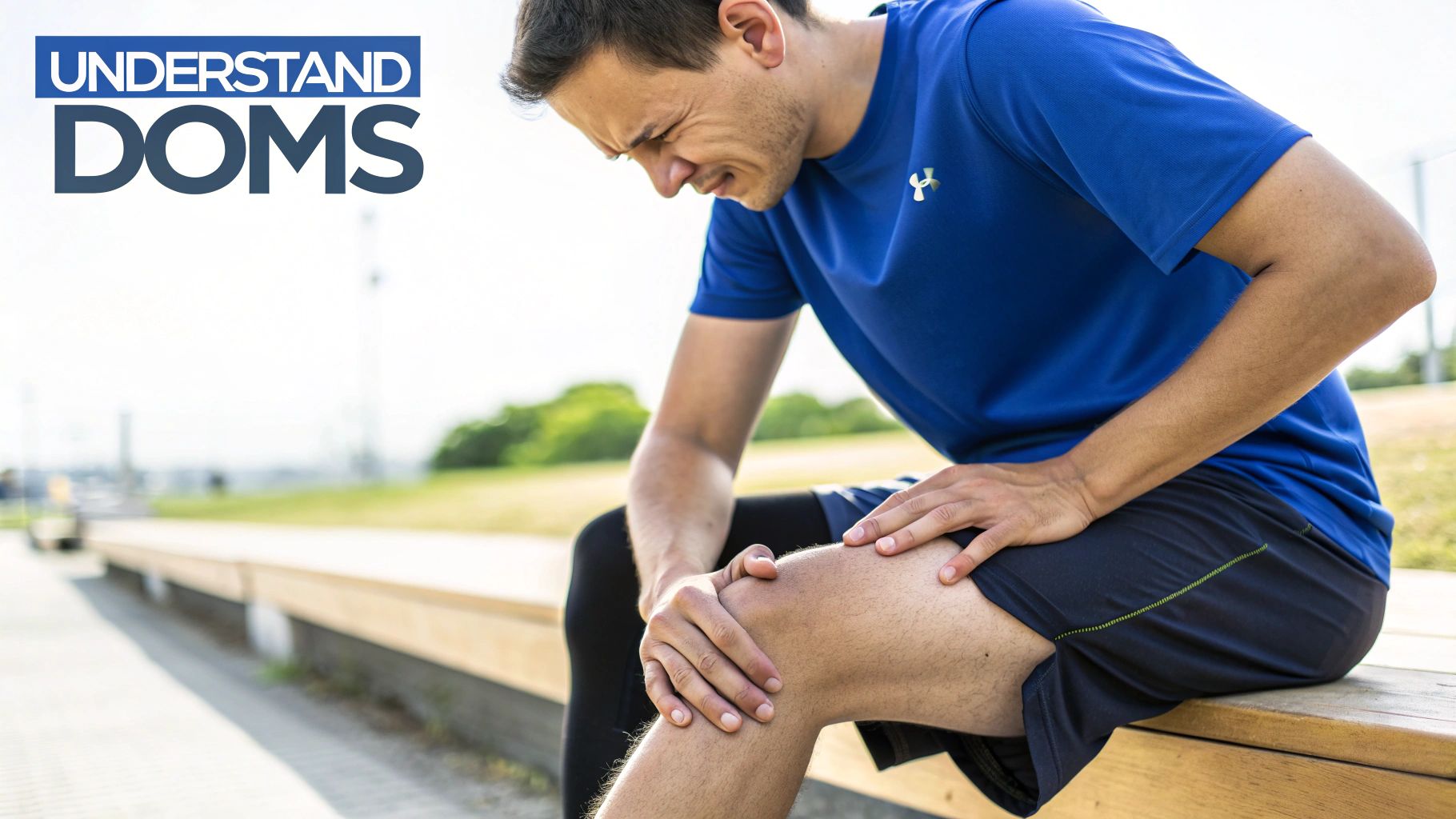
That familiar tenderness that sets in a day or two after you’ve pushed your limits isn't a bad thing. In fact, it's a sign that your muscles are adapting and growing stronger. This sensation has a specific name: Delayed Onset Muscle Soreness, or DOMS for short. It's the physical evidence that you've challenged your body and initiated a positive change.
DOMS happens when you introduce your muscles to a new type of stress, especially from eccentric movements—that’s when a muscle lengthens while under tension. Think about the lowering phase of a bicep curl or the impact of running downhill. These movements create tiny micro-tears in your muscle fibers. These microscopic damages are the catalyst for growth, signaling to your body that it needs to rebuild bigger and more resilient than before.
In response, your body kicks off a natural repair process. It floods the area with fluid and inflammatory cells to clear out the damaged tissue and start rebuilding the muscle fibers stronger than before. This inflammation is what causes that signature stiffness and ache, typically peaking 12 to 48 hours after your training session. Understanding this timeline is crucial; it helps you anticipate the discomfort and plan your recovery efforts accordingly, ensuring you don't mistake this normal response for something more serious.
Distinguishing DOMS from an Injury
It is absolutely vital to know the difference between the "good pain" of DOMS and the "bad pain" of an acute injury. If you get this wrong, you might rest when you don't need to, or worse, push through a serious problem and make it much worse. This distinction is the cornerstone of intelligent training and long-term athletic health.
Here’s a quick way to tell them apart:
- DOMS: Feels like a general, dull ache spread across an entire muscle group. It’s tender to the touch and noticeable when you move, but it usually fades within a few days. The soreness is diffuse and often symmetrical if you worked both sides of the body equally. Light movement, like walking, often helps to temporarily alleviate the stiffness associated with DOMS.
- Acute Injury: This is often a sharp, sudden, or stabbing pain concentrated in a specific spot. You might also see swelling, bruising, or find you can't use the muscle properly. This kind of pain doesn’t go away with light movement and frequently worsens with any attempt to use the affected area. The pain is localized and often traceable to a specific moment or movement during your workout.
For instance, if your entire quad muscles are aching two days after a heavy squat session, that’s classic DOMS. But if you feel a sharp, grabbing pain in your hamstring during a deadlift, that’s a major red flag for an injury that requires immediate cessation of activity and likely professional assessment.
Why Circulation is Key to Recovery
The entire repair process—from clearing out cellular junk to delivering the nutrients needed for rebuilding—is completely dependent on your circulatory system. Think of your blood flow as the highway for recovery. It brings in oxygen and all the building blocks your muscles need while hauling away metabolic waste products like lactate and inflammatory byproducts that contribute to soreness.
Improving your body's circulation is a cornerstone strategy for reducing muscle soreness. When you boost blood flow, you directly support your body’s natural healing, which can cut down both the intensity and duration of DOMS. Better circulation means faster delivery of repair materials and quicker removal of waste, effectively shortening the time your muscles feel stiff and sore. To dig deeper into this, you can learn more about improving blood circulation naturally in our detailed guide. Understanding this link helps you choose recovery methods that actually move the needle.
Your First Hour of Post-Workout Recovery
Those first few moments after your last rep are far more critical than you might think. What you do in this "golden hour" sets the stage for the next few days, often deciding whether you bounce back strong or get sidelined by deep, aching DOMS. Think of this period as a crucial transition from high-stress work to a state of active repair.
This is your prime window of opportunity. It's the time to get ahead of the inflammatory curve and kickstart the repair process before your body even knows what hit it. By taking proactive steps immediately, you can significantly mitigate the severity of delayed soreness.
The biggest mistake I see people make? Stopping cold. Your body has been under immense stress and needs a gentle transition back to a resting state. A proper cool-down is non-negotiable; it allows your heart rate to normalize gradually, prevents blood from pooling in your legs, and begins the crucial process of clearing out metabolic waste. Suddenly stopping can lead to dizziness and hinders the initial phase of recovery.
Building Your Immediate Cool-Down Protocol
Instead of collapsing on a bench and scrolling through your phone, dedicate the first 10-15 minutes after your workout to gentle, intentional movement. We’re not aiming for deep, static stretches here. The goal is to keep the blood flowing and slowly lengthen the muscles you just hammered. This active approach helps shuttle waste products out of the muscles and brings in fresh, oxygenated blood to begin repairs.
Think dynamic, not static. For example, after a brutal leg day, your cool-down might look like this:
- Gentle Bodyweight Squats: Perform slow, controlled squats with just your body weight, focusing on a smooth, full range of motion.
- Leg Swings: Hold onto a rack or wall for support and gently swing one leg forward and back, then side to side. This is fantastic for loosening up tight hip flexors and glutes.
- Walking Lunges: Use your body weight for slow, deliberate lunges, feeling the stretch in your hip flexors and quads with each step.
This kind of active cool-down is your first line of defense. It keeps nutrient-rich blood circulating to the damaged tissues and signals to your body that the work is done—now it's time to repair.
Leveraging Cold Therapy Strategically
Once your heart rate has settled, you can shift your focus to managing that initial wave of inflammation. This is where a little cold therapy can work wonders. While a full-body ice bath is overkill for most of us, a targeted cold shower can be incredibly effective.
For about 3-5 minutes, aim the cold water directly onto the muscle groups you just trained. If you hit legs, focus the stream on your quads, hamstrings, and calves. The cold triggers vasoconstriction—a narrowing of the blood vessels—which helps blunt the initial inflammatory flood and can minimize swelling before it even starts. This immediate response can significantly reduce the perception of pain and soreness over the next 24 hours.
It's not about stopping inflammation entirely. Remember, inflammation is a necessary part of healing. The goal here is to control the initial, over-the-top response so your body can move into the repair phase more efficiently.
Immediate vs Long-Term Recovery Tactics
Understanding the difference between what you need to do right away and what you should focus on over the next few days is key. Here's a quick breakdown:
| Recovery Phase | Primary Goal | Key Tactics | Example Application |
|---|---|---|---|
| Immediate (First Hour) | Reduce shock, manage inflammation, clear metabolic waste. | Active cool-down, targeted cold therapy, initial hydration. | 10-min dynamic stretching followed by a 5-min cold shower on trained muscles. |
| Long-Term (1-3 Days) | Promote tissue repair, manage soreness, restore function. | Sleep, nutrition, hydration, light activity, massage, compression. | Getting 8+ hours of sleep, eating a protein-rich meal, gentle walking. |
This table shows how your focus should shift from damage control in the first hour to actively supporting the rebuilding process in the days that follow.
This simple two-step routine—a dynamic cool-down plus a targeted cold shower—takes less than 20 minutes but pays huge dividends. It’s a foundational practice that paves the way for deeper recovery later.
The delayed effects of a tough workout are what catch people off guard, with DOMS often peaking 24 to 72 hours later. For elite athletes, the timeline is even longer. One study on female soccer players found it took 4-5 days for their leg strength to fully return after a single match.
This extended recovery window is precisely why pro teams invest so heavily in technologies that enhance circulation and accelerate repair. Shaving even 12-24 hours off recovery time is a massive competitive advantage. For those serious about optimizing their own recovery, adding advanced modalities can be a game-changer. You can learn more about how to supercharge your healing with modern tech and see how it can support your goals.
Using Advanced Tech to Accelerate Healing
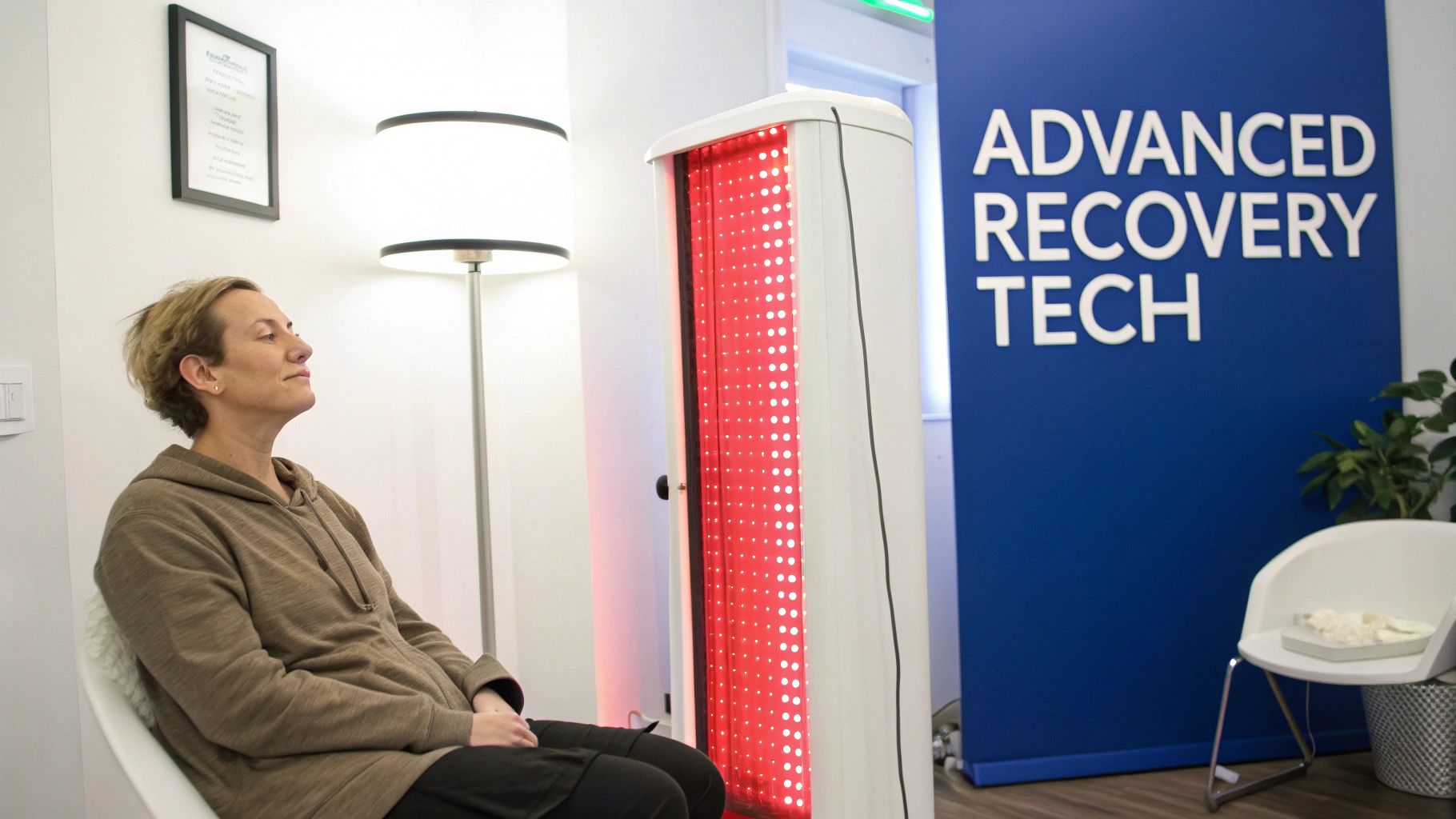
While the fundamentals like cool-downs and proper nutrition are non-negotiable, modern technology gives us some powerful tools to dramatically shorten that recovery timeline. For anyone serious about performance—from elite athletes to dedicated biohackers—these tools go way beyond just managing soreness. They're about true biological optimization.
They work by amplifying your body's own healing processes. We're talking about targeting circulation, inflammation, and cellular energy with a precision that manual methods simply can't touch. It’s all about working smarter to get back to 100% faster. These technologies aren't replacements for foundational habits but powerful amplifiers that can take your recovery to the next level.
The Power of Intermittent Vacuum Therapy
One of the most effective ways to fast-track healing is to supercharge your circulation. That's exactly what Intermittent Vacuum Therapy (IVT) does by creating a gentle, rhythmic vacuum around the lower body. This isn't just a surface-level treatment; it influences the entire vascular system in the targeted area.
Think of it as a passive workout for your cardiovascular system. During the negative pressure (vacuum) phase, your arteries and capillaries dilate, flooding your muscles with fresh, oxygen-rich blood. Then, when the cycle returns to normal pressure, it stimulates the venous and lymphatic systems, pushing out all the metabolic junk that makes you sore.
This process is a game-changer for:
- Boosting nutrient delivery straight to damaged muscle fibers.
- Speeding up the removal of waste like lactate and inflammatory markers.
- Reducing swelling and fluid retention, which is why your legs feel so much lighter afterward.
A typical session is completely passive and lasts around 20-30 minutes, making it an incredibly easy and effective habit to stack onto your post-workout routine.
Energizing Your Cells with Red and Infrared Light
Another heavy hitter in the advanced recovery world is Red and Infrared Light Therapy. This isn't science fiction; it's a non-invasive treatment that uses specific wavelengths of light to penetrate deep into your muscle tissue and interact directly with your cells. The light is absorbed by photoreceptors within the cells, triggering a cascade of beneficial biological events.
On a microscopic level, this light energy gets absorbed by the mitochondria—the "power plants" inside your cells. This kicks off a process that stimulates the production of Adenosine Triphosphate (ATP), which is the fuel for literally every cellular process, especially muscle repair. More ATP means your cells have more energy to heal and rebuild.
Red light therapy essentially gives your recovery a head start by energizing the repair process from the inside out. It's not just masking soreness; it's providing the fundamental energy needed for muscles to mend themselves more efficiently.
A Look at a Real-World Recovery Protocol
So, how does this all come together after a brutal workout? Integrating these tools is surprisingly simple and can make a massive difference in how you feel 24 to 48 hours later.
Let's say you just crushed a leg day. Here’s what a smart, tech-driven recovery session might look like:
- Immediate Post-Workout (0-60 mins): Don't skip the basics. Get your active cool-down and initial hydration in, just as we discussed. This primes the body for the deeper work to come.
- Advanced Recovery Session (Within a few hours): Head to a recovery facility for a targeted 30-minute session. The sooner you can do this after your workout, the better the results.
- The Session: You'll spend about 25 minutes in a device that combines a lower-body vacuum with red light therapy. The vacuum gets to work on circulation in your tired legs while the red and infrared light simultaneously reduces inflammation and boosts cellular energy.
- Post-Session: You’ll walk out feeling an immediate sense of lightness. That heavy, lead-leg feeling will be noticeably reduced. Over the next 24 hours, you'll likely experience less severe DOMS than you normally would.
This kind of focused session can be one of the best recovery tools for athletes or anyone looking to minimize downtime. When you combine modalities, you get a powerful synergistic effect that tackles multiple parts of the recovery puzzle all at once.
The market for these technologies is exploding for a reason. The broader recovery tools industry is projected to hit USD 3.5 billion by 2035, a boom driven by a clear demand for solutions that actually work. People are tired of being sore, and they're looking for effective ways to get back in the game faster.
How to Eat for Better Muscle Recovery
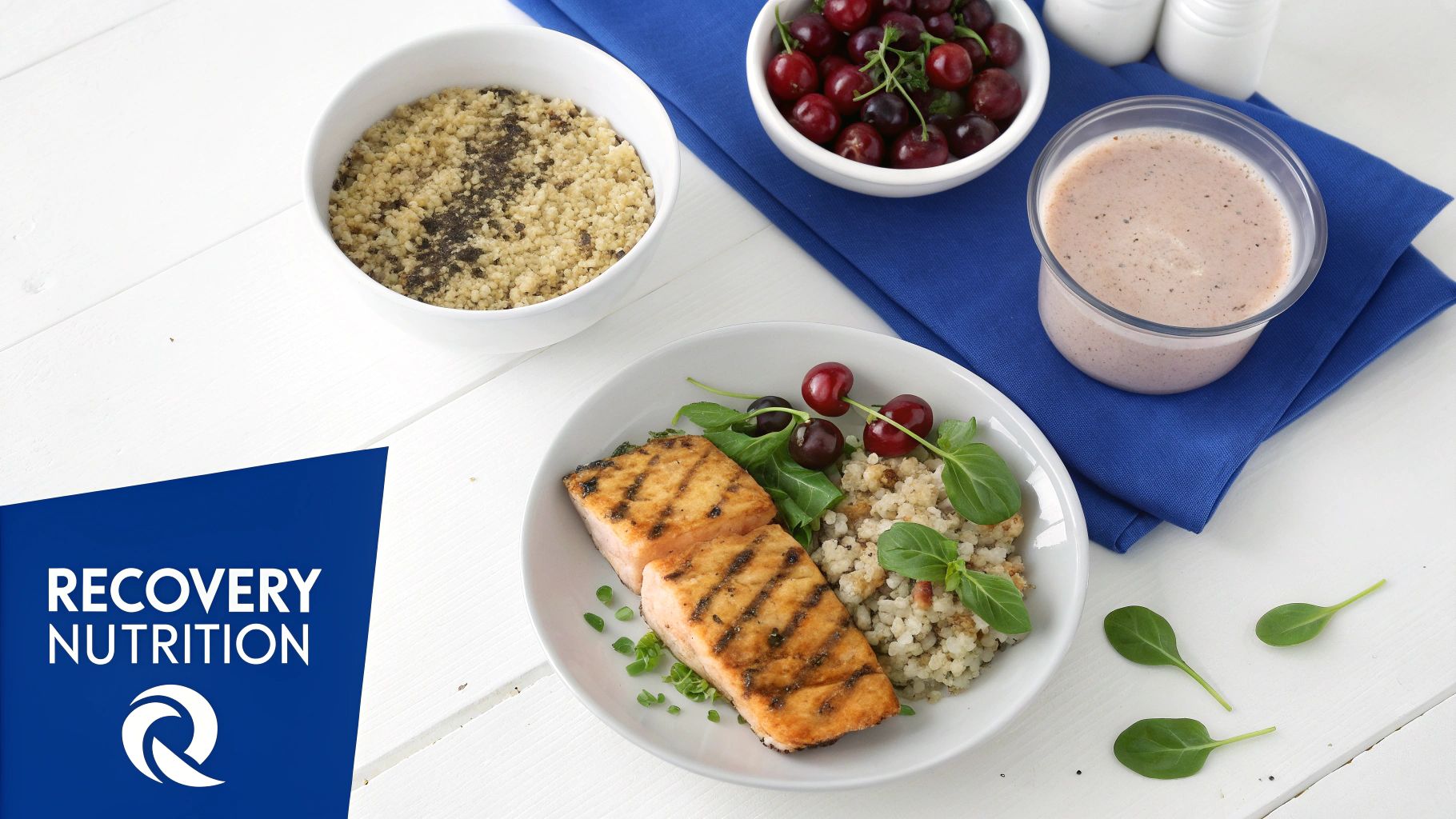
While advanced recovery tech offers powerful shortcuts, nothing replaces the fundamentals. What you put on your plate is the ultimate building block of muscle repair. Food isn't just fuel; it's the raw material your body uses to rebuild damaged fibers, calm inflammation, and restock energy stores. Nutrition provides the chemical and structural components necessary for every stage of the healing process.
Getting your nutrition dialed in is arguably the single most impactful thing you can do to reduce muscle soreness from the inside out.
Think of your post-workout meal as the first wave of construction materials arriving at a job site. Without them, the entire rebuilding process stalls. The trick is to deliver the right materials at the right time to kickstart healing.
The Protein and Carb Partnership
After a tough workout, your muscles are primed to soak up nutrients, a period often called the "anabolic window." Your top priorities here are protein and carbohydrates. Protein delivers the amino acids needed to patch up those microscopic muscle tears, while carbs are non-negotiable for replenishing glycogen—your muscles' primary fuel source.
Skipping carbs is a classic mistake. If you only focus on protein, your body might just convert it into energy instead of using it for muscle repair, completely defeating the purpose. The combination of both is what creates the perfect environment for recovery. Carbohydrates spike insulin, which helps shuttle amino acids from protein into your muscle cells more efficiently.
A good rule of thumb is to aim for a meal or snack with a 3:1 or 4:1 ratio of carbs to protein within about an hour of finishing your workout.
This doesn't have to be complicated. A simple post-workout snack could be a banana with a scoop of peanut butter. For a more substantial meal, think grilled chicken with a side of sweet potato and roasted vegetables.
Timing Your Protein Intake for Optimal Repair
While that immediate post-workout window gets a lot of attention, muscle protein synthesis—the actual rebuilding process—can stay elevated for a full 24 to 48 hours. This means your protein intake throughout the entire day is just as crucial as that first meal. A single protein-packed meal isn't enough to sustain the rebuilding effort.
Spreading your protein intake evenly across several meals provides a steady stream of amino acids for continuous repair. Instead of one massive, protein-heavy dinner, aim for 20-30 grams of high-quality protein with each meal and snack.
This consistent supply ensures your body always has the resources it needs to mend tissue, which can shorten the duration of that deep muscle ache.
Foods That Fight Inflammation Naturally
Beyond the macros, certain whole foods contain powerful compounds that can naturally reduce inflammation and ease soreness. Think of these as your nutritional defense team against the inflammatory response that causes DOMS. Incorporating these foods strategically can provide a cumulative benefit, helping to manage your body's inflammatory load over time.
Here’s a quick reference guide to some of the best anti-inflammatory foods to add to your recovery plan.
Top Anti-Inflammatory Foods for Muscle Recovery
| Food/Beverage | Key Compound | Primary Benefit |
|---|---|---|
| Tart Cherries | Anthocyanins | Reduces exercise-induced muscle damage and inflammation. |
| Fatty Fish (Salmon, Mackerel) | Omega-3 Fatty Acids | Lowers inflammatory markers and can decrease muscle soreness. |
| Turmeric | Curcumin | A potent anti-inflammatory agent that helps manage post-exercise pain. |
| Leafy Greens (Spinach, Kale) | Antioxidants | Fights oxidative stress caused by intense physical activity. |
Adding these foods to your rotation can make a noticeable difference over time.
While a healthy diet is a powerful tool, it's often underutilized. Data from a survey of 3,024 U.S. adults found that while 76% exercise weekly and most get sore, many don't prioritize nutrition for recovery. For example, one study showed that eating almonds daily led to an almost 25% reduction in muscle soreness, yet about 52% of people still reach for processed protein bars instead of whole foods.
This gap highlights a huge opportunity for recovery clinics to offer structured, science-backed solutions that complement what people can do at home. The demand for effective recovery is growing, as detailed by Global Banking & Finance Review, and smart nutrition is at its core.
The Overlooked Secrets to Recovery: Sleep and Movement
While high-tech gadgets and specialized supplements have their place, two of the most powerful tools for beating muscle soreness are completely free—and almost always overlooked. We're talking about high-quality sleep and gentle movement.
These aren't just suggestions; they are the fundamental pillars of how your body actually heals. Mastering these simple habits can do more for your recovery than almost anything else. It's not about expensive equipment, but about consistency and a shift in mindset. Prioritizing these basics will create a resilient foundation upon which all other recovery methods can build.
Why Quality Sleep Is Non-Negotiable
Sleep is, without a doubt, the single most powerful recovery tool you have. Period. It's during these crucial hours that your body shifts into full repair mode, releasing a flood of hormones that mend the microscopic tears in your muscle fibers caused by training.
The most important of these is human growth hormone (HGH). Your body pumps out the majority of its daily HGH during deep sleep. This hormone is directly responsible for tissue regeneration and muscle growth. Skimping on sleep is like asking a construction crew to rebuild a house with no materials—it just doesn't work. Chronic sleep deprivation can lead to elevated cortisol levels, which can hinder recovery and even promote muscle breakdown.
Think of it this way: your workout is the stimulus for change, but sleep is when the adaptation and strengthening actually happen. Without it, you're only getting half of the equation right.
Simple Steps for Better Sleep Hygiene
Improving your sleep doesn't have to be complicated. Small, consistent changes can make a massive difference in your recovery and how you feel day-to-day.
To get your body's repair cycle firing on all cylinders tonight, try these practical tips:
- Create a Cool, Dark Cave: Your body temperature naturally drops to initiate sleep. Keep your bedroom cool and use blackout curtains or an eye mask. Blocking out light is key, as it can mess with melatonin production.
- Power Down Your Screens: The blue light from phones, tablets, and computers tricks your brain into thinking it's still daytime. Shut down all screens at least 30-60 minutes before you plan to sleep. Read a book instead.
- Stick to a Routine: Going to bed and waking up around the same time every day—yes, even on weekends—helps regulate your body's internal clock (circadian rhythm). This leads to deeper, more restorative sleep.
Redefining Rest with Active Recovery
On those days when your muscles are screaming, curling up on the couch and not moving sounds like the best idea. But swapping complete inactivity for low-intensity movement—known as active recovery—can dramatically speed up the healing process.
The goal here isn't to add more stress. Not at all. It's about gently increasing blood flow to your sore muscles. This circulation boost acts like a delivery service, bringing fresh oxygen and nutrients to damaged tissues while flushing out the metabolic junk that contributes to soreness.
A good active recovery session should feel easy and refreshing, not like another workout.
- A casual 20-30 minute walk
- A light swim where you just focus on gliding
- An easy spin on a bike, keeping it flat
This gentle movement prevents your muscles from getting stiff and tight, promoting flexibility and dialing down that feeling of soreness. It’s the perfect bridge between a tough training day and your next one, ensuring you come back stronger, not just beaten down.
A Smarter Approach to Preventing Muscle Soreness
While all these recovery strategies are fantastic for dealing with soreness after it hits, the real win is minimizing it from the start. A proactive approach is all about building a body that adapts to training without those debilitating aches. This is about working smarter, not just recovering harder. Prevention is a more sustainable and effective long-term strategy than constantly trying to treat severe DOMS.
Prevention starts before you even lift a weight or take a step. A proper warm-up, lasting a solid 10-15 minutes, is completely non-negotiable. And this isn't just about a light jog on the treadmill; it’s about priming the specific muscles you’re about to train with dynamic movements—think leg swings, arm circles, and bodyweight squats. This crucial step gets blood flowing and prepares your muscle fibers for the work ahead, making them far less susceptible to damage.
The Principle of Progressive Overload
One of the biggest culprits behind extreme DOMS is simply doing too much, too soon. Your body is an incredible machine for adaptation, but it needs time. This is where the principle of progressive overload becomes your best friend in preventing excessive soreness.
In simple terms, it means you gradually increase the intensity, duration, or frequency of your workouts over time. For example:
- Instead of jumping from 10-pound dumbbells straight to 25s, move up to 15s first and let your body adjust.
- If you just ran three miles, add only half a mile to your next run, not another three.
This steady, intelligent progression gives your muscles a real chance to repair and strengthen between sessions. It reduces the shock that leads to that can’t-get-off-the-couch feeling.
Think of it like this: your training should always be a challenge, but never a shock to the system. Smart, incremental increases build resilience without overwhelming your body's capacity to recover.
When Soreness Becomes a Warning Sign
It's absolutely vital to learn the difference between normal muscle soreness and the kind of pain that signals an injury. Pushing through the wrong kind of pain is a fast track to serious setbacks.
DOMS typically feels like a dull, widespread ache deep in the muscle belly that actually gets a little better with light movement. In stark contrast, injury-related pain is often sharp, localized to a specific point (especially near a joint), and gets worse with activity.
If you’re dealing with pain that persists for more than 5-7 days, is paired with significant swelling, or sharply restricts your range of motion, it’s time to back off completely. This is your body's signal to seek professional medical advice. Listening to these warning signs is truly the most important prevention strategy of all.
Your Questions About Muscle Soreness, Answered
Even with a solid recovery plan, questions are bound to pop up. Let's dig into some of the most common ones I hear from athletes and clients to give you clear, straightforward answers.
Is It Okay to Work Out with Sore Muscles?
This is the classic dilemma, and the answer really comes down to listening to your body. If you're feeling a mild to moderate ache from DOMS, some light activity can actually be a good thing. Think of it as "active recovery"—a gentle swim or an easy spin on the bike can boost blood flow and help ease some of that stiffness.
But if the pain is sharp, severe, or making it hard to move properly, that’s your body hitting the emergency brake. Pushing through intense pain is a fast track to a real injury and will only set your recovery back. The golden rule is simple: your body knows best. Don't let a training schedule overrule its clear warning signs.
Key Takeaway: For mild soreness, light movement targeting different muscle groups can help. For severe pain, the only answer is rest. Let your body heal properly to prevent a much bigger problem.
How Long Does Muscle Soreness Usually Last?
Delayed Onset Muscle Soreness follows a pretty reliable pattern. You'll typically start feeling it about 12 to 24 hours after a new or unusually tough workout.
The discomfort tends to peak somewhere between 24 and 72 hours post-exercise. After that, it should start to fade, and you'll likely feel back to normal within three to five days. If the pain sticks around for more than a week, is paired with major swelling, or feels unusually sharp, it's a good idea to check in with a healthcare professional to make sure nothing more serious is going on.
Which Is Better for Soreness a Massage Gun or a Foam Roller?
Great question. Both are fantastic tools for myofascial release, but they play different roles on your recovery team. I like to think of them as a generalist and a specialist.
-
The Foam Roller (Your Generalist): This is perfect for applying broad pressure across big muscle groups like your quads, hamstrings, and back. It's your go-to for releasing overall tightness and getting blood flowing to the entire area.
-
The Massage Gun (Your Specialist): This tool uses percussion to deliver rapid, focused pressure deep into specific trigger points. It’s ideal for zeroing in on those stubborn knots a foam roller just can't seem to isolate.
Honestly, the best approach is to use them together. I often have clients use the foam roller first to warm up the tissue and find the problem spots, then switch to the massage gun to really dig in and release them.
At Weyergans HighCare US, we believe that smarter recovery is the key to unlocking better performance and a deeper sense of well-being. Our Vacustyler system offers a passive, effective way to enhance circulation and accelerate your body's natural healing processes, helping you bounce back faster from tough workouts. To see how our technology can elevate your recovery routine, visit us online.