



When you first hear about wood therapy, it’s easy to get excited. But what does it actually deliver? The truth is, realistic wood therapy results include a visible reduction in cellulite, a more defined body shape, and noticeably smoother skin.
While you might feel lighter and less bloated right after your first session, the most impressive, lasting changes build up over a full series of treatments. Remember: wood therapy is a body sculpting technique, not a direct weight-loss method.
What are realistic wood therapy results?
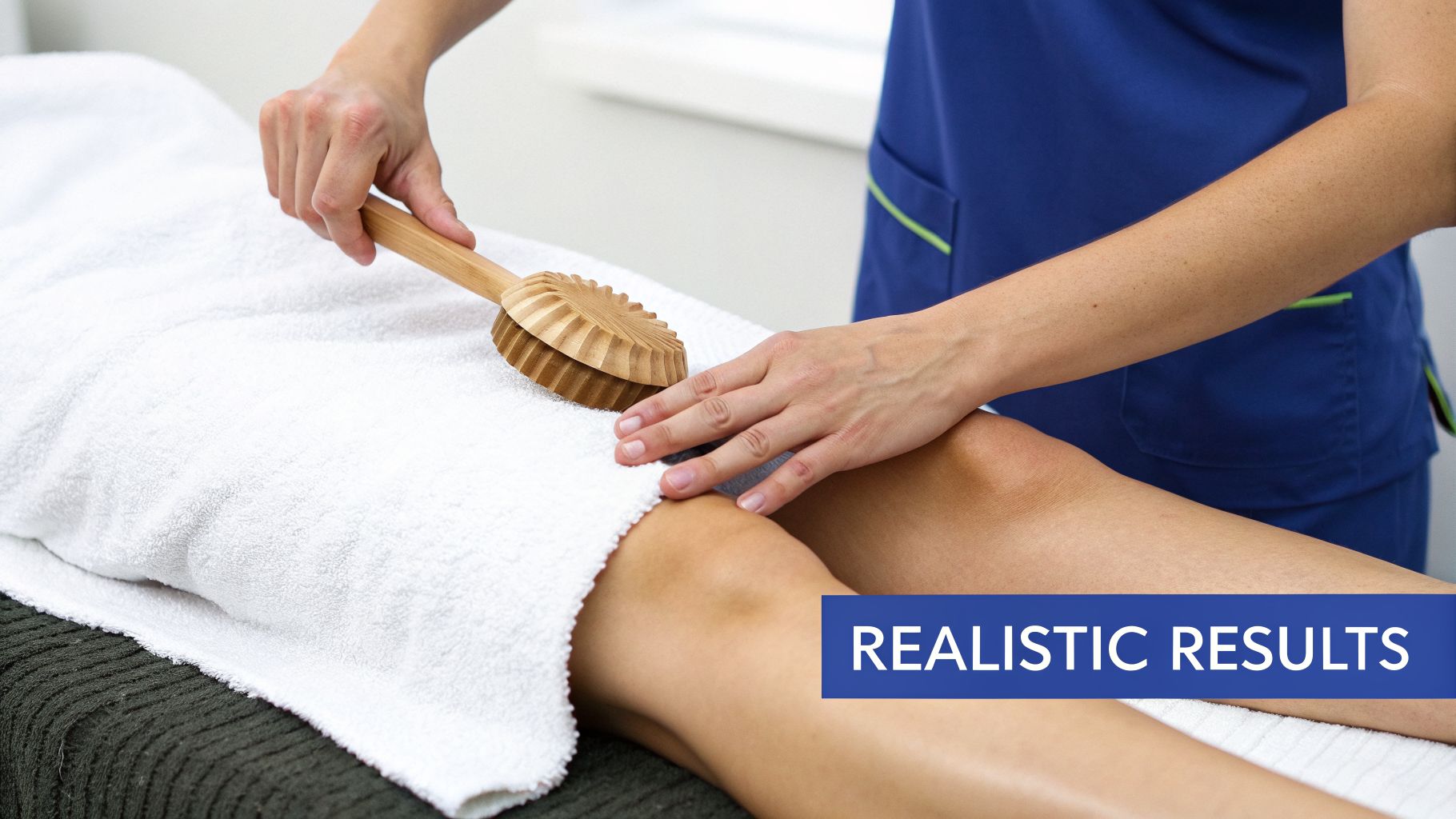
When talking about wood therapy, it helps to separate the immediate feelings from the long-term, visible gains. The goal is to set honest expectations for what this non-invasive treatment can achieve for you or your clients. It’s a fantastic tool for body contouring and lymphatic support when it’s applied correctly and consistently.
The main results clients are looking for are a smoother skin surface and a more sculpted silhouette. We achieve this by using specially shaped wooden tools to manually manipulate muscle, break down stubborn fat deposits, and get the lymphatic system moving. A key benefit of this process is its effect on improving circulation naturally, which is fundamental for detoxification and skin health.
Defining success with maderotherapy
Success with maderotherapy isn't about watching the numbers drop on a scale. It’s measured by real-world changes in skin texture, body measurements, and tone. Many clients report that their clothes fit better and feel looser long before they see any major shift in their weight.
This happens because the treatment focuses on moving stagnant fluid and breaking up the tough, fibrous bands that create cellulite dimples. We've written a detailed guide on how wood therapy specifically targets these issues in our article about using wood therapy for cellulite. Think of it less as removing mass and more about re-sculpting and refining what’s already there.
The most compelling proof of wood therapy's power comes from practitioner reports and before-and-after photos. Here's what the real-world evidence shows:
Real-world results show a 20-40% visible reduction in cellulite appearance after a full course of treatments, which typically includes 10-12 sessions.
This is often paired with an average loss of 1-3 inches in targeted areas like the thighs, abdomen, and flanks. These numbers provide a solid, realistic benchmark for what clients can expect when they commit to a full protocol.
The client experience and timeline
To manage expectations effectively, you need to understand the client’s journey. The results are cumulative—they build on each other with every session.
To give you a clearer picture, here is a typical timeline of what a client can expect as they progress through their treatment plan.
Expected wood therapy timeline and outcomes
| Session Milestone | Typical Physical Sensation | Visible Aesthetic Results |
|---|---|---|
| After 1-2 Sessions | Feeling "lighter," less bloated, and reduced water retention. | Skin looks brighter with a healthy glow from increased blood flow. |
| After 4-6 Sessions | The area feels softer and less dense. | Noticeable softening of cellulite dimples; body contours begin to look more defined. |
| After 10-12 Sessions | A feeling of firmness and toned muscle in the treated area. | Skin is visibly firmer, cellulite is significantly reduced, and inch loss is measurable. |
This progression shows why a full series of treatments is so important. A single session can give you a temporary boost and make you feel great, but lasting, visible change comes from committing to the complete process.
Understanding how wood therapy works
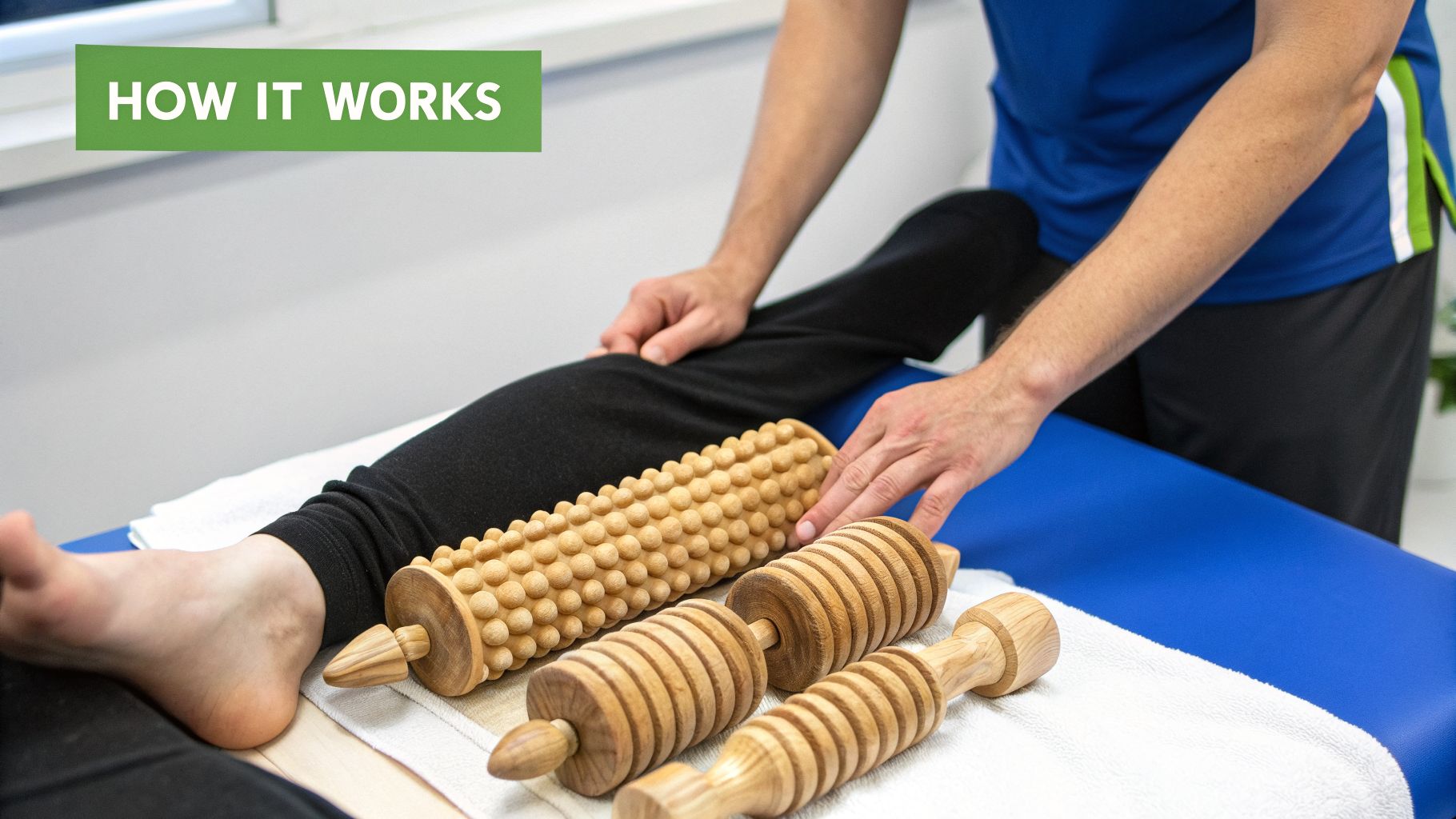
To understand why the visible wood therapy results happen, you have to look at what’s going on just beneath the skin’s surface. This is much more than a simple massage. It’s a specialized manual therapy that uses a set of anatomically-designed wooden tools to apply deep, targeted pressure to muscle, fat, and the connective tissue that holds it all together.
This practice, also called maderotherapy, is built on three core principles. Each one does something different to help reshape the body and smooth out the skin. Once you understand these mechanics, you can confidently explain the “why” behind the incredible changes your clients see and feel.
Activating the body's drainage system
First, wood therapy kickstarts the lymphatic system. Think of this system as your body’s own sanitation crew, clearing out metabolic waste, toxins, and trapped fluids. Unlike your circulatory system, which has the heart to act as a pump, your lymphatic network depends on muscle contractions and outside pressure to keep things moving.
When life gets in the way—through a sedentary job, poor diet, or genetics—that network can get slow and backed up. This leads to that puffy, bloated feeling and a general sense of heaviness. The specific, directional strokes of wood therapy are designed to manually push that stagnant fluid along its proper pathways toward the lymph nodes, where it can be processed and flushed out. If this is a new concept, our guide on wood therapy and lymphatic drainage breaks down this process in more detail.
This lymphatic activation is why so many clients report feeling an immediate "lightness" and less bloating after just one session. It’s like giving the body’s natural drainage system a much-needed manual assist.
Targeting stubborn tissue
The second key action is the physical breakdown of stubborn, compacted tissue. This covers both those localized pockets of fat that won’t budge and the fibrous bands that are the true culprits behind cellulite.
Loosening Fat Deposits: The firm, consistent pressure from the wooden tools mechanically loosens and breaks apart dense clusters of fat. Picture using a rolling pin to work out the lumps in a piece of dough. The tools function in a similar way, making the fat more pliable and easier for the body to metabolize.
Breaking Down Fibrous Bands: Cellulite dimples appear when fat pushes up against the skin while the tight, fibrous cords underneath (called septae) pull the skin down. Wood therapy tools apply focused, intense pressure to these cords, helping to stretch, loosen, and release their grip. This frees the skin from that tension, smoothing out the "cottage cheese" texture.
This is the work that creates the lasting changes in body contour and the reduction in cellulite over a full series of treatments.
A key aspect of wood therapy is its ability to physically manipulate tissue in a way that hands alone cannot. The firm, anatomically shaped tools can deliver consistent, deep pressure that effectively addresses the underlying structures contributing to cellulite and uneven texture.
Boosting circulation and skin health
Finally, the vigorous massage technique dramatically increases blood flow to the areas being worked on. This surge in circulation has several benefits for the overall wood therapy results.
Better circulation means a fresh rush of oxygen and nutrients is delivered directly to the skin cells. This fuels cellular repair, promoting a healthier look and feel. At the same time, this improved blood flow helps carry away metabolic waste from the tissues more efficiently.
Over a series of sessions, this process can trigger the production of new collagen and elastin—the two proteins that give skin its firmness and bounce. It’s why clients often report that their skin not only has less cellulite but also looks and feels tighter and more toned. This combination of lymphatic drainage, tissue manipulation, and improved circulation is what makes wood therapy an effective body sculpting modality.
Immediate effects versus long-term gains
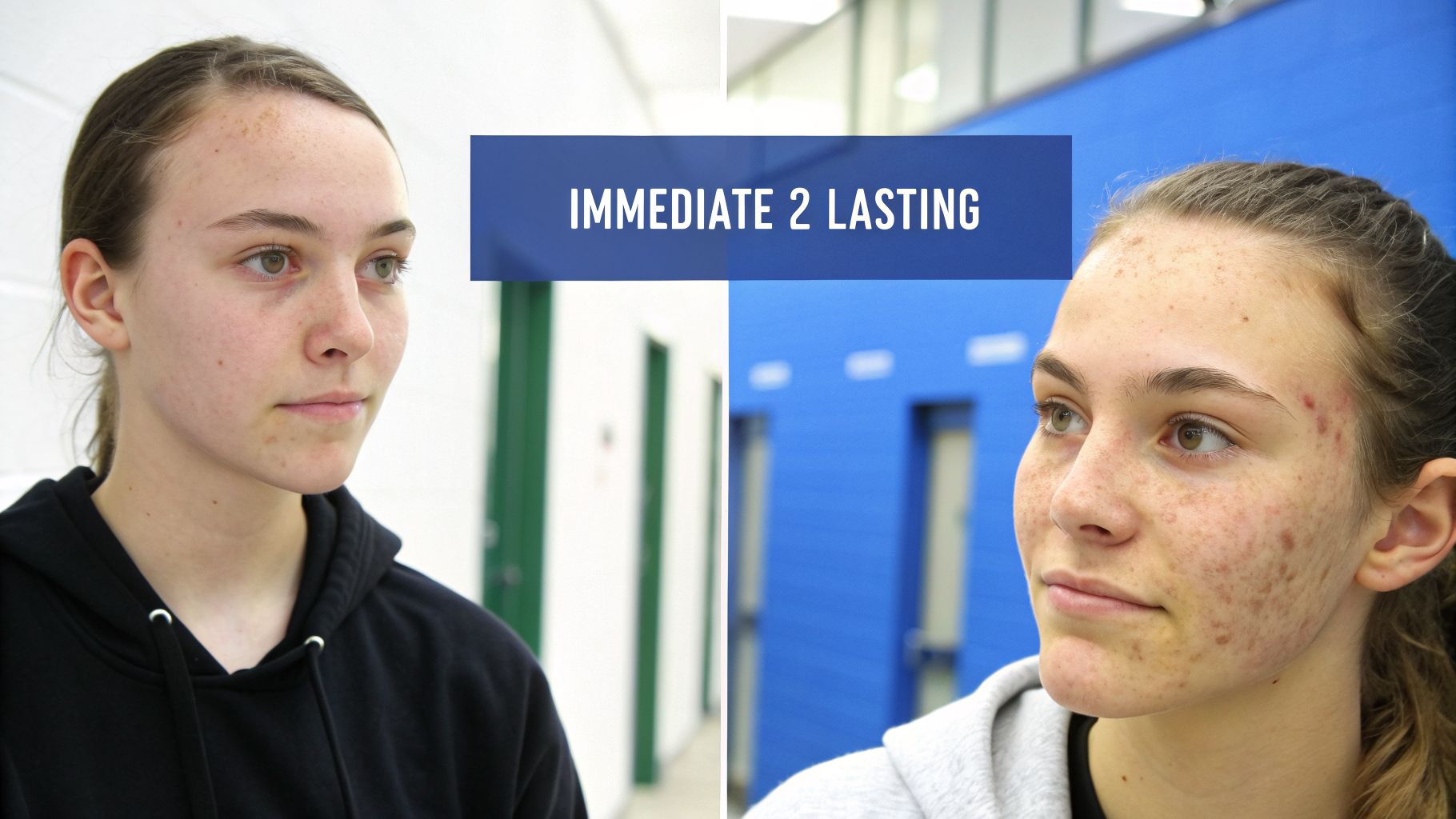
One of the most important things to grasp about wood therapy results is the timeline. This helps in managing expectations, both for you and your clients. I always compare it to starting a new fitness routine. After that first workout, you feel great, energized, maybe a little sore—but you don’t walk out with visibly bigger muscles. Real, lasting change only comes from showing up consistently and seeing the program through.
Wood therapy follows that same principle. The effects you feel right after your first session are very different from the structural changes that take hold after a complete course of treatments. Both are valuable, but they are two distinct stages of the body’s response.
What happens right after one session
The most common feedback I hear after a single wood therapy treatment is a feeling of "lightness" and seeing less bloat. This isn't just in their head; it's the direct result of waking up the lymphatic system. The wooden tools have manually pushed stagnant fluid out of the tissue, delivering immediate—though temporary—relief from water retention.
You’ll also probably notice a few temporary changes on the skin's surface:
- Temporary Smoothness: Skin often looks and feels smoother right away. This is caused by the surge in blood flow and the quick reduction of fluid, which can make cellulite appear less pronounced for a short time.
- A Healthy Glow: The vigorous massage boosts circulation, bringing a fresh supply of oxygen-rich blood to the skin. This typically creates a healthy, rosy appearance in the treated areas.
- Mild Redness: Some light flushing or redness is perfectly normal. It’s a good sign that circulation has been successfully activated.
Think of these immediate effects as a positive first step. They confirm the treatment is doing its job by firing up the body's underlying systems.
The cumulative effect of multiple sessions
True, lasting transformation is built over a full series of sessions, which is typically between 6 to 12 treatments. This is where the deeper, more structural changes really begin to lock in. Over time, the consistent manipulation of tissue starts to remodel the treated area, creating the visible wood therapy results clients are looking for.
The real power of wood therapy is cumulative. Each session builds on the last, progressively breaking down fibrous tissue and retraining the lymphatic system to work more efficiently. A single session is a jump-start; a full series is what truly reshapes the area.
This building-block process is where you start to see undeniable, measurable changes. Research into massage-based fat reduction backs this up. One study observed a 14% reduction in abdominal fat two months after just two sessions. But when the number of sessions was doubled, the improvement jumped by an additional 7.2%, showing a clear dose-response relationship. You can read the full research about subcutaneous fat reduction to dig deeper into the findings.
This is precisely why selling sessions in packages is the industry standard. It gives the therapist the necessary time to create change that lasts.
The long-term gains are far more significant and structural:
- Measurable Inch Loss: As the lymphatic system becomes more efficient and stubborn fat deposits are broken down, you will start seeing a real reduction in circumference.
- Significant Cellulite Reduction: The fibrous bands that create skin dimpling are progressively loosened and stretched, resulting in a much smoother skin surface.
- Improved Skin Texture and Tone: With ongoing stimulation, the skin ramps up its production of collagen and elastin. This leads to a firmer, tighter appearance that goes far beyond just getting rid of temporary fluid.
The immediate effects are there to provide motivation and proof of concept, while the long-term gains are what deliver the transformation.
Factors that influence wood therapy results
Why do some clients see dramatic changes after just a few wood therapy sessions, while others progress more slowly? It’s a question every practitioner gets. The truth is, wood therapy results are never a one-size-fits-all outcome.
Just like with a personal training program, the final result is a partnership between the client's body and the professional's skill. Understanding the variables at play helps manage expectations, educate your clients, and deliver the best possible transformations. It all boils down to two key areas: the client's unique physiology and the provider's technique.
Client-specific factors
Think of the client’s body as the canvas for your work. Their age, skin quality, and daily habits create the foundation you’re building upon. A younger client with naturally firm, elastic skin will likely see tightening effects much faster than an older client whose collagen and elastin have begun to decline.
Lifestyle is the other half of the equation. A client who supports your work with healthy habits at home is giving their body the tools it needs to achieve and maintain results. You can’t out-sculpt a poor diet or a sedentary lifestyle.
Here are the main personal factors to consider:
- Age and Skin Elasticity: Younger skin simply has more bounce-back. It responds more readily to the firming and lifting aspects of the treatment.
- Body Composition: Softer, more pliable tissue is often easier to manipulate and contour. A client with very dense, compacted adipose tissue may require more sessions to see significant changes.
- Hydration Levels: This is non-negotiable. Proper hydration is critical for the lymphatic system to do its job of flushing out the toxins and excess fluid you’ve just mobilized. Dehydrated clients see slower results.
- Diet and Exercise: A clean diet and regular movement support the body's metabolic rate and lymphatic flow. Exercise, in particular, is a powerful complement to your work, acting as a natural pump for the lymphatic system.
Think of yourself as a skilled sculptor and the client's body as the clay. The quality of the clay—its hydration, elasticity, and overall health—directly impacts how well you can shape and refine it. A client who drinks plenty of water and stays active provides much better material to work with.
Provider-dependent factors
The client is only half the story. The practitioner's skill, knowledge, and tools are just as important. A well-trained therapist isn't just going through the motions; they're reading the body's response and adapting their technique in real-time to address specific problem areas safely and effectively.
The quality of your service has a direct and immediate impact on wood therapy results. For instance, a therapist using generic, awkwardly shaped tools simply cannot achieve the same deep, targeted pressure as one using professional-grade, anatomically designed instruments.
These are the key variables on the provider’s side:
- Technique and Pressure: An experienced practitioner knows exactly how much pressure to apply and which directional strokes to use. This expertise is what effectively stimulates lymphatic drainage and breaks up stubborn tissue without causing damage.
- Quality of Tools: Professional wooden tools are not interchangeable. They are specifically shaped to contour different areas of the body, allowing for far more precise, effective, and comfortable tissue manipulation.
- Frequency and Consistency: The recommended schedule of 2-3 sessions per week for an initial series is grounded in the body's response cycle. If sessions are too spread out, the lymphatic system can become sluggish again, and you'll be starting from square one each time.
By understanding how these client and provider factors intersect, you can screen clients more effectively, set realistic and personalized goals, and provide the tailored advice they need. This collaborative approach is what builds trust and ensures every client gets the very best wood therapy results for their time and investment.
Amplifying your results: Combining wood therapy with advanced technology
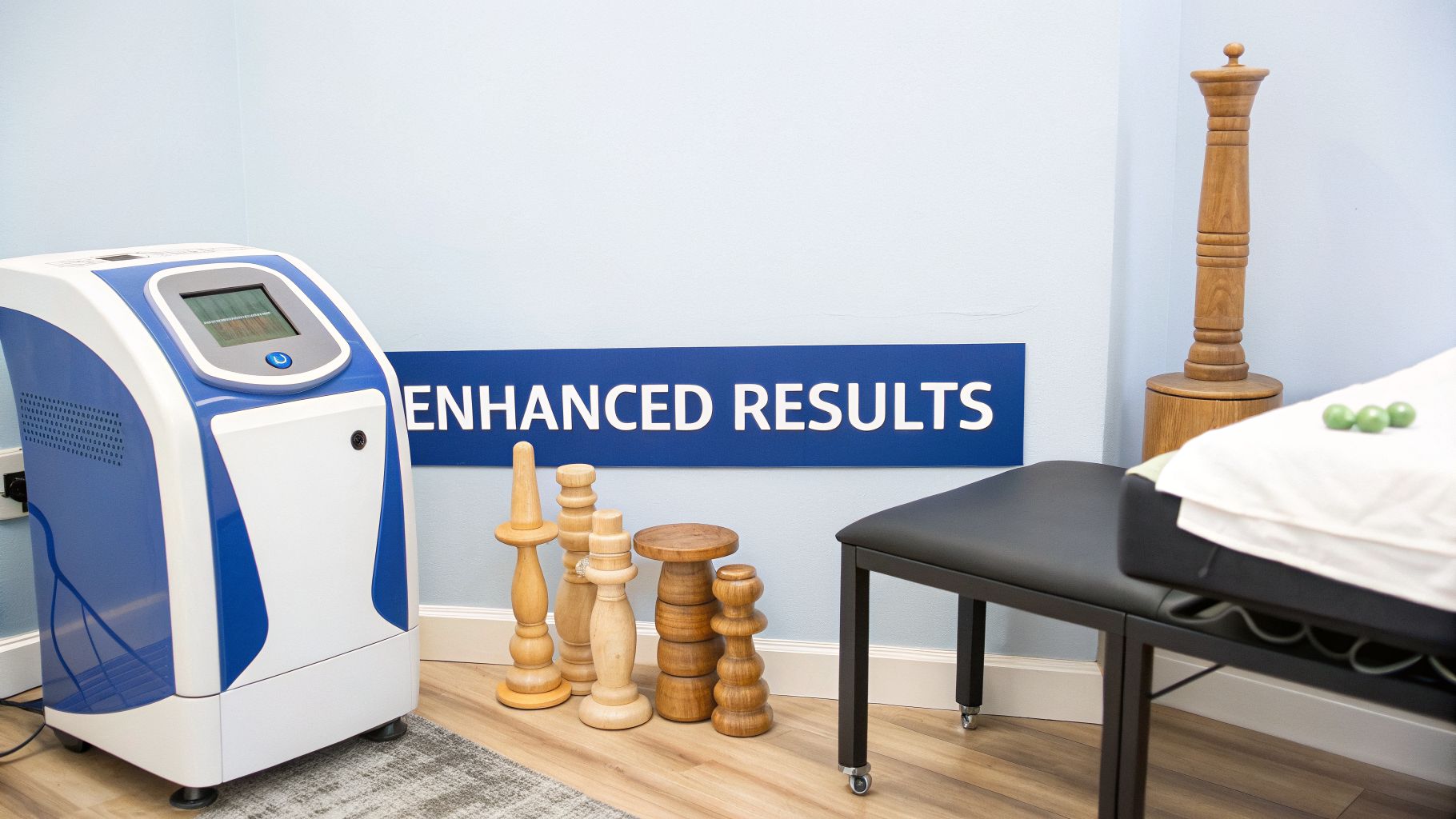
While wood therapy is a powerhouse on its own, its true potential is unlocked when you pair it with complementary technologies. Think of maderotherapy as the intensive prep work. It’s the hands-on sculpting that manually breaks down stubborn tissue, softens compacted fat, and gives the lymphatic system a much-needed kickstart.
This process makes the body significantly more receptive to other treatments. It’s a classic one-two punch that can improve wood therapy results, turning good outcomes into exceptional ones. By first mobilizing stagnant fluids and loosening fibrous bands, you create a clear path for other technologies to work their magic more effectively and deliver faster, more noticeable changes.
The synergy of manual sculpting and intermittent vacuum therapy
Pairing wood therapy with a sophisticated system like the Weyergans HighCare US Vacustyler Avantgarde creates one of the most effective protocols for modern body contouring. The Vacustyler uses intermittent negative pressure—rhythmic cycles of vacuum and normal atmospheric pressure—to supercharge the lymphatic drainage and circulation boost you initiated with the wooden tools.
First, your wood therapy session does the heavy lifting, manually manipulating and preparing the tissue. Then, your client simply relaxes in the Vacustyler pod. The machine takes over, applying gentle, rhythmic pressure changes that act as a powerful, passive pump for the entire lower body’s vascular and lymphatic network.
This combination achieves several key goals:
- Accelerated Lymphatic Drainage: The Vacustyler amplifies the manual drainage from wood therapy, flushing out the mobilized fluids and toxins with an efficiency that manual methods alone can't match.
- Enhanced Blood Flow: The negative pressure cycles draw fresh, oxygenated blood deep into the tissues, which nourishes the skin and supports cellular repair.
- Improved Skin Firmness: Some Vacustyler models also incorporate beauty light therapy (red and near-infrared), which helps stimulate collagen and elastin for visibly firmer, more toned skin.
When used together, the results are more than just additive—they’re synergistic. Each treatment makes the other more potent. It’s this powerful synergy that leads top-tier medspas to seek out the best body contouring machines that can be integrated with their manual techniques.
The science behind the combination
The strategy of combining intensive massage with mechanical methods isn't just intuitive; it's backed by clinical evidence. The effects of massage on cellulite, for instance, are well-documented. A landmark study used ultrasound imaging to track changes after intensive massage and found a 56±2% reduction in the unevenness of the dermis-hypodermis junction after three months.
However, the researchers also noted that the surface began to revert afterward, showing the need for ongoing maintenance. This is precisely where technology like the Vacustyler shines. It helps sustain and build upon the initial gains from manual therapy by providing consistent, powerful circulatory support that is nearly impossible to replicate by hand.
By using wood therapy to first “break up” the problem areas, you prepare the tissue for the Vacustyler. The machine can then perform a more effective and deeper systemic flush, leading to more dramatic and lasting contouring and detoxification.
Building a comprehensive protocol
A combined protocol uses the unique strengths of both modalities. The wood therapy provides the targeted, hands-on sculpting, while the Vacustyler delivers a systemic, passive circulatory and lymphatic boost.
The table below shows just how these two treatments work together to amplify the final outcome for your clients.
How combining therapies boosts results
| Benefit | Wood Therapy Alone | Wood Therapy + Vacustyler |
|---|---|---|
| Lymphatic Drainage | Manually moves fluid in targeted zones. | Deep, systemic flush of the entire lower body. |
| Circulation | Locally increases blood flow in treated areas. | Boosts circulation system-wide below the waist. |
| Cellulite Reduction | Mechanically breaks down fibrous bands and fat. | Flushes mobilized materials and tightens skin. |
| Client Experience | An active, deep-tissue massage. | A relaxing, passive, and rejuvenating session. |
By bringing these methods together, clinics can offer a more robust service that delivers superior wood therapy results. Clients see changes faster, feel more refreshed, and are far more likely to commit to a full treatment series when they can see and feel the incredible difference this integrated approach makes.
Frequently asked questions about wood therapy
Stepping into a new wellness treatment always brings up questions. When it’s something as hands-on and personal as wood therapy, it’s only natural to be curious about everything from how the tools feel to how long you can expect your results to stick around.
This guide answers the most common questions we hear from both clients and clinic owners. Our goal is to give you the honest, straightforward information you need to feel confident and set clear expectations.
How long do wood therapy results last?
The results you get from a full series of wood therapy sessions can be long-lasting, but they aren't permanent on their own. It helps to think of it like the results from a great fitness program—maintenance is the key to keeping them.
An initial series of 10 to 15 sessions is what builds your foundation. This is where we see a significant reduction in cellulite and noticeable body contouring. However, your daily lifestyle choices—like your diet, exercise habits, and how much water you drink—play a huge role in sustaining those outcomes.
Most experienced therapists will suggest a maintenance session every 4 to 8 weeks. Without this ongoing support, the lymphatic system can become sluggish again, and you might see the appearance of cellulite slowly return over several months.
Is wood therapy painful and are there side effects?
Wood therapy shouldn't be a painful experience, but it is an intense treatment. The sensation is very similar to a deep-tissue massage—firm, targeted pressure that can create a "good hurt," especially over areas with dense tissue or significant cellulite.
It’s common for people to experience temporary side effects, especially after their first few sessions. These are typically very mild and are a sign that the therapy is working. They can include:
- Redness: A healthy flush on the skin is completely normal and shows that circulation has increased in the area.
- Mild Sensitivity: The treated area might feel a bit tender to the touch for a day or so.
- Light Bruising: Small bruises can sometimes appear, particularly if you have sensitive skin or a lot of tissue congestion.
These effects almost always fade within a day or two. A skilled therapist will always be in communication with you, adjusting the pressure to match your comfort level. Drinking plenty of water before and after your session can really help your body process the treatment and minimize any potential discomfort.
How many sessions are needed to see real results?
While many clients report feeling "lighter" and less bloated after just one session, the visible, structural wood therapy results you're looking for require a series of treatments. The effects are cumulative, with each appointment building on the progress of the last one.
We find that a package of 10 to 15 sessions delivers the best results. These are usually scheduled two or three times a week to keep the momentum going and prevent the lymphatic system from becoming stagnant again between appointments.
Real, significant improvements—like a 20-40% reduction in cellulite and measurable inch loss—usually become obvious after about the sixth session. The most impressive and lasting changes are always seen after the full course is completed.
Who is the ideal candidate for wood therapy?
The ideal candidate for wood therapy is someone who is generally healthy and close to their target weight but is struggling with specific cosmetic concerns. It's a fantastic, non-invasive option for individuals who want to contour their body and improve their skin's texture without surgery.
Wood therapy is especially effective for people looking to address:
- Localized Fat: Those stubborn pockets of fat on the thighs, abdomen, arms, or buttocks that just won't budge with diet and exercise.
- Cellulite: Individuals with mild to moderate cellulite often see the most dramatic improvements in skin smoothness.
- Poor Circulation: Anyone who experiences feelings of heaviness, puffiness, or water retention can benefit from the lymphatic drainage effects.
- Body Sculpting: Those who want to enhance their natural curves and achieve a more toned, defined silhouette.
We consistently see the best and most lasting wood therapy results in people who are committed to a healthy lifestyle. The treatment works best as a partner to your healthy habits, not as a replacement for them.
Who should avoid wood therapy?
While wood therapy is safe for most healthy adults, it isn't the right fit for everyone. A thorough consultation is always the first step to ensure the treatment is a safe and appropriate choice for you.
As a rule, it is not recommended for individuals with certain conditions, including:
- Pregnancy
- Active infections or fever
- Unmanaged high blood pressure
- Deep vein thrombosis (DVT) or other blood clotting disorders
- Kidney or liver disease
- Active cancer
- Certain skin conditions like eczema or psoriasis in the treatment area
Always be open and honest about your full medical history with your therapist before starting treatment. If you have any concerns at all, it's always best to check with your doctor first.
Ready to elevate your body contouring services and deliver exceptional results? The Weyergans HighCare US Vacustyler Avantgarde is the perfect complement to your wood therapy protocols, amplifying detoxification and skin firming for faster, more impressive outcomes.
Discover how to integrate this advanced technology into your practice by visiting https://weyerganshighcareus.com.