


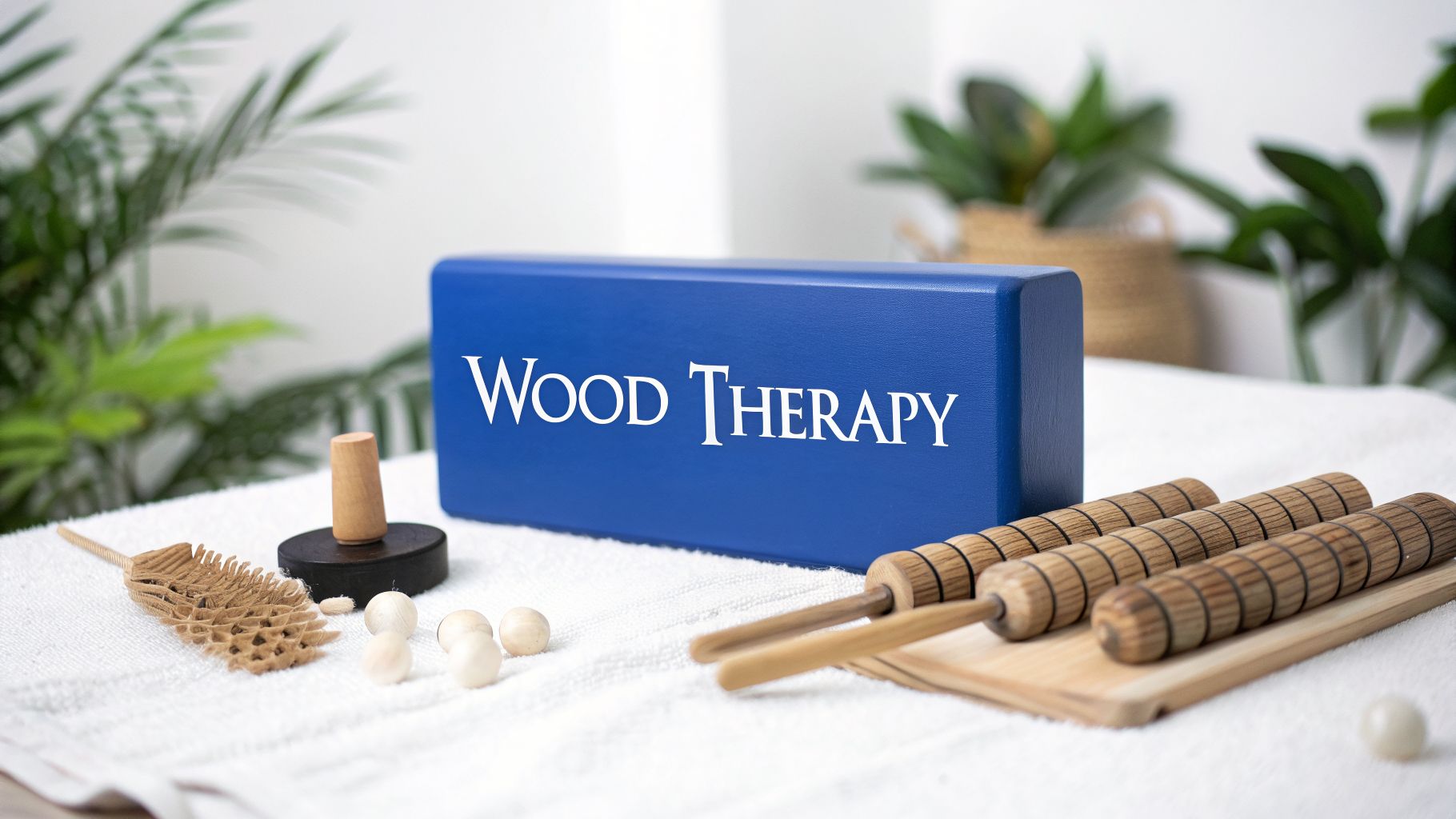
Wood therapy is a hands-on, non-invasive massage technique that uses specially designed wooden tools to sculpt, tone, and contour the body. It isn't a weight-loss method, but it's a good tool for addressing the appearance of stubborn belly fat by applying deep, targeted pressure that helps break down localized fat and kickstart the lymphatic system.
What Is Wood Therapy For Abdominal Contouring?
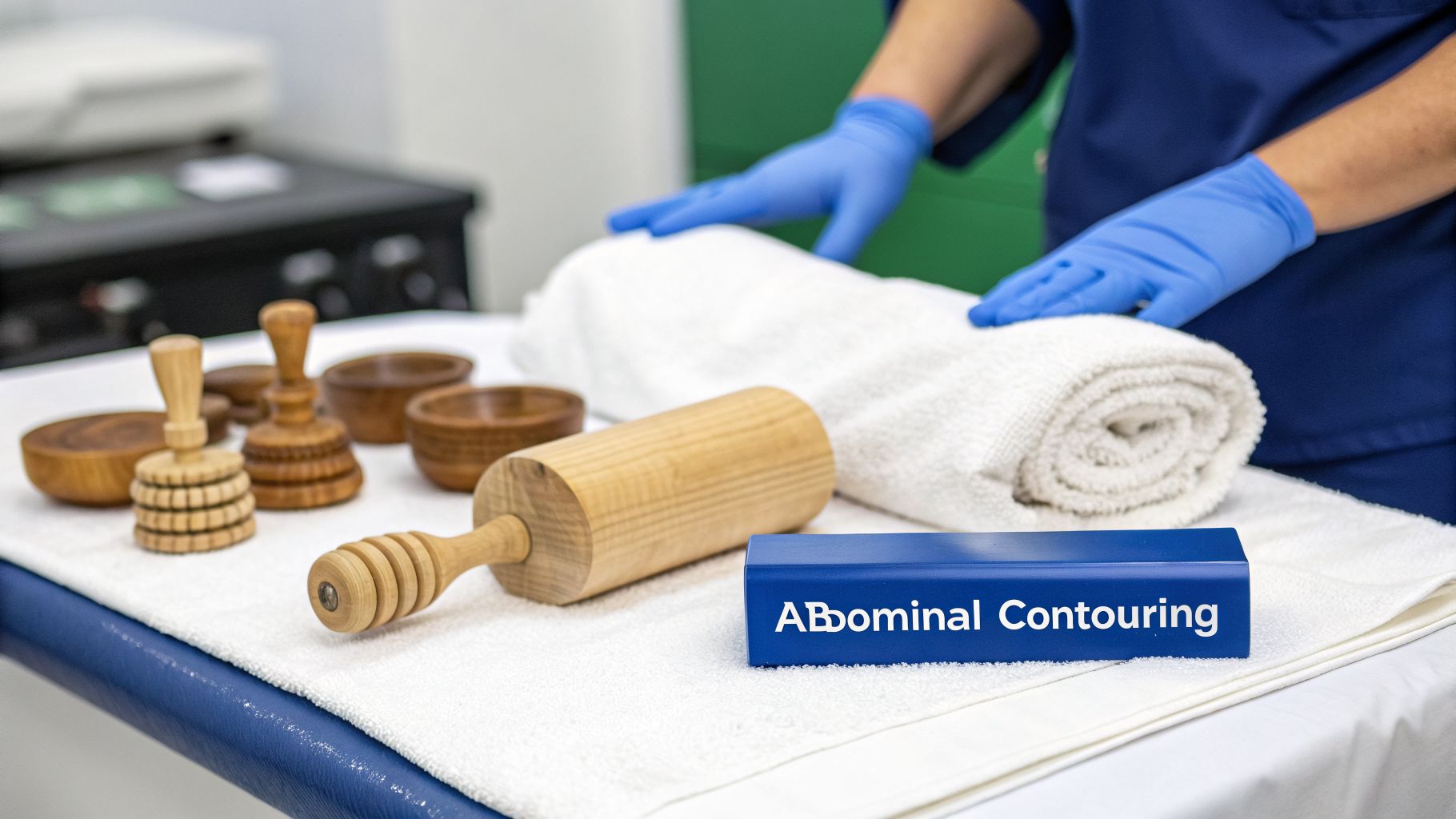
Wood therapy, or maderoterapia, is a body sculpting technique that comes from wellness traditions in South America and Asia. The practice uses a set of anatomically shaped wooden instruments that let a therapist apply intense, consistent pressure to specific areas like the abdomen, going deeper than hands ever could.
The Mechanics Of Abdominal Contouring
So, how does rubbing wooden tools on the belly actually work? The principle is about targeted mechanical manipulation designed to achieve two goals at once.
- Breaking Down Adipose Tissue: The firm, rolling pressure from the wooden tools helps to physically break apart the stubborn, fibrous fat pockets that sit just under the skin. This mechanical action is what helps create a smoother, more toned appearance.
- Stimulating the Lymphatic System: The specific, directional strokes are used to guide stagnant lymphatic fluid and metabolic waste toward the lymph nodes for processing. This is necessary for reducing the bloating and fluid retention that often make the stomach area look fuller than it is.
The real appeal of wood therapy is that it’s completely non-invasive, making it a go-to for clients who want visible contouring results without the risks and downtime of surgery. Many clinics report that a consistent series of treatments can lead to impressive aesthetic changes. Clients have seen a 20-40% reduction in the appearance of cellulite and lost an average of 1-3 inches from treated abdominal areas.
Think of your lymphatic system like a slow-moving river cluttered with debris. Wood therapy acts as a strong, focused current that helps clear those blockages and get things flowing again. This "flushing" effect is what reduces puffiness and helps give the abdomen a flatter, more defined contour.
To give you a clearer picture, here’s a quick summary of what wood therapy for belly fat involves.
Wood Therapy for Belly Fat at a Glance
This table breaks down the key aspects of using wood therapy for abdominal contouring, from the technique itself to the results clients can realistically expect.
| Aspect | Summary |
|---|---|
| Primary Goal | To improve the aesthetic appearance of the abdomen by reducing bloating, smoothing skin texture, and contouring the shape. |
| Mechanism | Uses mechanical pressure from wooden tools to break down fibrous fat deposits and stimulate the lymphatic system to drain excess fluid and toxins. |
| Best For | Clients near their target weight who struggle with localized "stubborn" fat, bloating, or poor skin texture on their stomach. Not a primary weight-loss treatment. |
| Sensation | An intense, deep-tissue massage. It can be slightly uncomfortable but should not be painful. |
| Typical Protocol | A series of 6-12 sessions, often scheduled 2-3 times per week for best results. |
| Realistic Outcome | A visibly flatter, more toned-looking abdomen, a reduction of 1-3 inches in circumference, and smoother, firmer-feeling skin. Results require maintenance. |
| Key Benefit | A non-invasive body sculpting option with no downtime, offering natural-looking results. |
This approach positions wood therapy not as a weight-loss miracle, but as a body contouring tool. It excels at refining the shape of the belly and improving skin quality. For those clients focused on skin texture, you can explore more on using wood therapy for cellulite in our detailed guide. By setting these clear expectations, you can add this service as a valuable step in a client's body sculpting journey.
How Wood Therapy Affects Fat and Fluid Retention
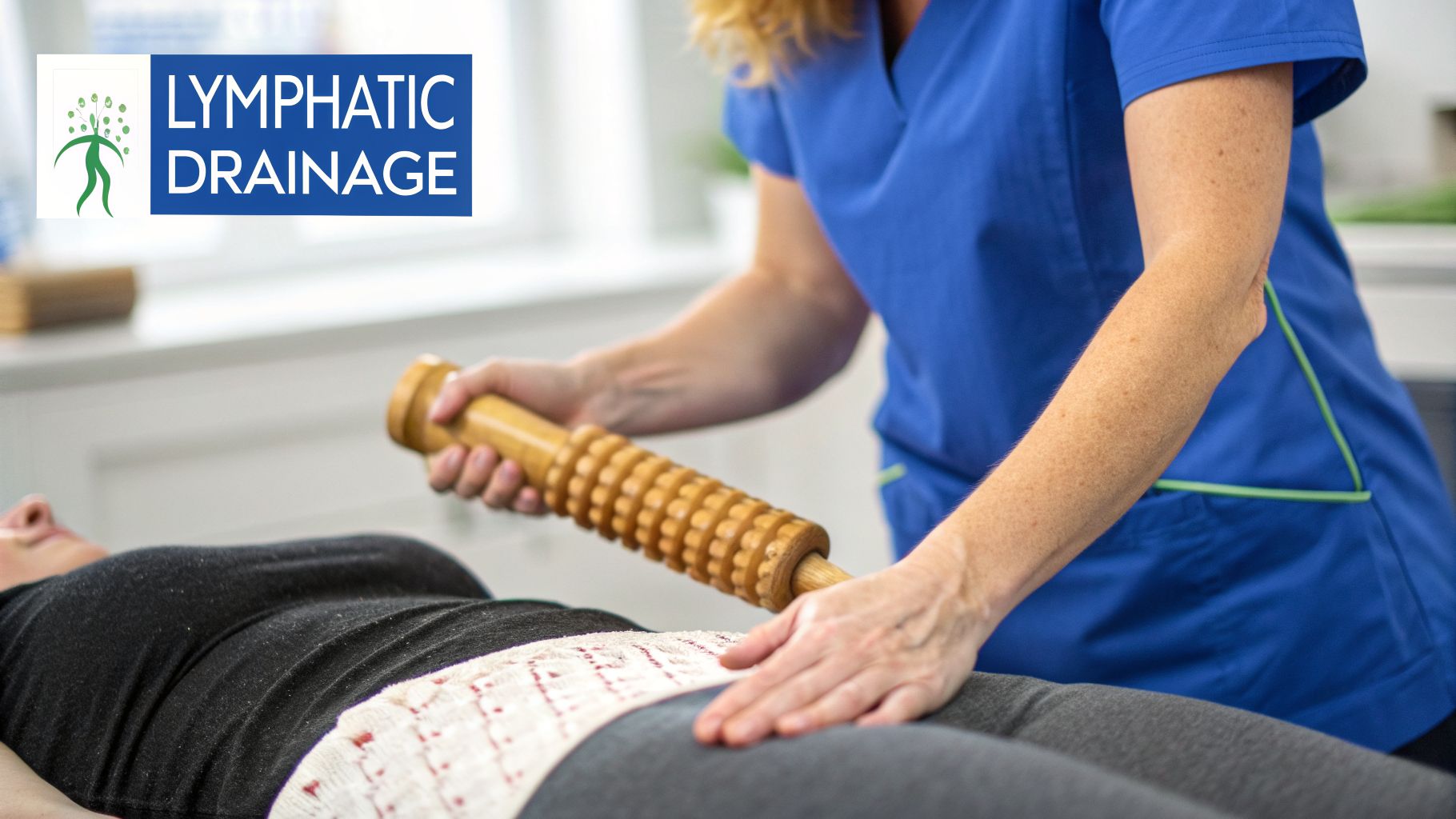
When clients ask about wood therapy for belly fat, it's important to set the right expectations. The goal isn't to magically melt away fat cells. Instead, it’s a technique for tackling two of the biggest contributors to a stomach’s appearance: stubborn pockets of subcutaneous fat and puffiness from excess fluid retention.
The secret is in the intense, targeted pressure delivered by the specially designed wooden tools. This vigorous massage creates a two-pronged attack on the abdominal tissue. It physically manipulates the tissue to smooth things out, and just as importantly, it gives your body's natural drainage and circulatory systems a serious kick-start.
Activating the Lymphatic System
Think of your lymphatic system as your body's built-in waste disposal network. It's responsible for clearing out metabolic byproducts, toxins, and excess fluids. When this system gets sluggish—which is common—that fluid can get trapped in your tissues, leading to a puffy, bloated look, especially around the midsection.
Wood therapy directly confronts this problem. The specific rolling, gliding, and suctioning motions are all designed to manually push stagnant lymph fluid towards major lymph nodes for processing. It’s like unclogging a slow drain. By stimulating that flow, you help the body flush out the very things that cause that swollen appearance, creating a flatter, more defined contour.
This process of improved lymphatic drainage is a primary reason clients often report feeling "lighter" and seeing an immediate reduction in their belly measurements.
If you want to dig deeper into the specific movements involved, you can learn more about how wood therapy enhances lymphatic drainage in our dedicated guide.
Impact on Subcutaneous Fat
So, what about the fat itself? We’re still waiting on large-scale clinical trials focused only on wood therapy, but the principles behind vigorous, localized massage are established in scientific literature. The mechanical force applied by the tools helps disrupt the stiff, fibrous structure of subcutaneous adipose tissue—the layer of fat just beneath the skin.
By breaking up these rigid structures, the fat deposits become more pliable and less lumpy, contributing to a smoother overall look.
The evidence from related manual therapies is compelling. A 2017 review of noninvasive body contouring methods found that localized manual therapies—using protocols similar to wood therapy—led to a 14% reduction in abdominal adipose tissue over two months. Ultrasound imaging confirmed a thinning of the fat layer in 73% of cases, with the abdomen showing the most significant results. These protocols involved 10-15 sessions, which aligns with standard wood therapy recommendations. You can explore the research on these comparable manual therapies on PMC.
By improving both fluid drainage and the texture of underlying fat, wood therapy creates a visible aesthetic improvement. The result is a stomach that not only measures smaller but also appears smoother and more toned.
It's this one-two punch—reducing fluid-based puffiness while smoothing the fat layer—that makes wood therapy for belly fat such an effective contouring service. It doesn't destroy fat, but it improves the body’s natural processes to create a sculpted and defined abdomen.
Designing an Effective Wood Therapy Protocol

To deliver consistent, visible results with wood therapy for belly fat, you need a structured protocol. A haphazard approach won’t work. The effectiveness comes from a clear plan that dictates session frequency, duration, and the specific sequence of tools used for abdominal contouring.
For most clients, a good initial course consists of 10 to 15 sessions. These appointments are best scheduled twice a week, which helps build momentum and allows the benefits to accumulate. Each session should be blocked for 45 to 60 minutes, giving you ample time to properly warm up the tissue, perform the intensive contouring work, and finish with lymphatic drainage strokes.
As the global body contouring industry grows, services like wood therapy are becoming a go-to for belly-focused treatments. It isn't just a trend; it’s a business driver. Client retention data shows that 62% of clients return for maintenance after finishing an initial 12-session course, creating a reliable revenue stream. You can learn more about the business potential of these protocols on skinenvyny.com.
The Toolkit for Abdominal Sculpting
A successful belly contouring session is a methodical process. A skilled therapist uses a sequence of different wooden tools, each with a specific job, to work through layers of tissue and achieve a sculpted finish.
A typical session flow might look like this:
- Grooved Rolling Pins: These are often your opening act. Their textured surface is perfect for warming up the skin and starting to break down superficial, fibrous fat deposits.
- Cubed or Checkered Rollers: Next, you bring in the tools for deeper work. These rollers apply more intense, focused pressure to target stubborn, dense fatty tissue and help release fascial restrictions around the abdomen.
- Contouring Boards (Shaping Paddles): These smooth, curved tools are for moving and sculpting the now-malleable tissue. They are essential for defining the waistline and guiding displaced fluid and fat toward lymphatic drainage points.
- Suction Cups (Swiss Cups): These create a gentle vacuum effect on the skin. This suction helps lift connective tissue, draws blood flow to the surface, and gives a boost to lymphatic drainage to reduce bloating.
Think of the process like sculpting clay. The rolling pins break down the hard clumps, the deeper rollers knead the material into a more uniform texture, and the contouring boards provide the final shaping and smoothing. Each tool builds on the work of the last.
Setting Timelines and Managing Results
Managing client expectations is one of the most important parts of any protocol. While some clients feel lighter and less bloated after just one session, visible changes in shape and skin texture typically require at least five to six sessions.
Communicating this timeline clearly and honestly from the beginning is key. It prevents disappointment and builds the trust necessary for a long-term client relationship.
Once a client completes their initial course, maintenance preserves their results. The effects of wood therapy are incredible, but they aren't permanent without some upkeep. Scheduling monthly or bi-monthly maintenance sessions helps preserve that contoured appearance and prevents fluid and puffiness from returning. This strategy not only keeps your clients happy but also creates a steady, recurring revenue stream for your practice.
Safety Guidelines and Managing Client Expectations

While wood therapy is a non-invasive service, your success depends on two things: safety and clear communication. A meticulous screening process is non-negotiable—it protects both your clients and your practice from liability.
Your primary goal here is to ensure you only treat individuals who can safely benefit. This means having a detailed intake form and a mandatory one-on-one consultation before a single tool ever touches their skin.
Key Contraindications for Wood Therapy
Not everyone who wants wood therapy is a good candidate for it. As the expert, it's your responsibility to identify and confidently decline service when necessary. The deep, mechanical pressure that makes the treatment effective can be harmful to clients with certain health conditions.
You must always avoid providing wood therapy to clients with:
- Active Infections or Fever: The massage can spread infection or put additional stress on a body that's already fighting something off.
- Blood Clotting Disorders: This includes anyone with a history of deep vein thrombosis (DVT) or those currently taking blood-thinning medication. The pressure could dislodge a clot, which is a serious medical emergency.
- Certain Skin Conditions: Never perform the therapy over open wounds, rashes, psoriasis, or active eczema flare-ups. The friction will only make it worse.
- Pregnancy: The abdominal area is strictly off-limits throughout the entire pregnancy.
- Recent Surgery: Clients must be fully healed, with clearance from their doctor, particularly after any procedures in or around the abdominal area.
Setting Realistic Expectations for Belly Fat Reduction
The most important conversation you will have with a client is the one about results. Managing their expectations from the first consultation is what separates a one-time visitor from a loyal, long-term customer who refers their friends.
You need to be direct and honest about what wood therapy for belly fat can and cannot do.
Wood therapy is a body contouring and skin toning service, not a weight-loss treatment. Its real strength is in refining the shape of the abdomen, easing puffiness from fluid retention, and improving the skin’s texture and tone. It does not permanently destroy or remove fat cells.
Use simple, clear language. Explain that the ideal candidate is someone who is already close to their target weight but is frustrated with a bit of stubborn, localized fat, bloating, or skin laxity. It is not the right fit for someone looking for significant, all-over fat reduction.
Finally, prepare them for the actual experience. Let them know it feels like an intense, deep-tissue massage and that some mild redness or even light bruising can occasionally occur. This kind of transparency builds immediate trust and positions you as a professional, ensuring clients understand the journey and are thrilled with their sculpted results.
Pairing Wood Therapy with Other Aesthetic Services
Wood therapy is a fantastic standalone service, but its real power—and business potential—is unlocked when you pair it with your other aesthetic technologies.
Think of it as the ultimate preparatory step. The intense, mechanical massage breaks down dense, fibrous tissue and supercharges local circulation. This creates the perfect foundation for your other treatments to go deeper and work more effectively.
When you start with a session of wood therapy for belly fat, you're priming the entire abdominal area. The tissue becomes more pliable, blood flow increases, and the stage is set for what comes next.
Creating Synergistic Treatment Packages
This is where you can create high-value packages that deliver impressive client outcomes. A subsequent treatment can build directly on the groundwork laid by the wood therapy, amplifying the overall effect. This approach boosts results and also increases your average client spend.
For example, imagine following a vigorous wood therapy session with a device that uses intermittent negative pressure, like a Vacustyler. The wood therapy first handles the heavy lifting, breaking up stubborn adhesions and manually stimulating lymphatic vessels. The vacuum therapy then acts like a pump, accelerating the clearance of all that freshly released metabolic waste and excess fluid.
The combination works so well because each treatment addresses a different piece of the puzzle. Wood therapy handles the mechanical breakdown of dense tissue, while a technology like vacuum therapy optimizes the physiological process of flushing it all out.
Smart Combinations for Abdominal Contouring
Here are a few powerful pairings that can elevate your body contouring menu:
- Red Light Therapy: After a wood therapy session, the increased circulation allows red light to penetrate the skin more effectively. This combination is incredible for supporting skin health and firmness by encouraging collagen and elastin production right where you need it most.
- Non-Invasive Fat Reduction: Using wood therapy before treatments like radiofrequency (RF) or ultrasound cavitation can be a game-changer. By improving blood flow and making the tissue more uniform, you create optimal conditions for the energy-based device to target fat cells with greater efficiency. You can explore a variety of these technologies in our guide to the best body contouring machines.
- Pressotherapy: Following wood therapy with a pressotherapy session creates the ultimate lymphatic drainage protocol. The wood therapy manually moves fluid from the abdomen, and the compression suit then provides a systemic flush, ensuring waste is efficiently processed and removed from the entire lower body.
To show how these pairings work in a clinical setting, we've created a quick reference table.
Synergistic Treatment Pairings with Wood Therapy
This table compares how different technologies can be combined with wood therapy to improve client outcomes for belly fat reduction and body contouring.
| Paired Technology | Combined Benefit | Ideal Client |
|---|---|---|
| Intermittent Vacuum Therapy | Wood therapy mechanically releases fluid and waste; vacuum therapy accelerates systemic clearance. | Clients with fluid retention, puffiness, and sluggish lymphatic systems. |
| Red Light Therapy | Wood therapy boosts circulation for deeper light penetration; RLT stimulates collagen and elastin for improved skin tone. | Clients concerned with skin laxity and firmness after fat reduction. |
| RF or Ultrasound | Wood therapy softens and prepares tissue, allowing for more uniform energy delivery and efficient fat cell targeting. | Clients seeking accelerated and enhanced fat reduction and body sculpting. |
| Pressotherapy | Wood therapy provides a targeted, manual flush; pressotherapy offers a full-body, automated lymphatic drainage to complete the process. | The ultimate detox and debloating client who wants to feel lighter immediately. |
These smart combinations give you a clear path to building premium service packages that stand out.
By framing wood therapy as a synergistic component of a larger treatment plan, you position it as an indispensable tool for any clinic serious about delivering top-tier body sculpting results. This strategy turns a simple, hands-on service into a cornerstone of your most effective and profitable contouring packages.
Marketing Wood Therapy and Calculating Your ROI
The way you talk about wood therapy for belly fat is everything. Your clients are smart. They’re often wary of invasive procedures and looking for results that feel natural, not artificial. This is where you position wood therapy.
Focus your messaging on its non-invasive, body-sculpting benefits. Frame it as a way to improve their natural shape, visibly tone the abdomen, and reduce that stubborn puffiness and bloating without any downtime. This resonates with the wellness-focused client who wants to refine, not completely overhaul, their look.
Building Recurring Revenue
A one-off wood therapy session is a great introduction, but the real magic—for both the client's results and your clinic's bottom line—comes from a full series. This is how you build loyalty and generate predictable income.
Don't just sell single sessions. Structure your offerings to encourage commitment.
- The Starter Course: Your primary offering should be a package of 10-12 sessions. Sell it upfront with a slight discount to lock in the client and ensure they see the treatment through to its transformative conclusion.
- The Maintenance Membership: For clients who have completed the initial course, offer a simple monthly membership for 1-2 sessions. This is the key to preserving their results and turning a new client into a long-term regular.
This model moves you away from one-time transactions and creates a steady, reliable revenue stream.
Calculating Your Return on Investment
Here’s the best part: wood therapy is one of the most financially accessible services you can add to your menu. The initial investment is low. A high-quality, professional set of wooden tools costs a few hundred dollars—a world away from the five or six-figure price tag on a new contouring machine.
The return on that small investment is almost immediate. With individual sessions typically priced between $150 and $250, the profit margins are significant.
Think about it. A single treatment room dedicated to wood therapy can quickly become a profit powerhouse. If you run just four sessions a day, five days a week, at a conservative $150 per session, that’s $3,000 in weekly revenue.
That’s a potential $150,000 in annual revenue from one room, with almost no overhead. For any clinic looking to make a real impact on its bottom line, the numbers speak for themselves.
Common Questions About Wood Therapy for Belly Fat
When it comes to wood therapy for belly fat, both clients and practitioners have plenty of questions. Getting straight, honest answers is the key to managing expectations and making sure it’s the right fit for your clinic and your clients.
Let's walk through some of the most common questions we hear.
Does Wood Therapy Permanently Remove Belly Fat?
This is the big one. The short answer is no—wood therapy doesn’t remove fat cells in the way surgery like liposuction does. Think of it less as removal and more as reorganization and refinement.
Its real power lies in breaking down the stubborn, lumpy structure of localized fat deposits, flushing out retained fluid, and firing up the lymphatic system. This combination is what leads to a visibly smaller waistline and a smoother, more toned appearance. The results are real, but they need to be maintained with a healthy lifestyle and occasional follow-up sessions. Without that upkeep, fat cells can plump back up over time.
How Long Does It Take to See Results on the Stomach?
While some clients feel lighter and less bloated after just a single session, the truly visible changes—like a more defined stomach contour and improved skin texture—start to show up after about 5 to 6 sessions.
To get the most significant and lasting improvement for the abdominal area, a full series of 10-15 sessions is the gold standard. We recommend scheduling them two to three times a week to build momentum and achieve the best possible outcome.
Is Wood Therapy Painful and Are There Side Effects?
The sensation is best described as a very intense, deep-tissue massage. It should never be outright painful. Some clients might feel a bit of discomfort, especially in sensitive spots or where the tissue is particularly dense and knotted, but it’s a productive "hurts-so-good" feeling.
The most common side effects are minor and temporary. You might see some redness in the treated area or even light bruising, but both typically fade within a few days. A well-trained therapist knows how to read the client’s body and will always adjust the pressure to keep them comfortable.
Who Is the Ideal Candidate for This Treatment?
The perfect candidate for abdominal wood therapy isn't someone looking for major weight loss. Instead, it’s for the person who is already near their target weight but is frustrated with stubborn pockets of fat or cellulite on their stomach that just won't budge.
It’s a body sculpting and skin-toning treatment at its core. It works best for individuals who are already committed to a healthy lifestyle and are looking for that final touch to refine their shape and boost their confidence.
Ready to improve your clinic’s body contouring services with a treatment that complements your existing offerings? At Weyergans HighCare US, our Vacustyler technology can amplify the lymphatic drainage benefits of wood therapy, delivering superior results for your clients. Explore how our systems create powerful, high-margin service packages at https://weyerganshighcareus.com.