


Boosting circulation in your legs doesn't always require a major overhaul. It often comes down to making small, consistent lifestyle adjustments—like incorporating targeted exercises, staying hydrated, and simply avoiding long stretches of sitting or standing still. The goal is to give your vascular system the support it needs to efficiently move oxygen-rich blood to your extremities. For those seeking faster, more pronounced results, modern wellness technologies can significantly accelerate this process.
What Poor Leg Circulation Actually Feels Like
It’s easy to brush off the early signs of poor leg circulation as just a normal part of a long day. That familiar heavy, achy, or tired feeling in your legs? Most of us just blame fatigue, but it could be your body's way of telling you that your blood flow is struggling. When circulation is compromised, your muscles and tissues don't receive the optimal amount of oxygen and nutrients, leading to a cascade of uncomfortable symptoms.
This isn't just a vague feeling of tiredness; it's a direct consequence of your circulatory system working overtime. When blood flow slows down, your muscles aren't getting the steady stream of oxygen and nutrients they need to function properly, which leads to that nagging discomfort. Over time, this can impact everything from your mobility to your recovery after exercise.
It's More Than Just Being Tired
Imagine your arteries and veins as a busy highway system. When the lanes get narrowed or clogged—due to a sedentary lifestyle, plaque buildup, or underlying conditions like peripheral artery disease (PAD)—the traffic slows to a crawl. That traffic is your blood, and the slowdown means vital deliveries aren't reaching their destination on time.
This circulatory slowdown is what causes those classic, tell-tale symptoms. You might start noticing them subtly at first, perhaps at the end of a long day, but they can become more persistent over time if left unaddressed. It is this persistent nature that signals a need for proactive steps.
Common Signs of Poor Leg Circulation
Recognizing the signs is the first crucial step. The table below breaks down what these symptoms actually feel like in real-world terms, helping you identify potential issues before they become more serious.
| Symptom | What It Feels Like | When It's Often Noticed |
|---|---|---|
| Aching or Cramping | A deep, dull ache or sharp, seizing pain in the calves, thighs, or buttocks. | During or after physical activity like walking; often subsides with rest. This is a classic sign known as claudication. |
| Numbness or Tingling | The classic "pins and needles" sensation or a feeling that your leg has "fallen asleep," even with minimal pressure. | After sitting or standing in one position for too long, or sometimes without any clear trigger. |
| Cold Feet or Toes | Your feet feel icy to the touch, even when the rest of your body is warm and you're in a comfortable environment. | At night when you're trying to sleep or in a cool room, indicating blood isn't reaching the extremities efficiently. |
| Swelling (Edema) | A puffy or tight feeling in your lower legs, ankles, or feet; socks might leave deep marks that last for a while. | Usually worse at the end of the day, especially after prolonged standing or sitting, as gravity takes its toll. |
| Skin Changes | The skin on your legs might appear pale, bluish, or shiny. You may also notice slower hair growth on the legs. | These changes are often gradual and can be easily overlooked, but they are direct indicators of chronic poor circulation. |
| Slow-healing Sores | Minor cuts, scrapes, or ulcers on your feet or lower legs take an unusually long time to heal. | This is a serious sign that your tissues are not receiving enough blood to support the natural healing process. |
These symptoms can feel different for everyone, but they all point back to the same core issue: compromised blood flow. Understanding these signals is paramount for taking timely action.
Why This Matters for Wellness and Recovery
Poor circulation is a surprisingly widespread issue. In fact, PAD alone affects over 200 million people globally, leading to painful cramping that can severely limit mobility and quality of life. The good news is that targeted interventions work. One landmark study showed that a dedicated physiotherapy program helped participants walk significantly farther before pain set in, proving that proactive care makes a real, measurable difference.
Recognizing these symptoms for what they are—a physiological signal, not just fatigue—is empowering. It's the first step toward finding effective solutions instead of just trying to "push through" the discomfort.
For athletes or anyone leading an active life, healthy circulation is a non-negotiable. Efficient blood flow is what delivers oxygen to your muscles during a workout and, just as importantly, clears out metabolic waste afterward. This process is absolutely critical for muscle repair, recovery, and preventing injuries. When circulation is suboptimal, recovery times lengthen and performance suffers.
Understanding the root causes behind the ache is key. To go a level deeper, you can learn more about what causes poor leg circulation in our detailed guide. Knowing why it's happening helps you choose the right strategies to improve your mobility and overall well-being for the long haul.
Daily Habits That Naturally Boost Blood Flow
Improving your leg circulation doesn’t mean you have to completely upend your life. It's much more about weaving small, consistent habits into your daily routine. These foundational tweaks provide direct support for your vascular health, making it easier for your body to do its job efficiently. Think of these as the building blocks for a healthier circulatory system.
One of the easiest yet most powerful changes is simply drinking enough water. Think of your blood as a river; when you're dehydrated, that river gets thick and sludgy, forcing your heart to work overtime to pump it through your vessels. Staying properly hydrated keeps your blood at the right consistency so it can flow smoothly and deliver oxygen where it's needed most. Aim for around eight glasses of water per day, or more if you are active or in a hot climate.
Fuel Your Flow with the Right Foods
What you eat has a direct line to the health and flexibility of your arteries. Some foods are absolutely packed with natural compounds that act as powerful allies for your entire circulatory system. A diet focused on vascular health can be both delicious and effective.
Making these a regular part of your diet can make a noticeable difference:
- Nitrate-Rich Vegetables: Foods like beets, spinach, and arugula are loaded with nitrates, which your body cleverly converts into nitric oxide. This molecule is a vasodilator, a fancy term for something that helps relax and widen your blood vessels, boosting blood flow and lowering blood pressure.
- Omega-3 Fatty Acids: You'll find these in fatty fish like salmon, mackerel, and sardines, but also in plant-based sources like walnuts, flaxseeds, and chia seeds. Omega-3s are famous for their anti-inflammatory properties, which help protect the delicate lining of your arteries from damage and reduce the risk of clot formation.
- Antioxidant-Packed Fruits: Berries, citrus fruits, and pomegranates are bursting with antioxidants like flavonoids. These compounds are your body's defense team against oxidative stress, a process that can lead to stiff, unhealthy blood vessels. Regular intake helps maintain arterial flexibility.
- Garlic and Onions: These kitchen staples contain sulfur compounds that have been shown to increase blood flow and relax blood vessels. They also possess anti-inflammatory properties that contribute to overall cardiovascular health.
These aren't exotic, hard-to-find ingredients. They're simple additions that help build a stronger vascular system from the inside out. For even more ideas, check out our guide on improving blood circulation naturally.
Lifestyle Factors You Can't Ignore
Beyond what you eat and drink, two other habits play an outsized role in your circulatory health: keeping your blood pressure in check and kicking smoking to the curb. These are non-negotiable for anyone serious about improving their circulation.
High blood pressure puts constant, damaging stress on your artery walls. Over time, this makes them less elastic and more likely to narrow. Think of it like running your home's plumbing at a dangerously high PSI—eventually, something's going to give. Managing it with diet, regular exercise, and medication if prescribed by your doctor is non-negotiable for long-term vascular health.
Quitting smoking is arguably the single most impactful thing you can do for your circulation. The chemicals in tobacco smoke directly attack the delicate lining of your blood vessels, causing inflammation, plaque buildup, and severe narrowing of the arteries. This damage chokes off blood flow throughout your entire body, especially to your legs and feet, drastically increasing the risk of PAD and other serious conditions.
By focusing on these daily habits, you're creating an internal environment where healthy blood flow can thrive. You aren't just chasing symptoms; you're strengthening the entire system, one smart choice at a time. This foundational approach is key to learning how to improve circulation in legs for good.
Targeted Exercises to Get Your Circulation Moving
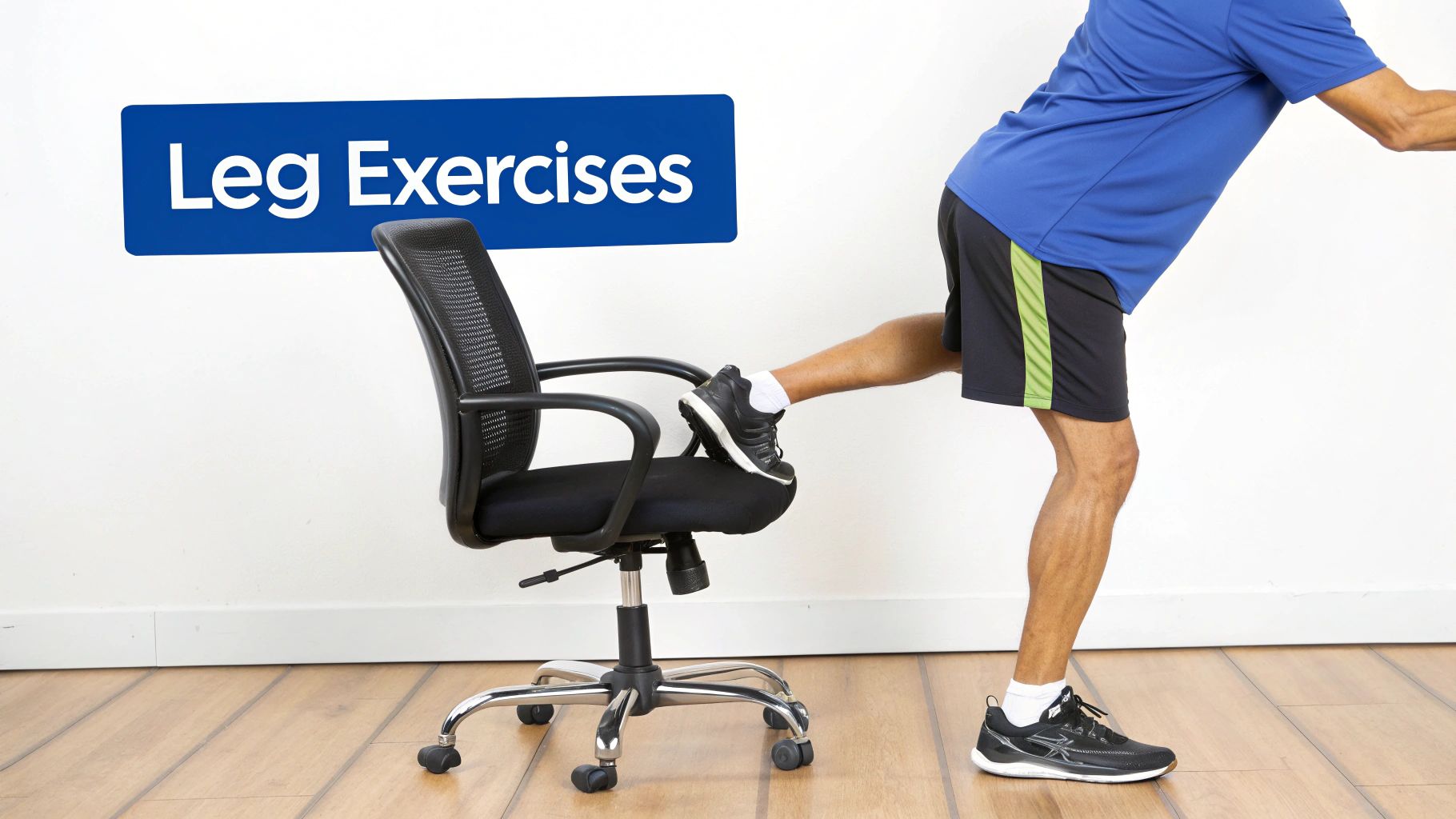
When it comes to getting sluggish circulation moving again, nothing beats good old-fashioned movement. Every time you move your legs, your muscles contract and relax. Think of this as a natural, built-in pump that helps push blood from your lower body back up toward your heart, working against gravity.
This "muscle pump" is the cornerstone of healthy venous return. By making consistent, purposeful movement a part of your life, you keep this system firing on all cylinders, preventing blood from pooling where it shouldn't. The great news? You don't need to run a marathon to get incredible benefits. Even small, frequent movements can make a significant difference.
Low-Impact Activities for Daily Circulation
Often, the most effective exercises for circulation are the simplest ones. Rhythmic, low-impact activities are perfect because they consistently engage your leg muscles without hammering your joints, making them accessible to almost everyone.
Here are a few of the best options to weave into your week:
- Walking: It’s the gold standard for a reason. A brisk 30-minute walk gets your calves, hamstrings, and quadriceps working in a steady pumping motion that dramatically improves blood flow. If you can't manage 30 minutes at once, break it into three 10-minute walks throughout the day.
- Swimming or Water Aerobics: The water’s buoyancy is a game-changer if you deal with joint pain or arthritis. As a bonus, the hydrostatic pressure of the water provides a gentle, natural compression effect on your legs, helping to push fluid and blood upward.
- Cycling: Whether you're on a scenic trail or a stationary bike, cycling gives you a fantastic cardio workout that strengthens your leg muscles and boosts circulation with every single pedal stroke. It's an excellent choice for building endurance without high impact.
- Yoga and Stretching: Practices like yoga incorporate a combination of movement, stretching, and deep breathing. Poses that involve leg inversions or gentle twists can be particularly beneficial for stimulating blood flow and improving the flexibility of blood vessels.
Consistency is what really matters here. If you're wondering how to improve circulation in legs, aiming for at least 30 minutes of moderate activity most days of the week is a powerful place to start.
Simple Exercises You Can Do Anywhere
You don't always need a gym membership or a dedicated block of time to get your blood moving. There are plenty of potent little exercises you can do right at your desk, while you're watching TV, or during a quick break from work.
Try sprinkling these discreet movements throughout your day:
- Ankle Pumps: While seated, just extend one leg and point your toes away from you, then flex them back toward your shin. Do this 15-20 times on each leg every hour. It’s a direct way to activate that critical calf muscle pump and prevent blood from pooling.
- Calf Raises: Stand up and hold onto a chair or wall for balance. Slowly rise onto the balls of your feet, pause for a second to feel the contraction in your calves, and then lower yourself back down. This is an incredibly effective way to strengthen your lower leg muscles, which are vital for circulation.
- Leg Lifts: While you’re sitting, slowly straighten one leg until it's parallel to the floor. Hold it there for a few seconds before lowering it back down. This gets your larger thigh muscles (quadriceps) involved, further enhancing the pumping action.
- Foot Circles: Lift one foot off the floor and slowly rotate your ankle clockwise 10 times, then counter-clockwise 10 times. Repeat with the other foot. This simple motion improves mobility and circulation in the ankles and feet.
These micro-movements might feel small, but when you do them consistently, they fight off the circulatory stagnation that comes from sitting too long. Think of them as "circulation snacks" to keep your blood flowing smoothly all day.
For athletes and fitness buffs, optimizing blood flow is everything—it's the key to both performance and recovery. A solid warm-up with dynamic stretches like leg swings gets the vascular system primed for action. Afterward, a cool-down with some gentle stretching helps flush out metabolic waste, preventing blood from pooling and leading to a much faster, more efficient recovery.
At-Home Therapies for Passive Circulation Support
While getting your body moving is a fantastic way to boost circulation, some of the most impactful strategies require almost no effort at all. These passive methods are ideal for integrating into your daily routine, especially on recovery days or for anyone whose mobility is limited.
These passive therapies are perfect for recovery days or for anyone with limited mobility. They're also a simple way to give your circulatory system a much-needed assist at the end of a long day on your feet.
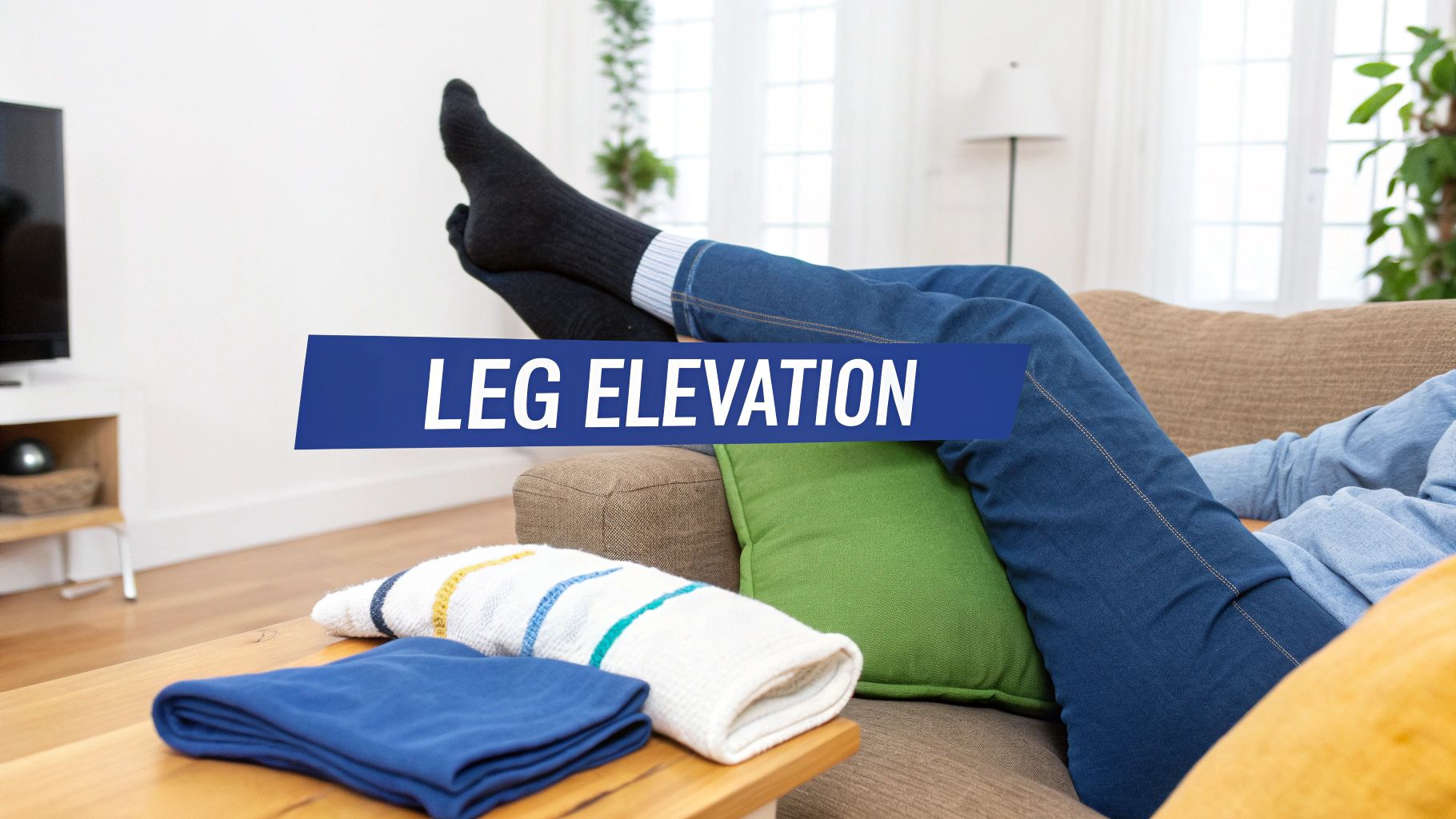
One of the oldest tricks in the book is also one of the best: leg elevation. By simply propping your legs up above heart level for 15-20 minutes, you let gravity do the work. This position helps drain pooled blood and excess fluid from your lower body, which can ease pressure on your veins and reduce swelling almost immediately.
This isn't just an old wives' tale, either. The science backs it up. A vascular nursing study found that elevating the legs led to a measurable drop in calf and ankle circumference and a significant decrease in that feeling of leg heaviness. The research confirms what we've known for years—this simple act cuts venous pressure and boosts blood flow. You can read the full research about these circulation findings to see the data for yourself.
Using Compression to Your Advantage
Another cornerstone of passive therapy is compression. When you pull on a pair of compression socks or sleeves, they apply gentle, graduated pressure to your legs. This external support helps your veins and muscles move blood more efficiently, preventing fluid from seeping into your tissues and causing that all-too-familiar puffy, heavy sensation.
Think of it as giving your vascular system a supportive framework to work with. The pressure is usually tightest at the ankle and eases up as it moves up the leg, which naturally encourages blood to flow back toward your heart.
So, who can benefit from a little compression?
- Athletes: To speed up recovery, reduce delayed onset muscle soreness (DOMS), and clear metabolic waste after a tough session.
- Frequent Flyers: To fight the circulatory stagnation and risk of DVT that sets in on long flights or car rides.
- Professionals on Their Feet All Day: Nurses, teachers, and retail workers find they can dramatically reduce end-of-day swelling and aching.
- Anyone with Venous Issues: It’s a great supportive measure for managing symptoms of varicose veins, spider veins, or chronic venous insufficiency.
Just remember that choosing the right level of compression is key. For general wellness and recovery, a light to moderate pressure (15-20 mmHg) is typically all you need. For medical conditions, consult a doctor for the appropriate grade.
The real beauty of these therapies is that they provide passive support to enhance your body's natural circulatory processes. They work with your system, not against it, offering an easy way to promote healthy blood flow without breaking a sweat.
Self-Massage for Localized Flow
Finally, never underestimate the power of getting your hands on the problem with self-massage or foam rolling. Manually stimulating the muscles can have a profound impact on local blood flow.
When you manually work on tight muscles in your calves, thighs, and glutes, you can release tension that might be constricting blood vessels. This localized manipulation encourages fresh, oxygenated blood to flood the area, which is absolutely crucial for muscle repair and function. Use a foam roller or a massage gun to target specific sore spots, helping to break up knots and improve tissue mobility.
For those interested in exploring more advanced options for localized support, our guide on red light therapy for legs is a great next step, as it also helps promote circulation and recovery at a cellular level.
The Next Wave of Recovery Technology
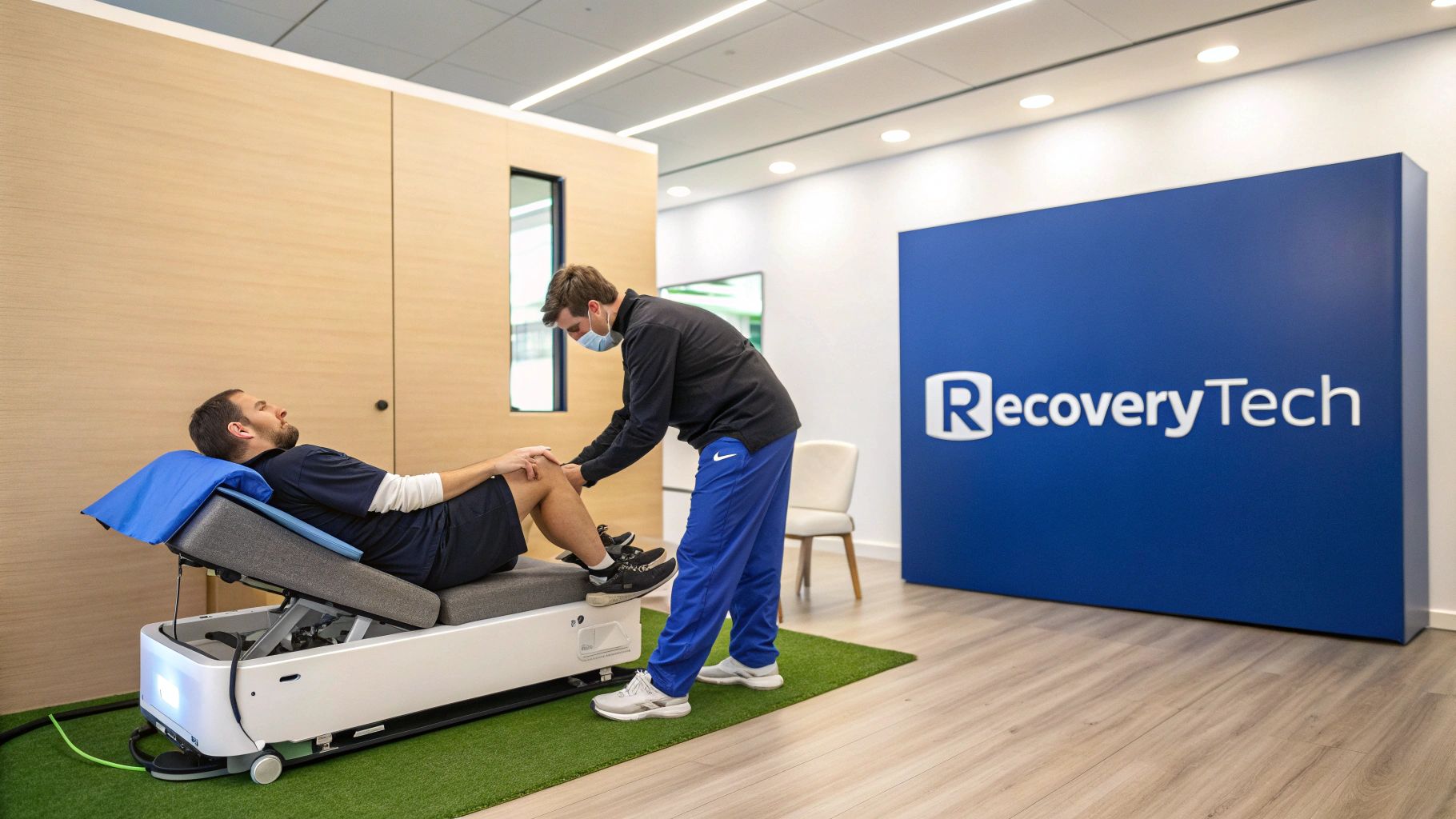
While daily habits and exercises are the bedrock of long-term circulatory health, technology now gives us a way to accelerate and deepen those benefits. For anyone looking for faster recovery, relief from persistent symptoms, or a more passive way to boost circulation, certain systems can deliver the advantages of a workout without the physical effort.
This new class of recovery tech is quickly becoming a staple in high-end medspas, athletic training rooms, and wellness studios. The whole idea is to provide efficient, non-invasive solutions that help clients and athletes feel better, faster. These technologies work by augmenting the body's natural processes, making them more efficient.
Intermittent Vacuum Therapy Explained
One of the most powerful methods out there is Intermittent Vacuum Therapy (IVT), sometimes called intermittent negative pressure therapy. Systems like the Vacustyler Avantgarde use a brilliant process, originally inspired by space medicine to counter the effects of zero gravity on astronauts, to passively fire up blood and lymphatic flow in the lower body.
Here’s how it works: you lie down and your lower body is enclosed in a sealed chamber. The system then gently cycles between negative pressure (a vacuum) and normal atmospheric pressure. This rhythmic change creates a passive "push-pull" on your entire vascular system.
During that negative pressure phase, your arteries and capillaries dilate, which allows a rush of fresh, oxygen-rich blood into your legs and feet. This is akin to the vasodilation that occurs during exercise. Then, as the pressure returns to normal, your veins and lymphatic vessels are gently compressed, helping to push out deoxygenated blood and metabolic waste.
It's essentially mimicking the powerful muscle-pumping action of an intense workout, but you get to lie down and completely relax. It’s an incredible way to enhance circulation, reduce swelling, and flush out all the byproducts that cause soreness and fatigue.
The best part? A session is quick, usually just 20-30 minutes, and clients almost always report an immediate feeling of lightness and rejuvenation in their legs. It's a highly efficient method for achieving profound circulatory benefits.
The Science of Passive Stimulation
This whole concept of passive stimulation isn't just a good idea; it's backed by solid physiological evidence. Even something as simple as gentle, passive limb movement has been shown to trigger remarkable circulatory responses.
For example, research has shown this kind of motion can cause a 3.3-fold increase in leg blood flow and significantly boost key markers of vascular health. Over time, this passive stimulation spikes the production of vascular endothelial growth factor (VEGF), a key protein that stimulates the formation of new blood vessels, and can even triple the proliferation of the endothelial cells that line your blood vessels. You can find more on the science behind how passive movement boosts blood flow on newsroom.heart.org.
This is exactly why IVT is becoming a go-to tool for so many different people:
- Athletes looking to slash recovery times, reduce muscle soreness, and reduce downtime between training sessions.
- Wellness clients seeking real relief from heavy, tired legs, fluid retention, and the appearance of cellulite.
- Aesthetic practices using it to complement body contouring treatments by improving lymphatic drainage and skin tone.
- Individuals with chronic conditions like lymphedema or venous insufficiency, under professional guidance, find it a valuable part of their management plan.
By providing a passive yet potent circulatory boost, this technology offers a practical and effective answer to the question of how to improve circulation in legs, fitting perfectly into the modern wellness toolkit.
Comparing Circulation Boosting Methods
With so many options, from daily habits to advanced tech, it can be tough to decide where to focus your energy. This table breaks down the most common methods to help you choose the best approach for your specific goals.
| Method | Effort Level | Primary Benefit | Ideal For |
|---|---|---|---|
| Daily Walking | Low | Foundational circulatory maintenance and cardiovascular health. | Everyone, especially those starting their health journey. |
| Stretching/Yoga | Low-Moderate | Improved flexibility, reduced vascular stiffness, and stress reduction. | Desk workers, those with muscle tightness, and active individuals. |
| Compression Socks | Passive | Reduces swelling, supports venous return, and prevents blood pooling. | Travelers, people who stand all day, and those with mild edema. |
| Massage Therapy | Passive | Targeted muscle relaxation, increased local blood flow, and release of tension. | Athletes, individuals with muscle soreness, and for stress relief. |
| Intermittent Vacuum Therapy | Passive | Deep, systemic circulatory & lymphatic stimulation for rapid recovery. | Athletes seeking fast recovery, wellness clients, and individuals with persistent leg fatigue. |
| Red/IR Light Therapy | Passive | Cellular energy production, nitric oxide release, and reduced inflammation. | Targeted recovery, skin health, and localized pain relief. |
Ultimately, the most effective strategy often involves a combination of these approaches—using daily habits as your foundation and layering in more advanced therapies to accelerate results and target specific concerns.
Common Questions About Improving Leg Circulation
Even with the best plan, you're bound to have questions as you start focusing on your vascular health. Let's dig into some of the most common ones I hear, so you can move forward with confidence.
How Long Does It Take to Improve Circulation in Your Legs?
This is the big question, and the honest answer is: it depends. The timeline really hinges on the underlying cause, which methods you’re using, and how consistent you are.
Simple things, like elevating your legs or taking a short walk, can give you immediate—though temporary—relief from that heavy, swollen feeling. You might feel a noticeable difference after just 20 minutes.
For more lasting changes, it’s all about consistent lifestyle adjustments. Most people start to feel a real drop in swelling and discomfort within a few weeks of starting a daily walking routine, improving hydration, and making dietary changes. If you're dealing with more significant underlying issues, think in terms of several months of dedicated effort to see deep, sustainable improvements.
Of course, advanced therapies can speed things up dramatically. A single session with Intermittent Vacuum Therapy often leaves people feeling lighter and more energized right away, with the deeper circulatory benefits building up over a series of treatments.
What Are the Best Foods to Increase Blood Flow to the Legs?
Your diet is one of the most powerful tools you have. The goal isn't about restriction; it's about adding in whole foods that help your blood vessels relax, stay flexible, and fight inflammation. Consistency is more important than perfection.
Here are some of the heavy hitters for boosting circulation:
- Foods High in Nitrates: Think beets, spinach, and arugula. Your body cleverly converts nitrates into nitric oxide, a fantastic molecule that helps your blood vessels widen for better flow.
- Antioxidant-Rich Foods: Berries (blueberries, strawberries), citrus fruits (oranges, grapefruit), and yes, even a bit of dark chocolate (70% cocoa or higher) are loaded with compounds that protect the delicate lining of your arteries from damage.
- Sources of Omega-3s: Fatty fish like salmon, mackerel, and sardines are the gold standard here, but walnuts and flaxseeds are also excellent for tamping down inflammation throughout your cardiovascular system.
- Helpful Spices: Adding a dash of cayenne pepper, turmeric (with black pepper to increase absorption), or ginger to your meals can be a great move. They contain natural compounds known to stimulate blood flow and reduce inflammation.
Can Poor Leg Circulation Be a Sign of Something Serious?
Yes, absolutely. While it’s often tied to lifestyle factors like sitting too much or smoking, poor circulation can also be a red flag for more serious medical conditions. This is why you should never ignore persistent symptoms, especially if they are worsening.
It could be a sign of things like Peripheral Artery Disease (PAD), where plaque builds up in the arteries; chronic venous insufficiency, where leg veins don't allow blood to flow back up to the heart; or even a deep vein thrombosis (DVT), which is a blood clot in a deep vein and a medical emergency.
When to See a Doctor: If you experience constant leg pain that gets worse with activity (claudication), numbness that doesn't go away, sores that won't heal, a noticeable temperature difference between your legs, or one leg becomes suddenly swollen and painful, it's time to see a professional. Self-diagnosing is a risky game. A proper diagnosis is the only way to get a safe and effective treatment plan.
How Can a Wellness Center Use Circulation-Boosting Services?
For wellness centers, medspas, and athletic facilities, this is a huge opportunity. Integrating circulation-focused services is a fantastic way to improve client results, enhance other treatments, and open up new revenue streams. You can start simply with offerings like professional compression therapy or targeted massage.
If you want to offer a premium, high-impact service, advanced technology like the Vacustyler Avantgarde is a game-changer. It provides unattended 20-30 minute sessions that are easy to market as powerful standalone recovery treatments for athletes or as a solution for anyone suffering from heavy, tired legs.
You can also bundle them into memberships or sell them as an add-on to other services like IV therapy, cryotherapy, or body sculpting, as improved circulation can enhance the results of those treatments. The marketing message is clear and compelling: promise faster recovery, less soreness, and an immediate feeling of lightness that will keep your clients coming back for more.
Ready to offer your clients the next level of recovery and circulatory support? Weyergans HighCare US provides the Vacustyler Avantgarde, a cutting-edge system designed to deliver immediate results for athletes and wellness seekers alike. Learn more and see how it can benefit your business at http://weyerganshighcareus.com.