


To get rid of that frustrating water retention in your legs, you first have to understand why it's happening. The causes can be anything from simple daily habits, like sitting too long, to deeper circulatory issues. The good news is that you can make a real difference by targeting your diet, activity level, and daily routines. Let's walk through the practical steps to get you feeling lighter and less swollen.
Why Your Legs Are Holding Onto Fluid
That heavy, tight, and swollen feeling in your lower legs isn't imaginary. It’s a very real signal that your body is having trouble managing its fluid balance, a condition clinically known as edema.
Simply put, excess fluid is getting trapped in your tissues instead of being moved along and processed efficiently. For your legs, this is a constant fight against gravity.
Your circulatory system—a team effort between your blood vessels and your lymphatic system—works nonstop to pump fluid up from your feet and back toward your heart. When this system is even slightly compromised, fluid starts to pool in the lowest points of your body. That means your ankles, feet, and calves bear the brunt of it, creating that familiar puffiness and discomfort. This can be exacerbated by a number of factors, including inactivity, diet, and even hormonal changes.
Temporary Puffiness vs. Chronic Edema
It's crucial to know whether you're dealing with occasional swelling or something more persistent.
-
Temporary Swelling: This is the kind of puffiness you get after a long flight, standing for hours, or being stuck at a desk all day. It’s usually symmetrical (happening in both legs) and tends to go away after you put your feet up or get some rest. Hot weather is another classic trigger, as your blood vessels expand and allow fluid to leak into surrounding tissues more easily. Hormonal fluctuations during the menstrual cycle or pregnancy can also lead to temporary fluid retention.
-
Persistent Edema: If your legs are swollen most days and the indentation from your socks is still visible hours later, you might be looking at a chronic issue. This kind of consistent fluid buildup often points to an underlying inefficiency in your circulatory or lymphatic systems that needs to be addressed. It's a sign that your body's fluid management system is consistently overwhelmed and requires more than just temporary fixes.
The Role of Your Veins and Lymphatic System
Picture your leg veins as an uphill highway for your blood. They have tiny, one-way valves inside them that are supposed to stop blood from flowing backward. When these valves weaken—a condition called venous insufficiency—it becomes much harder for blood to make that trip back up to the heart.
Venous insufficiency is a common culprit behind leg water retention, affecting between 1-40% of women and 1-17% of men worldwide. It's often triggered by long hours of standing or sitting, smoking, or a lack of activity. This sluggish blood flow leads to varicose veins and that classic ankle swelling as fluid pools.
To get a handle on the root of the problem, it helps to understand what causes poor leg circulation. For many, the issue is a mix of both venous and lymphatic struggles, creating a frustrating cycle of fluid retention that's tough to break without the right strategies.
At the same time, your lymphatic system acts as the body's drainage network, clearing out waste and excess fluid. If this network gets congested or impaired, fluid gets left behind, adding to the swelling. Unlike the circulatory system, the lymphatic system has no central pump like the heart; it relies on muscle contractions and body movement to keep fluid flowing. When you're sedentary, this system slows down, contributing to fluid buildup.
Common Causes of Leg Swelling at a Glance
Quickly pinpoint potential reasons for fluid buildup in your legs with this summary of common triggers.
| Cause | Who It Affects Most | Key Symptoms |
|---|---|---|
| Prolonged Sitting/Standing | Office workers, retail staff, travelers | Symmetrical swelling in both ankles/feet, resolves with movement |
| High Sodium Diet | Anyone consuming processed foods | General puffiness, bloating, "sock marks" |
| Venous Insufficiency | Adults over 50, pregnant women, inactive individuals | Aching, heavy legs, visible varicose veins, skin discoloration |
| Hot Weather | Most people during summer months | Mild, temporary swelling in hands and feet |
| Medication Side Effects | Patients on certain blood pressure or steroid meds | Consistent, bilateral leg swelling |
| Lymphatic System Issues | Post-surgery patients, individuals with lymphedema | Persistent, often asymmetrical swelling, tight-feeling skin |
Understanding these potential causes is the first step. By identifying what might be contributing to your swelling, you can start applying the right solutions to find relief.
Simple At-Home Strategies for Immediate Relief
When your legs feel heavy, achy, and swollen, you don’t want to wait for relief. You need practical, effective strategies that work right now. Fortunately, some of the most powerful techniques for reducing water retention can be done from the comfort of your home, with no special equipment needed.
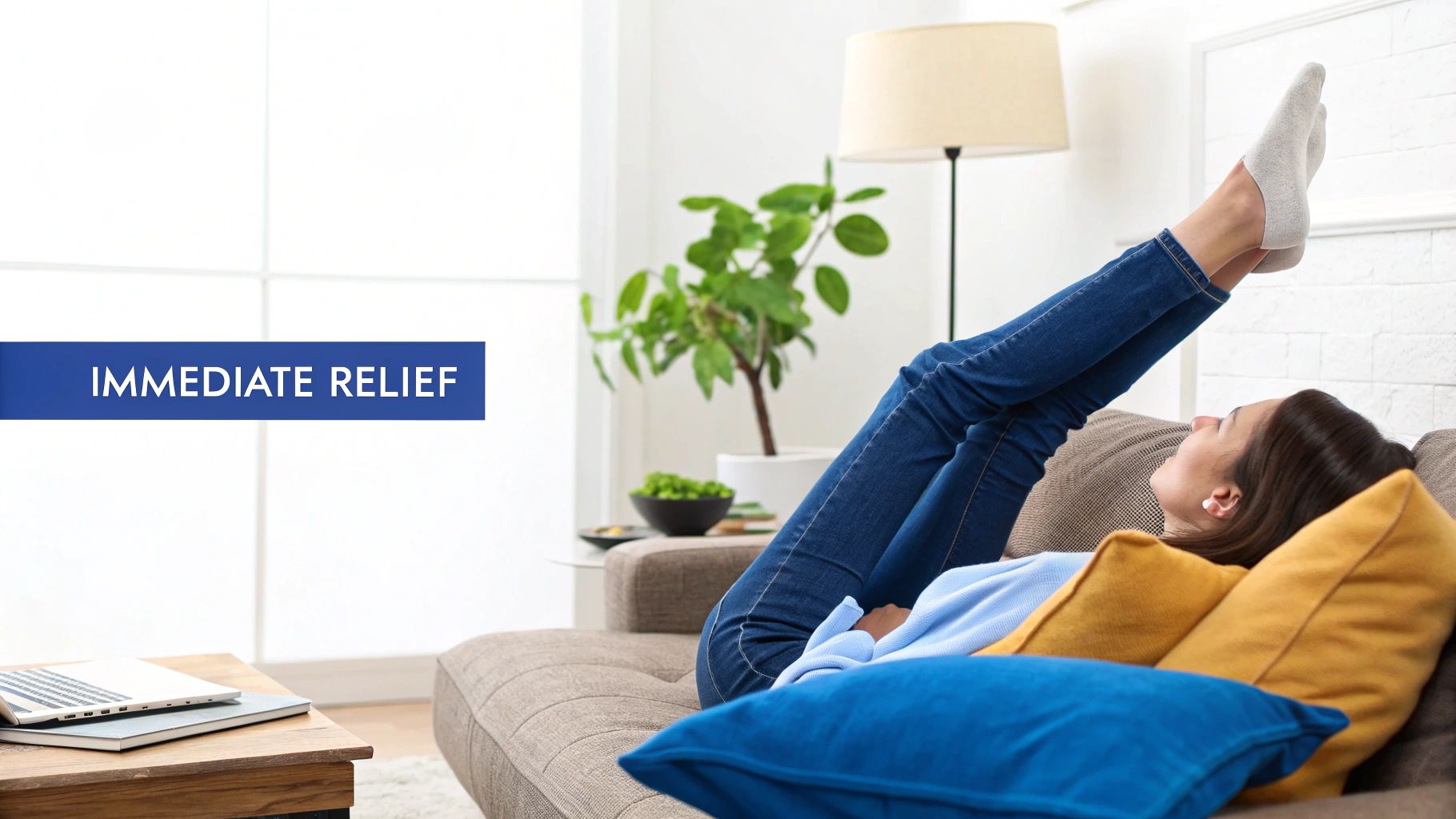
Think of these methods as your first line of defense. They use gravity and gentle stimulation to encourage trapped fluid to move out of your lower limbs—a physical reset button for your circulatory and lymphatic systems. These techniques are designed to counteract the effects of gravity and inactivity that contribute to fluid pooling.
Master the Art of Leg Elevation
Simply propping your feet up is good, but doing it correctly is even better. The goal is to position your legs above the level of your heart to give gravity a helping hand in draining the excess fluid. This simple shift in position can bring noticeable relief in as little as 20-30 minutes.
Here’s how to do it most effectively:
- Against a Wall: Lie on the floor or your bed with your hips as close to the wall as is comfortable. Extend your legs straight up the wall, forming an "L" shape with your body.
- Using Pillows: If the floor isn't an option, stack several pillows under your calves and feet while lying on a sofa or bed. The key is to make sure your ankles are higher than your knees, and your knees are higher than your heart.
This isn't just about comfort; it's physics. By reversing the gravitational pull that causes fluid to pool in your lower legs, you are directly aiding both venous return and lymphatic drainage, which are critical for reducing swelling.
To enhance the effect, try adding gentle ankle pumps while your legs are up—just point and flex your feet. This simple action activates your calf muscles, which act as a pump to push fluid upward even more effectively. Making this a regular practice, especially at the end of the day, can prevent fluid from accumulating overnight.
Try Gentle Self-Massage for Circulation
You don't need to be a professional massage therapist to stimulate fluid movement. A simple self-massage can work wonders by encouraging blood flow and lymphatic drainage. The secret is to always massage in the right direction: toward your heart.
Start at your ankles and use long, gentle but firm strokes, moving upward along your calves toward your knees. Then, continue from your knees up your thighs. This technique helps push stagnant fluid back toward the center of your body where it can be processed. Focus on maintaining a consistent, upward motion to mimic the natural flow of the lymphatic system.
For an added benefit, use a lotion or oil with peppermint or eucalyptus. These ingredients create a cooling sensation that provides extra soothing relief for tired, heavy-feeling legs. The lubrication also makes the massage smoother and more effective.
Harness the Power of Cool Compresses
Applying a cool compress or even taking a cool bath can offer immediate comfort for swollen legs. The cold temperature causes the blood vessels near the skin's surface to constrict.
This vasoconstriction can help reduce the leakage of fluid from capillaries into the surrounding tissue, which is a primary driver of swelling. It also provides a welcome numbing effect that can ease any aches or discomfort. It's a simple, yet scientifically sound method to quickly reduce inflammation and puffiness.
Just wrap a bag of frozen peas or a cold pack in a thin towel and apply it to the swollen areas for about 15 minutes. Remember to avoid placing ice directly on your skin to prevent ice burn. This straightforward method can be a surprisingly effective way to find quick relief after a long day.
Building a Diet That Fights Fluid Retention
While at-home remedies offer fantastic immediate relief, winning the long-term battle against leg swelling truly starts on your plate. What you eat and drink directly dictates your body's fluid balance. Creating a diet that actively fights water retention isn't about harsh restrictions; it's about making smart, strategic choices that support your circulatory and lymphatic systems from the inside out.
The link between diet and fluid retention isn't a new discovery. In fact, it's been a persistent public health concern for decades. Think about this: back in 2000, roughly 20% of older adults in the U.S. were struggling with persistent lower leg swelling from peripheral edema. Sixteen years later, in 2016, that number was still hovering at 19%—a clear sign that this issue is a relentless companion for millions. Learn more about the prevalence of this condition and its long-term impact. This data highlights the critical importance of proactive, long-term dietary management.
Rethink Your Relationship with Sodium
When it comes to diet-related water retention, sodium is the number one offender. It acts like a magnet for water, and when you have too much, your body clings to excess fluid to maintain its internal balance. This is what causes that puffy, heavy feeling, especially in your lower limbs.
The trick is, the biggest sodium bombs aren't usually coming from your salt shaker. They’re masters of disguise, hiding in:
- Processed Foods: Think canned soups, frozen dinners, and cured meats.
- Restaurant Meals: Chefs are paid to make food taste incredible, and that often means a heavy hand with the salt.
- Condiments and Sauces: That innocent-looking soy sauce, ketchup, or salad dressing can pack a shocking sodium punch.
Instead of aiming for zero salt (which is nearly impossible), focus on a strategic reduction. Get in the habit of reading labels and opting for low-sodium versions of your go-to products. Cooking more at home is a game-changer because it gives you total control, letting you build flavor with herbs, spices, garlic, and citrus instead.
Don't mistake flavor for salt. You can create incredibly delicious meals using a wide array of spices like smoked paprika, cumin, and oregano, which add complexity without contributing to fluid retention. This small shift in habit can dramatically reduce daily sodium intake.
The Hydration Paradox: Drink More to Retain Less
It sounds completely backward, but one of the best things you can do to fight water retention is to drink more water. When you're dehydrated, your body goes into survival mode, clinging to every last drop of fluid it has. This just makes the swelling worse.
Staying properly hydrated sends a clear signal to your body that there's plenty of water available, encouraging it to flush out excess sodium and waste through your kidneys. The key is consistent sips throughout the day, not chugging a huge bottle all at once. Aim for around 8-10 glasses per day, but adjust based on your activity level and climate.
If plain water feels like a chore, liven it up with slices of cucumber, lemon, or a few sprigs of mint. Herbal teas like dandelion or hibiscus also count toward your daily fluid intake and even offer gentle diuretic properties.
Power Up with Potassium-Rich Foods
Think of potassium as sodium’s natural counterbalance. While sodium tells your body to hold onto water, potassium helps your kidneys show it the door. This mineral is absolutely critical for managing fluid balance and can make a huge difference in reducing water retention in the legs.
Weaving potassium-rich foods into your diet is a simple, effective way to support this process. Most people don't get nearly enough, so making a conscious effort here can yield powerful results.
Top Potassium-Rich Food Sources:
- Leafy Greens: Spinach and Swiss chard are nutritional powerhouses.
- Fruits: Bananas get all the credit, but avocados, oranges, and melons are also fantastic sources.
- Vegetables: Sweet potatoes, white beans, and tomatoes are packed with this vital nutrient.
- Fish: Salmon and tuna deliver a healthy dose of both potassium and omega-3 fatty acids, which are great for overall circulatory health.
By focusing on these three dietary pillars—managing sodium, staying hydrated, and boosting potassium—you create a powerful internal system that naturally keeps your fluid levels in check. This isn't a quick fix, but a sustainable lifestyle shift that helps your legs feel lighter and healthier, day after day.
Movement and Exercise Routines to Boost Circulation
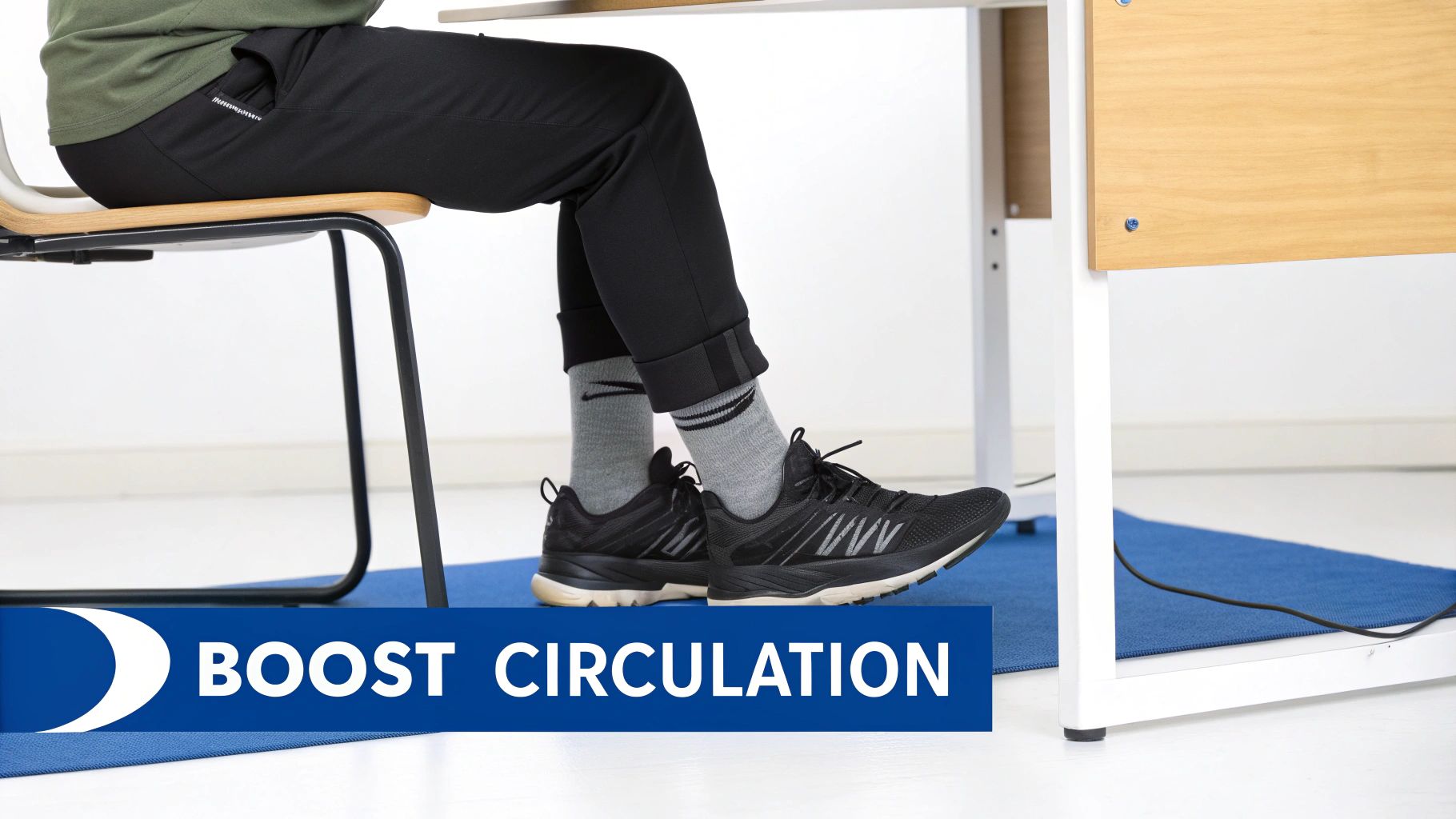
While diet provides the building blocks for proper fluid balance, movement is what gets the job done. To really tackle water retention in your legs, you have to get things moving. Stagnant fluid simply can't win against an active, pumping circulatory system.
The good news? This doesn't mean you need to train for a marathon. The focus is much simpler: activate the key muscle groups that act as your body's natural pumps. Specifically, we're talking about your calf muscles.
Often called the body's "second heart," these muscles are absolutely essential for pushing blood and lymphatic fluid up and out of your lower legs, working directly against gravity's pull. Any form of regular physical activity that engages the lower body, such as walking, cycling, or swimming, is beneficial.
Tapping Into Your "Second Heart"
Think of your calf muscles as a powerful hydraulic system. Every single time they contract, they squeeze the deep veins in your legs, propelling fluid upward toward your heart. Simple, repetitive movements are often the most effective way to engage this mechanism, especially if you spend long hours sitting or standing in one place.
Best of all, these exercises can be done almost anywhere, with no equipment and minimal time. The only secret ingredient is consistency.
-
Ankle Pumps: While seated or lying down, point your toes away from you (like a ballet dancer), hold for a moment, then flex them back toward your shins. Aim to repeat this 20-30 times every hour or so to keep fluid from settling around your ankles.
-
Calf Raises: Stand with your feet flat on the floor. Slowly rise up onto the balls of your feet, pausing at the top to feel that solid contraction in your calves, and then slowly lower back down. Try for 3 sets of 15-20 repetitions.
-
Ankle Circles: Lift one foot just off the floor and rotate your ankle clockwise for 15 seconds, then counter-clockwise for another 15 seconds. Switch legs and repeat. This simple motion lubricates the joint and gently engages all the smaller surrounding muscles.
These small movements are incredibly powerful at preventing fluid from building up during the day. If you want to go a step further, there are many other ways to improve blood circulation in legs that build on these foundational exercises.
A Daily Mobility Routine to Move Stagnant Fluid
A short mobility routine can make a world of difference. This isn't a high-intensity workout; it’s a gentle sequence designed purely to enhance circulation, promote lymphatic drainage, and leave your legs feeling noticeably lighter.
You can do it first thing in the morning to get ahead of the day or in the evening to undo the effects of being on your feet (or in a chair) for hours. Consistency is key to seeing long-term benefits.
The goal here isn't to build muscle or burn calories. It's about methodically moving stagnant fluid. Think of it as a gentle, yet powerful, form of physical therapy you can do at home to support your body's natural drainage systems.
Here’s a quick routine you can do every day. It's designed to be simple, effective, and take just a few minutes.
| Exercise | Duration/Reps | Primary Benefit |
|---|---|---|
| Ankle Pumps | 30 reps per foot | Activates the calf muscle pump |
| Leg Swings (forward/back) | 15 swings per leg | Improves hip mobility and blood flow |
| Leg Swings (side-to-side) | 15 swings per leg | Opens up the hip joints |
| Marching in Place | 60 seconds | Gets the entire circulatory system moving |
| Calf Stretch | 30 seconds per leg | Releases tension and aids recovery |
This little sequence ensures you’re moving your joints through their full range of motion, which is crucial for both circulatory and lymphatic health. Making it a daily habit is a game-changer in the fight against fluid stagnation.
Advanced Therapies for Powerful and Lasting Results
When your daily habits and at-home tricks just aren't cutting it, it might be time to call in the professionals. Advanced therapies go far beyond surface-level fixes, targeting the deep mechanics of your circulatory and lymphatic systems for results you can truly feel—and that actually last.
For anyone who spends all day on their feet or athletes pushing for faster recovery, these options can be a total game-changer. These professional interventions are designed to provide more intensive support than is possible with home remedies alone.
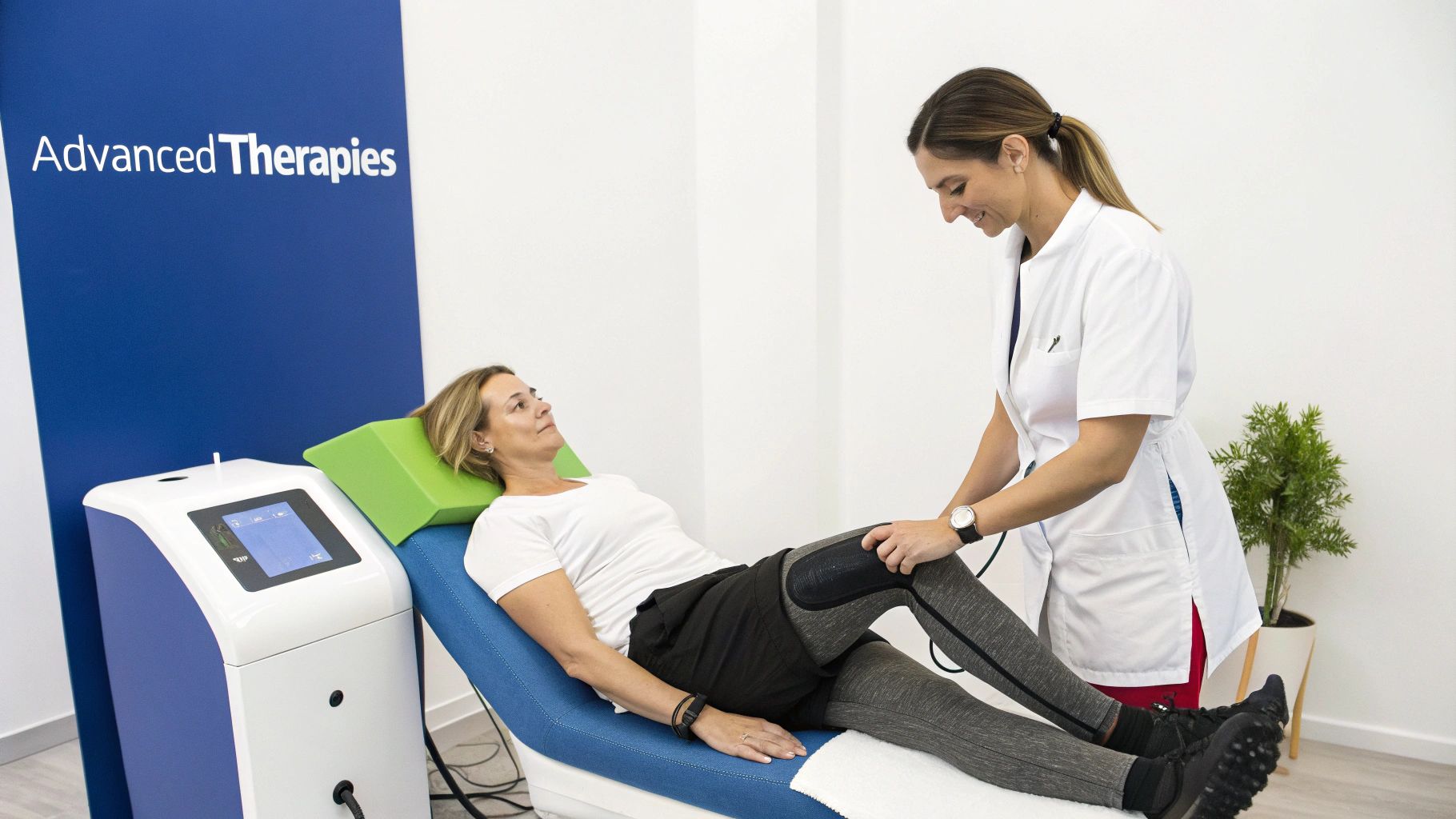
These treatments aren't just for severe cases. They're powerful tools for optimizing your body's fluid management, giving you an immediate and tangible feeling of lightness and well-being.
Manual Lymphatic Drainage: A Specialized Touch
One of the most effective professional treatments is Manual Lymphatic Drainage (MLD). Don't mistake this for a deep-tissue massage. MLD is a highly specialized, gentle technique using light, rhythmic strokes to get lymph fluid moving the way it's supposed to.
A trained therapist knows the intricate roadmap of your lymphatic system. They work methodically to clear blockages and redirect stagnant fluid toward lymph nodes for proper processing. For anyone dealing with persistent swelling, a session can feel like finally clearing a clogged drain, providing profound relief that sticks around.
This approach is especially critical for managing chronic conditions where the lymphatic system is compromised. Take obesity-fueled lymphedema, a severe form of leg swelling tied to water retention. Studies show it becomes almost inevitable at a BMI of 50-60, impacting up to 52.1% of bariatric patients. MLD is a vital tool for managing these complex cases.
The Future of Circulation Enhancement
Beyond manual techniques, modern technology offers some truly remarkable ways to reduce water retention in the legs. One of the most promising is Intermittent Vacuum Therapy (IVT), a concept first developed to help astronauts maintain circulation in zero gravity.
The technology uses a specialized chamber for the lower body that applies gentle, alternating cycles of negative and positive pressure. Think of it as a wave that gently pulls and pushes on your legs, rhythmically expanding and compressing your blood vessels and lymphatic channels.
This passive "vascular workout" acts as a powerful pump, dramatically accelerating blood flow and lymphatic drainage without any physical effort from you. It’s a way to supercharge your body’s natural fluid-moving mechanisms.
Treatments like the Vacustyler Avantgarde are built on this very principle. A session is just 20-30 minutes long. You simply lie back and relax while the device does all the work. Clients almost always report an immediate sensation of lightness, as if a heavy weight was just lifted from their legs.
This makes it perfect for busy professionals or athletes needing to flush out metabolic waste after a tough workout. The technology doesn't just reduce swelling—it also supports skin toning and contouring, giving you both wellness and aesthetic benefits. To learn more, you can explore the science of IVT and how negative pressure supports circulation.
Advanced Compression Systems
Professional-grade compression therapy is another powerful option that puts standard compression socks to shame. These systems, often called pneumatic compression devices, use multi-chambered sleeves that wrap around your legs.
The chambers inflate and deflate in a specific sequence, starting from your foot and moving up toward your thigh. This controlled "milking" action physically squeezes stagnant fluid out of the tissues and pushes it back into circulation. It's a highly efficient method for reducing edema and improving venous return, which is why you'll find these systems in nearly every top-tier athletic recovery center and physical therapy clinic. These devices provide a level of consistent, graduated pressure that is difficult to achieve manually.
Knowing When Leg Swelling Is a Red Flag
While most strategies for reducing water retention in the legs focus on lifestyle tweaks, it's absolutely critical to recognize when swelling is more than just a temporary nuisance. Benign edema is one thing; a serious underlying health issue is another entirely.
Ignoring certain warnings just isn't an option. Your body sends signals for a reason, and knowing when to stop self-treating and call a professional is the most important step you can take for your long-term health. Never underestimate persistent symptoms.
Signs That Demand Immediate Medical Attention
If you experience leg swelling alongside any of the following symptoms, it’s time to consult a doctor right away. These aren't things to wait out. They can point to serious conditions like a blood clot (deep vein thrombosis), heart failure, or a severe infection that needs prompt intervention.
Key warning signs to watch for:
- Sudden or severe swelling that seems to appear out of nowhere.
- Swelling in only one leg, which is a classic indicator of a potential blood clot.
- Pain, tenderness, or cramping in your calf or thigh that doesn't resolve.
- Skin that is red, warm to the touch, or looks shiny, suggesting inflammation or an infection.
Most importantly, if your leg swelling is accompanied by shortness of breath, difficulty breathing, or chest pain, you need to seek emergency medical care immediately. These symptoms can be signs of a pulmonary embolism, a life-threatening condition where a blood clot has traveled to the lungs.
When to Schedule a Doctor's Visit
Even if your symptoms don't feel like an emergency, persistent or worsening swelling is a clear sign to get checked out. If you notice the swelling is getting progressively worse, or if the at-home strategies you've tried are providing zero relief, make an appointment with your healthcare provider.
This is especially true if you have a pre-existing condition like heart, kidney, or liver disease. In these cases, leg edema can signal that your condition isn't being managed effectively. A doctor can run the right tests, like blood work or an ultrasound, to diagnose the root cause and get you the proper treatment. Your health always comes first. Don't delay seeking professional advice if your condition isn't improving.
Common Questions About Managing Water Retention
It’s natural to have questions when you’re trying to understand fluid retention. To help you feel confident putting the advice in this guide into practice, we’ve put together some clear, straightforward answers to the things people most often ask about reducing water retention in their legs.
This is your quick guide to getting the best possible results.
How Long Until I See Results from These Changes?
The timeline for relief really depends on the strategy you're using. You can feel the effects of some methods almost instantly, while others are more about building consistent habits over time.
For example, immediate strategies like leg elevation can bring noticeable relief from that heavy, puffy feeling within just 20-30 minutes. It's a fantastic way to cap off a long day on your feet.
When it comes to diet, the results are also pretty quick. After just a few days of consciously cutting back on sodium and drinking more water, you’ll likely see less prominent "sock marks" and feel a general lightness. The more lasting improvements from consistent exercise and better hydration will become more obvious over several weeks as your overall circulatory health gets stronger.
Are Compression Socks Safe to Wear All Day?
Yes, for most people, wearing a properly fitted pair of graduated compression socks throughout the day is both safe and incredibly helpful. They’re especially effective if your day involves long stretches of sitting or standing, as they actively work against gravity's tendency to let fluid pool in your lower legs.
The key is getting the fit right—they should feel snug and supportive, but never painfully tight.
Think of compression socks as a support system for your veins. They provide just enough external pressure to help your internal pumps—your veins and calf muscles—do their job of moving fluid upward more efficiently. It's a simple, passive way to support active circulation all day long.
It’s generally best to take them off at night, giving your skin a chance to breathe, unless a doctor has specifically told you otherwise. Always consult with a healthcare professional if you have concerns about the appropriate compression level for your needs.
Could My Leg Swelling Be a Sign of Something Serious?
While most cases of leg swelling are tied to lifestyle factors, it's absolutely crucial to know when it might be a red flag for a more significant health issue. Persistent, stubborn, or unusual edema can sometimes be a symptom of underlying heart, kidney, or liver problems.
You should seek medical advice immediately if you notice your swelling:
- Appears very suddenly and severely.
- Affects only one of your legs.
- Is accompanied by pain, redness, or warmth in the skin.
- Happens alongside shortness of breath or chest pain.
These symptoms need a prompt medical evaluation to rule out a serious condition like a blood clot or a cardiac issue. When in doubt, it is always safer to seek a professional medical opinion to ensure proper diagnosis and treatment.
Ready to take the next step toward lighter, revitalized legs? The advanced circulation-enhancing technology at Weyergans HighCare US offers a powerful, non-invasive solution for lasting relief. Discover how the Vacustyler can help you achieve your wellness and recovery goals by visiting http://weyerganshighcareus.com.