


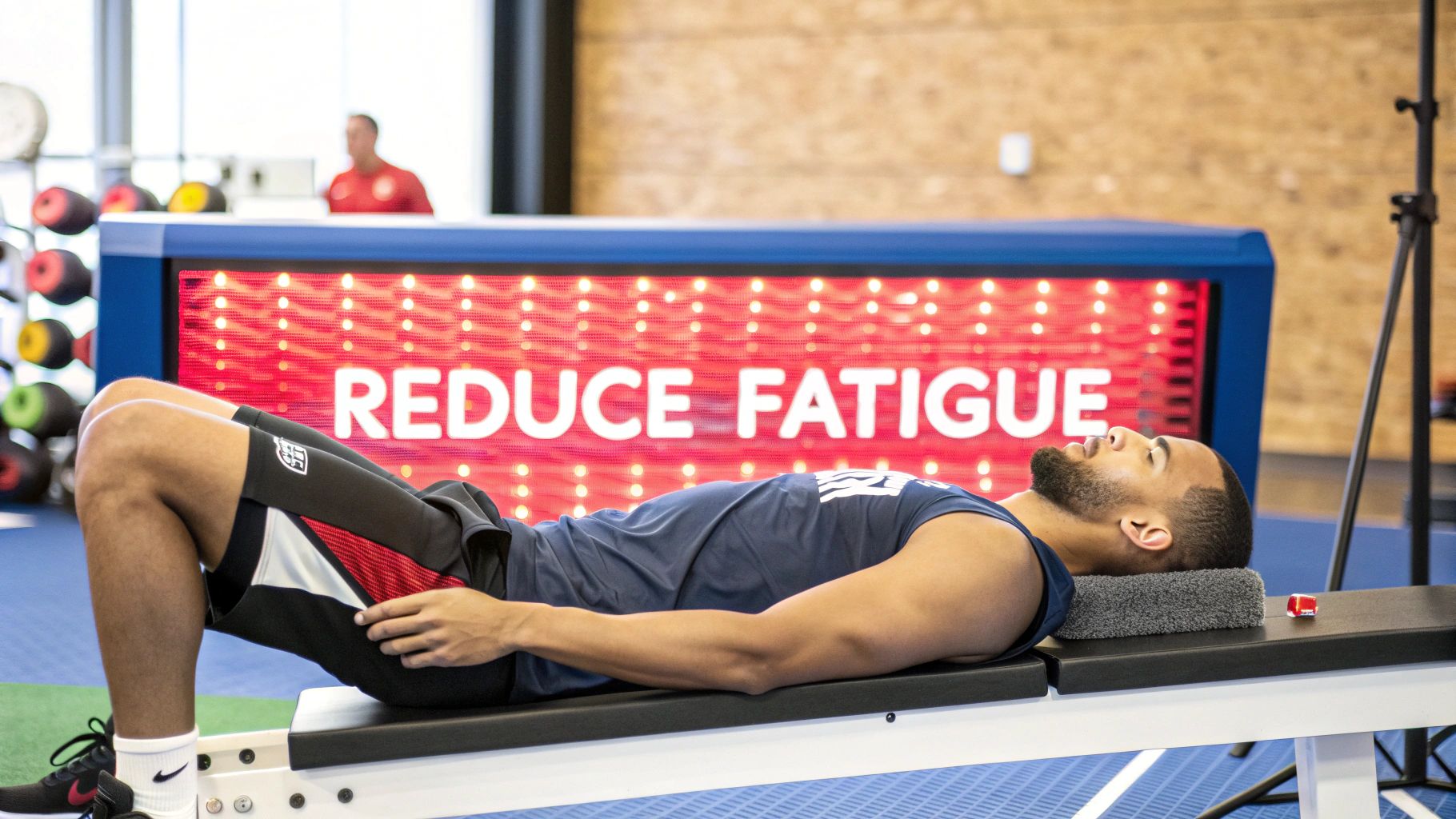
To truly get a handle on muscle fatigue, you can't just focus on one thing. It takes a combined strategy that looks at everything from cellular energy production and metabolic waste clearance to how your nervous system is firing. This means getting smart about your hydration, dialing in your nutrition, being strategic with your rest, and bringing in advanced recovery methods that support your body’s natural healing processes. A holistic approach is essential for anyone serious about performance, wellness, and longevity.
What Actually Happens When Your Muscles Get Tired
Ever hit that wall during a workout? Or felt that inescapable heaviness in your legs after a long day on your feet? That sensation isn't just in your head. It's a complex physiological signal that your body is pushing its limits. It’s the result of a multifaceted process involving energy depletion, metabolic byproduct accumulation, and even signals from your brain.
For years, everyone pointed the finger at lactic acid as the bad guy behind muscle soreness and fatigue. But we now know the story is much more interesting and nuanced. Real muscle fatigue is a cascade of events happening deep inside your cells and all the way up to your brain. Understanding these mechanisms is the first step in learning how to effectively reduce muscle fatigue.
The Energy Crisis in Your Cells
At the heart of every single muscle contraction is a molecule called Adenosine Triphosphate (ATP). Think of ATP as the high-octane, ready-to-use fuel for your muscles. The second you start moving, your body burns through its immediate ATP stores. We're talking seconds. This initial burst of energy is powerful but extremely short-lived.
To keep you going, your body scrambles to make more ATP by breaking down stored fuel, mostly glycogen (from carbs) and fat. This process, known as cellular respiration, is incredibly efficient but has its limits. When those fuel tanks start running low, your ability to produce ATP plummets. This energy shortfall is a huge driver of fatigue, making it physically harder for your muscles to contract with the same force and speed.
The sensation of 'hitting the wall' is your body's way of saying its readily available fuel tanks are running low. Your performance drops not because of a single factor, but because the energy supply can no longer meet the demand.
As this is happening, your muscles are also producing metabolic byproducts, like hydrogen ions. It's the buildup of these ions that can lower the pH in your muscles, creating a more acidic environment. This acidity messes with enzyme function and gums up the works for efficient contractions, further contributing to the feeling of fatigue.
When Your Nervous System Hits the Brakes
But muscle fatigue isn't just a local problem happening in the muscle tissue itself. Your central nervous system (CNS)—your brain and spinal cord—plays a huge protective role. Think of it as a central governor for your body, constantly monitoring internal conditions to prevent you from pushing yourself to the point of injury.
Your brain and spinal cord are constantly sensing changes throughout your body, such as:
- Rising core body temperature
- Depleting energy stores (like muscle glycogen)
- Increasing levels of metabolic byproducts
- Neurotransmitter imbalances in the brain
When things get too intense, the CNS deliberately dials back the electrical signals it sends to your muscles. This is a protective mechanism known as central fatigue. It's your brain's way of hitting the brakes to stop you from causing serious injury or cellular damage. It reduces the motor drive, making it feel like you simply can't push any harder, even if you want to.
So when your muscles feel weak and just won't fire, it's often your nervous system making a calculated decision to scale back the effort. Understanding this dual system—the local energy supply within the muscle and the central command center in your brain—is the key to building a smarter, more comprehensive recovery strategy.
Build Your Foundation for All-Day Energy
Before we even touch on advanced recovery technologies, let's get the fundamentals right. The daily habits you build—what you eat, drink, and how you sleep—are the absolute bedrock of your body's resilience. These aren't just suggestions; they are the non-negotiable pillars that prevent muscle fatigue before it ever starts. They provide the raw materials and the crucial downtime your body needs to repair and adapt.
Think of your body as a high-performance vehicle. The most sophisticated engine won't get you far with the wrong fuel, low oil, or a clogged filter. Nailing these basics ensures your body is primed to perform and recover, day in and day out, creating a baseline of health that technology can then enhance.
Fuel Smart: Your Nutritional Game Plan
Strategic nutrition is your number one weapon against fatigue. What you eat before a workout dictates your available energy, while your post-session meal determines how quickly and effectively your muscles repair themselves and restock for the next challenge.
Your goal here is to top off your energy reserves. About 30-60 minutes before you start, have some easily digestible carbohydrates with a touch of protein. This gives you a steady stream of glucose for fuel without weighing you down or causing digestive distress. A banana with almond butter, a small bowl of oatmeal, or a piece of toast with honey are perfect examples.
After you've pushed your body, your muscles are like sponges, ready to soak up nutrients. This is often called the "anabolic window." Within 60 minutes of finishing, you need a meal rich in protein and complex carbs. This provides the amino acids necessary for muscle protein synthesis (repair) and replenishes those depleted glycogen stores. Think grilled chicken salad with quinoa, a protein shake with fruit, or salmon with sweet potatoes.
Proper fueling is also a huge part of maintaining healthy blood flow, which is how all those good nutrients get delivered to the tissues that need them most. If you want to dive deeper into this topic, our guide on improving blood circulation naturally is a great resource.
To make it even clearer, here’s a quick-glance table to help you dial in your pre- and post-workout nutrition.
Fueling to Fight Fatigue: A Pre-Workout vs Post-Workout Comparison
| Nutritional Goal | Pre-Workout (30-60 Mins Before) | Post-Workout (Within 60 Mins After) |
|---|---|---|
| Primary Focus | Top off glycogen stores for sustained energy. | Replenish glycogen and provide protein for muscle repair. |
| Ideal Foods | Easily digestible carbs, minimal fat/fiber. | High-quality protein and complex carbohydrates. |
| Quick Examples | Banana with almond butter, small bowl of oatmeal, rice cakes. | Grilled chicken with sweet potato, protein shake with fruit, Greek yogurt with berries. |
Timing your meals this way ensures you have the energy to perform and the building blocks to recover, which is a key step in learning how to reduce muscle fatigue effectively and consistently.
The Power of Smart Hydration
Dehydration is the fastest way to hit a wall. Even a minor fluid loss of just 2% of your body weight can seriously tank your physical and cognitive performance, reduce endurance, and increase perceived exertion. Water is essential for countless bodily functions, including nutrient transport and temperature regulation.
But smart hydration is more than just chugging water; it’s about maintaining electrolyte balance.
Key minerals like sodium, potassium, and magnesium are essential for muscle contractions and nerve function. When you sweat, you lose them. If you only rehydrate with plain water after intense, prolonged exercise, you risk diluting your remaining electrolytes, a condition which can lead to cramps and even more serious issues.
For intense sessions, try adding an electrolyte powder to your water or grab some coconut water afterward to get things back in balance. Proper hydration ensures your circulatory system can efficiently deliver oxygen and remove waste.
Sleep: The Ultimate Recovery Tool
Never, ever underestimate the power of sleep. This is when your body does its most critical repair work. During deep sleep, your body ramps up its production of human growth hormone (HGH), which is vital for repairing tissue and building muscle. It's also when your brain consolidates memories and clears out metabolic waste that accumulates during waking hours.
Make 7-9 hours of quality sleep a non-negotiable priority. Simple tweaks like keeping your room cool and dark, establishing a consistent sleep schedule, and ditching screens an hour before bed can make a world of difference. This isn't just downtime; it's an active, essential phase of recovery that fights fatigue at the cellular and neurological level.
Accelerate Healing with Advanced Recovery Technology
Dialing in your nutrition and sleep lays the foundation for solid recovery, but it doesn't have to end there. To truly gain an edge, you need to actively speed up the healing process. Elite athletes and top-tier wellness centers don't just sit back and wait for the body to repair itself; they use specialized tools to accelerate cellular repair, flush out metabolic waste, and cool down inflammation.
These modern tools go far beyond basic stretching or foam rolling. They target the physiological roots of muscle fatigue, helping you bounce back faster, stronger, and with a whole lot less soreness. They work by enhancing the body's own natural recovery mechanisms, making them more efficient.
While things like compression and cryotherapy are common, one of a highly effective approach works by enhancing your body's most critical recovery asset—the circulatory system.
Intermittent Negative Pressure: A Breakthrough in Recovery
Imagine a technology that could pull fresh, oxygenated blood deep into your tissues while simultaneously pushing out the metabolic junk causing fatigue and swelling. That’s the core idea behind intermittent negative pressure therapy, a method first pioneered for astronauts to counteract the circulatory effects of zero gravity.
The Weyergans Vacustyler Avantgarde brings this space-age concept down to Earth. The system uses gentle, rhythmic vacuum waves around your lower body, acting like a powerful external pump to dramatically improve blood and lymph flow. It creates a cycle of negative pressure (vacuum) and normal pressure, which causes blood vessels to dilate and constrict.
This isn't just passive recovery; it’s an active circulatory workout. The alternating pressure phases essentially train your blood vessels, improving their elasticity and efficiency. For clearing out metabolic debris, it's a total game-changer.
By physically enhancing this natural flushing process, the Vacustyler helps your body clear out the byproducts of intense exercise—like hydrogen ions—much faster than it could on its own. The immediate result is an incredible feeling of lightness in the legs and a significant reduction in post-exercise swelling.
In the high-stakes world of professional sports, this kind of tech is indispensable. For instance, neuromuscular electrical stimulation (NMES) devices now represent 34.6% of the muscle stimulator market because they get results. By sending targeted electrical pulses to fatigued muscles, they boost circulation and slash soreness so athletes can get back to training sooner. Intermittent negative pressure offers a similar, yet distinct, powerful circulatory benefit.
Beyond Muscle Fatigue: Aesthetic and Wellness Benefits
The perks of supercharged circulation extend far beyond the gym or athletic field. Because the Vacustyler also stimulates the lymphatic system—your body's waste disposal network—it’s an incredibly effective tool for reducing fluid retention, swelling, and promoting detoxification.
This is why it's become such a popular choice in medspas for aesthetic treatments. Better circulation and lymphatic drainage can lead to some impressive results that clients can see and feel:
- Reduced appearance of cellulite: It helps clear trapped fluids and toxins from subcutaneous fat layers, leading to smoother-looking skin.
- Firmer, more toned skin: Better blood flow delivers a rush of oxygen and nutrients to skin cells, promoting collagen production and skin health.
- Contoured and lighter-feeling legs: The system actively reduces puffiness and water retention, providing immediate relief from heaviness.
For athletes who need to know how to reduce muscle fatigue, the Vacustyler is an essential performance tool. For medspa clients, it’s a relaxing, non-invasive treatment for better-looking and better-feeling legs. If you want to see how different modalities stack up, check out our comparison of the best recovery tools for athletes. This unique dual-benefit approach makes it one of the most versatile solutions for a huge range of wellness goals.
How to Integrate Modern Recovery into Your Routine
Having access to advanced recovery tools is one thing, but making them work for you is where the magic happens. You can have the best technology in the world, but if it isn't seamlessly integrated into your life or business model, it's just another gadget. The key is creating a structured, repeatable process.
The right approach isn't one-size-fits-all. A pro athlete’s recovery needs are worlds apart from a medspa client's wellness goals or a time-crunched executive's schedule. Let's break down how to build a smart, effective routine for each of these distinct scenarios.
The Pro Athlete Protocol: Post-Game Refresh
For any athletic team, the name of the game is consistency. Minimizing downtime is critical for maintaining a competitive edge throughout a long season. When players recover faster, they're on the field more often and performing at their peak. Using intermittent negative pressure isn't just a perk; it's a systematic way to keep everyone ready for the next practice or game.
A simple, powerful post-training protocol could look like this:
- Immediate Post-Training (0-60 mins): Players hit their cool-down stretches and refuel with a protein and carbohydrate shake to kickstart muscle repair and glycogen replenishment.
- Targeted Recovery Session (1-2 hours post-training): This is the sweet spot. A 25-minute session in the Vacustyler Avantgarde actively flushes metabolic waste and dials down inflammation right when the body is primed for it. This helps mitigate the effects of exercise-induced muscle damage.
- Evening Wind-Down: Before their final meal, players can use foam rollers or massage guns for any lingering tightness, then shift their focus to quality sleep to maximize hormonal repair processes.
This structured approach removes the guesswork. It makes recovery a non-negotiable part of the training cycle, helping the entire team stay fresher and more resilient all season long.
The Medspa Wellness Package: Boost Results
As a medspa owner, your goal is to create an irresistible experience that delivers visible, tangible results. Advanced recovery tech is the perfect partner for your existing aesthetic and wellness services, amplifying client outcomes and leaving them thrilled with their investment.
We’ve all been there—after a tough workout or a long day on your feet, your legs feel heavy and achy. It’s classic muscle fatigue. And the demand for solutions is huge. Portable muscle stimulators, which boost blood flow, recently captured over 72% of the market, a sector now valued at USD 785.8 million and growing. These devices work by relaxing spasms and improving circulation, which is critical since neuromuscular fatigue can slash maximal force by 20-50%.
You can build packages that tap directly into this need:
The "Lighter Legs" Package: Imagine pairing a body-contouring treatment like cryolipolysis or radiofrequency with a follow-up Vacustyler session. The incredible circulation boost from the Vacustyler can enhance the aesthetic results by helping to clear away treated fat cells, while leaving clients feeling unbelievably light and refreshed.
Another fantastic pairing is with red light therapy. The combination accelerates skin rejuvenation on the surface while promoting deeper tissue repair below, creating a comprehensive anti-aging and recovery treatment. You can learn more about this synergy in our guide on red light therapy for legs.
The Busy Professional's 30-Minute Biohack
For the busy professional, time is everything. They need recovery that is fast, effective, and requires zero effort. Sitting at a desk all day leads to stagnant circulation, stiffness, and that dreaded brain fog. This "sedentary fatigue" is a real problem for millions.
This is where you position a Vacustyler session as the ultimate 30-minute biohack. It's an incredibly efficient way to reverse the physical toll of a sedentary workday without needing to carve out an hour for a massage or a trip to the gym.
A professional can easily slot a session into their lunch break or swing by after work to:
- Quickly fight the leg swelling and stiffness that comes from sitting.
- Boost circulation for a noticeable improvement in energy and mental clarity.
- De-stress and unwind in a completely passive, relaxing environment.
This transforms recovery from another chore on the to-do list into a quick, high-impact wellness habit that fits into even the most packed schedules, offering a powerful solution for corporate wellness programs.
The Business of Recovery for Spas and Athletic Programs
Investing in advanced recovery technology is no longer a luxury—it’s a sharp business decision with a clear return. For medspas, athletic programs, and forward-thinking wellness centers, offering targeted solutions for muscle fatigue opens up powerful new avenues for growth, client retention, and peak performance.
This is about shifting recovery from a passive afterthought to an active, high-value service. You’re directly addressing a universal client need—feeling and performing better, faster—and turning it into a reliable revenue stream. Let's break down the business case for this strategic investment.
New Revenue Streams for Medspas
For medspas, the appeal is crystal clear. Cutting-edge technologies like the Vacustyler Avantgarde introduce high-margin services that require minimal staff oversight. A single device can generate significant, predictable income through a few simple models:
- Session Packages: Bundling five or ten recovery sessions is a fantastic way to encourage repeat business and lock in upfront cash flow. A client might purchase a package to complement their existing body-contouring treatments, enhancing their results and overall satisfaction.
- Monthly Memberships: Create a predictable, recurring revenue stream by offering unlimited or tiered access for a flat monthly fee. This model is perfect for clients committed to consistent wellness maintenance and transforms a one-off customer into a loyal patron.
- Smart Service Add-Ons: A recovery session can be positioned as the perfect add-on to other services like IV therapy, cryotherapy, or even a facial. It’s a simple, low-effort way to boost the average value of every single client visit.
This strategic approach does more than just sell a single treatment. It transforms a one-time visit into an ongoing wellness relationship, dramatically increasing customer lifetime value and setting your spa apart from competitors.
ROI for High-Performance Athletics
In the hyper-competitive world of athletics, the return on investment (ROI) is measured in wins, player availability, and the prestige of your program. Investing in superior recovery technology directly impacts the bottom line by keeping your most valuable assets—your athletes—healthy and performing at their absolute peak.
The market for these tools is booming for one simple reason: they work. Chronic muscle fatigue is a massive performance killer, but new therapies are proving incredibly effective. In fact, the muscle stimulators market is projected to more than double from USD 1.43 billion to USD 2.92 billion within a decade, largely driven by the surging need for better rehabilitation and performance enhancement.
The science backs it up. Studies show that intermittent negative pressure can boost microcirculation by 29% and slash fatigue markers by 22% after a workout. This is a game-changer when you consider that fatigue can cripple force output by up to 30% in team sports. You can find more insights on the growing muscle stimulator market on Fact.MR.
For an athletic program, a top-tier recovery system isn't an expense; it's an investment in your players. Fewer injuries mean more consistent rosters and a stronger competitive edge. It's about proactive injury prevention, not just reactive treatment.
This commitment to player health also becomes a massive recruiting tool. It sends a clear signal to prospective athletes and their families that your program is dedicated to their longevity and peak performance, setting you leagues apart from the competition.
Your Top Questions on Muscle Fatigue, Answered
As you dive into the world of muscle recovery, it's totally normal for questions to pop up. We've talked about the science, daily habits, and even some pretty advanced tech, but how does it all come together in the real world? Let’s clear up some of the most common questions I hear.
Think of this as your quick-reference guide for troubleshooting fatigue and making your recovery as effective as possible.
What Is the Difference Between Soreness and Fatigue?
This is a big one, and the distinction is crucial. Muscle soreness, what we often call Delayed Onset Muscle Soreness (DOMS), is that familiar tenderness you feel a day or two after hitting the gym hard or trying a new activity. It’s a good sign, really—it means your muscle fibers have experienced micro-trauma and are now repairing and rebuilding stronger. It is a necessary part of adaptation.
Muscle fatigue, on the other hand, is what happens during the workout. It's the immediate drop in your muscle's power, that feeling of weakness that makes it impossible to squeeze out one more rep or keep your pace. It is a temporary inability to maintain optimal physical performance. While soreness is part of the adaptation process, ongoing fatigue is your body's way of saying its energy stores and nervous system are running on empty.
How Long Should Recovery Take?
There's no magic number here. Recovery time is deeply personal and hinges on your workout intensity, duration, your current fitness level, and overall health. For a standard, moderate session, 24-48 hours is usually enough for your muscles to patch things up. But if you’ve just run a marathon or survived a particularly brutal leg day, you might need several days to feel 100% again.
A few things that can speed up or slow down that timeline:
- Sleep Quality: Deep sleep is prime time for your body's repair crew to get to work. Skimping on sleep will dramatically slow recovery.
- Nutrition: Getting enough protein and carbs right after a workout is non-negotiable for refueling and rebuilding. Inadequate nutrition starves your muscles of the building blocks they need.
- Active Recovery: Gentle movement like walking or swimming, and technologies that get your blood flowing can seriously cut down on downtime by promoting circulation.
Who Benefits Most from Advanced Recovery Tech?
Honestly, anyone looking to improve circulation and cut down on inflammation will feel a difference. But some people find technologies like the Vacustyler Avantgarde to be a complete game-changer, moving them from good recovery to great recovery.
These tools are particularly powerful for anyone whose performance, well-being, or even business relies on their body being ready to go. We're talking about athletes who can't afford long downtimes, busy professionals fighting the stiffness of a desk job, and medspa clients wanting to amplify their aesthetic results with a wellness boost.
If you’re actively looking for a way to fast-track your body's natural healing—whether to win a race, feel human again after a stressful week, or enhance a body contouring treatment—then these systems are built for you. They offer a targeted, efficient boost that simple rest just can't match, helping you recover smarter, not just harder.
Ready to feel the difference that advanced circulatory enhancement can make? The Weyergans HighCare US team is here to show you how the Vacustyler Avantgarde can elevate your recovery, performance, and wellness offerings. Explore the science behind the Vacustyler and see how it can benefit you or your business.