


If you want to sidestep that dreaded post-workout ache, you need a full-circle strategy. This means thinking about muscle care before, during, and after you train—not just reacting once the soreness sets in. Many athletes and fitness enthusiasts believe soreness is a necessary evil, but what if you could train hard, make progress, and still walk down the stairs normally the next day?
It’s all about a proactive approach that includes dynamic warm-ups, smart nutrition, intelligent training, and a recovery routine that actually works. This comprehensive strategy helps minimize the microscopic damage and inflammation that leave you hobbling and stiff, allowing you to stay consistent and achieve your goals faster. True prevention isn't about avoiding hard work; it's about making your body more resilient to it.
Why Your Muscles Get Sore and How to Stop It
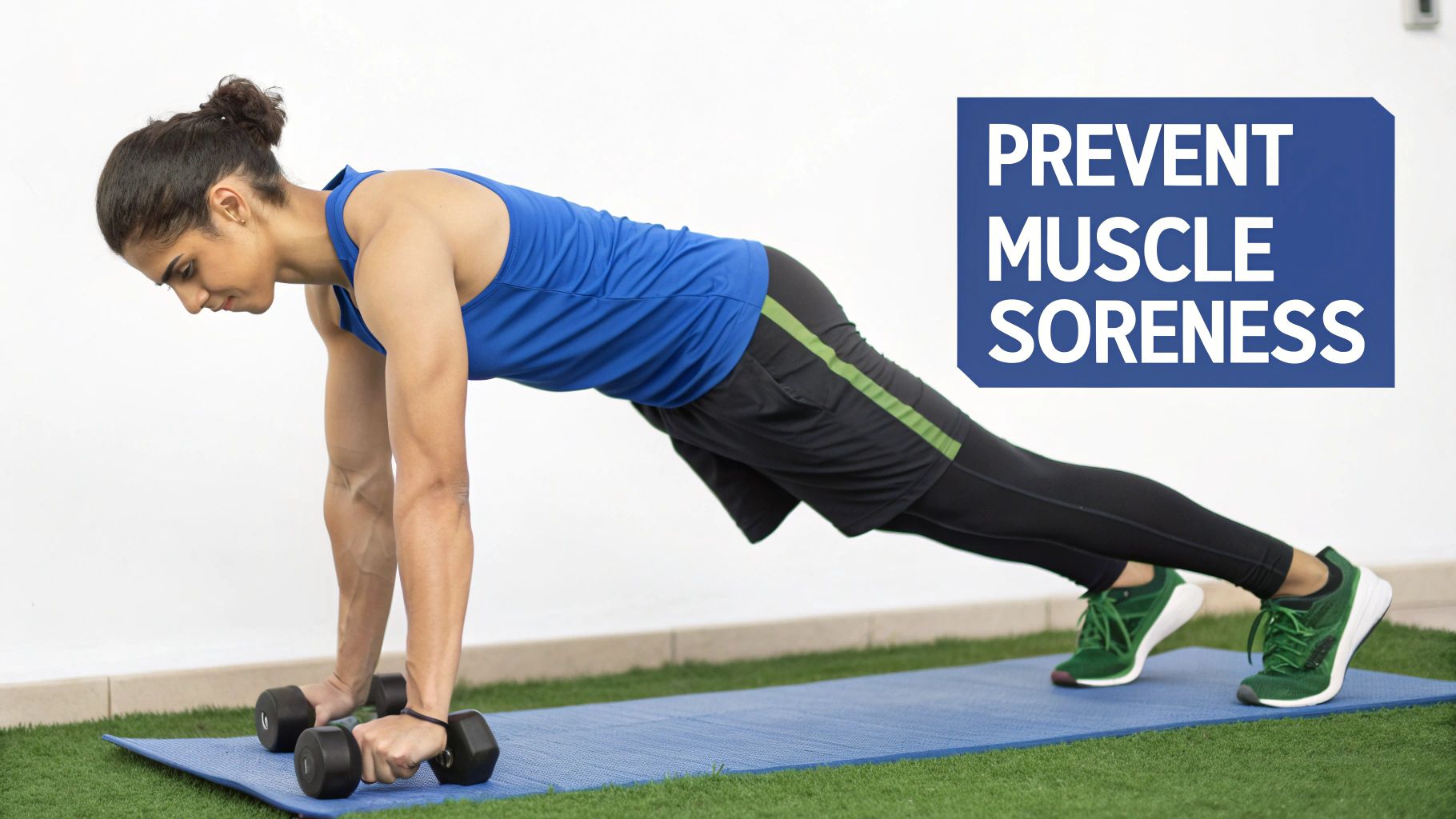
That familiar, tender feeling that shows up a day or two after a tough workout has a name: Delayed Onset Muscle Soreness (DOMS). It’s the direct result of challenging your body with new or intense movements, creating microscopic tears in your muscle fibers and the surrounding connective tissues.
Don't worry, this process is a normal—and necessary—part of getting stronger. As your body repairs these tiny tears, your muscles rebuild themselves to be bigger and more resilient. This is the very essence of adaptation. The problem is the inflammation and fluid buildup that come along for the ride, causing that classic stiffness, tenderness, and pain that can derail your training schedule.
Understanding the Cause of DOMS
The primary culprit behind serious soreness is usually eccentric muscle contractions. Think about the lowering phase of a bicep curl, the downward motion of a squat, or the burn you feel walking downhill. These are moments when your muscle lengthens while under tension, and this specific type of movement creates significantly more micro-damage than concentric (shortening) movements. New exercises or a sudden increase in training volume are also major triggers for DOMS, as they present a novel stress that your body hasn't adapted to yet.
While a little soreness can be a badge of honor, too much can completely sideline you. Severe DOMS can kill your range of motion, tank your performance, and make the thought of your next workout totally dreadful. Knowing how to prevent muscle soreness isn't about avoiding hard work; it's about training smarter so you can recover faster and train harder, more consistently, over the long term.
The most effective approach is a full-cycle strategy. True prevention begins long before your workout starts and continues long after it ends, involving preparation, smart programming, and targeted recovery.
A Holistic Prevention Strategy
Forget the outdated advice of just holding a few static stretches after you exercise. A modern, science-backed approach is far more powerful and involves a complete cycle of care for your body. This holistic view recognizes that your performance and recovery are interconnected, influenced by everything from your warm-up to your post-workout meal.
Here’s what that looks like:
- Pre-Exercise Preparation: This is all about priming your muscles for the work ahead. Dynamic warm-ups, proper hydration, and adequate fueling make your tissues more pliable and far more resistant to injury and excessive damage.
- Strategic Training: Learning to manage your workout intensity, volume, and exercise selection is key. This helps you avoid pushing your muscles past their ability to recover effectively, applying just enough stress to stimulate growth without causing unnecessary breakdown.
- Targeted Recovery: Active cool-downs, smart nutrition, and promoting good blood flow are non-negotiables. Efficient circulation is critical for flushing out metabolic waste and delivering the nutrients your muscles need to repair. To dive deeper, check out our guide on improving blood circulation naturally.
By adopting this complete approach, you can train consistently and see real progress without the debilitating pain that holds so many people back. The following sections will give you actionable steps for each phase of this cycle, turning prevention into a seamless part of your fitness routine.
Preparing Your Body to Avoid Post-Workout Pain
The best way to deal with crippling muscle soreness is to stop it before it even starts. That means getting your body ready for action before you even think about lifting that first weight or taking that first stride. Preparation is the most overlooked yet most impactful component of preventing DOMS.
So many people make the mistake of jumping straight into the hard stuff. It's like trying to drive a car on a frosty morning without letting the engine warm up—sure, it might move, but you're asking for trouble down the line. A proper pre-workout routine is your first and most powerful line of defense against excessive soreness.
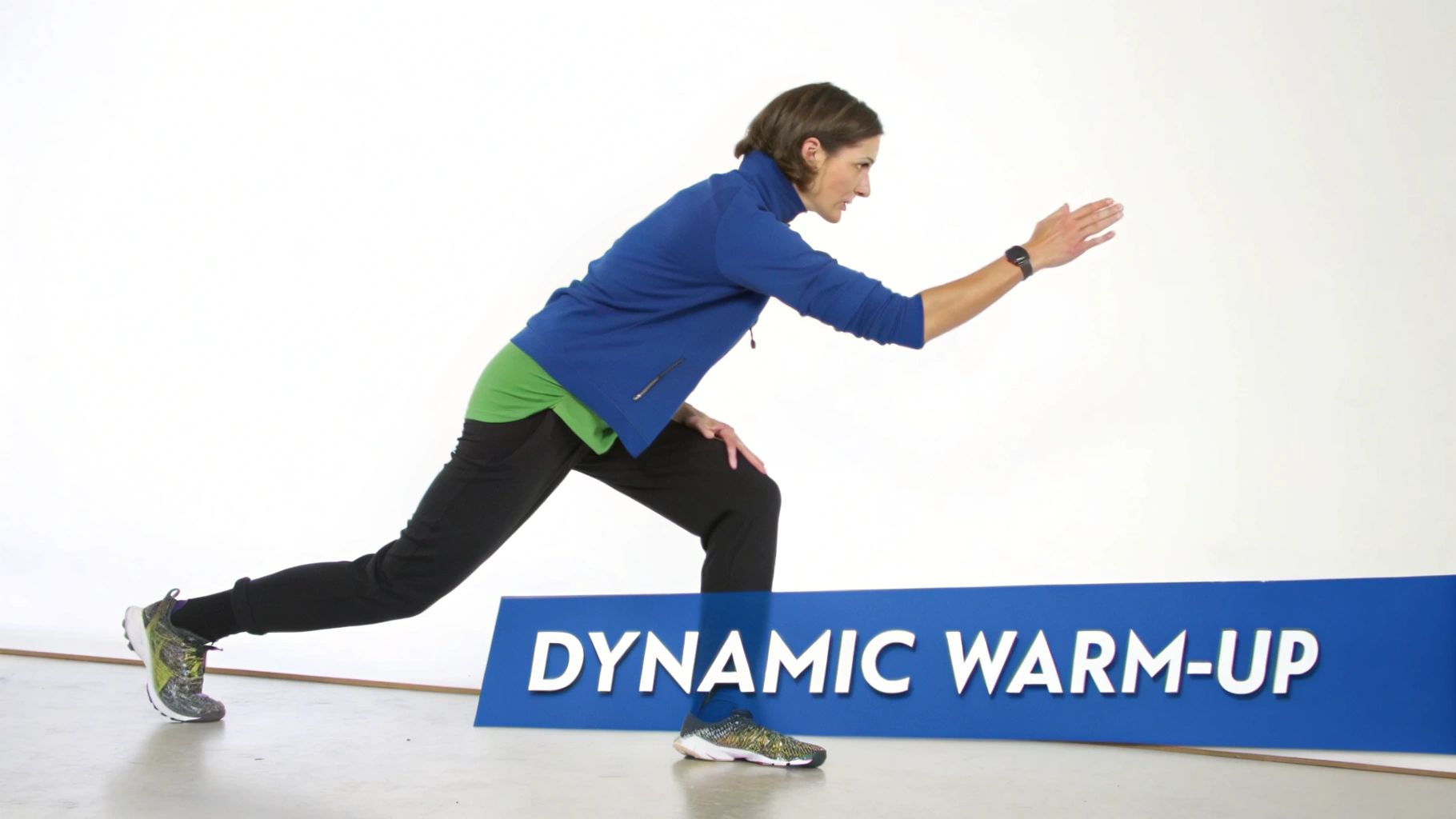
The Power of a Dynamic Warm-Up
Forget what you learned in old-school gym class. Static stretching, where you hold a pose for 30 seconds, has its place after a workout, but doing it beforehand can actually hinder your performance by temporarily reducing muscle power output. The modern, science-backed approach is the dynamic warm-up.
A dynamic routine is all about active movement. You’re taking your joints and muscles through their full range of motion, which ramps up your core temperature, gets blood flowing, and makes your muscle fibers more pliable. Think of your muscles as rubber bands: a cold one is brittle and snaps easily, but a warm one is flexible and resilient. This increased elasticity and blood flow directly prepares the muscles for the stress of exercise, reducing the likelihood of micro-tears.
Just 5 to 10 minutes is all it takes to prep your body for the stress ahead and dramatically reduce the micro-tears that cause that dreaded next-day soreness.
Here’s a simple, go-to routine that works for almost any activity:
- Walking Lunges: Perform 10-12 lunges per leg to wake up your glutes, quads, and hamstrings while promoting hip mobility.
- Arm Circles: Do 15-20 small circles forward and backward, then repeat with large circles to get the shoulder joints ready and increase blood flow to the upper body.
- Leg Swings: Hold onto a wall or rack for support. Swing one leg forward and back 15 times, then side to side 15 times. Switch legs. This opens up the hips.
- Torso Twists: Stand with your feet shoulder-width apart and gently rotate your upper body for about 30 seconds to mobilize your spine and activate your core.
- Cat-Cow Stretches: On all fours, cycle through arching and rounding your back for 10-12 repetitions to improve spinal flexibility.
This quick sequence fires up all the major muscle groups, ensuring they're primed and ready for whatever you throw at them.
The goal of a pre-workout routine isn't just to "get loose." It's a strategic preparation that actively reduces your risk of injury and significantly lowers the chances of experiencing severe post-workout pain.
Don't Overlook Fuel and Hydration
What you put into your body before you train is just as crucial as how you move it. Think of pre-workout fuel and hydration as foundational pillars for preventing muscle soreness. They are the internal equivalent of your physical warm-up.
When your muscles are even slightly dehydrated, they're far more susceptible to cramping, fatigue, and damage. Dehydration reduces blood volume, meaning less oxygen and fewer nutrients can reach your working muscles. A good rule of thumb is to drink at least 8-16 ounces of water in the hour leading up to your workout.
On top of that, giving your muscles some fuel is a game-changer. A small snack rich in complex carbohydrates about 60-90 minutes beforehand stocks your muscles with glycogen—their preferred energy source. This helps power you through the session and stops your body from breaking down precious muscle tissue for energy (a process called catabolism), which can significantly worsen soreness.
Simple options like a banana, a small bowl of oatmeal, or a slice of whole-wheat toast with peanut butter are perfect. They're easy to digest and give you exactly what you need. When you show up fueled and hydrated, your muscles are more resilient, better supplied, and ready to perform—ultimately minimizing the painful aftermath.
Training Smarter to Minimize Muscle Soreness
How you build and execute your workouts has a massive impact on how you feel the next day. Yes, pushing your limits is where progress happens, but completely overwhelming your body's ability to recover is the fastest way to end up with debilitating soreness that disrupts your entire week.
The goal is to challenge your muscles intelligently, not just demolish them. It's about finding the sweet spot where you provide enough stimulus for adaptation without causing excessive, unproductive damage.
This is where the principle of progressive overload becomes your best friend. It’s the absolute foundation of getting stronger, faster, and more resilient. The concept is simple: to keep improving, you have to gradually increase the demand on your body over time. The real secret to avoiding crippling DOMS, however, is how you apply this principle.
Master the Art of Progressive Overload
Instead of making huge jumps in weight or tacking on an extra hour to your workout, think in small, manageable steps. Your body adapts best to consistent, incremental challenges. A tiny increase is more than enough to signal the need for growth without causing excessive muscle damage that leads to severe soreness.
Here are a few smart ways to apply progressive overload without overdoing it:
- Increase Weight: Add the smallest possible increment, like 2.5 or 5 pounds. It feels small, but it adds up over time and is a sustainable way to progress.
- Add Reps: Aim for just one or two more reps with the same weight you used last time. This is a fantastic way to increase volume without changing equipment.
- Increase Sets: Once you can comfortably hit your target reps for all sets, consider adding one more set to that exercise to increase total work.
- Decrease Rest Time: Shave 5-10 seconds off your rest periods between sets to gently increase the intensity and metabolic stress.
- Improve Form: Perfecting your technique allows you to recruit muscle fibers more effectively, which is a form of progression in itself.
By focusing on just one of these variables at a time, you give your body a real chance to adapt without pushing it over the edge into recovery debt.
Manage Your Training Load and Variety
When it comes to preventing muscle soreness, consistency is king. Your body gets better at handling exercises it sees regularly. This is known as the "repeated bout effect"—a workout that makes you incredibly sore the first time will cause significantly less soreness the next time you do it. But, of course, you need to introduce new movements to avoid plateaus and keep making progress.
The trick is finding the right balance. When you try a brand new exercise, your body is incredibly susceptible to soreness because it's a completely unfamiliar stress. To manage this, introduce only one or two new exercises per session. This lets you challenge your body in a new way while the rest of your routine remains familiar and manageable.
The goal isn't to shock your system into submission. It's to coax it into getting stronger by applying just enough stress to stimulate adaptation, not cause debilitating damage.
You also have to learn to listen to your body. If you feel exceptionally run down, are stressed out, or slept terribly, today is not the day to chase a new personal record. This is called autoregulation. Scaling back the intensity or volume on off days is a smart move that prevents overtraining and keeps you on track for the long haul.
Finally, pay close attention to the eccentric part of the lift—the "lowering" phase. This is where most muscle damage happens. Instead of letting gravity do all the work, control the descent. A slow, controlled 2-4 second negative on movements like squats, deadlifts, or bicep curls actually builds strength and resilience, turning a major cause of soreness into a powerful tool for progress when managed correctly.
Your Post-Workout Plan for Immediate Recovery
The work isn't over when you finish your last rep. What you do in the first hour after your workout is a critical window of opportunity to kickstart the repair process and get a head start on preventing muscle soreness. This period sets the stage for how you'll feel for the next 48 hours.
Think of this period as damage control and resource replenishment. Your muscles are depleted, broken down, and screaming for resources to begin the healing process. Providing them with the right fuel and care immediately can significantly reduce the inflammation and stiffness that lead to DOMS.
Refuel to Rebuild Your Muscles
Your post-workout nutrition is non-negotiable. Right after training, your muscles are like sponges, primed to soak up nutrients to begin repairing the microscopic tears you just created. Your primary goals are to replenish glycogen (your muscles' energy stores) and provide the building blocks for repair.
The magic combination is protein and carbohydrates. Carbs spike insulin, a hormone that helps shuttle nutrients like glucose and amino acids into your muscle cells, while protein provides the essential amino acids needed for rebuilding tissue. I always tell my clients to aim for a snack or shake within 30 to 60 minutes of finishing their session to maximize this "anabolic window."
Simple and effective options include:
- A protein shake with a banana: This is fast-digesting, convenient, and provides an ideal blend of protein and simple carbs.
- Greek yogurt with berries: A great mix of high-quality protein, carbohydrates, and antioxidants that help fight inflammation.
- Chocolate milk: It's a surprisingly effective and affordable recovery drink that a lot of athletes swear by due to its ideal carb-to-protein ratio.
- A chicken breast with a small sweet potato: A solid food option if you're heading straight to a meal.
This simple step refuels your body and shifts it from a catabolic (breakdown) state to an anabolic (building) state, setting the stage for a much less painful next day.
The Non-Negotiable Cool-Down
Just as you wouldn't slam on the brakes of a speeding car, you shouldn't bring your body to a sudden halt after intense exercise. An active cool-down is essential for gradually bringing your heart rate down, lowering your body temperature, and encouraging blood flow to flush out metabolic waste products like lactic acid and hydrogen ions from your muscles.
A proper cool-down involves two key components:
- Light Cardio: Spend 5-10 minutes on a stationary bike, walking on a treadmill, or even just strolling around the gym floor. This gentle movement keeps blood circulating, which is crucial for nutrient delivery and waste removal, preventing blood from pooling in your extremities.
- Static Stretching: Now is the time for those classic hold-style stretches. Gently lengthen the muscles you just worked, holding each stretch for 20-30 seconds without bouncing. This helps relieve tightness, restore muscles to their resting length, and can improve your flexibility and range of motion over time.
The purpose of a cool-down is to transition your body back to a resting state gracefully. It’s a simple, proactive step that can dramatically decrease post-workout stiffness and soreness.
Elevate Recovery with Advanced Tools
While nutrition and stretching are fundamental, modern technology offers powerful ways to accelerate recovery. One of the most effective methods for combating DOMS is improving circulation to clear out inflammatory byproducts before they settle in and cause pain.
Did you know that massage therapy is one of the most effective ways to combat delayed onset muscle soreness? Research shows it slashes inflammation markers like creatine kinase and eases stiffness. Advanced systems like the Vacustyler Avantgarde from Weyergans HighCare US deliver automated, German-engineered massage-like effects through intermittent negative pressure waves.
This vacuum therapy mimics a hands-on massage by stimulating deep circulation and lymphatic drainage, but in just 20-30 unattended minutes. Studies show DOMS can cut muscle performance by up to 24%, but with tools like the Vacustyler, you can preserve your strength gains. For instance, in one study, control groups lost 24% of their strength post-squats, while treated groups held steady with only a 4% loss.
For facilities, these hands-off solutions are a game-changer, offering clients an efficient and highly effective way to enhance their recovery, reduce soreness, and feel better faster. If you're looking for more ways to optimize your routine, check out our comprehensive guide on how to speed up muscle recovery.
Using Advanced Technology for Elite Recovery
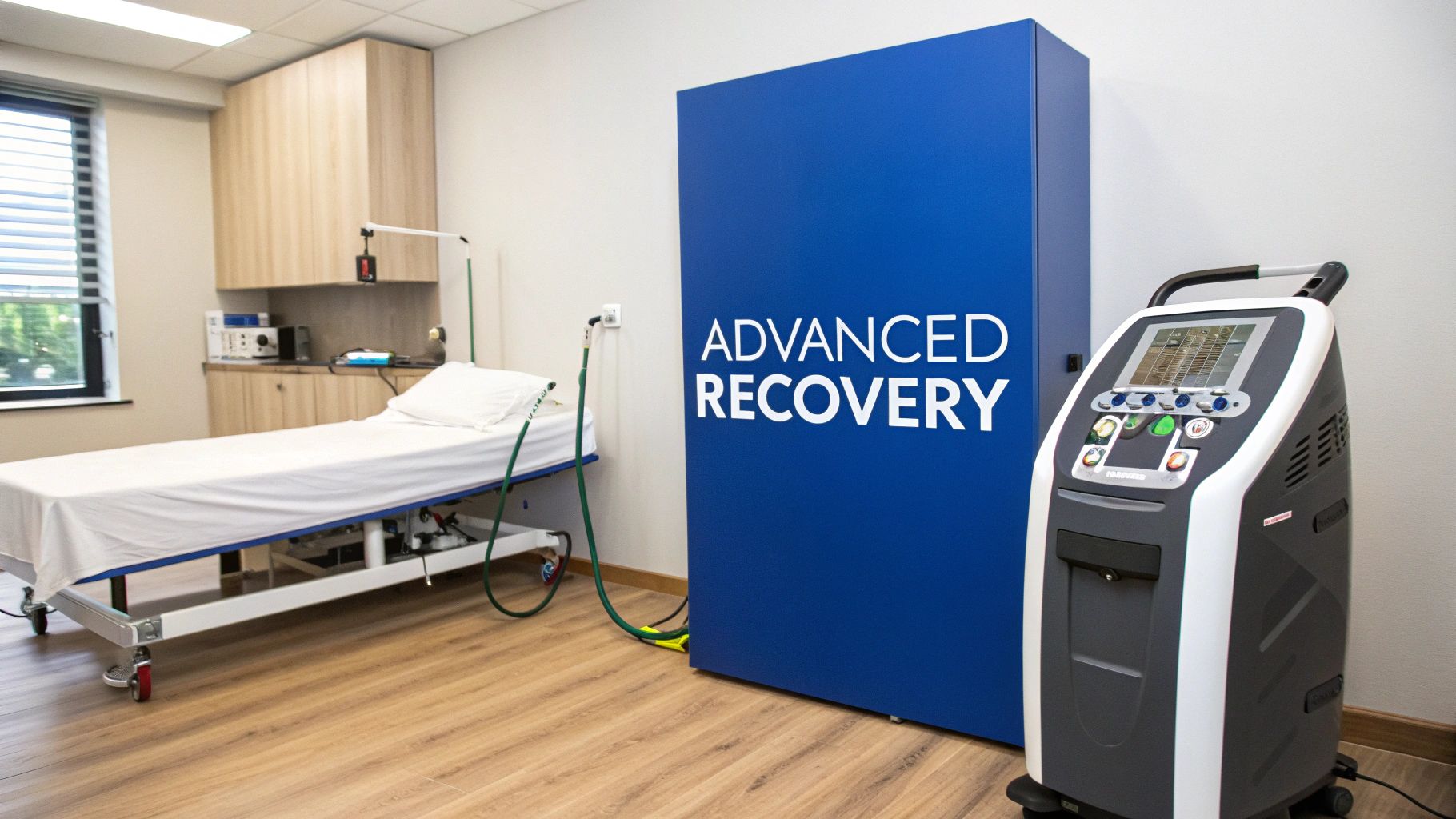
While smart nutrition and proper stretching are the foundation of any good recovery plan, modern technology gives us powerful ways to speed up the process. For facilities that want to offer a premium client experience, it's time to look beyond foam rollers and ice baths. The future of recovery is automated, efficient, and science-backed.
Today’s best recovery tools are built for efficiency, delivering real results with almost no effort from the user. They work by getting straight to the root causes of muscle soreness—inflammation, sluggish circulation, and cellular damage. By addressing these issues head-on, they help people bounce back faster so they can train more consistently and simply feel their best.
Heat Therapy and Its Modern Evolution
Cold therapy gets a lot of attention, but heat therapy is a true powerhouse for preventing and treating DOMS. Applying warmth increases blood flow (vasodilation) to sore muscles, which helps them relax and delivers the oxygen and nutrients they need to repair. It’s especially good for dialing down the perception of pain and keeping muscles elastic and pliable.
In fact, some research suggests heat therapy can be even better than cold in certain situations. Studies have confirmed it can slash pain and calm down overly tight muscles. One trial found that applying heat right after a workout or even 24 hours later helped protect muscle tissue and reduce damage markers. This is because heat can activate heat shock proteins (HSPs) which play a role in cellular repair and stress resistance.
In that study, the heat and cold groups lost only 4% of their strength, while the control group that did nothing lost a whopping 24%. You can dig into more of the science behind heat's role in recovery in this 2015 randomized trial.
For medspas and athletic teams, combining modalities offers a new level of effectiveness. Integrating gentle warmth with other therapies can create a synergistic effect that enhances overall recovery and client satisfaction.
Comparing Modern Recovery Modalities
To help facilities choose the right tools, it's useful to compare the most popular technologies side-by-side. Each offers a unique mechanism for tackling muscle soreness, and understanding their differences is key to building an effective recovery suite.
| Modality | Primary Mechanism | Best For | Session Time |
|---|---|---|---|
| Intermittent Vacuum Therapy (IVT) | Rhythmic negative pressure to boost microcirculation & lymphatic flow. | Flushing metabolic waste, reducing leg heaviness, full-body rejuvenation, and deep tissue oxygenation. | 20-30 min |
| Compression Therapy | Sequential pneumatic pressure to squeeze fluid out of limbs. | Reducing swelling, edema, and fluid retention post-exercise. | 15-30 min |
| Red & Infrared (IR) Light Therapy | Light energy absorption to stimulate cellular repair (ATP production) and reduce inflammation. | Reducing inflammation, accelerating healing, and promoting deep tissue repair. | 10-20 min |
| Cryotherapy | Exposure to extreme cold to reduce inflammation and numb pain receptors. | Acute inflammation management, systemic nervous system reset, and immediate pain relief. | 2-3 min |
This table shows there isn't a single "best" option—the ideal choice depends on the specific recovery goals of your clients, whether that’s deep cellular repair, rapid flushing of metabolic byproducts, or acute inflammation control.
Integrated Systems for Superior Results
The most advanced recovery solutions don't just stick to one mechanism; they integrate multiple technologies to work together for a compounded effect. This is where systems like the Vacustyler Avantgarde really shine. It takes the classic benefits of heat therapy and elevates them by adding red and infrared (IR) light therapy directly into its intermittent vacuum cycles.
This combination is incredibly effective. The vacuum waves gently stimulate blood flow and lymphatic drainage throughout the lower body, while the built-in red and IR lights provide a gentle warmth that penetrates deep into the tissue. This dual-action approach not only helps flush out metabolic waste but also supports cellular repair on a much deeper level by enhancing mitochondrial function. It’s a multi-faceted attack on the root causes of soreness.
For facilities, offering the best recovery tools for athletes and wellness clients means investing in systems that are both powerful and efficient. A technology like the Vacustyler provides a hands-off, 20-30 minute session that leaves clients feeling refreshed, light, and recovered. It delivers a tangible result that keeps them coming back for more.
Frequently Asked Questions About Muscle Soreness
Even with a perfect plan, you're bound to have questions about muscle soreness. It's a universal experience for anyone who is active. Let's tackle some of the most common ones we hear from athletes and wellness enthusiasts alike, giving you clear, straightforward answers to build confidence in your training and recovery.
Is It Okay to Work Out with Sore Muscles?
This is the classic dilemma, isn't it? The answer really depends on how sore you are. If you're feeling a bit of mild tenderness but can still move through a full range of motion without wincing or altering your form, some light, active recovery is actually a great idea.
Think about a gentle walk, a slow spin on a bike, some dynamic stretching, or even a swim. These activities boost blood flow to those aching muscles, which can help clear out metabolic waste and deliver fresh nutrients to speed up the repair process. This is often more effective than complete rest.
However, if you're dealing with serious pain, major stiffness, or can barely move a limb, that's your body's way of screaming for a rest day. Pushing through severe DOMS is a fast track to injury, as your movement patterns will be compromised, and you'll put undue stress on other muscles and joints. In this case, your best bet is to focus on hydration, nutrition, sleep, and maybe some gentle mobility work until the worst of it passes.
How Long Does Muscle Soreness Usually Last?
Delayed Onset Muscle Soreness, or DOMS, typically hits its peak 24 to 48 hours after the workout that triggered it. This delay is why you might feel fine right after a tough leg day but can barely sit down two mornings later. For most people, that deep ache will start to fade and should be gone within three to five days.
But the exact timeline can vary significantly. Here’s what it depends on:
- Exercise Novelty: Trying a completely new movement or hitting a muscle group you've neglected will almost always lead to more intense, longer-lasting soreness due to the high degree of unfamiliar stress.
- Workout Intensity: If you pushed your limits and went harder, heavier, or for more volume than usual, your body will naturally need a bit more time to recover and rebuild.
- Recovery Quality: How seriously you take your post-workout nutrition, hydration, sleep, and other recovery modalities makes a massive difference in how quickly you bounce back. Good recovery can shorten the duration of DOMS significantly.
If the pain is sharp, localized to a specific point, seems to be located in a joint, or hangs around for more than a week, it could be something more than just DOMS, like a strain or sprain. That’s when it’s a good idea to check in with a healthcare professional.
Should I Use Ice or Heat for Sore Muscles?
The age-old ice vs. heat debate is easier to solve than you think. A simple rule of thumb I always follow is: ice for injuries, heat for muscles.
If you suspect an acute injury—like a sprain, strain, or a pull where you see immediate swelling and feel sharp pain—ice is your go-to for the first 48 hours. The cold constricts blood vessels, which helps numb pain and calm down the initial inflammatory response.
For that general, deep, widespread ache of DOMS, heat is usually far more comforting and effective. A warm bath (perhaps with Epsom salts), a heating pad, or a hot shower helps increase blood circulation (vasodilation), which relaxes tight, knotted-up muscles and soothes the ache. That warmth helps shuttle fresh, oxygen-rich blood to the tissues that need it most, facilitating faster repair.
Ultimately, the best strategy is to listen to what your body is telling you. If a warm bath makes you feel relaxed and less stiff, that's the right move. If a cool compress seems to take the edge off the ache, go for it. Some people even find success with contrast therapy (alternating between hot and cold).
Does Stretching Actually Prevent Soreness?
This is one of the biggest myths in fitness. While stretching is fantastic for your flexibility, mobility, and overall joint health, static stretching (the old "hold-for-30-seconds" kind) before you work out doesn't do anything to prevent DOMS. In fact, as mentioned earlier, it can sometimes slightly decrease your power output. A dynamic warm-up is a much smarter way to prep your body for a workout.
Where stretching really shines is after your workout as part of a cool-down. It helps lengthen the muscles that were just working hard, can reduce that immediate feeling of tightness, and helps your body gradually return to a resting state. It might not stop DOMS from showing up tomorrow, but it can make a real difference in post-workout stiffness, improve long-term flexibility, and just make you feel a whole lot better. So, keep stretching, but do it at the right time and for the right reasons.
At Weyergans HighCare US, we believe smarter recovery is the key to consistent performance. Our Vacustyler Avantgarde system offers a passive, efficient way to enhance circulation, reduce leg fatigue, and accelerate your body's natural repair process in just 20-30 minutes.
Discover how our German-engineered technology can elevate your recovery protocol by visiting us at http://weyerganshighcareus.com.