


That heavy, tight feeling in your lower legs isn't just uncomfortable—it's a sign your body is trying to tell you something. Thankfully, reducing leg swelling often starts with simple, effective actions you can take right now. The journey to lighter, more comfortable legs begins with understanding the core issue and applying proven techniques.
Things like elevating your legs, moving your body more frequently, and managing your salt intake can provide surprisingly quick relief while you figure out what’s causing the puffiness in the first place. This guide will walk you through everything from immediate, at-home remedies to long-term lifestyle changes and advanced technologies that can make a profound difference.
Unpacking the Causes of Leg Swelling
Leg swelling, known in the medical world as peripheral edema, happens when excess fluid gets trapped in your body's tissues. You can think of it like a traffic jam in your circulatory system. Normally, your veins and lymphatic system work together to keep fluid moving, but sometimes, that process gets disrupted. This disruption leads to fluid pooling, most commonly in the lower extremities due to the effects of gravity.
This is a surprisingly common issue. In fact, large population studies show that 19–20% of adults aged 55 and over report persistent swelling in their feet or ankles. The likelihood of experiencing edema is much higher in people with conditions like obesity, diabetes, and hypertension—all of which are often linked to reduced physical activity. Understanding the underlying cause is the first step toward effective management.
Common Triggers for Swollen Legs
Several factors can contribute to that puffy, heavy feeling in your legs. Understanding the "why" behind the swelling is the first step toward finding relief that actually lasts. Many of these triggers are tied to our daily habits and lifestyle choices, making them addressable with conscious effort.
Here are some of the most frequent culprits:
- Prolonged Inactivity: Sitting or standing for long hours—whether at a desk, on a flight, or during a road trip—lets gravity pull fluid down into your lower legs. Your calf muscles act as a pump to push blood back up to the heart, and when they're inactive, fluid starts to pool. This is often referred to as dependent edema and is one of the most common forms of temporary leg swelling.
- High Sodium Intake: A diet high in salt makes your body retain water. This can lead to bloating and swelling all over, but it's especially noticeable in your feet and ankles because of gravity's pull. The mechanism involves the body holding onto water to dilute the high concentration of sodium in the bloodstream, leading to increased fluid volume in the tissues.
- Poor Circulation: When the tiny valves in your leg veins weaken (a condition called venous insufficiency), it’s harder for blood to flow back to the heart. This is a primary reason people wonder what causes poor leg circulation, as it directly contributes to fluid buildup and can lead to more chronic swelling issues.
- Hot Weather: High temperatures can cause your veins to expand (dilate) as a way for your body to cool itself. This dilation can make it easier for fluid to leak into the surrounding tissues, leading to noticeable swelling, particularly in the summer months.
- Certain Medications: Some prescription drugs, including those for blood pressure, certain antidepressants, and steroids, can list swelling as a potential side effect. If you suspect your medication is the cause, it's essential to discuss it with your doctor before making any changes.
Key Takeaway: Most temporary leg swelling is a mechanical issue—gravity and inactivity working against your body's fluid management system. Actively counteracting these forces is your first line of defense.
Immediate Actions for Leg Swelling Relief
To help you get started, here is a quick guide to some of the most effective at-home remedies you can try for immediate relief. These actions are simple, require no special equipment, and can be integrated into your daily routine.
| Strategy | How It Works | Quick Tip |
|---|---|---|
| Leg Elevation | Uses gravity to help drain excess fluid from your lower extremities back toward your core. | Prop your legs up on pillows so your feet are higher than your heart for 20-30 minutes. |
| Gentle Movement | Activates the calf muscle pump to improve blood and lymphatic flow, pushing fluid out of the legs. | Perform simple ankle circles and foot pumps while sitting at your desk or watching TV. |
| Stay Hydrated | Helps your body flush out excess sodium and prevents your system from holding onto water. | Keep a water bottle handy and sip throughout the day instead of drinking a large amount at once. |
| Compression Socks | Provides external pressure to support veins and prevent fluid from pooling in the lower legs. | Put them on in the morning before swelling has a chance to build up throughout the day. |
These simple strategies are often all it takes to see a noticeable difference in temporary, mild swelling.
Proven At-Home Methods for Immediate Relief
When your legs feel heavy, puffy, and just plain uncomfortable, you want relief that works—and works fast. The good news is, some of the most effective strategies are simple, mechanical techniques you can do right in your own living room. These methods aren't magic; they're based on helping your body’s natural systems, like circulation and lymphatic drainage, do their jobs better.
These aren't just old wives' tales, either. They're backed by solid principles of physiology. Simple actions like elevation, compression, and movement have a measurable impact on fluid retention. In fact, noticeable swelling (peripheral edema) often means the fluid in your tissues has already increased by 2.5 to 3 liters. That’s why taking action early makes such a difference. You can read the full research on edema management to see the clinical data for yourself.
Master the Art of Leg Elevation
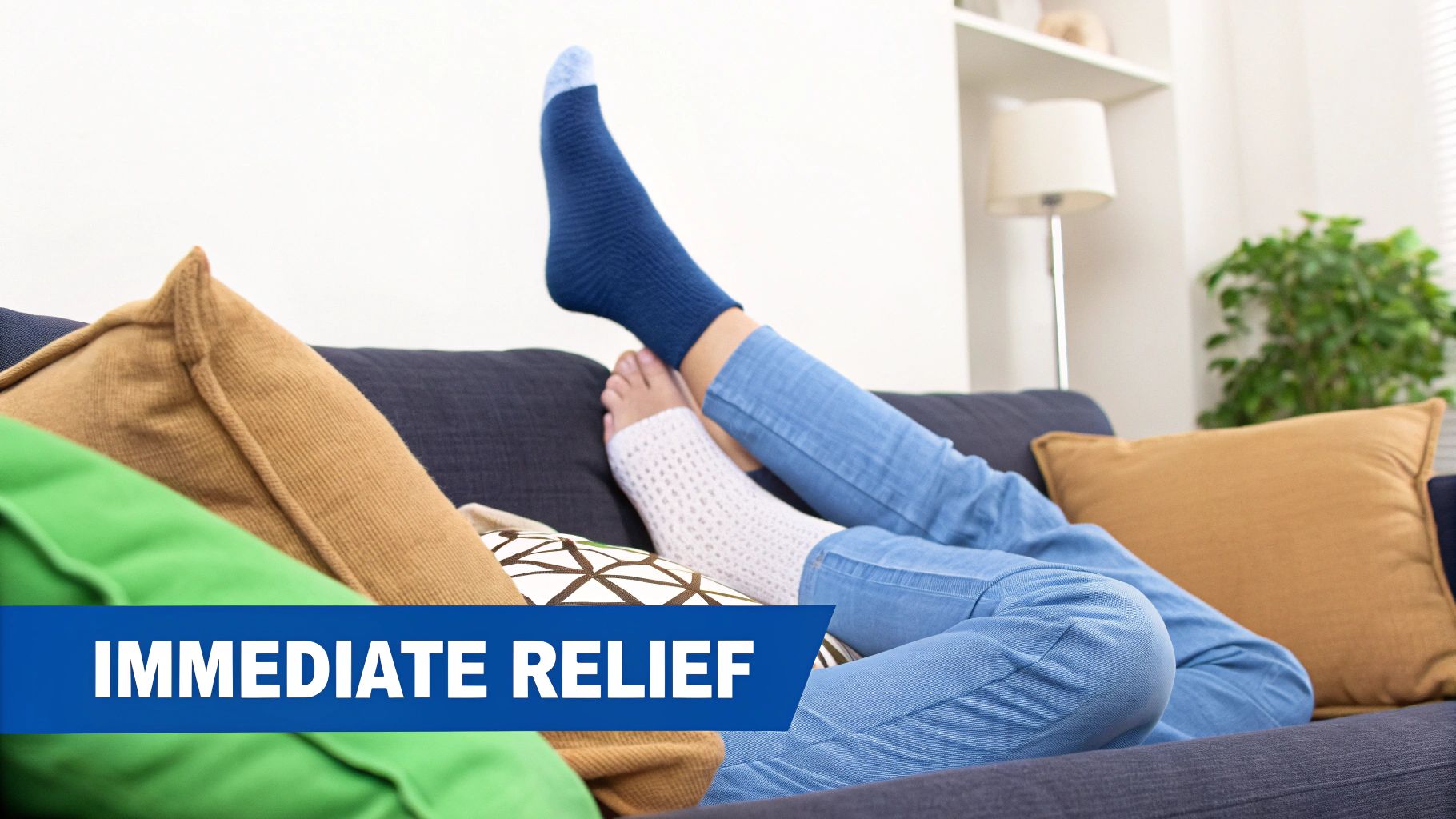
You've probably heard the advice to "put your feet up," but there's a right way and a wrong way to do it. For gravity to truly work its magic, you have to get the positioning just right. The goal is simple: get your feet higher than your heart. This allows gravity to assist, rather than hinder, the return of fluid from your legs back into your central circulation.
Just propping them on a coffee table while you sit on the couch won't cut it. For real results, lie down comfortably on your back. Use a stack of pillows, cushions, or even a rolled-up blanket to raise your legs. Another effective method is to lie on the floor with your legs resting up against a wall, forming an 'L' shape with your body.
Pro Tip: Aim for a position where your toes are above your nose. Hold this for 20-30 minutes at a time, a few times a day—especially after being on your feet for hours. This simple, consistent habit can make a huge difference.
Harness the Power of Compression
Think of compression socks or stockings as a helpful hug for your legs. They apply gentle, graduated pressure—tightest at the ankle and looser as they move up the leg—which gives your veins and lymphatic vessels the external support they need to move fluid upward instead of letting it pool around your ankles. This mimics the pumping action of walking and helps prevent fluid accumulation.
But not all compression socks are created equal. They come in different pressure levels, measured in millimeters of mercury (mmHg), and choosing the right one is key.
- Mild (8-15 mmHg): Perfect for tired, achy legs or minor swelling you might get from a long day of travel. These are often available over-the-counter.
- Moderate (15-20 mmHg): This is the sweet spot for most people. It's great for preventing swelling on long flights or during workdays spent mostly sitting or standing.
- Firm (20-30 mmHg): Your doctor might recommend this level for more persistent swelling, varicose veins, or to aid in post-surgical recovery. These often require a professional fitting.
- Extra Firm (30-40 mmHg and above): These are typically prescribed for more severe conditions like lymphedema or deep vein thrombosis.
The fit is crucial. The socks should feel snug but never painfully tight. If they roll down or bunch up, they could actually restrict your circulation, so make sure you get the right size by measuring your ankle and calf circumference.
Get Moving to Get Fluid Flowing
It might sound counterintuitive to move when your legs feel heavy, but movement is one of the best things you can do. Your calf muscles are often called your "second heart" for a good reason. Every time they contract, they squeeze the veins in your legs, physically pushing blood back up toward your heart. When you stay still for too long, that muscle pump goes dormant.
You don’t need an intense workout to get the benefits. A few simple, targeted movements can work wonders, even from your desk chair. The key is to incorporate these small activities frequently throughout your day to break up long periods of inactivity.
Try these simple exercises throughout your day:
- Ankle Pumps: While seated, just point your toes away from you, then flex them back toward your shins. Do this 10-15 times on each leg every hour.
- Ankle Circles: Lift one foot off the floor and slowly rotate your ankle clockwise 10 times, then counter-clockwise 10 times. Switch to the other leg and repeat.
- Heel-Toe Raises: When standing, rock back and forth from your heels to your toes. This simple movement effectively engages the calf muscles.
- Take Short Walking Breaks: Set a reminder to get up and walk around for a few minutes every hour. This is one of the most effective ways to reactivate your circulatory system.
These small but consistent actions are fundamental for promoting healthy blood flow. If you want to dive deeper, we have a whole guide on other great ways to improve blood circulation in legs.
Building a Lifestyle That Prevents Leg Swelling
While immediate relief strategies are essential for comfort, the most powerful approach is building a lifestyle that prevents swelling from happening in the first place. This is about shifting your focus from temporary fixes to sustainable, daily habits that support your circulatory and lymphatic systems long-term.
It’s about making smart, consistent choices that support your circulatory health for the long run. These preventative measures get to the root causes of fluid retention, like diet and activity levels, helping you feel lighter and more energetic every single day.
Re-examine Your Relationship with Salt
One of the biggest culprits behind stubborn swelling is hiding in plain sight: the salt shaker. Sodium plays a huge role in how your body manages fluid balance. When you eat too much, your body clings to extra water to dilute it, leading directly to that puffy, swollen feeling, especially in your legs and ankles.
The tricky part is that most of the sodium we consume isn't from the salt we add at the table. It’s tucked away in processed foods, including:
- Canned soups and frozen meals: These are often loaded with sodium for preservation and flavor.
- Deli meats and cured foods: Things like sausages, bacon, and lunch meats are notoriously high in salt.
- Packaged snacks: Chips, pretzels, and even some crackers can add a surprising amount to your daily intake.
- Sauces and dressings: Soy sauce, ketchup, and salad dressings are common hidden sources.
Get in the habit of reading nutrition labels and prioritizing whole, unprocessed foods. You can add incredible flavor to your meals with herbs, spices, garlic, and citrus—without the fluid-retaining side effects of excess salt. Aim for less than 2,300 milligrams of sodium per day, or even less if recommended by your doctor.
Make Movement a Non-Negotiable Habit
Regular physical activity is your body’s best tool for keeping circulation healthy. When you move, you activate your calf muscle pump, which physically squeezes blood and lymphatic fluid out of your lower legs and back toward your heart. It’s the direct opposite of being sedentary, where gravity has free rein.
You don’t have to run a marathon to get the benefits. Consistency is everything.
Find an activity you genuinely enjoy, and it will never feel like a chore. The goal is to make movement a natural and enjoyable part of your daily rhythm, not another task to check off a list.
Think about low-impact exercises that are easy on your joints but great for circulation, like brisk walking, cycling, or swimming. Even 20-30 minutes of moderate activity on most days can dramatically improve how your body manages fluid and prevents swelling. Water-based exercises, like water aerobics, are particularly beneficial as the water provides natural compression on your legs.
This proactive approach is something many people consider, especially when the weather changes. An analysis of Google search data found that queries for “ankle swelling” spike in the warmer summer months. This pattern suggests that people are actively looking for solutions when heat and lifestyle shifts make swelling more common. You can explore the full findings on seasonal searches for ankle swelling on PMC.
Exploring Advanced Tools for Recovery and Wellness
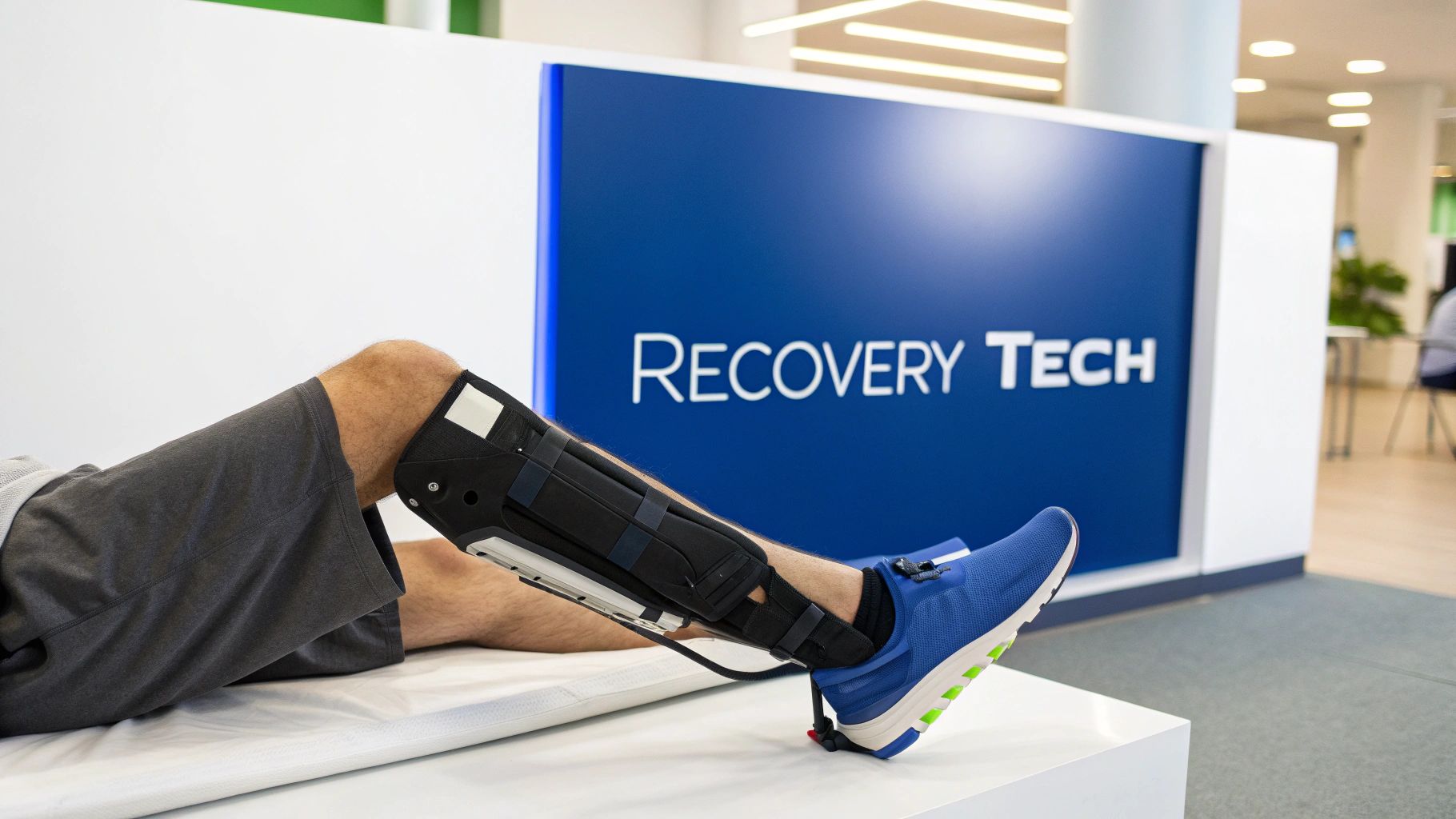
Sometimes, elevation and compression just don't cut it. When you've tried the at-home staples and still feel that frustrating puffiness, or you're simply looking for a more powerful and efficient solution, it might be time to look at modern recovery technology.
These aren't just for elite athletes anymore. Advanced systems are now found in forward-thinking wellness centers and clinics, offering real benefits for anyone struggling with stubborn leg swelling. They go beyond passive support, actively stimulating your body’s natural drainage and circulatory systems to get results that would otherwise take far more time and effort.
The Science of Intermittent Negative Pressure Therapy
One of the most impressive technologies in this space is Intermittent Negative Pressure Therapy (INPT). Think of it as a highly intelligent vacuum therapy. Instead of just squeezing your legs like compression gear, INPT creates gentle, rhythmic changes in pressure—alternating between a vacuum and normal atmospheric pressure.
So, how does it work? The negative pressure (vacuum) phase gently pulls open your capillaries and arteries, flooding your lower body with fresh, oxygen-rich blood. This process is known as vasodilation. Then, the positive pressure phase helps push out the deoxygenated blood and lymphatic fluid back toward your core, aiding in venous and lymphatic return.
It’s like having a powerful, external pump for your entire lower body's circulatory and lymphatic systems. This gentle cycling enhances fluid exchange and tackles swelling at its source, all while you just lie back and relax.
A typical session inside a device like a Vacustyler pod lasts only about 20-30 minutes. The feeling afterward is often immediate—a sensation of lightness and relief as the system efficiently flushes out the stagnant fluid that causes that heavy, swollen feeling. This can be particularly beneficial for chronic issues that don't respond fully to conventional methods.
Who Benefits from Advanced Recovery Tools?
While the technology sounds complex, its application is surprisingly broad. It's a game-changer for so much more than just post-workout soreness. Anyone who wants a serious answer for how to reduce leg swelling can find value here.
Just think about these real-world scenarios:
- Busy Professionals: You spend all day sitting at a desk or standing on your feet. A short session can completely counteract the circulatory stagnation of an eight-hour workday.
- Frequent Travelers: After a long flight, that familiar ankle and lower leg swelling can take days to go away. INPT can dramatically speed up that process, helping you feel normal again in a fraction of the time.
- Athletes: For any competitor, faster recovery is a huge advantage. Flushing out metabolic waste and reducing inflammation means you can get back to training sooner and perform better. For a deeper dive, check out our guide on the best recovery tools for athletes.
- Individuals with Chronic Circulation Issues: People dealing with conditions like venous insufficiency or lymphedema may find these tools offer a level of relief that is difficult to achieve otherwise, under the guidance of a healthcare professional.
- Wellness Enthusiasts: If you're focused on optimizing your health, these tools are a powerful way to support detoxification, boost circulation, and enhance overall vitality.
These advanced systems perfectly fill the gap between basic home care and medical intervention. They offer a proactive and incredibly effective method for maintaining leg health, comfort, and performance—a smart investment in your long-term wellness.
Knowing When Swelling Is a Sign of Something More
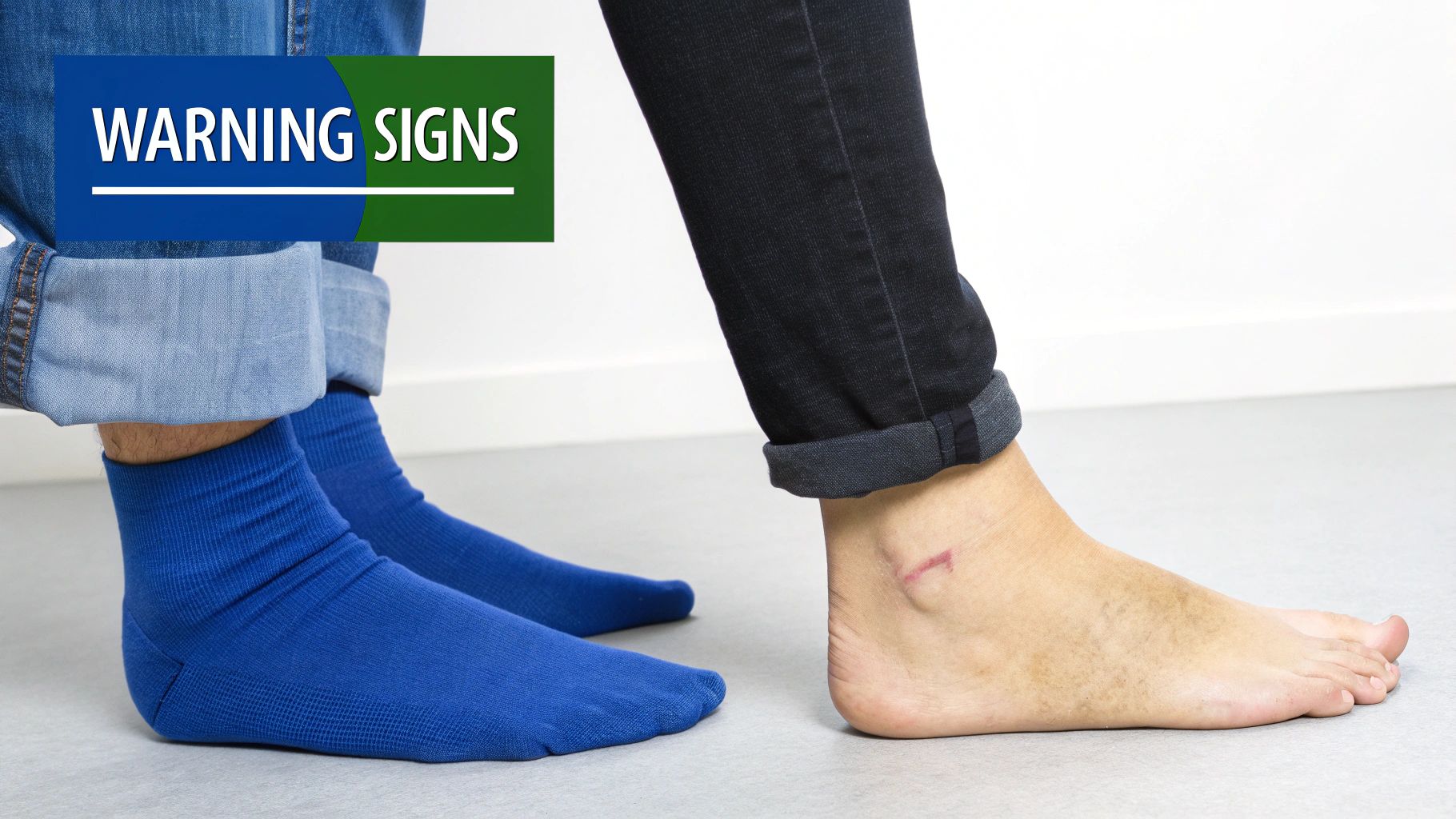
Most of the time, a little leg swelling is just your body's response to a long day, a tough workout, or maybe too much salt at dinner. It’s temporary and usually harmless. But sometimes, swelling is your body's way of sending up a flare, signaling that something more serious is going on underneath the surface.
Learning to tell the difference between everyday puffiness and a genuine warning sign is crucial. The idea here isn't to create alarm, but to empower you with the knowledge to act decisively when it really counts. Ignoring these signals can mean delaying critical medical care.
Critical Symptoms That Demand Medical Attention
Think of these signs as non-negotiable reasons to get a professional medical opinion. If your leg swelling shows up alongside any of the following, it's time to put the at-home remedies aside and call a doctor right away.
- Sudden or One-Sided Swelling: If swelling appears out of nowhere or is confined to just one leg, this is a major red flag. It could point to a blood clot, such as a deep vein thrombosis (DVT), which needs immediate medical attention.
- Pain, Redness, or Warmth: Is the swollen area painful to the touch? Does it look red or discolored, or feel noticeably warmer than the surrounding skin? These are classic signs of a possible infection (cellulitis) or clot.
- Changes to Your Skin: Pay attention to skin that looks stretched and shiny. The appearance of sores or ulcers that just won't seem to heal is another serious indicator of poor circulation. Pitting edema, where a dimple remains for a few seconds after you press on the swollen area, also warrants a doctor's visit.
- System-Wide Symptoms: This is the most urgent one. If your swollen legs are accompanied by shortness of breath, difficulty breathing, or any kind of chest pain, treat it as a medical emergency. This combination could indicate a serious heart problem or even a pulmonary embolism, where a blood clot has traveled to your lungs.
Key Insight: Context is everything. Swelling in both ankles after an 8-hour flight is one thing; sudden, painful swelling in a single calf while you're sitting at your desk is something else entirely. Pay attention to the full picture your body is painting.
When to See a Doctor for Persistent Swelling
What if your symptoms aren't that dramatic? Even if you don’t have any of the urgent red flags above, persistent swelling should never be ignored.
If you’ve been diligent with the at-home strategies—you're elevating your legs, using compression, and watching your sodium—but the swelling isn't getting better (or is slowly getting worse) after several days, it's time for a check-up.
Chronic swelling can be a sign of an underlying issue with your heart (congestive heart failure), kidneys (kidney disease), or liver (liver disease). These organs play a vital role in regulating fluid in your body. A doctor can run simple, non-invasive tests to check how these vital organs are functioning and get to the root cause of the problem. This is the only way to get a proper diagnosis and an effective, long-term solution for how to reduce leg swelling for good.
Common Questions About Reducing Leg Swelling
Even after covering the causes and remedies for leg swelling, a few practical questions always seem to pop up. Here are some clear, straightforward answers to the most common queries we hear, designed to give you confidence in managing your leg health.
How Long Does It Take to Reduce Leg Swelling?
The timeline for seeing a real difference depends entirely on the root cause. If your legs are swollen simply from a long day on your feet or sitting through a hot afternoon, you could feel significant relief within just a few hours. A little elevation and some gentle movement are often all it takes to help that trapped fluid move back toward your body's core.
For more stubborn or chronic edema, consistency is the name of the game. When you commit to strategies like daily compression wear, watching your sodium intake, and regular exercise, you'll likely start noticing improvements over several days or weeks. For those looking for a faster feeling of relief, advanced modalities like intermittent negative pressure can deliver a noticeable sense of lightness after just a single 20-30 minute session. If swelling persists beyond a few days despite these efforts, it's crucial to consult a healthcare provider.
Can Drinking More Water Help With Swollen Legs?
It definitely sounds backward, but the answer is a resounding yes. When your body thinks it's dehydrated, it flips a survival switch and starts clinging to every drop of water it can. This hoarding effect is a direct contributor to swelling and puffiness.
Staying properly hydrated helps your system in two critical ways:
- It helps flush out excess sodium, which is one of the biggest culprits behind fluid retention.
- It supports healthy kidney function, and your kidneys are the master regulators of your body's fluid balance.
The trick is to sip water steadily throughout the day. Guzzling a huge amount all at once can overwhelm your system, but consistent hydration keeps everything balanced and tells your body it's safe to let go of that excess fluid.
Should I Use Hot or Cold Therapy for Swelling?
This is a great question, and the right choice depends entirely on why your legs are swollen in the first place.
For an acute injury—think a sprained ankle or a pulled muscle—cold is always the answer. An ice pack helps constrict the blood vessels, which is exactly what you want to reduce inflammation, numb the pain, and minimize bruising. Apply for 15-20 minutes at a time.
On the other hand, for chronic, non-inflammatory swelling related to poor circulation, gentle warmth can sometimes feel good. A warm bath might help relax tight muscles and temporarily open up blood vessels to improve flow. However, be cautious, as excessive heat can sometimes worsen edema for some people. For general edema, your go-to remedies should always be elevation, movement, and compression—they are far more effective than heat.
What Foods Are Best for Reducing Fluid Retention?
Absolutely. What you eat plays a massive role in managing fluid retention. By focusing on the right nutrients, you can help your body naturally regulate its fluid levels and fight back against the effects of sodium.
Try incorporating more of these into your meals:
- Potassium-rich foods: Bananas, avocados, spinach, and sweet potatoes are your best friends here. Potassium is a key player in helping your body excrete sodium and maintain proper fluid balance.
- Magnesium-rich foods: You can find this in dark chocolate, nuts, seeds, and leafy greens. Magnesium is involved in hundreds of bodily processes, including those that help reduce water retention. Some studies suggest a deficiency can contribute to edema.
- Natural diuretics: Foods like cucumbers, asparagus, parsley, and watermelon can gently encourage your body to release any excess fluid it's holding onto.
- Foods high in Vitamin B6: This vitamin can help reduce water retention, particularly for swelling related to premenstrual syndrome. Good sources include fish, walnuts, and bananas.
At Weyergans HighCare US, we're focused on providing advanced, non-invasive solutions that support your body’s natural ability to recover. If you're looking for a powerful way to enhance circulation and finally achieve that feeling of lightness, we invite you to explore the science behind our Vacustyler technology at http://weyerganshighcareus.com.