


Boosting your blood circulation naturally isn’t about some complicated biohack; it comes down to consistent, simple lifestyle habits. It’s about making conscious choices every day—from what you eat to how you move—that give your cardiovascular system the support it needs. Think of smart nutrition, targeted movement, and proper hydration as the core of a powerful strategy for your body’s internal delivery service. This guide will walk you through actionable, science-backed steps to enhance your blood flow, improve energy levels, and support your long-term health, establishing a foundation that makes you feel vibrant and revitalized.
Why Healthy Blood Circulation Is Your Secret Weapon
Picture your circulatory system as the most advanced logistics network ever built. Every single second, it’s delivering oxygen, hormones, and critical nutrients to trillions of cells. At the same time, it’s clearing out metabolic waste, keeping your internal environment clean and running smoothly. This vast network, comprised of arteries, veins, and capillaries, is the lifeline that sustains every organ and tissue in your body.
When this system is efficient, you feel it. Your energy levels are high, your mind is sharp, and your body bounces back quickly from physical stress. But when things get sluggish, the signs can be subtle at first, yet they slowly chip away at your vitality. You might dismiss cold fingers or occasional fatigue as normal, but they are often the first whispers from your body that its delivery service is under strain.
The True Cost of Sluggish Flow
Poor circulation is more than just a minor annoyance. It’s a signal that your body is struggling, and it often shows up in ways that can seriously disrupt your daily life. It’s a foundational health issue that can exacerbate other conditions and diminish your overall quality of life.
You might notice common signs like:
- Cold Hands and Feet: Do your fingers and toes feel perpetually chilled, no matter the room temperature? That’s often because warm, oxygenated blood isn’t reaching your extremities effectively.
- Persistent Fatigue: When your cells are starved for oxygen and nutrients, their energy production tanks. The result is a feeling of being constantly drained, even after a full night’s sleep. This isn’t just “being tired”; it’s a deep, cellular exhaustion.
- Swelling and Heaviness: If blood flow back to the heart (venous return) is inefficient, fluid can pool in your lower limbs. This leads to puffiness, swelling (edema), and that frustrating heavy, achy feeling in your legs, especially at the end of the day.
- Brain Fog: Your brain is incredibly demanding, consuming about 20% of your body’s oxygen. When circulation is subpar, cognitive function can suffer, leading to difficulty concentrating, memory lapses, and a general feeling of mental slowness.
The impact of poor circulation extends far beyond personal discomfort; it’s a massive global health issue. Did you know that poor blood circulation contributes massively to the global cardiovascular crisis, with hypertension—a key circulation disruptor—affecting over 1.3 billion people worldwide? Scaling natural approaches could avert 76 million deaths by 2050, as you can see in the full WHO report on hypertension’s devastating impact.
This guide is designed to move beyond simply talking about the problem. We’re giving you a clear, actionable roadmap to improve your circulation naturally, unlocking your body’s true potential. We’ll explore smart nutrition, targeted daily movement, and modern wellness technologies that support both your circulatory and lymphatic systems. For a deeper dive into a related system, you might be interested in our article on the role of lymphatic drainage in holistic wellness.
Our goal is to empower you to take control and feel the immediate, refreshing benefits of a circulatory system running at its best.
Eating for Better Blood Flow
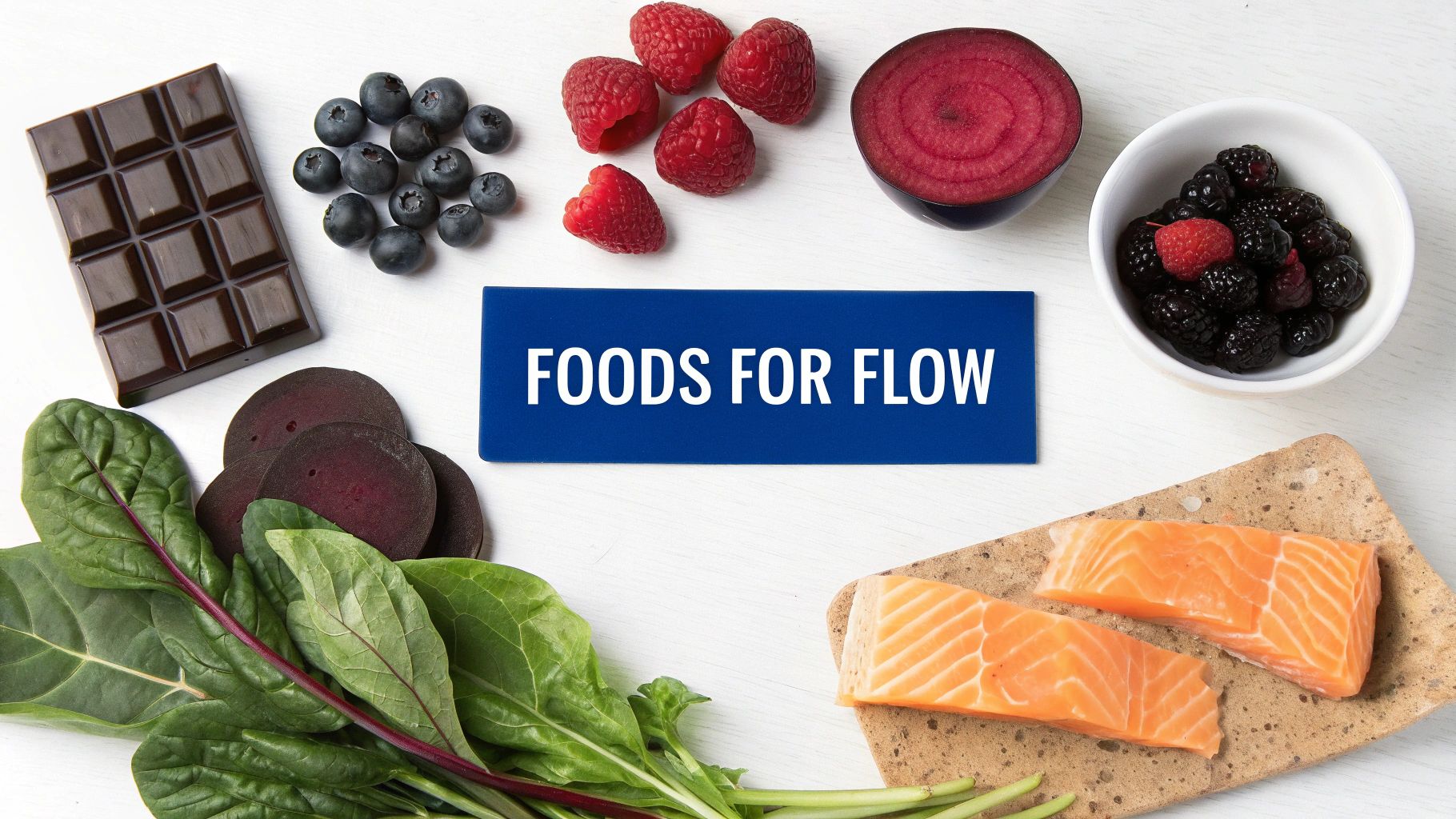
What you put on your plate is one of the most powerful and direct ways you have for improving blood circulation naturally. The right foods act like internal medicine, helping your blood vessels relax, reducing inflammation, and keeping your arteries flexible and clear. This isn’t about generic advice; specific nutrients create specific, positive changes in your body that you can feel.
Think of your blood vessels as tiny, flexible hoses. For blood to move efficiently, they need to expand and contract with ease. This is where a critical compound called nitric oxide (NO) comes into play. It’s a potent vasodilator, which is a fancy way of saying it signals the smooth muscles in your artery walls to relax. This widens the pathway, lowering blood pressure and allowing blood to flow more freely to every corner of your body.
Foods That Boost Nitric Oxide
Many vibrant, plant-based foods are absolutely packed with nitrates, which your body cleverly converts into nitric oxide. Making them a regular part of your diet is a simple yet incredibly effective strategy for boosting your vascular health and enhancing blood flow from the ground up.
Some of the best sources are easier to find than you think:
- Beets: This humble root vegetable is arguably the king of nitrates. A glass of beet juice before a workout is a classic biohack for a reason—it can noticeably improve performance and stamina by increasing blood flow and oxygen delivery to working muscles.
- Leafy Greens: Spinach, arugula, and kale are nitrate powerhouses. A simple spinach salad, tossing a handful of arugula onto a sandwich, or adding kale to a smoothie are effortless ways to get your daily dose.
- Garlic: Beyond adding a punch of flavor, garlic contains sulfur compounds like allicin that activate nitric oxide synthase, the very enzyme that produces NO. It also has properties that help reduce arterial stiffness and prevent plaque buildup.
- Citrus Fruits: Oranges, lemons, and grapefruits are loaded with vitamin C, which is not only a powerful antioxidant but also helps to increase the bioavailability of nitric oxide in your body.
A focus on diet-based lifestyle changes has a profound global impact. Hypertension control hovers at a dismal 14-19.7% globally, fueling millions of deaths yearly, but natural strategies have propelled leaders like Canada to 70% rates. Tackling modifiable factors like diet is key, as cutting sodium by just 30% could slash stroke risk by 25%. Discover more about the global initiative to prevent cardiovascular disease through lifestyle changes.
Antioxidants and Hydration Are Key
Beyond nitrates, certain antioxidants called flavonoids and polyphenols play a crucial role. They act like bodyguards for your blood vessels, protecting them from the oxidative stress that can cause them to become stiff and narrow over time. This damage is a primary driver of atherosclerosis (hardening of the arteries).
For instance, the flavonoids in dark chocolate (with high cocoa content) and berries help preserve the youthful flexibility of your vessels. The deep colors in berries signal the presence of anthocyanins, which are particularly potent for vascular health. In the same way, the omega-3 fatty acids found in fatty fish like salmon, mackerel, and sardines, as well as in walnuts and flaxseeds, fight systemic inflammation, a major culprit behind poor circulatory health.
And finally, never underestimate the simple power of hydration. Water makes up a huge portion of your blood volume—about 92% of blood plasma. When you’re dehydrated, your blood literally thickens, increasing its viscosity. This forces your heart to work much harder just to pump it around your body, putting unnecessary strain on your entire cardiovascular system. Aiming for consistent water intake throughout the day is one of the easiest and most effective ways to support circulation.
Making smart choices at the grocery store becomes a lot easier when you can see a clear side-by-side comparison.
Foods That Boost vs Hinder Blood Circulation
Here’s a quick-glance table to help you distinguish the foods that support your vascular system from those that work against it.
| Nutrient/Food Group | How It Helps Circulation (The ‘Do’ List) | How It Harms Circulation (The ‘Avoid’ List) |
|---|---|---|
| Nitrates | Foods like beets and leafy greens convert to nitric oxide, which relaxes and widens blood vessels for better flow. | Processed meats often contain sodium nitrate as a preservative, which doesn’t offer the same benefits and is high in sodium. |
| Omega-3 Fatty Acids | Found in salmon, walnuts, and flaxseeds, these fats reduce inflammation and help prevent plaque buildup in arteries. | Trans fats (found in many fried and processed foods) increase inflammation and damage blood vessel linings. |
| Flavonoids | Berries, citrus fruits, and dark chocolate are rich in these antioxidants that improve vessel flexibility and function. | High-sugar foods and drinks contribute to inflammation and can lead to arterial stiffness over time. |
| Sodium | Excess sodium from processed foods and table salt causes the body to retain water, increasing blood volume and blood pressure, straining arteries. |
Think of this as your cheat sheet. Prioritizing the “Do” column while minimizing the “Avoid” list is a practical, sustainable way to eat for better flow.
Smart Movement to Get Your Blood Pumping

While your diet lays the groundwork, consistent movement is the engine that really drives better blood flow. Every time you get up and move, you’re firing up a powerful mechanism known as the skeletal-muscle pump.
You can think of it as your body’s second heart. As muscles contract and relax—especially in the legs—they squeeze the veins running through them. This simple action forces blood upward, defying gravity on its way back to your heart. It’s a fundamental process for improving blood circulation naturally and preventing that heavy, stagnant feeling in your lower body that comes from prolonged sitting or standing.
Low-Impact Options for Everyone
You don’t need grueling, high-impact workouts to make a real difference. In fact, some of the most powerful movements for circulation are incredibly gentle and accessible, no matter your fitness level. The key is consistency, not intensity.
Brisk walking is a fantastic place to start. Just 20-30 minutes a day is enough to strengthen your heart, make your blood vessels more pliable, and kick that muscle pump into gear. It’s a simple habit that pays massive dividends for your entire cardiovascular system.
Yoga is another brilliant choice. Poses like “Legs Up the Wall” (Viparita Karani) cleverly use gravity to help blood and lymphatic fluid return from the legs, providing immediate relief for tired, swollen limbs. Gentle twists can help stimulate circulation around your internal organs. The focus on deep, intentional breathing is a bonus, helping to lower blood pressure and supercharge oxygen delivery to every cell. Other great options include swimming, cycling, and tai chi, all of which get your blood moving without stressing your joints.
Regular physical activity does more than just move blood around; it trains your heart to be a more efficient pump. Over time, your heart can push out more blood with each beat (increased stroke volume), which lowers your resting heart rate and its overall workload, building long-term cardiovascular resilience.
For the Desk-Bound Professional
Let’s be honest: sitting for eight hours a day is one of the biggest roadblocks to healthy circulation in modern life. When you’re sedentary for that long, the muscle pump in your legs basically shuts down. Blood flow slows, fluid pools, and you’re left with that sluggish, heavy feeling we all know too well. This “sitting disease” is a significant risk factor for circulatory problems.
The good news is you can fight back without even leaving your desk. Micro-movements throughout the day can make a world of difference.
A few simple movements can reactivate your circulation:
- Ankle Pumps: While seated, just extend one leg out and point your toes forward like a ballet dancer, then flex them back toward your shin. Repeat this 15-20 times on each leg every hour. It perfectly mimics the pumping action of walking and is incredibly effective.
- Seated Marches: Simply lift your knees up and down as if you’re marching in place while remaining seated. This wakes up your hip flexors and quads, getting dormant muscles firing and blood flowing again.
- Shoulder Rolls and Neck Stretches: Roll your shoulders up, back, and down. Gently tilt your head from side to side. This is great for relieving tension and boosting blood flow to your neck, shoulders, and head, which can help alleviate tension headaches and brain fog.
Try setting a timer on your phone or computer to remind you to stand, stretch, or do a few of these every hour. It’s a tiny interruption with a huge payoff for your vascular health.
Optimizing Flow for Athletes
For any athlete, circulation is everything. It’s directly linked to both performance and recovery. Efficient blood flow is what delivers oxygen and fuel to your muscles during a workout and, just as importantly, what clears out metabolic waste like lactic acid afterward.
Before you train, incorporate dynamic stretches like leg swings, arm circles, and torso twists. This is like a warm-up for your circulatory system, increasing blood flow to the muscles you’re about to use and prepping them for the work ahead.
After the workout, active recovery is key. A cool-down walk or gentle cycling helps gradually bring your heart rate down and keeps the blood circulating to flush out waste products. Foam rolling is also a game-changer. It helps release tight spots (fascial adhesions) in your muscles that can physically constrict blood vessels, making sure nutrient-rich blood can get in to start the repair process. Of course, this active recovery is most effective when paired with smart nutrition and hydration. Athletes can also see how adjunctive therapies fit into their overall strategy; you can learn more about the 5 ways IVT complements your post-workout recovery routine.
Tapping into Modern Wellness and Recovery Tech
While foundational habits like diet and exercise are the absolute cornerstones of healthy circulation, modern technology offers some powerful ways to complement and even accelerate your efforts. These innovations provide targeted support that can be difficult to achieve through lifestyle alone.
Think of these tools not as replacements for the fundamentals, but as powerful allies. They work with your body’s natural processes, giving them a focused boost. From simple at-home practices to sophisticated systems found in wellness clinics, these methods can provide a tangible lift to how you feel day-to-day.
Simple, Accessible Circulation Boosters
You don’t need a fancy clinic to get started. Accessible techniques like contrast therapy are a great entry point. This is as simple as alternating between hot and cold in the shower—a few minutes of heat to expand your blood vessels (vasodilation), followed by a minute of a cold rinse to constrict them (vasoconstriction). This creates a natural pumping action that really gets the blood moving and can invigorate your entire system.
Dry brushing is another simple yet surprisingly effective method. Before you shower, you use a firm-bristled brush on dry skin, always stroking with long, gentle movements toward your heart. This manual stimulation invigorates the skin and encourages both lymphatic drainage and superficial blood flow. It’s a great way to feel refreshed and energized in just a few minutes.
Advanced Tools for a Deeper Impact
Beyond these manual methods, some incredible technologies can take circulatory support to a whole new level by working on a deeper, more systemic scale. These tools are designed to target specific physiological mechanisms, often producing more noticeable and lasting results for improving blood circulation naturally.
Two of the most compelling technologies in the modern wellness space are intermittent negative pressure therapy and red light therapy.
- Intermittent Negative Pressure Therapy (INPT): This is the technology you’ll find in systems like the Vacustyler, and it was actually inspired by research for astronauts in space who needed to counteract the effects of zero gravity on circulation. It creates gentle, rhythmic vacuum waves around the lower body. The negative pressure phase gently pulls blood into the smallest capillaries, while the return to normal pressure helps push it back through the veins. In essence, it acts like a powerful external muscle pump for your entire lower body, passively supporting both venous return and arterial delivery.
- Red Light Therapy (RLT): This approach, also known as photobiomodulation, involves exposing your skin to specific wavelengths of red and near-infrared light. This light is able to penetrate the skin and get absorbed by the mitochondria (the powerhouses) inside your cells. This process stimulates the production of ATP (cellular energy) and triggers the release of nitric oxide locally, which in turn can significantly enhance microcirculation right down at the cellular level. This improves oxygenation and nutrient delivery to tissues, supporting healing and reducing inflammation.
These advanced tools aren’t just for elite athletes anymore. They provide profound benefits for anyone looking to feel lighter on their feet, recover faster from activity, and support their vascular health from the inside out.
The Science Behind Modern Recovery
The application of this tech isn’t just hype; it’s grounded in solid physiological principles. Take a condition like peripheral artery disease (PAD), which causes significant pain from poor circulation and affects over 200 million people worldwide. While surgery is an option, non-invasive methods are gaining ground because they can support blood flow without downtime.
Research has shown how restored blood flow improves quality of life. Intermittent negative pressure therapy helps replicate the circulatory benefits of movement, which can be a game-changer for those with compromised systems or mobility issues. In a similar vein, studies on red and near-infrared light therapy have demonstrated its ability to enhance microcirculation by up to 25% by giving cellular mitochondria a direct energy boost and promoting vasodilation.
By combining foundational habits with modern wellness tech, you create a powerful synergy. The daily practices build a resilient circulatory system from the inside out, while targeted therapies provide a focused boost, helping to clear stagnation, reduce inflammation, and enhance overall vitality.
Ultimately, these tools act as accelerators. They enhance the positive effects you’re already getting from your diet and exercise regimen, helping you feel the benefits more quickly and profoundly. Whether you’re an athlete trying to optimize recovery or a professional looking for relief from heavy legs after a long day sitting down, integrating these technologies can offer an immediate, welcome sensation of lightness and refreshment.
Building Your Personal Circulation Plan
Knowing the strategies is one thing, but turning that knowledge into a daily routine is where you’ll see real, lasting change. Now that you have a solid grasp of how to improve your circulation naturally, it’s time to build a plan that actually fits your life. Remember, consistency is far more powerful than intensity when it comes to long-term vascular health.
A great plan doesn’t mean you have to overhaul your entire life overnight. It’s about layering small, sustainable habits into the schedule you already have. Whether you’re a busy professional jumping between meetings, a dedicated athlete chasing peak performance, or simply someone who wants to feel more vibrant every day, there’s a practical path for you.
Designing Your Weekly Blueprint
First, get honest about your goals and your reality. A corporate executive’s plan will look very different from an athlete’s. The executive might focus on quick desk exercises, pre-packed, circulation-friendly lunches, and finding pockets of time for short walks. The athlete, on the other hand, will lean heavily into post-workout recovery sessions and specific nutrients to speed up tissue repair and reduce inflammation.
Here are a few starting points to get you thinking:
- The Busy Professional: Your strategy is all about efficiency. Pencil in three 20-minute brisk walks during your lunch breaks or phone calls. Keep walnuts and berries at your desk for smart snacking to avoid sugary slumps. Set an hourly phone reminder to do a quick set of ankle pumps or seated stretches. The goal is to break up long periods of sitting.
- The Dedicated Athlete: Your routine is built around performance and recovery. Make foam rolling or a targeted stretch session non-negotiable after every workout to enhance blood flow to tired muscles. Schedule two or three dedicated recovery sessions a week, using tools like contrast therapy, compression boots, or red light therapy to clear out metabolic waste and get you back in the game faster.
- The Everyday Wellness Seeker: Your approach is all about balance and creating healthy rhythms. Aim for a 30-minute walk every day—perhaps first thing in the morning to start your day with energy. Find a way to get leafy greens into at least one meal, like a smoothie or a side salad. Finish your evenings with something calming like a warm bath with Epsom salts or the classic “Legs Up the Wall” yoga pose for 10 minutes to help drain fluid from your legs before sleep.
The only effective circulation plan is the one you can actually stick with. Start small—just two or three new habits. Once they feel like second nature, you can layer in more. This creates a powerful, cumulative effect on your vascular health that builds over time.
Integrating Modern Wellness Tech
Modern therapies can be fantastic accelerators, boosting the results of your daily efforts without demanding more of your time. This visual breaks down a few of the most effective technologies that support healthy blood flow.
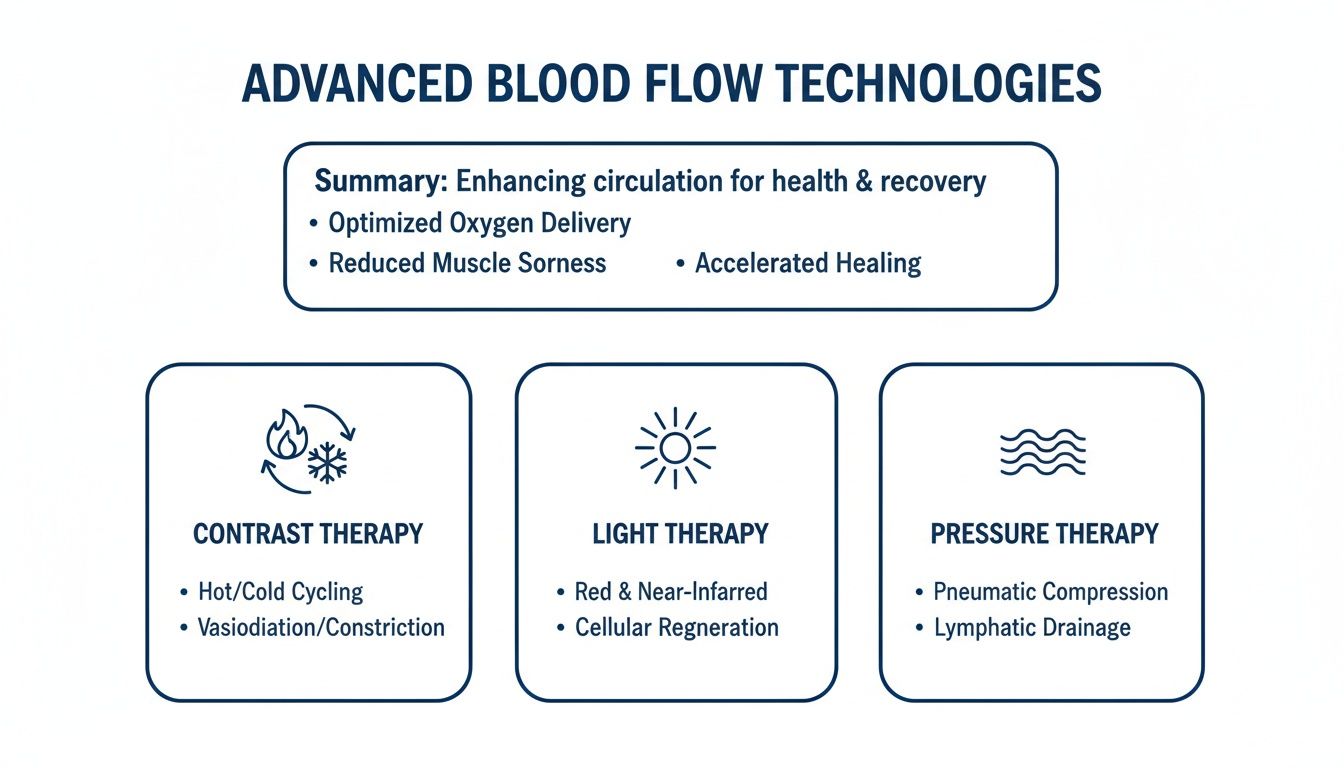
As you can see, therapies using contrast, light, and pressure each work on your circulatory system in a slightly different way. This allows you to pick the tool that best matches your specific goal, whether that’s recovery, detoxification, or general wellness.
Putting this into practice is simple. An athlete might book a pressure therapy session after a brutal leg day to flush out soreness and reduce swelling. A professional could pop in for a quick red light therapy session during lunch to combat the inflammation that comes from sitting all day and boost cellular energy.
The key is to view these technologies not as a replacement for good habits, but as strategic amplifiers. They are powerful ways to enhance the benefits of your diet and exercise, helping you achieve that feeling of lightness and vitality much more efficiently.
Weekly Circulation-Boosting Action Plan
To help you get started, here is a simple, actionable table you can use to build your own weekly routine. Mix and match these ideas to create a plan that feels manageable and aligns with your personal goals.
| Strategy | Frequency | Best For | Example Action |
|---|---|---|---|
| Brisk Walking | 3-5 times/week | Everyone | A 30-minute walk during your lunch break or after dinner. |
| Desk Stretches | Daily | Busy Professionals | Set an hourly timer for ankle pumps and neck rolls. |
| Hydration | Daily | Everyone | Drink a glass of water first thing in the morning and keep a bottle handy all day. |
| Nitrate-Rich Foods | 4-5 times/week | Athletes, Wellness Seekers | Add a handful of spinach to your smoothie or have a side of beets with dinner. |
| Omega-3s | 2-3 times/week | Everyone | Eat fatty fish like salmon or snack on walnuts and chia seeds. |
| Contrast Showers | 2-3 times/week | Athletes, Wellness Seekers | End your shower with 30 seconds of cold water, alternating with 30 seconds of hot. |
| “Legs Up the Wall” | Daily | Everyone | Spend 5-10 minutes in this pose before bed to aid venous return. |
| Tech-Assisted Recovery | 1-3 times/week | Athletes, Busy Professionals | Schedule a red light or negative pressure therapy session to accelerate recovery. |
Creating a personalized plan is the final, crucial step in this journey. Start today, stay consistent, and you’ll be well on your way to better circulatory health and a more vibrant life.
Common Questions About Improving Circulation
As you start focusing on your vascular health, it’s totally normal to have a few questions pop up. We get it. This section is designed to give you clear, no-nonsense answers to the things we hear most often, so you can move forward with confidence. Think of it as your quick-reference guide for improving blood circulation naturally.
How Long Does It Take To See Results?
This is a great question, and the answer is a mix of immediate feelings and long-term gains. You might feel lighter and more refreshed right after a specialized therapy session or even after a 10-minute “legs up the wall” pose. However, the real, lasting benefits are built on consistent daily habits.
Many people tell us they notice better energy levels, warmer hands and feet, and less heaviness in their legs within just a few weeks of consistently cleaning up their diet, staying hydrated, and incorporating daily movement. But the deeper, more measurable improvements in cardiovascular efficiency from regular exercise—like a lower resting heart rate or better blood pressure readings? Those typically take about two to three months of consistent effort to really set in and become stable.
The magic is in the consistency. Small actions you take every single day add up to a powerful cumulative effect over time. Be patient with your body and celebrate the small wins along the way.
Are There Warning Signs That Require a Doctor?
Yes, and this is critical. While natural methods are fantastic for general wellness and improving mild circulatory sluggishness, some symptoms are red flags that should send you straight to a doctor. It’s crucial to know the difference between feeling a bit sluggish and seeing signs of a potentially serious underlying medical condition.
Keep an eye out for these signals:
- Intermittent Claudication: Persistent cramping pain in your calf, thigh, or hip muscles that flares up when you walk or climb stairs but disappears when you rest. This is a classic sign of Peripheral Artery Disease (PAD).
- Non-Healing Sores: Sores or ulcers on your feet, ankles, or lower legs that just won’t heal. This indicates that the tissue isn’t getting enough blood flow to repair itself.
- Skin Color Changes: A distinct change in skin color—like unusual paleness (pallor) or a bluish tint (cyanosis)—in one specific area, especially when accompanied by pain.
- Asymmetric Temperature: One leg or arm feeling noticeably colder to the touch than the other.
- Sudden or Severe Swelling: Unexplained swelling in just one limb could be a sign of a blood clot (Deep Vein Thrombosis – DVT), which is a medical emergency.
If you’re experiencing any of these, don’t wait. Schedule a visit with your doctor to rule out serious conditions and get the right care.
Can Natural Methods and Medical Treatments Work Together?
Absolutely. In fact, this is often the most effective approach for managing chronic conditions. Natural strategies like a heart-healthy diet, consistent movement, and staying hydrated create a powerful foundation that can actually enhance the efficacy of conventional medical treatments for conditions like hypertension, high cholesterol, or diabetes. They work in synergy. For example, improving your diet can make blood pressure medication more effective, and regular exercise can improve insulin sensitivity in diabetics.
The key is open communication. Always talk to your healthcare provider before adding new therapies or making significant lifestyle changes, especially if you have a pre-existing condition or are taking medication. This ensures your entire wellness plan is safe, coordinated, and working toward the same goal. Your doctor can help you integrate these natural strategies in a way that complements your medical care.
By combining the best of both worlds—evidence-based natural strategies and appropriate medical care—you create a truly comprehensive and powerful plan for long-term circulatory health. For more practical tips, check out our other articles on improving circulation.
At Weyergans HighCare US, we believe in supporting your body’s natural vitality with advanced, non-invasive technology. Discover how the Vacustyler Avantgarde can complement your wellness routine and provide an immediate sensation of lightness and refreshment. Learn more about our solutions at Weyergans HighCare US.