


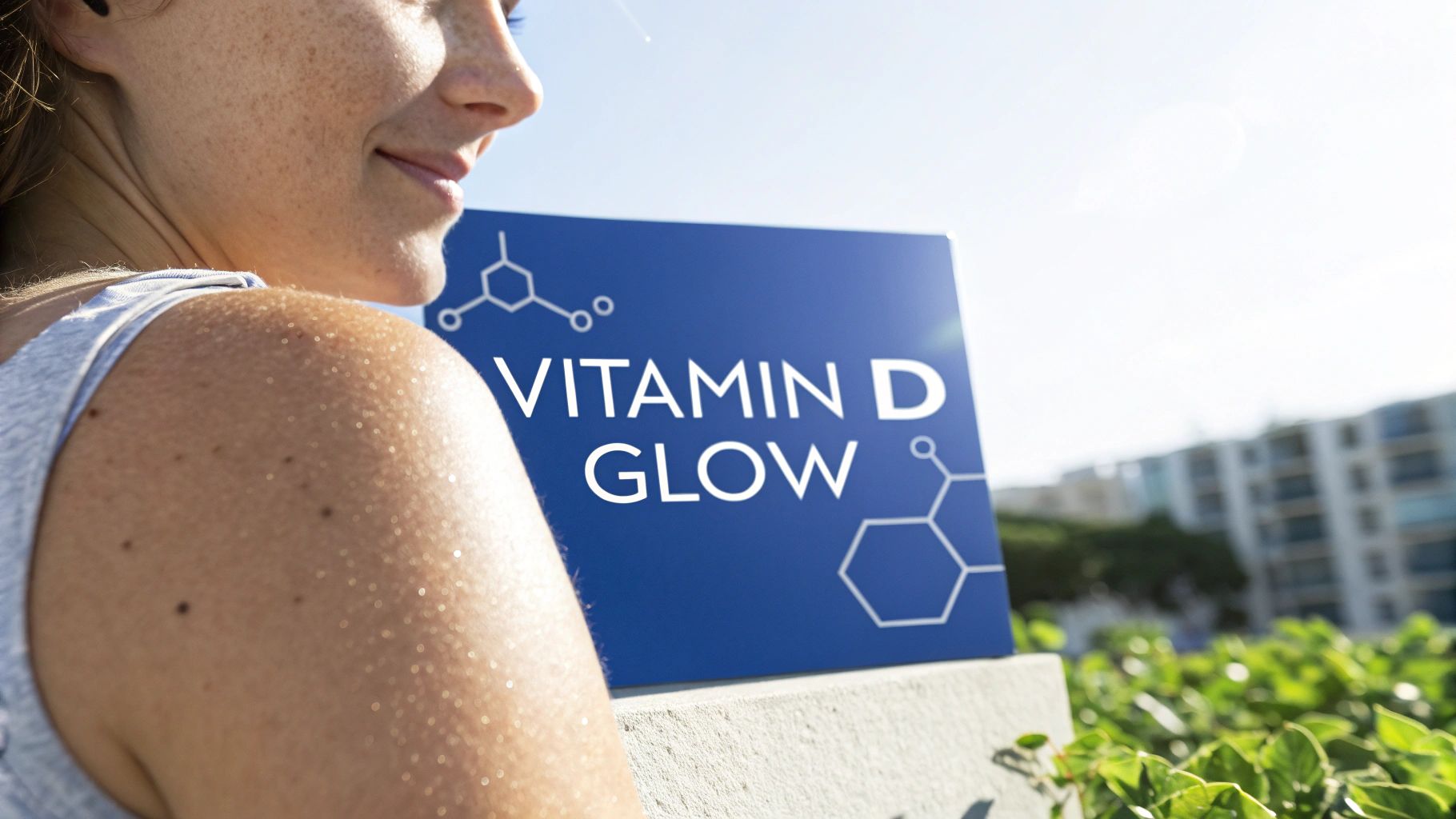
What if the key to resilient, glowing skin wasn’t found in an expensive serum, but was produced naturally by your own body? The skin benefits of vitamin D are massive, with this nutrient acting as a powerful hormone that’s essential for cellular repair, calming inflammation, and protecting against daily environmental stressors.
Understanding its role is a game-changer for anyone serious about skin health. This comprehensive guide will explore the profound impact of vitamin D on your skin, delving into its cellular mechanisms, its proven effects on common skin conditions, and safe strategies for optimizing your levels. Whether you're a wellness professional seeking to enhance client outcomes or an individual aiming for a healthier complexion, this article will provide the in-depth knowledge you need.
Your Skin's Secret Ally: The Sunshine Vitamin

Often called the "sunshine vitamin," vitamin D is unique because your skin produces it when exposed to sunlight. While everyone knows it’s crucial for bone health, its influence on your body's largest organ—the skin—is just as profound. It's best to think of it not just as a vitamin, but as a pro-hormone that directs countless processes essential for skin vitality. From regulating cell growth to fortifying the skin's barrier, its functions are integral to maintaining a healthy and youthful appearance.
This guide is your roadmap to understanding why optimizing vitamin D is so critical for maintaining healthy, vibrant skin. It’s a foundational element that supports everything from your skin's immune response to its ability to heal and defend itself. We will break down the scientific underpinnings of its role, providing a clear picture of how this single nutrient can be a cornerstone of any effective skincare and wellness strategy.
Why Vitamin D Matters for Your Skin
It's estimated that nearly 40% of adults in the U.S. have insufficient vitamin D levels, a gap that can show up directly in your skin's function. This nutrient is far from a passive player; it actively communicates with skin cells to make sure they're performing correctly. A deficiency can manifest in various ways, including increased inflammation, a compromised skin barrier, and a diminished ability to repair damage.
Its primary roles include:
- Regulating cell growth: It helps manage the lifecycle of skin cells (keratinocytes), preventing the kind of overgrowth that can lead to certain skin conditions like psoriasis. This ensures a smooth and orderly renewal process.
- Modulating the immune system: Vitamin D helps keep the skin's immune responses in check, calming frustrating redness and irritation. It acts as a natural anti-inflammatory agent, crucial for managing conditions like eczema and rosacea.
- Strengthening the skin barrier: A strong barrier is your first line of defense for retaining moisture and blocking pollutants. Vitamin D is a key contributor to its integrity by promoting the synthesis of essential lipids and proteins.
- Providing antioxidant protection: It helps shield your skin from the oxidative stress caused by UV radiation and environmental toxins, which are major contributors to premature aging.
As we dive deeper, you'll see how these functions translate into tangible improvements for your skin. This isn't about chasing trends; it's about understanding the core biology that dictates skin health. From medspa professionals to wellness enthusiasts, recognizing the power of this single nutrient is fundamental.
Just as a balanced diet is crucial for overall health, specific nutrients can offer targeted support. For example, many people explore the uses of geranium oil for skin as a complementary topical treatment. However, addressing skin health from the inside out is paramount for achieving lasting results.
This article, however, will focus on the internal mechanics, setting the stage for a comprehensive understanding of how to achieve your best skin from within. We'll break down the science, explore its effects on common conditions, and provide actionable advice you can actually use.
How Vitamin D Directs Your Skin's Health

Think of vitamin D as a master architect for your skin. From deep within, it orchestrates the critical functions that keep your skin healthy, resilient, and running smoothly. Its influence touches nearly every layer, directing how cells behave to build a strong, balanced surface. One of its most important jobs is managing how skin cells grow and mature.
This whole process starts with keratinocytes, the main cells that form your epidermis, or outer skin layer. Vitamin D acts like a project foreman, making sure these cells develop correctly and move up to the surface in an organized way. This process, known as differentiation, is crucial for forming a healthy stratum corneum. Without this guidance, cell production can turn chaotic, leading to a disorganized and weakened skin structure, which in turn can compromise the skin's barrier function and open the door to problems like dryness and sensitivity.
A Diplomat for Your Skin's Immune System
Beyond cell management, vitamin D is also a skilled diplomat for your skin’s immune system. Your skin is constantly bombarded by potential threats, from pollutants to microbes, and its immune cells need to know when to fight and when to stand down. Vitamin D helps keep this response in check by promoting the production of antimicrobial peptides like cathelicidin, which help fight off pathogens, while simultaneously suppressing overactive inflammatory pathways.
This is a huge deal for calming the redness and irritation tied to inflammatory skin conditions. By balancing the immune response—boosting its protective functions while tamping down on excessive inflammation—vitamin D fosters a calmer, more stable environment for your skin. It’s a key player in keeping skin comfortable and looking its best, particularly for those with chronic inflammatory issues.
Fortifying Your Skin's Natural Shield
Your skin’s outermost layer—the skin barrier—works a lot like a brick-and-mortar wall. The bricks are your skin cells (corneocytes), and the mortar is a mix of lipids that holds everything tight. Vitamin D is absolutely essential for creating key parts of this mortar, including proteins like filaggrin and loricrin, as well as crucial lipids. This reinforcement makes the whole barrier stronger and more resilient.
A strong, intact barrier does two vital things:
- It locks moisture in, preventing transepidermal water loss (TEWL) that leads to the dryness and dehydration responsible for dull, flaky skin.
- It keeps irritants out, shielding your deeper skin layers from pollutants, allergens, and harmful microbes that can trigger inflammation and sensitivity.
By reinforcing this protective shield, vitamin D directly contributes to your skin's resilience and hydration. It’s a foundational element for maintaining a smooth, supple, and healthy complexion that feels as good as it looks.
The Foreman of Wound Healing and Repair
When your skin gets injured, from a minor cut to a post-procedure recovery, vitamin D steps in as the supervisor of the repair crew. It helps coordinate the complex wound healing process by ramping up the production of compounds that fight off infection (like those antimicrobial peptides) and manage inflammation. This allows the skin to mend itself much more efficiently, reducing the risk of scarring and ensuring a smoother recovery.
This role also extends to protecting against daily environmental assaults. In fact, vitamin D is crucial for defending skin against UV-induced damage. Studies show it can significantly reduce DNA damage, apoptosis (cell death), and inflammation after sun exposure by activating proteins that shield cells from oxidative stress. This protective action is similar to how other therapies support skin health, like the restorative effects of infrared light therapy. Maintaining adequate levels is essential for anyone serious about their skin’s long-term health and vitality.
Vitamin D's Proven Impact on Skin Conditions

Understanding the science is one thing, but the real power comes from seeing how vitamin D delivers tangible results for stubborn, common skin conditions. This isn't just theory; a growing body of clinical evidence confirms its role in managing inflammatory issues that affect millions of people.
When we move from the cellular mechanisms to real-world impact, it becomes clear that optimizing vitamin D is a foundational strategy for calming distressed skin. For wellness professionals and medspa operators, grasping this evidence is the key to educating clients and getting better results from your treatments. This knowledge empowers you to offer a more holistic and effective approach to skin health.
Soothing Psoriasis Symptoms
Psoriasis is the textbook example of what happens when skin cell production runs wild. It’s an autoimmune response that kicks cell turnover into overdrive, creating those characteristic thick, scaly patches. This is where vitamin D steps in, directly slowing down this out-of-control growth (hyperproliferation) and guiding skin cells back to a normal lifecycle (differentiation).
At the same time, its immune-modulating abilities get to the root of the problem by calming the inflammation that fuels the fire. It helps to suppress the T-helper cells (Th1 and Th17) that drive the psoriatic inflammatory cascade. This dual-action approach—regulating cell growth and soothing the immune system—makes vitamin D a cornerstone of modern psoriasis management, used in both topical creams (calcipotriol is a synthetic vitamin D analog) and systemic care plans.
Calming Atopic Dermatitis or Eczema
Atopic dermatitis, better known as eczema, is another area where vitamin D shows incredible promise. Defined by a weak skin barrier and chronic inflammation, eczema flare-ups are very often linked to low vitamin D levels. The nutrient helps on two fronts: it strengthens the skin's natural barrier to reduce moisture loss and simultaneously dials down the inflammatory signals that cause redness and itching.
Research consistently shows a powerful link between low vitamin D and severe eczema. One major meta-analysis found that patients, especially children, had significantly lower levels of the vitamin than their healthy peers. Even better, oral supplementation proved effective, dropping eczema severity scores by a remarkable 11 points in people who were deficient. These findings highlight supplementation as a low-risk, high-reward strategy for managing this challenging condition.
By addressing both the structural (barrier) and immunological (inflammation) sides of eczema, vitamin D helps build a more resilient, less reactive skin environment. It’s a pathway to giving clients real, lasting relief.
Defending Against Photoaging
Beyond managing specific conditions, vitamin D is a key player in the fight against photoaging—the premature aging caused by sun exposure. UV radiation is the number one cause of fine lines, wrinkles, and sagging skin. Vitamin D helps protect against this damage by boosting the skin's own antioxidant defenses and reducing UV-induced cell death.
It works by helping to neutralize the destructive free radicals generated by UV light, reducing oxidative stress before it has a chance to break down vital proteins like collagen and elastin. Maintaining healthy vitamin D levels is essential for reinforcing the skin's natural repair systems and preserving a youthful look over the long haul. This is a proactive strategy, much like other calming techniques; you might also find our guide on what icing your face can do interesting for similar soothing benefits.
The clinical evidence speaks for itself. Below is a quick summary of how vitamin D's mechanisms of action translate into observable benefits for these common skin concerns.
Vitamin D's Role in Common Skin Conditions
| Skin Condition | Mechanism of Action | Observed Clinical Benefit |
|---|---|---|
| Psoriasis | Slows rapid keratinocyte growth and calms the underlying immune response. | Reduction in the thickness and scaling of plaques; improved overall skin appearance. |
| Atopic Dermatitis (Eczema) | Strengthens the skin's barrier function and reduces inflammatory signals. | Decreased severity of flare-ups, less itching, and improved skin hydration. |
| Photoaging | Acts as an antioxidant, neutralizing free radicals caused by UV exposure. | Helps protect collagen and elastin, preserving skin structure and reducing fine lines. |
| Acne | Reduces inflammation and regulates sebum production through its hormonal effects. | Potential reduction in inflammatory lesions and overall breakout severity. |
This table illustrates that vitamin D isn't just a single-solution nutrient; it's a versatile regulator that addresses the core issues driving some of the most challenging skin conditions clients face.
Achieving Optimal Vitamin D Levels Safely

So, how do you actually get your vitamin D levels where they need to be for healthy skin without going overboard? It really comes down to a smart, balanced strategy involving three key players: sensible sun exposure, strategic supplementation, and a supportive diet.
Each path has its own set of rules and benefits. The ideal approach often involves a combination of all three, tailored to individual needs, location, and lifestyle. Let's walk through how to navigate them safely to get all the skin-boosting rewards without the risks of overexposure or toxicity.
Sensible Sun Exposure
Getting vitamin D from the sun isn't about baking for hours. It’s about short, strategic bursts of exposure that kickstart your skin’s natural production process. The most efficient time for this is when the sun is highest, typically between 10 AM and 2 PM, as UVB rays are strongest. This is the period when your skin can synthesize the most vitamin D in the shortest amount of time.
Of course, "how long" is the million-dollar question, and it depends entirely on your skin type and where you are in the world.
- Fair skin: Just 5–10 minutes a couple of times a week is often enough.
- Medium skin: You can aim for 10–20 minutes, but always stop before your skin shows any sign of turning pink.
- Darker skin: Melanin offers more natural protection, so you may need 20–30 minutes of direct sun to get the same effect.
- Timing Tip: A great rule of thumb is the “shadow rule.” If your shadow is shorter than you are, UVB intensity is high and ideal for vitamin D synthesis.
The goal is simple: get just enough exposure on large areas of skin (like arms and legs) to trigger production, then cover up or apply a broad-spectrum sunscreen. This way, you get the benefits without the burn and minimize the long-term risks of skin cancer and photoaging.
Sun Exposure vs Supplementation A Practical Comparison
When sun exposure isn't practical or safe, supplementation is the next logical step. But how do you choose? Both methods have clear pros and cons that make them better suited for different lifestyles and seasons. Understanding these differences is key to creating a sustainable and effective vitamin D strategy.
Here’s a quick breakdown to help you and your clients decide on the best approach.
| Factor | Safe Sun Exposure | Oral Supplementation |
|---|---|---|
| Efficiency | Can produce up to 10,000 IU in about 10 minutes for fair skin. | Provides a consistent 600–2,000 IU per daily dose. |
| Consistency | Highly variable—depends on weather, season, and location. | Delivers a reliable, measurable dose year-round. |
| Safety | Carries a risk of sunburn and photoaging if not carefully managed. | Risk of toxicity exists if daily intake exceeds 4,000 IU long-term. |
| Accessibility | Free and natural, but only available during certain times of the day and year. | Supplements are widely available and affordable. |
| Recommended Practice | Aim for 10–15 minutes midday, 3x per week, then protect your skin. | Start with 800–1,000 IU daily and adjust based on blood test results. |
Ultimately, a combined approach often works best—using sensible sun exposure when possible and relying on supplements to fill in the gaps, especially during winter months or for individuals with limited outdoor time.
Strategic Supplementation
Supplements are your reliable backup, ensuring you never fall short when sun and diet aren't enough. You'll mainly see two forms on the shelf: D2 and D3. For skin health, D3 (cholecalciferol) is the clear winner as it’s better absorbed and more effective at raising blood levels. It's the same form your body produces naturally.
To supplement responsibly, follow a clear, step-by-step process:
- Test Your Baseline: Before you start, get a simple blood test to check your serum 25(OH)D levels. You can't know what you need if you don't know where you're starting. This is the gold standard for personalization.
- Choose Your Dose: For most adults, a starting dose of 1,000–2,000 IU daily is a safe and effective target, but always follow your practitioner's advice based on your test results.
- Select the Right Form: D3 is best. Look for liquid drops or softgels that are formulated with a healthy fat like olive or coconut oil to maximize absorption, as vitamin D is fat-soluble.
- Recheck Your Levels: After 8–12 weeks of consistent supplementation, get another blood test to see how your levels have responded.
- Adjust as Needed: Based on your new results, you can increase or decrease your dose to maintain an optimal range, typically between 30–50 ng/mL.
This test-and-adjust method removes the guesswork and ensures you hit that sweet spot for skin health without accidentally overdoing it.
Monitoring and Safety
While vitamin D is essential, more is not always better. Regular monitoring is the key to preventing toxicity.
"Testing vitamin D levels is what transforms supplementation from a guess into a strategy. It's the only way to ensure safe and effective dosing."
Be cautious with daily doses above 4,000 IU, as this is the upper limit for most adults. Consuming more than this long-term can lead to hypercalcemia (too much calcium in the blood), which carries risks like kidney stones. Always consult with a healthcare professional before starting a high-dose supplementation regimen.
And a pro tip: always take your vitamin D supplement with a meal that contains healthy fats. This simple step can significantly boost how much your body absorbs.
Practical Takeaways for Wellness Operators
As a medspa or wellness operator, integrating vitamin D guidance is a powerful way to enhance your client services and deliver better results.
Here are a few actionable ideas:
- Offer 25(OH)D Testing: Add it to your initial wellness consultations to create a personalized, data-driven plan from day one.
- Educate on Safe Sun Exposure: Provide clients with simple, clear guidelines on sun exposure times based on their specific skin type.
- Pair with Other Services: Connect vitamin D advice with treatments like Vacustyler sessions, explaining how optimal levels can support the circulatory and recovery benefits.
- Provide Quality Supplements: Consider offering a trusted, branded D3 supplement as part of your wellness packages.
- Track Client Progress: Monitor changes in skin hydration, resilience, and overall vitality to demonstrate the tangible benefits of optimizing their levels.
By taking this multi-faceted approach, you empower your clients to safely and effectively harness the skin-rejuvenating power of vitamin D. It's all about consistency, smart monitoring, and education.
Boosting Results in Wellness and Recovery
For medspas, athletic departments, and longevity clubs, the skin benefits of vitamin D are more than just a health fact. It's about taking the advanced therapies you already offer and making them work better. Think of it as turning a simple nutrient into a powerful performance enhancer for both aesthetic and recovery treatments.
It’s like preparing a canvas before painting. When a client has optimal vitamin D levels, their skin is primed for success. Its barrier is stronger, inflammation is under control, and the cellular repair machinery is already running at peak efficiency. This optimized internal environment creates a receptive foundation for any external treatment.
This creates a powerful synergy with modern wellness technologies. Services that work by stimulating the body’s own healing and circulatory processes just become flat-out more effective when the foundational biology is already dialed in.
Pairing Vitamin D with Advanced Therapies
Healthy vitamin D levels can directly amplify the outcomes of your most popular treatments. When a client's internal systems are fully supported, the external results you deliver are faster, more noticeable, and last longer. This is especially true for therapies based on light and pressure.
Consider the synergy with these modalities:
- Light Therapy (LED/Infrared): These treatments kickstart cellular energy and repair by stimulating mitochondria. Vitamin D is right there alongside them, helping to manage inflammation and promote the production of key proteins needed for skin rejuvenation, effectively compounding the benefits.
- Vacuum Wave Applications: Devices like the Vacustyler use intermittent negative pressure to boost circulation and lymphatic flow. With enough vitamin D, the skin's structure is more resilient and its cells are functioning optimally, allowing it to respond better to treatments aimed at toning and firming contours.
- Microneedling and Laser Resurfacing: These procedures rely on the body's wound-healing response. Optimal vitamin D levels ensure this response is efficient and well-regulated, leading to better collagen production, reduced post-procedure inflammation, and a quicker recovery time.
Optimizing vitamin D isn't an upsell; it's a foundational step in client care. It elevates the efficacy of your services, reduces downtime, and ultimately improves client satisfaction and retention.
A Foundational Element for Faster Recovery
This synergy is crystal clear when it comes to recovery and anti-aging. Vitamin D fights skin aging by boosting collagen, curbing oxidative stress, and helping wounds heal—all critical as aging skin naturally has fewer repair cells like fibroblasts.
Studies show it helps slow down both chronological aging and photoaging, which is the damage responsible for a staggering 80% of visible aging. It works by activating antioxidant networks and protecting cellular health. You can explore more findings on how vitamin D supports skin vitality on imrpress.com. This research underscores its importance not just for treating conditions, but for proactively maintaining skin youthfulness.
For an athletic department, this means athletes feel recovered from exertion more quickly. For a medspa, it means less downtime after aesthetic procedures and better firming results from body-contouring treatments.
Practical Steps for Wellness Operators
Building vitamin D optimization into your client protocols is a straightforward way to add real value and get better outcomes.
- Educate Clients: Create simple, easy-to-digest materials explaining why their vitamin D level matters for the specific treatments they’re getting. Use analogies like "priming the canvas" to make the concept relatable.
- Integrate Testing: Partner with a lab or recommend at-home testing to get a baseline for new clients. Frame it as part of a truly personalized wellness plan.
- Recommend Sensible Supplementation: Guide clients toward high-quality D3 supplements, advising on the right dosages based on their test results and lifestyle.
- Showcase the Synergy: Connect the dots for them. Explain how keeping their vitamin D levels healthy will help them get the absolute most out of their investment in your advanced therapies, from facials to full-body recovery sessions.
Frequently Asked Questions About Vitamin D and Skin
Even after exploring the science, you probably still have a few practical questions. Let's tackle some of the most common ones to clear up any lingering confusion about vitamin D and skin health.
Can I Get Enough Vitamin D Through Diet Alone?
For most of us, relying only on food to get enough vitamin D is a tough, if not impossible, goal. While some foods are great sources—think fatty fish like salmon and mackerel, egg yolks, and UV-treated mushrooms—you'd have to eat them in huge quantities.
To put it in perspective, you would need to eat about six ounces of salmon every single day just to hit the minimum recommended intake of 600 IU. That's why a smart combination of sensible sun exposure and targeted supplementation is the most practical and effective way to maintain healthy vitamin D levels.
Will Wearing Sunscreen Cause Vitamin D Deficiency?
This is a big one. Yes, sunscreen absolutely reduces your skin's ability to produce vitamin D. A sunscreen with SPF 30 can block up to 99% of the UVB rays your skin needs to start the vitamin D synthesis process.
But—and this is critical—that doesn't mean you should ever skip sunscreen. The danger of skin cancer from unprotected sun exposure is a far greater risk than a potential vitamin D shortfall. The best approach is a balanced one: get 10-15 minutes of unprotected sun on your arms and legs a few times a week, then apply your sunscreen generously. Use supplements to fill in the rest of your needs.
The goal is balance, not compromise. Prioritize skin cancer prevention with sunscreen while ensuring your vitamin D levels are supported through other safe methods like high-quality supplements.
Does Vitamin D Help With Acne?
The link between vitamin D and acne is getting a lot of attention, and for good reason. We know vitamin D is a powerful immune regulator with anti-inflammatory properties, so it makes sense that it could help calm the inflammation that fuels acne breakouts. In fact, several studies have shown that people with acne often have lower-than-average vitamin D levels.
While the science is still developing and it's not a direct "cure," ensuring your vitamin D levels are optimal is a solid foundational step. It helps create a less inflammatory environment in your skin, which can indirectly support a clearer, calmer complexion. It may also play a role in regulating sebum production, further contributing to acne management.
What Is the Difference Between Vitamin D2 and D3?
When you’re browsing the supplement aisle, you’ll see two main forms of vitamin D: D2 (ergocalciferol) and D3 (cholecalciferol). It's a simple but important distinction.
- Vitamin D2 is the plant-based form, usually derived from mushrooms exposed to UV light.
- Vitamin D3 is the form your own skin produces from sunlight. It’s also found in animal-based foods.
For supplementation, the science is clear: vitamin D3 is the superior choice. It's more effective at raising and maintaining vitamin D levels in your blood because it's the exact form your body is designed to produce and use. When choosing a supplement to support your skin, always look for D3.
At Weyergans HighCare US, we believe in a science-backed approach to wellness that supports the body from the inside out. Optimizing foundational nutrients like vitamin D can enhance the results of advanced recovery and aesthetic treatments. Explore how our German-engineered technologies can elevate your facility's offerings at https://weyerganshighcareus.com.