


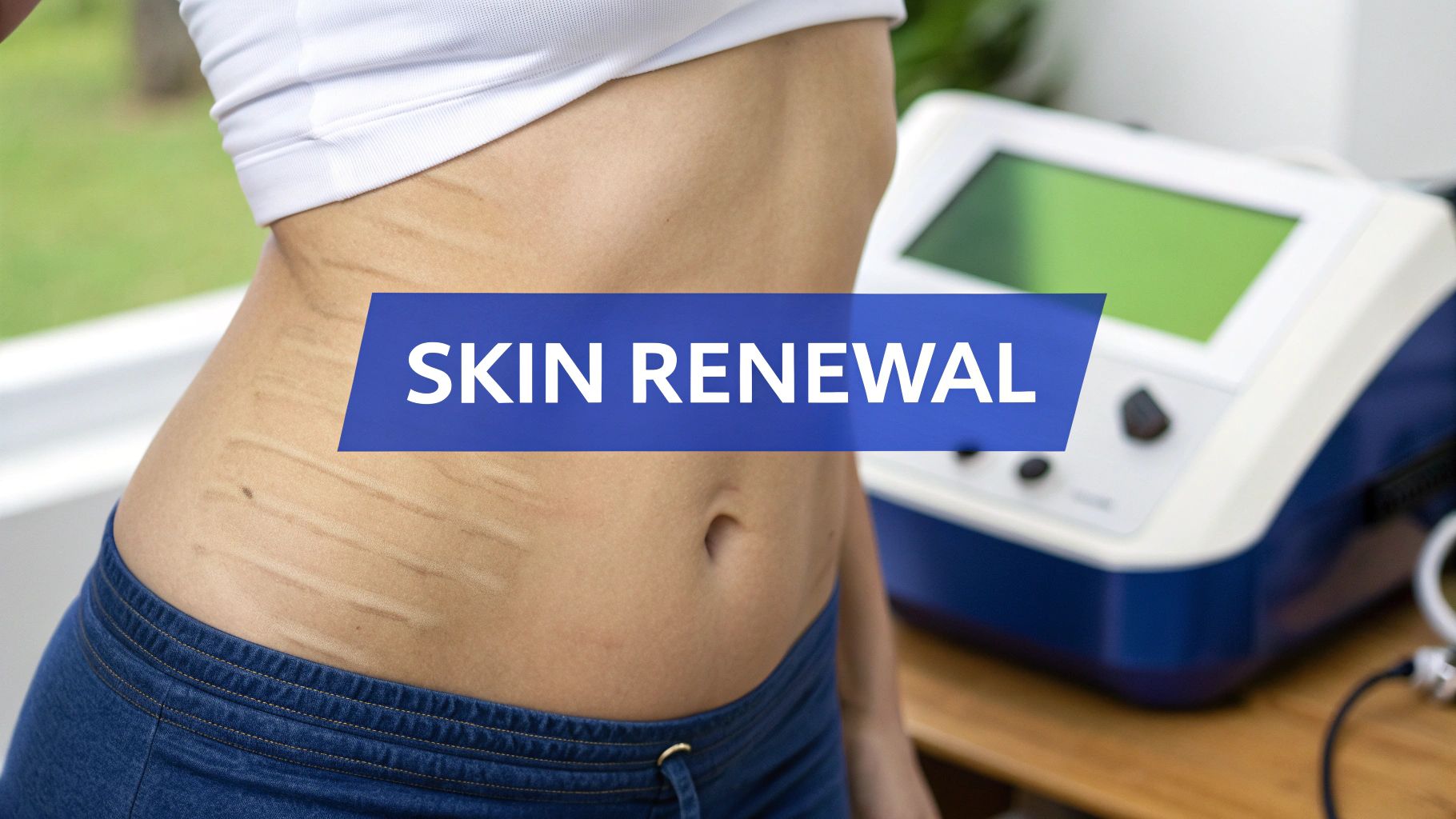
RF microneedling for stretch marks is a game-changer. It works by combining controlled micro-injuries with deep radiofrequency heat to kickstart the skin's rebuilding process. This dual-action approach forces the body to generate new collagen and elastin, dramatically improving the texture and appearance of stretch marks from the inside out. It's a science-backed service that delivers real, visible improvements for a huge range of clients.
The Definitive Answer to Treating Stubborn Stretch Marks
For years, clinics have been stuck offering solutions for stretch marks that delivered mixed results, at best. Clients were often left feeling frustrated and defeated. Topical creams barely scratch the surface and can't create structural change, while other treatments just don't address the core issue—the damaged, disorganized collagen fibers deep in the dermis. This is exactly where RF microneedling carves out its niche as a far superior alternative.
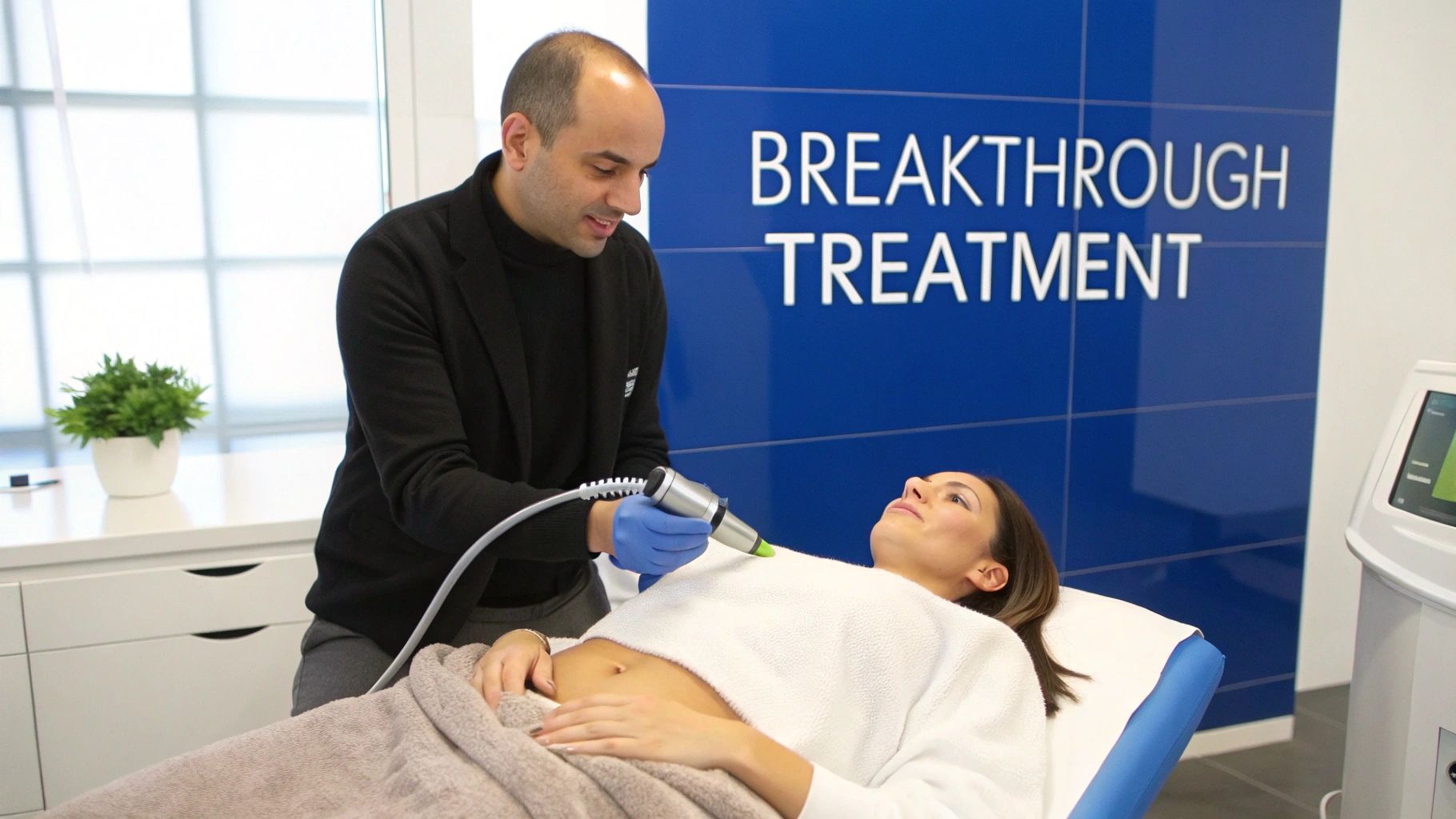
Why Standard Solutions Fall Short
Most traditional approaches simply don't reach the source of the problem. Stretch marks, known clinically as striae distensae, are essentially scars that form in the skin’s dermal layer when it’s forced to stretch or shrink too quickly. To truly fix them, any effective therapy has to get down into that deeper layer and make a change.
- Topical Creams: These products only work on the epidermis (the skin's outermost layer). They can't possibly trigger the kind of deep collagen remodeling needed to repair a dermal tear.
- Standard Microneedling: While it’s great for creating micro-injuries that stimulate some new collagen, it’s missing the critical thermal energy needed for maximum tissue tightening and regeneration.
- Superficial Peels: Chemical peels are mostly for surface texture and pigmentation. They have a very limited effect on the structural integrity of deep-seated stretch marks.
A Breakthrough in Dermal Remodeling
RF microneedling blows past these limitations by delivering targeted radiofrequency energy directly into the dermis through ultra-fine, insulated needles. This creates two powerful therapeutic actions at once. First, the microneedles create thousands of controlled micro-channels, triggering the body’s natural wound-healing cascade. Second, the radiofrequency energy generates precise, localized heat deep within the skin.
This one-two punch of thermal and mechanical stimulation forces a robust production of new, organized collagen and elastin—the literal building blocks of smooth, resilient skin. It doesn't just put a band-aid on the issue; it actively rebuilds the damaged tissue from within.
The clinical evidence backing its effectiveness is growing fast. For instance, a pilot study noted significant improvements in both the length and width of stretch marks, along with enhanced smoothness, after just a few sessions. You can learn more about those study findings on male skin treatment here. This ability to produce measurable, visible change is what truly positions RF microneedling for stretch marks as a premier, high-value service for any modern aesthetic clinic.
How RF Microneedling Rebuilds Skin from the Inside Out
To really get why RF microneedling for stretch marks is so effective, you have to think about what a stretch mark actually is. Imagine it like a crack in a home's foundation. You can paint over it, but that doesn't fix the deep, structural weakness. Most topical treatments are just like that paint—they can't touch the real problem, which lies deep in the skin's dermis.
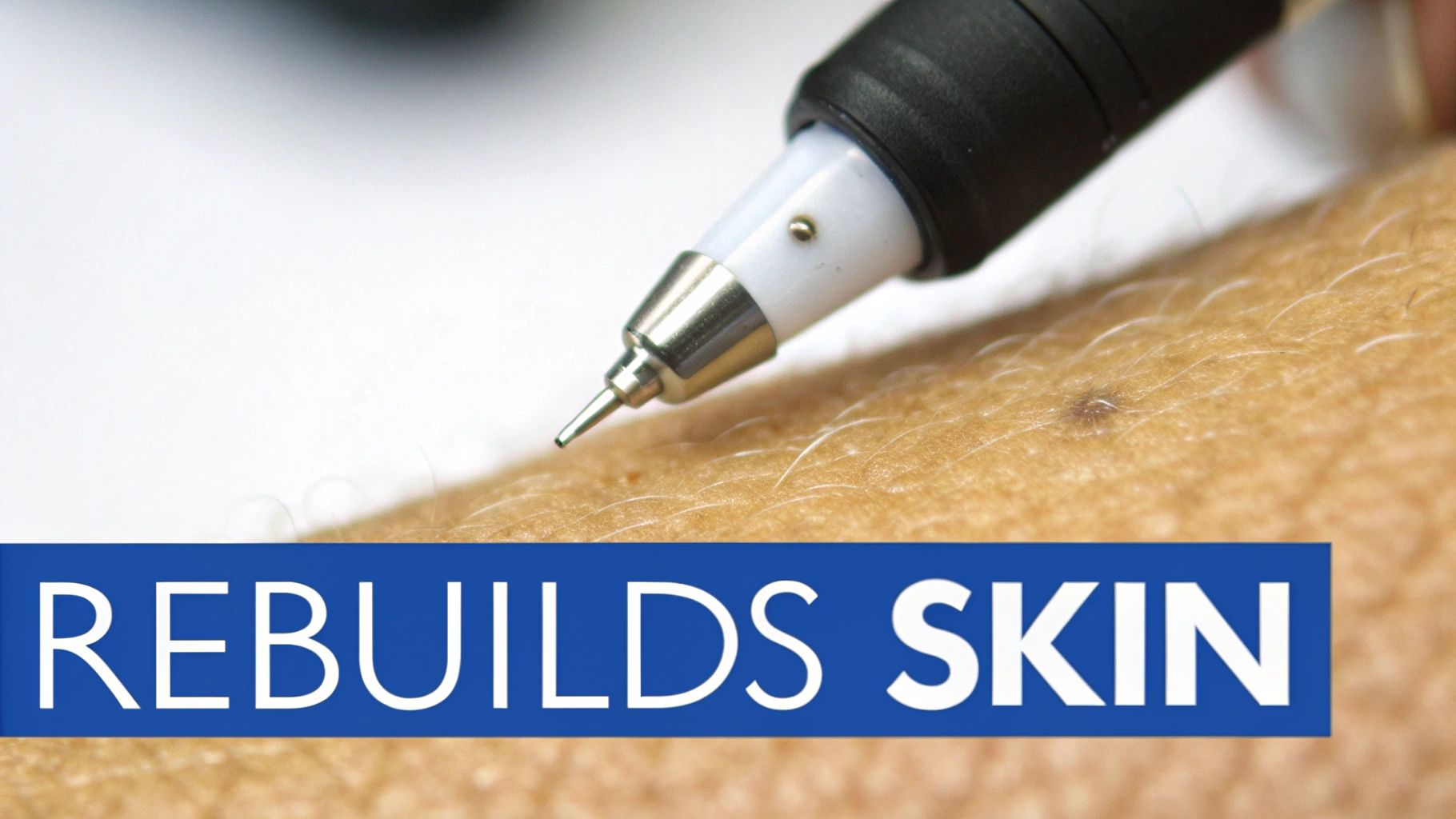
RF microneedling doesn't just patch things up. It’s like sending a specialized construction crew down into the foundation to rebuild it from the inside. The entire process hinges on two powerful actions working in perfect sync.
The First Action: Creating Access Pathways
First, you have the "microneedling" part. A device with ultra-fine, gold-plated needles creates thousands of tiny, controlled micro-injuries in the skin. These aren't just random punctures; they are precise channels that lead directly into the dermis—the exact layer where stretch marks form.
This controlled injury is the secret sauce. It completely bypasses the skin's surface, ensuring the real therapeutic energy gets delivered right where it needs to go without damaging the outer epidermis. That's a huge reason why the treatment is safer for a wider range of skin tones compared to many lasers.
The Second Action: Delivering Targeted Heat
As these tiny needles reach their target depth, they deliver a pulse of focused radiofrequency (RF) energy. In our analogy, this is the "repair team" getting to work. The RF energy creates a gentle but powerful heat deep inside the tissue, and this heat is the catalyst that kicks off real change.
This thermal energy triggers the body's natural wound-healing response on a massive scale, signaling it to ramp up the production of two critical proteins:
- Collagen: This is the protein that gives skin its strength and structure. Over the next few weeks, the body generates new, organized collagen fibers that begin to replace the damaged, chaotic tissue of the stretch mark.
- Elastin: Responsible for the skin’s snap-back quality, elastin helps the newly rebuilt skin become more flexible and resilient, dramatically improving the overall texture.
This one-two punch is what sets RF microneedling apart. The micro-injuries create the path for repair, and the radiofrequency energy provides the powerful wake-up call needed to rebuild the skin's entire support network. It's a fundamental restructuring, not a superficial fix.
Rebuilding the Skin's Support Structure
The body’s response to this combined stimulus is gradual but profound. In the weeks that follow each session, the newly minted collagen and elastin get to work filling in the dermal tears that we see as stretch marks. The old, disorganized fibers are slowly cleared out and replaced by a fresh, healthy skin matrix.
This process literally rebuilds the skin’s internal scaffolding from the ground up. The result? A visible improvement in the texture, depth, and even the color of the stretch marks. The skin becomes smoother, firmer, and much more uniform in its appearance.
Because the treatment tackles the root cause of stretch marks—that breakdown of dermal support—the results are both significant and long-lasting. By stimulating the body's own powerful regenerative machinery, RF microneedling for stretch marks offers a solution that truly restores the skin's integrity. It delivers outcomes that topical creams and surface-level treatments just can't dream of matching, which is exactly why it has become a go-to procedure for clinics that want to provide real, visible improvements for their clients.
Translating Clinical Data into Real-World Results
Moving from the science of collagen induction to tangible client outcomes is what separates a good treatment from a great one. While the theory behind how RF microneedling for stretch marks works is compelling, clinic owners and discerning clients need to see concrete proof.
Fortunately, the clinical data provides a strong foundation for the real-world results you can expect to deliver.
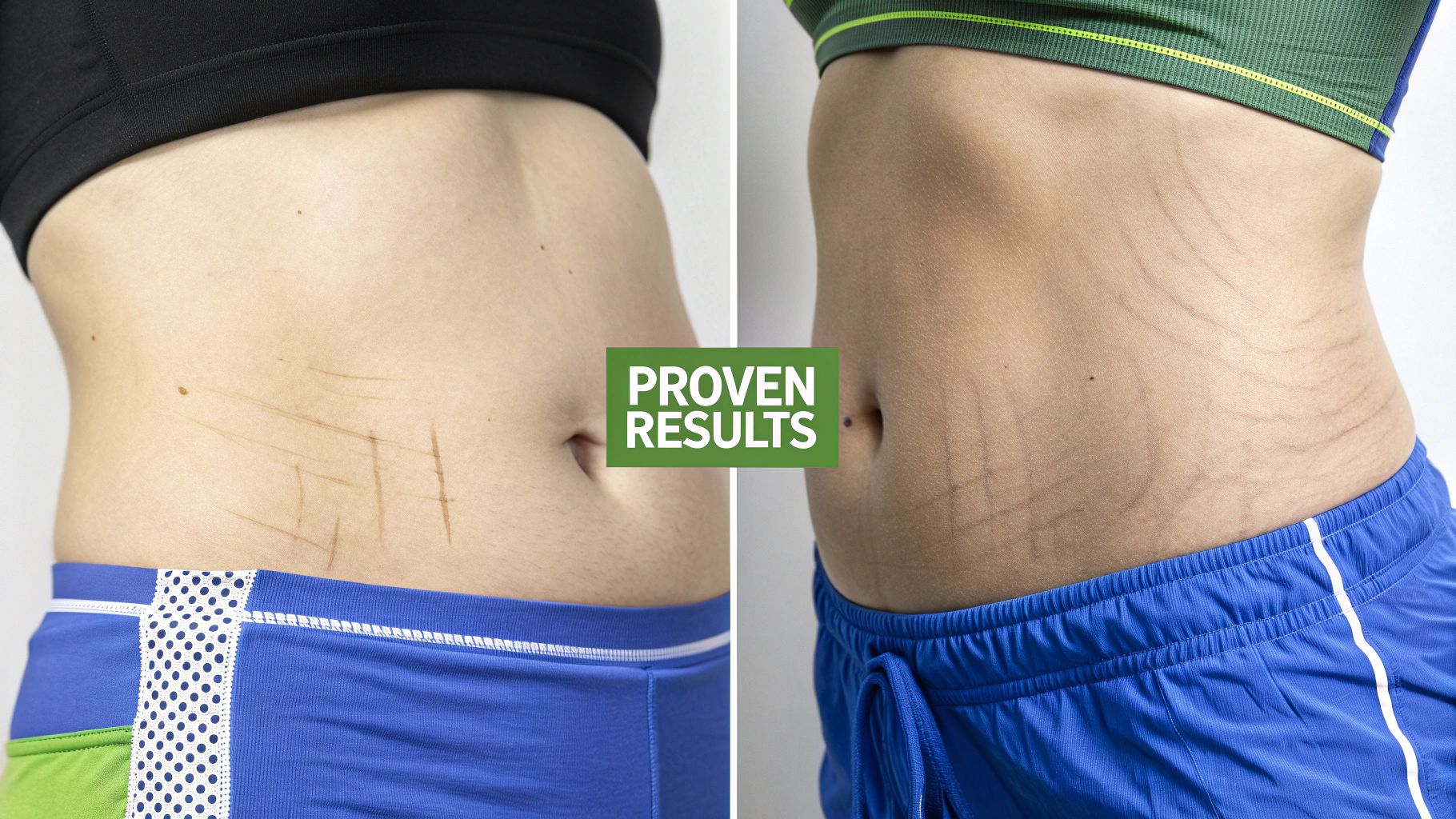
This isn't about hoping for improvement; it's about achieving measurable changes in skin texture, volume, and coloration. The goal is to set clear, evidence-based expectations for your clients, showing them precisely what's possible with a dedicated treatment plan.
By understanding the numbers, you can confidently explain the value of the procedure and build trust from the very first consultation.
Quantifying the Improvements
When we talk about results, specific numbers help clients visualize their potential outcome. Clinical studies have drilled down into several key areas of improvement for striae distensae (stretch marks), offering a clear picture of the treatment's efficacy.
A key study published in the Journal of Cosmetic Dermatology gave us specific, quantifiable data on the effects of fractional radiofrequency microneedling. Researchers observed an average 19.1% reduction in striae volume and an 11.2% reduction in pigmentation after a series of treatments.
These figures show a direct impact on the physical depth and discoloration that make stretch marks so noticeable. You can discover more details about these clinical findings and patient satisfaction rates.
These numbers are more than just statistics; they are the proof points that help you manage client expectations. Instead of vague promises of "better-looking skin," you can discuss specific, documented improvements in depth, color, and overall appearance.
Here's a quick look at the kind of data we're seeing from clinical trials.
RF Microneedling Efficacy Snapshot (Based on Clinical Findings)
This table summarizes the average improvements observed in clinical trials for stretch marks treated with RF Microneedling over a series of sessions.
| Improvement Metric | Average Percentage Reduction |
|---|---|
| Striae Volume (Depth/Indentation) | 19.1% |
| Pigmentation (Discoloration) | 11.2% |
These metrics give us a solid, evidence-based starting point for client conversations, grounding expectations in reality.
What Clients See and Feel
Beyond the clinical metrics, the most important results are the ones your clients experience firsthand. The process of dermal remodeling kicked off by RF microneedling translates into visible and textural changes that build over time.
- Smoother Skin Texture: As new collagen fills in the dermal tears, the skin's surface becomes noticeably smoother to the touch. That ridged or indented texture characteristic of stretch marks begins to flatten out.
- Reduced Discoloration: The treatment helps normalize pigmentation. For newer, reddish-purple stretch marks (striae rubrae), the redness fades more quickly. For older, silvery-white marks (striae albae), the treatment can help repigment the area, making it blend better with the surrounding skin.
- Increased Skin Firmness: The new elastin fibers generated during the healing process restore a degree of elasticity to the treated area. This results in skin that not only looks better but also feels firmer and more resilient.
The real power of RF microneedling lies in its progressive nature. While some improvements may be visible after the first session, the most significant changes occur as collagen continues to build over a period of three to six months. This gradual, natural-looking improvement is a key selling point for clients seeking authentic results.
By presenting a combination of hard data and relatable, tangible outcomes, you can build a powerful narrative around the effectiveness of RF microneedling for stretch marks. This evidence-based approach establishes your clinic as a trusted authority, capable of delivering the impressive results that modern clients demand. It turns a promising technology into a proven solution.
Setting Your Clinic Up for Success with Proven Protocols
Getting incredible results with RF microneedling for stretch marks takes more than just having the latest device—it’s about crafting a world-class patient journey. This is where proven, structured protocols come in. They are the key to managing expectations, ensuring clients follow through with their care, and delivering those "wow" outcomes time and time again.
A well-defined process builds immense trust and elevates the entire client experience, from the very first conversation to the final follow-up.

This blueprint gives your team the confidence to guide clients effectively, positioning your clinic as a highly professional, results-driven practice that people talk about.
Crafting the Ideal Treatment Timeline
Consistency is everything when it comes to stimulating the deep collagen remodeling needed to truly repair stretch marks. A scattered, one-off approach just won't cut it. The most effective protocols involve a series of treatments perfectly spaced to work with the body's natural regenerative cycles, not against them.
- Number of Sessions: A typical treatment plan includes 3 to 5 sessions. This range allows you to build momentum, with each treatment compounding the results of the last.
- Optimal Interval: Sessions should always be scheduled 4 to 6 weeks apart. This isn't an arbitrary number. This specific window gives the skin just enough time to complete its initial healing phase and kickstart critical collagen production before the next stimulus is introduced. Rushing the process is a recipe for subpar results.
By setting this schedule from day one, you hand clients a clear roadmap of their commitment and what they can realistically expect over the coming months.
The Pre-Treatment Consultation
The journey to amazing results starts long before the device is even switched on. Your most powerful tool for success is a thorough, transparent consultation. This is where you set the stage.
During this initial meeting, you need to dig into the client’s goals, carefully assess the treatment area, and review their medical history for any contraindications. This is also your moment to clearly explain what the procedure feels like—most clients describe a mild warming and prickling sensation, which is easily managed with a topical numbing cream applied beforehand.
Clearly communicating the expected sensations and temporary side effects, like mild redness similar to a sunburn, prevents surprises and reinforces your clinic's transparency and expertise. This builds a foundation of trust that is essential for client retention.
Essential Post-Care Instructions
What your client does after they walk out the door is just as crucial as the treatment itself. Handing them simple, clear post-care instructions is non-negotiable for maximizing results and minimizing any potential hiccups.
Your post-treatment protocol should be easy to follow and include these key points:
- Gentle Skincare: Advise clients to stick to a gentle cleanser and a hydrating, non-comedogenic moisturizer for the first few days. Harsh active ingredients like retinoids or acids are a definite no.
- Sun Protection: The treated skin is going to be extra sensitive to UV radiation. Emphasize the daily, non-negotiable use of a broad-spectrum sunscreen with an SPF of 30 or higher. This protects the healing skin and prevents hyperpigmentation.
- Avoid Intense Activity: Recommend they skip strenuous exercise, saunas, and hot tubs for at least 24-48 hours after treatment to keep irritation and swelling to a minimum. Gentle recovery methods can also be a fantastic addition. For example, you can learn more about the benefits of lymphatic drainage massage in our related guide, which can beautifully complement the healing process.
- Stay Hydrated: Encourage clients to drink plenty of water. It's a simple step that supports the skin’s healing and regeneration from the inside out.
Finally, remember to highlight one of the biggest advantages of RF microneedling for stretch marks: the minimal downtime. Most people only experience a bit of redness for a day or two and can jump right back into their normal routine. For busy clients who want real results without disrupting their lives, this is a massive selling point.
How RF Microneedling Outperforms Other Treatments
In a market flooded with stretch mark "solutions," it's no wonder clients are often overwhelmed and skeptical. They’ve likely tried the miracle creams that delivered zero miracles or have been weighing their options for in-office procedures. This is your clinic’s opportunity to cut through the noise by explaining why RF microneedling for stretch marks isn't just another choice—it’s a fundamentally better one.
The real difference is its ability to tackle the root cause of stretch marks with incredible precision. While other treatments just scratch the surface or rely on a single mechanism, RF microneedling delivers a powerful, dual-action punch. It doesn’t just patch up the appearance; it actively rebuilds the damaged tissue from deep within the dermis.
Understanding this distinction is key to showing clients its true value and positioning it as the premium, gold-standard service in your clinic.
Depth of Treatment The Deciding Factor
The success of any stretch mark treatment comes down to one thing: depth. Stretch marks are dermal scars, meaning the damage—the torn collagen—is in the middle layer of the skin. If a treatment can't reach the dermis, it's destined to fail.
- Topical Creams: These products only work on the epidermis, the skin's outermost layer. They might hydrate the surface and offer a temporary textural improvement, but they are physically incapable of mending the broken collagen fibers deeper down.
- Chemical Peels: Lighter peels do a decent job of exfoliating the top layers. While this can help with surface-level pigmentation, they simply don't trigger the robust collagen and elastin production needed to restructure a deep dermal scar.
- Standard Microneedling: This is a step in the right direction. It creates micro-injuries that reach the dermis, sparking some collagen growth. But it’s missing the game-changing element of thermal energy. Adding radiofrequency heat is what supercharges the regenerative process, leading to far more significant tissue tightening and rebuilding.
RF microneedling is specifically engineered to bypass the epidermis and deliver its therapeutic heat directly into the dermis. This ensures all that powerful energy is concentrated exactly where the stretch marks are, kicking off a powerful healing response for maximum impact.
The ability to precisely target and heat the dermal layer is the single most important factor that elevates RF microneedling above other modalities. It’s like the difference between painting over a crack in the wall and actually reinforcing the structure behind it.
A Clear Comparison of Popular Treatments
To really grasp its advantages, putting it side-by-side with other options is essential. This helps both clinicians and clients see exactly where RF microneedling shines in terms of its mechanism, real-world effectiveness, and safety profile for all skin types. Many non-invasive body treatments aim to improve skin, but their methods vary widely. If you're interested in exploring other options, you can learn more about non-invasive body treatments that focus on circulation and recovery.
Let’s break down how it really stacks up against the competition.
Stretch Mark Treatment Comparison
This table gives a straightforward comparison of RF Microneedling against other common treatments, helping to clarify the best path forward for your clients.
| Treatment | Mechanism | Effectiveness | Downtime | Best For |
|---|---|---|---|---|
| RF Microneedling | Combines microneedling with deep radiofrequency heat to stimulate collagen and elastin production in the dermis. | High on both new (red) and old (white) stretch marks. Visibly improves texture and firmness. | Minimal (1-3 days of mild redness). | All skin types, including darker skin tones, seeking significant structural improvement. |
| Standard Lasers | Use focused light energy to resurface the skin (ablative) or heat the dermis (non-ablative). | Moderate to High, but effectiveness varies. Higher risk of post-inflammatory hyperpigmentation (PIH) in darker skin tones. | Varies (can be 1-2 weeks for ablative lasers). | Lighter skin tones. Can be effective but requires careful patient selection. |
| Chemical Peels | Apply a chemical solution to exfoliate the top layers of skin, promoting cell turnover. | Low for stretch marks. Primarily affects surface texture and mild discoloration. | Varies (from none to several days of peeling). | Superficial skin concerns; not a primary treatment for dermal scars. |
| Topical Creams | Use ingredients like retinoids or hyaluronic acid to hydrate and encourage slight cell turnover on the skin's surface. | Very Low. May slightly improve the appearance of new stretch marks over many months but cannot repair dermal tears. | None. | Minor prevention or very early, mild stretch marks. |
As the table makes clear, RF microneedling for stretch marks consistently offers the most effective, safest, and most versatile solution. It delivers the deep dermal remodeling required for real, lasting change with minimal downtime, making it the ideal choice for the vast majority of clients who want to finally do something about this stubborn concern.
Boosting Clinic Revenue with Smart Treatment Pairing
Offering a high-value service like RF microneedling for stretch marks is a fantastic start, but the real business growth happens when you strategically build around it. By transforming a single, effective procedure into a premium, multi-step experience, you can dramatically increase per-client revenue and elevate your clinic's reputation. The key is intelligent treatment pairing, often called "stacking."
This approach is all about combining RF microneedling with complementary technologies that boost results and improve the client experience. It’s not just about adding another service; it's about creating a synergistic package that delivers more than the sum of its parts. This allows you to justify premium pricing while building incredible client loyalty through superior, comprehensive care. You're no longer just offering a service—you're providing a complete solution.
Enhancing Recovery and Results with Complementary Tech
After an RF microneedling session, the skin is in a prime state of regeneration. This makes it the perfect time to introduce therapies that support and accelerate the healing process. One standout option is pairing the treatment with a system like the Vacustyler Avantgarde. This device uses intermittent negative pressure therapy—think of it as gentle vacuum waves—around the lower body to significantly boost circulation and lymphatic flow.
Here’s a simple way to look at it: RF microneedling is the construction crew rebuilding the skin's foundation. The Vacustyler is the logistics team that clears the roads and brings in fresh supplies. By improving blood flow, it helps deliver more oxygen and nutrients to the healing tissues while efficiently clearing away inflammation and swelling. This not only speeds up recovery but also creates a far more comfortable post-treatment experience for your client. We also see great benefits in supporting skin health with light; you can learn more about how different wavelengths contribute by reading our guide on the benefits of infrared light therapy.
Creating High-Margin, Premium Packages
Stacking treatments lets you design tiered packages that cater to clients who want the absolute best outcomes. Instead of selling three to five standalone RF microneedling sessions, you can now offer a "platinum" package that includes a 20-minute Vacustyler session after each appointment.
This bundled approach hits several key business goals at once:
- Increases Perceived Value: Clients see a more robust, thoughtful treatment plan designed to maximize their investment and deliver better results.
- Justifies Higher Price Points: A multi-technology package naturally commands a higher price than a single service, giving your profit margins a healthy lift.
- Improves Client Outcomes: Faster recovery and potentially enhanced results lead to happier clients who are far more likely to return and refer others.
An open-label study on post-treatment tolerability found that an incredible 90% of subjects felt more confident and 86% were very or extremely comfortable resuming activities shortly after RF microneedling. These findings highlight the minimal disruption, which is a major selling point. Pairing these sessions with a Vacustyler treatment can further optimize that quick recovery by reducing swelling through its gentle vacuum waves and integrated light therapy, creating an even better client journey. You can explore the full study on RF microne-edling tolerability to see the data for yourself.
Answering Your Most Common Questions
Even after digging into the science and protocols, you probably still have a few questions. That's completely normal. This final section tackles the most common queries we hear from both clients and clinic owners about RF microneedling for stretch marks, giving you the clear, direct answers you need to move forward with confidence.
Is RF Microneedling for Stretch Marks Painful?
This is almost always the first question on everyone's mind. The short answer is no, not really. Most clients report very little discomfort during the procedure. Before the session even starts, a powerful topical numbing cream is applied to the treatment area, which makes a huge difference in ensuring the experience is as comfortable as possible.
You might feel a mild prickling sensation and a bit of warmth as the radiofrequency energy is delivered, but the treatment is designed for patient comfort and is generally very well-tolerated. It's more of an odd sensation than a painful one.
How Long Do the Results Last?
The improvements you'll see from RF microneedling are incredibly long-lasting. Think of it this way: the treatment kickstarts your body’s own collagen factory, prompting it to produce new, healthy tissue. Because you're rebuilding the skin's foundation from the inside out, those structural changes are permanent.
Of course, we can't stop the natural aging process. To keep your skin looking its best over the years and fight off future skin laxity, your provider might suggest an occasional maintenance session down the road. But the core repair work is done.
The new collagen your body creates is permanent, meaning the core improvements to the stretch marks will endure. This isn't a temporary fix; it's a true restoration of the skin's dermal foundation.
Who Is the Ideal Candidate for This Treatment?
One of the best things about this procedure is just how many people it works for. The ideal candidate is really any healthy individual who wants to improve the texture, color, and overall appearance of their stretch marks—whether they're new and red or old and silvery-white.
Because the RF energy is delivered below the skin's surface, the risk of pigmentation issues is far lower than with many aggressive laser treatments. This makes RF microneedling for stretch marks a safe and powerfully effective option for almost all skin types and tones, from the very fair to the very dark. It’s a truly versatile solution for a huge range of clients.
Ready to deliver superior results and accelerate recovery for your clients? The Weyergans HighCare US Vacustyler Avantgarde is the perfect addition to your RF microneedling protocols, enhancing outcomes and boosting revenue. Discover how this German-engineered technology can elevate your practice by visiting https://weyerganshighcareus.com.