


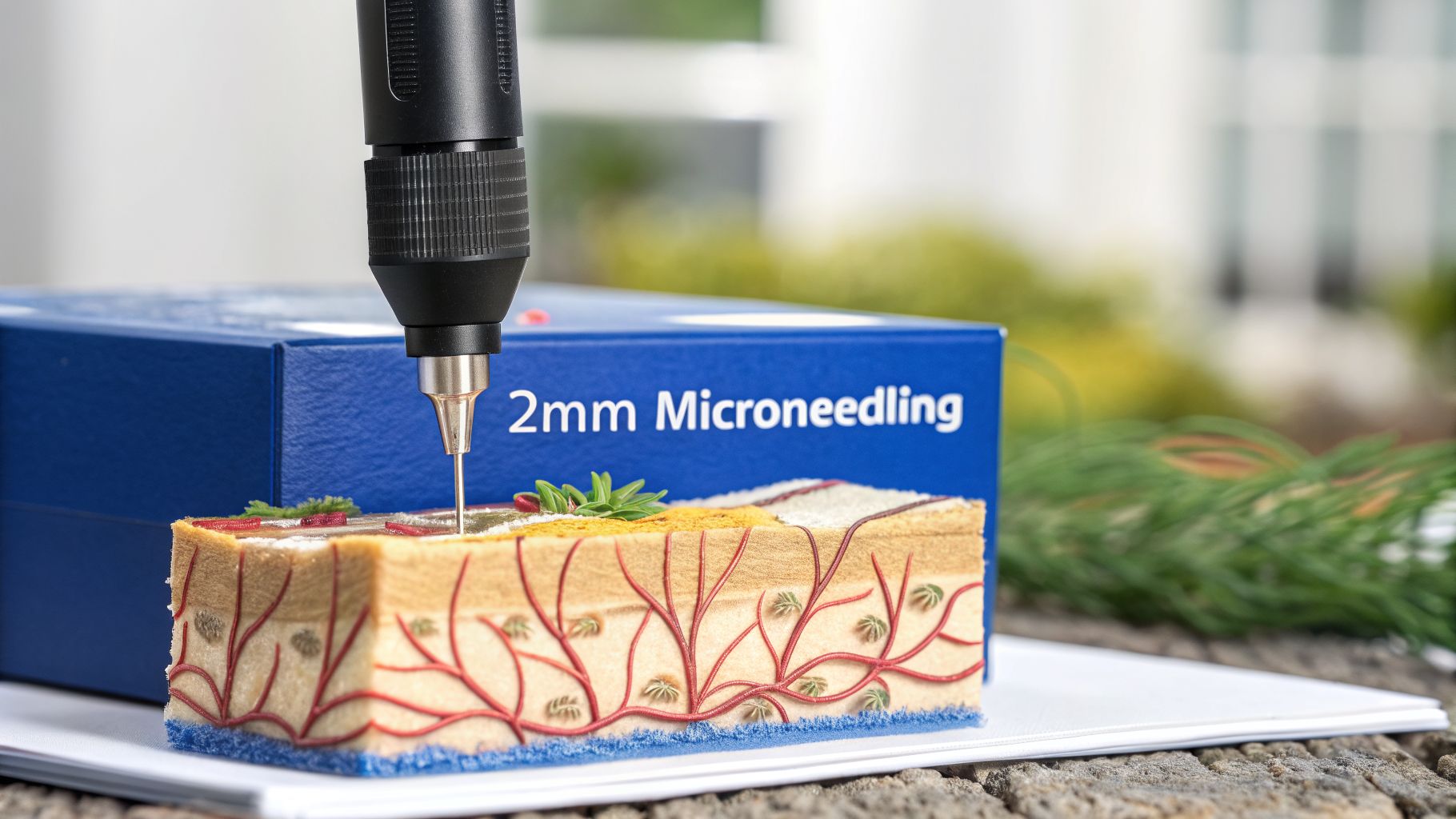
When you need to go beyond surface-level skin rejuvenation and tackle significant textural issues, you have to go deeper. That's where microneedling with 2mm needles comes in. This isn't your standard at-home treatment; it's a clinical procedure designed for serious skin remodeling, targeting deep concerns like severe acne scars and pronounced wrinkles.
This depth reaches far below the skin's surface to kickstart a powerful collagen and elastin response. Because of its intensity, a trained professional must perform it in a sterile, clinical setting.
Going Deep: Understanding the 2mm Microneedling Technique
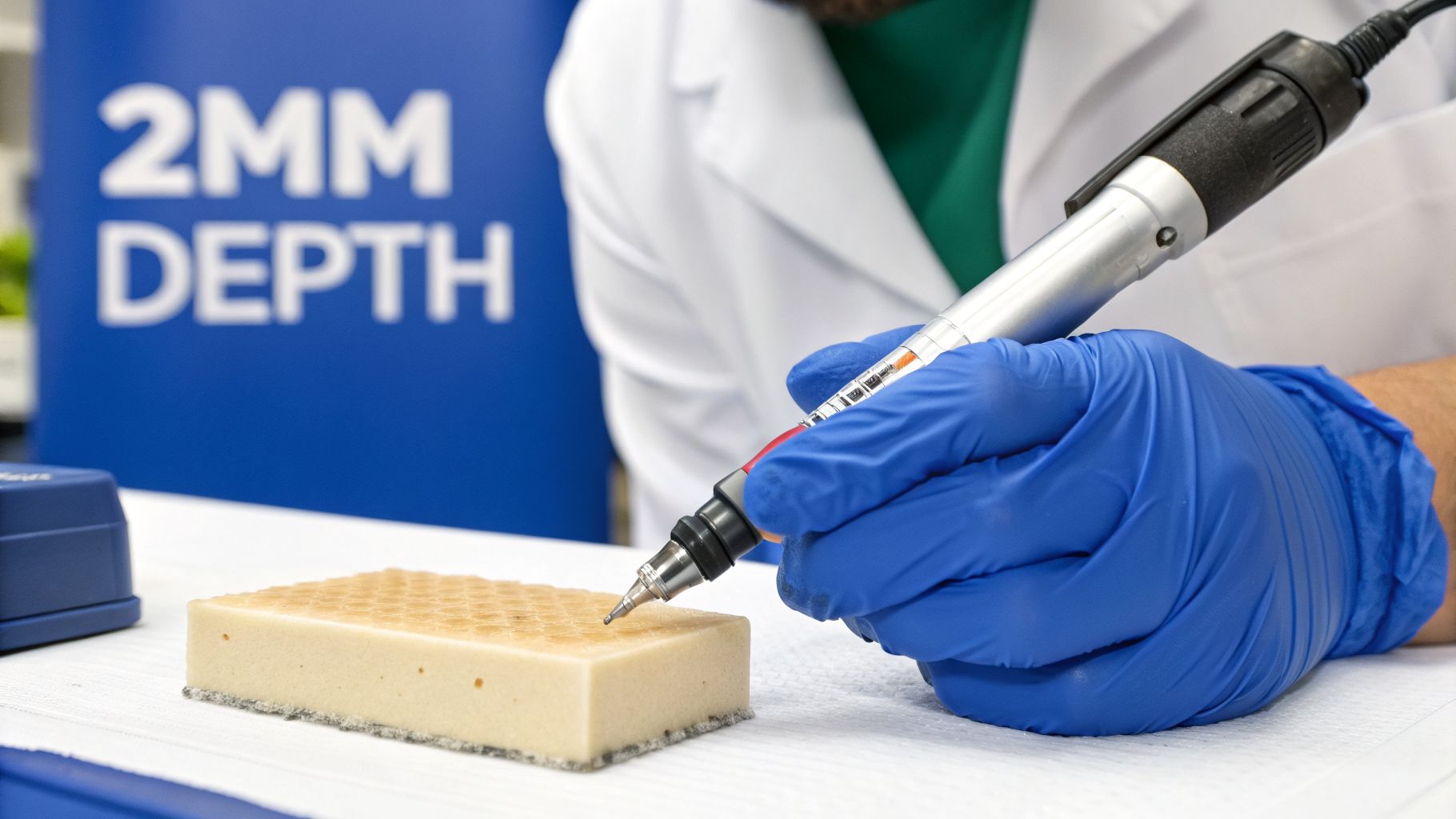
Think of it like aerating a lawn to encourage deep, healthy root growth. While shallower microneedling treatments work on the skin's surface, a 2mm needle depth is chosen to create controlled micro-injuries in the deeper layers of the dermis. This triggers the body’s natural healing cascade on a much larger scale.
This process signals specialized cells to rebuild the skin’s support structure from the inside out. The goal is the generation of new, organized collagen and elastin, which works to smooth out rough texture, fill in depressions, and restore the skin’s underlying firmness.
Reaching the Reticular Dermis
To grasp why 2mm is so effective, you need a quick look at the skin's anatomy. For our purposes, three layers matter most:
- Epidermis: The outermost, protective layer. Shorter needles (under 0.5mm) primarily work here for improved product absorption.
- Papillary Dermis: The upper layer of the dermis. Needles from 0.5mm to 1.5mm reach this area to address fine lines and general dullness.
- Reticular Dermis: The deeper, thicker part of the dermis. This is the structural hub where the skin's foundational proteins—collagen and elastin—live. A 2mm needle is required to reliably reach this zone.
By penetrating to the reticular dermis, the treatment can physically break down old, disorganized scar tissue and force the body into a remodeling process. This is why it’s the go-to depth for tackling significant textural problems that originate deep within the skin. You can learn more about the role of key cells in this layer in our article about fibroblasts in the skin.
A 2mm microneedling treatment is not a superficial cosmetic procedure; it is a clinical intervention for substantial dermal remodeling. Its ability to reach the reticular dermis is what makes it uniquely effective for moderate-to-severe scarring and deep-set wrinkles.
This deep-reaching capability has captured massive attention in the aesthetics industry. Valued at USD 748 million in 2026, the global microneedling market is projected to reach USD 1,588.99 million by 2034. This growth is fueled by the demand for effective treatments like microneedling 2mm, which can stimulate collagen production by up to 400% and deliver measurable improvements in skin texture. You can see more on these microneedling market trends on PrecedenceResearch.com.
Because the procedure creates injuries deep within the skin, a licensed and experienced practitioner must perform it. Proper technique, a sterile environment, and strict aftercare protocols are essential for safety and achieving the best possible results. Without professional oversight, the risks of infection, scarring, and other serious complications increase dramatically.
Matching 2mm Microneedling to the Right Skin Conditions

Stepping up to a 2mm needle depth is a significant clinical decision. This is not an everyday maintenance treatment; it's a targeted intervention for skin concerns rooted deep in the dermis. Matching the tool to the problem is the first and most important step toward delivering the dramatic, lasting results that build a practice's reputation.
This deep-reaching treatment is the go-to solution when more superficial methods are not enough. For clients with moderate to severe textural issues, micro needling 2mm provides the robust mechanical stimulus needed to restructure the skin from the inside out.
Primary Indications for 2mm Depth
The real power of a 2mm needle is its ability to physically break down stubborn, disorganized tissue—like scar tissue—and kickstart a collagen remodeling cascade. This makes it the perfect tool against a very specific set of conditions.
- Moderate to Severe Atrophic Acne Scars: Think boxcar or rolling scars. These depressions exist because the collagen foundation was destroyed. A 2mm needle can reach deep enough to shatter the fibrous bands that tether the scar down, signaling the body to flood the area with new, healthy collagen to fill the deficit.
- Certain Surgical or Trauma Scars: For older, non-keloidal scars that have settled, this depth is fantastic. It helps to reorganize that chaotic collagen matrix, making the scar tissue softer, more pliable, and less visible.
- Deep Wrinkles and Rhytides: Fine lines respond well to shallower depths, but deep-set wrinkles are a different beast. They are anchored in the reticular dermis and demand a more assertive approach. A 2mm treatment triggers the creation of a dense new support network of collagen and elastin, providing the structural lift needed to smooth out those pronounced creases.
When used correctly, this targeted approach delivers incredibly high patient satisfaction. Clinics often report 80-90% satisfaction rates for acne scar treatments at this depth. This kind of success is a driver in the market’s growth, with the global microneedling industry projected to hit USD 992.5 million by 2028, thanks in large part to advanced professional procedures.
When to Avoid 2mm Microneedling
Knowing who to treat is only half the battle; knowing who to turn away is just as important. Using a 2mm needle on the wrong client can turn a corrective procedure into a damaging one, leading to poor outcomes or adverse events. Rigorous patient screening is required.
A thorough consultation and skin analysis are fundamental to safe practice. Incorrect patient selection not only compromises results but can also create new problems.
Here are the absolute contraindications for a 2mm treatment:
- Active Acne, Rosacea, or Skin Infections: Never needle over active pustules or inflamed, infected skin. It’s the fastest way to spread bacteria and make the underlying condition worse. The skin must be calm before you proceed.
- History of Keloid or Hypertrophic Scarring: This is a major red flag. For individuals prone to keloids, the controlled trauma of microneedling can trigger an overactive healing response, resulting in new, raised, and thick scars.
- Use of Accutane (Isotretinoin) in the Past 6 Months: This potent medication fundamentally alters the skin’s healing capacity and increases photosensitivity. Deep needling is unsafe until at least six months after the course is finished.
- Certain Skin Diseases: Conditions like eczema, psoriasis, or scleroderma in the treatment area mean the skin barrier is already compromised. It will not heal properly. For other body-specific concerns, you might find our guide on RF microneedling for stretch marks helpful.
By diligently matching the treatment to the specific skin condition and client profile, you can confidently use micro needling 2mm to achieve transformative results. This careful, expert selection process separates a standard clinic from a leading advanced aesthetics practice.
How Needle Depths from 0.5mm to 3.0mm Compare
In microneedling, choosing the right needle depth is the single most important decision you’ll make. It separates a light, refreshing treatment from a truly corrective one. There is no "standard" depth, because every layer of the skin responds differently.
Understanding this spectrum, from the superficial to the deep dermis, allows a practitioner to move beyond a basic service and design precise, powerful treatment plans. It all comes down to matching the tool to the target. This is why a thorough skin analysis and client consultation are required.
Superficial Depths (0.5mm – 1.0mm)
Think of the 0.5mm to 1.0mm range as skin conditioning. At this depth, you’re working almost exclusively within the epidermis and the very top of the papillary dermis. It's about refinement, not reconstruction.
- Primary Goal: To improve product absorption, soften fine lines, reduce the appearance of large pores, and improve overall skin tone and texture.
- Mechanism: These shallow micro-injuries create thousands of tiny channels, which is fantastic for driving serums deeper into the skin. They also kickstart a gentle collagen-stimulating response.
- Best For: This is the perfect entry point for clients new to microneedling or those looking for a "red carpet glow" with minimal downtime. They’ll see some mild redness for a day, but that’s about it.
Intermediate Depths (1.5mm)
Once you move to 1.5mm, you’re in corrective territory. This depth reliably reaches the upper reticular dermis, where you can start making a real impact on the skin's structural integrity.
This is your workhorse depth for tackling issues like mild acne scarring, more noticeable sun damage, and deeper-set wrinkles. The collagen and elastin synthesis is far more robust here than at shallower depths, leading to visible improvements in skin firmness and smoothness. Expect downtime to be a bit longer, usually around two to three days of redness and some light swelling.
Deep Clinical Depths (2.0mm – 3.0mm)
This is where true skin remodeling happens. Using depths of 2.0mm to 3.0mm is a serious clinical procedure reserved for trained professionals targeting significant dermal concerns.
Using a 2.0mm depth or greater is a clinical intervention. Its purpose is to physically break down disorganized, tethered scar tissue and trigger a wound-healing response deep within the reticular dermis—the skin’s foundational support layer.
This range is the gold standard for treating:
- Moderate to severe atrophic acne scars, especially boxcar and rolling scars.
- Certain surgical or trauma scars (as long as they are not keloidal).
- Deep rhytides and significant textural damage.
- Some cases of skin laxity, particularly when combined with other modalities.
Depths of 2.5mm and 3.0mm are rarely used on the face and are typically reserved for treating thicker skin on the body, like for stretch marks or deep surgical scars. The inflammatory response here is significant, and downtime can easily last from three to seven days. Performing these treatments requires an expert hand and a deep understanding of skin anatomy to be both effective and safe.
To help you visualize how these depths correspond to clinical goals, we've put together a quick reference table.
Microneedling Depth and Target Skin Condition
The following table provides a clear comparison of common microneedling depths, the skin layers they target, and their primary clinical indications. Use this as a guide to inform your clinical reasoning during client consultations.
| Needle Depth (mm) | Target Skin Layer | Primary Indications | Typical Use Case |
|---|---|---|---|
| 0.5 – 1.0mm | Papillary Dermis | Fine lines, large pores, product absorption | General skin rejuvenation, "glow-up" maintenance. |
| 1.5mm | Upper Reticular Dermis | Mild acne scars, moderate wrinkles, sun damage | First-line corrective treatment for textural issues. |
| 2.0mm | Mid-Reticular Dermis | Severe acne scars, deep wrinkles, surgical scars | Aggressive scar revision and deep textural remodeling. |
| 2.5 – 3.0mm | Deep Reticular Dermis | Body scars, stretch marks, severe textural issues | Corrective treatments for thick-skinned areas (body). |
Great results come from a blend of science and artistry. By understanding what each needle depth achieves, you can confidently explain your treatment strategy, build client trust, and deliver customized, effective outcomes.
Safety Protocols And Client Care For Deep Treatments
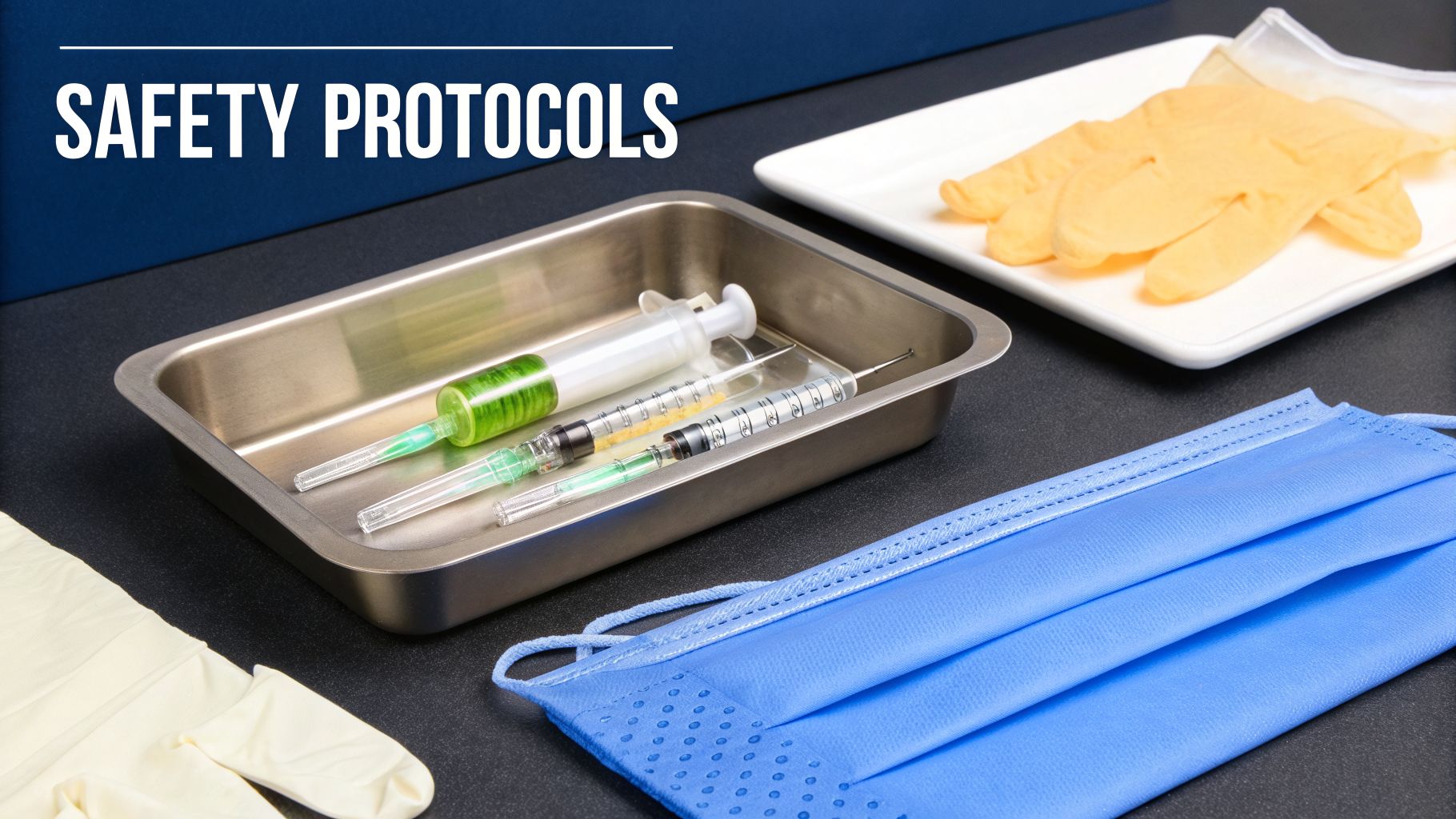
When you're working with micro needling 2mm depths, safety and client care are mandates. This is a deep, clinical treatment that reaches the reticular dermis. Meticulous protocols are the only way to prevent complications and deliver predictable, transformative results. A solid safety framework protects your client, your license, and your clinic’s reputation.
The foundation of a safe procedure is laid long before a needle touches the skin. It’s built on a sterile environment, uncompromising sanitation, and a strict commitment to single-use equipment.
Pre-Treatment Preparation And Pain Management
A 2mm microneedling treatment would be unbearable without proper pain management. Client comfort is a top priority, which makes a high-quality topical anesthetic a requirement.
Your standard protocol should involve applying a thick layer of a prescription-strength numbing cream, like a lidocaine blend, over the entire treatment area. To be effective, this cream needs to stay on the skin for a full 45 to 60 minutes. This ensures it has time to penetrate and desensitize the nerve endings deep in the dermis. The skin must be thoroughly sanitized before you apply the anesthetic and again after you remove it to prevent driving surface bacteria into the fresh micro-channels.
The Requirements Of A Safe Procedure
During any micro needling 2mm session, there are procedural standards that can never be compromised. These steps are the bedrock of risk mitigation and must be followed for every client, every time.
- Sterile, Single-Use Cartridges: There is no substitute for a brand-new, sterile, single-use needle cartridge for each client. Attempting to reuse cartridges—even on the same person in a later session—invites an unacceptable risk of infection and cross-contamination. Don't do it.
- Proper Skin Sanitation: Immediately before you begin needling, the treatment area must be cleansed with a clinical-grade antiseptic. Products like chlorhexidine or isopropyl alcohol are standard for removing any lingering surface bacteria.
- Managing Pinpoint Bleeding: Pinpoint bleeding is the expected clinical endpoint for a 2mm treatment. It’s a clear sign that you have successfully reached the target depth in the dermis. This should be managed by gently blotting the area with sterile gauze as you work.
Managing client expectations is just as important as your clinical technique. Clearly explain that visible redness, swelling, and some pinpoint bleeding are all normal, healthy signs of an effective treatment. An informed client is a calm and confident client.
Post-Treatment Care And Managing Downtime
The care a client takes after they leave your clinic is as important as the treatment you performed. A deep 2mm procedure kicks off an inflammatory and healing cascade. The aftercare protocol is designed to support this natural process while minimizing any risk of complications. A key piece of this is maintaining an optimal moist wound healing environment to ensure the skin regenerates properly.
Expect downtime for a 2mm treatment to be around 3 to 5 days. The skin will look and feel red and swollen, often compared to a moderate sunburn.
Providing a clear, written aftercare plan is essential. Your instructions must include:
- Gentle Cleansing: For the first 72 hours, clients should only use a mild, non-exfoliating cleanser and lukewarm water. No harsh scrubs or active ingredients.
- Hydration and Support: Have them apply a simple, soothing serum to support healing. Hyaluronic acid is a great choice. All other active products—especially retinoids, vitamin C, or acids—must be avoided for at least one week.
- Mandatory Sun Protection: The newly treated skin is incredibly vulnerable to UV damage. A broad-spectrum, mineral-based SPF 30+ sunscreen is mandatory every day, even if they are staying indoors.
While at-home microneedling devices are popular, they cannot replicate the depth or safety of a professional procedure. For clients who ask, our guide on whether at-home microneedling is safe offers a detailed explanation.
By implementing these rigorous safety and care protocols, your clinic can confidently offer micro needling 2mm treatments, delivering superior results while prioritizing client well-being.
Pairing Microneedling with Advanced Recovery Methods
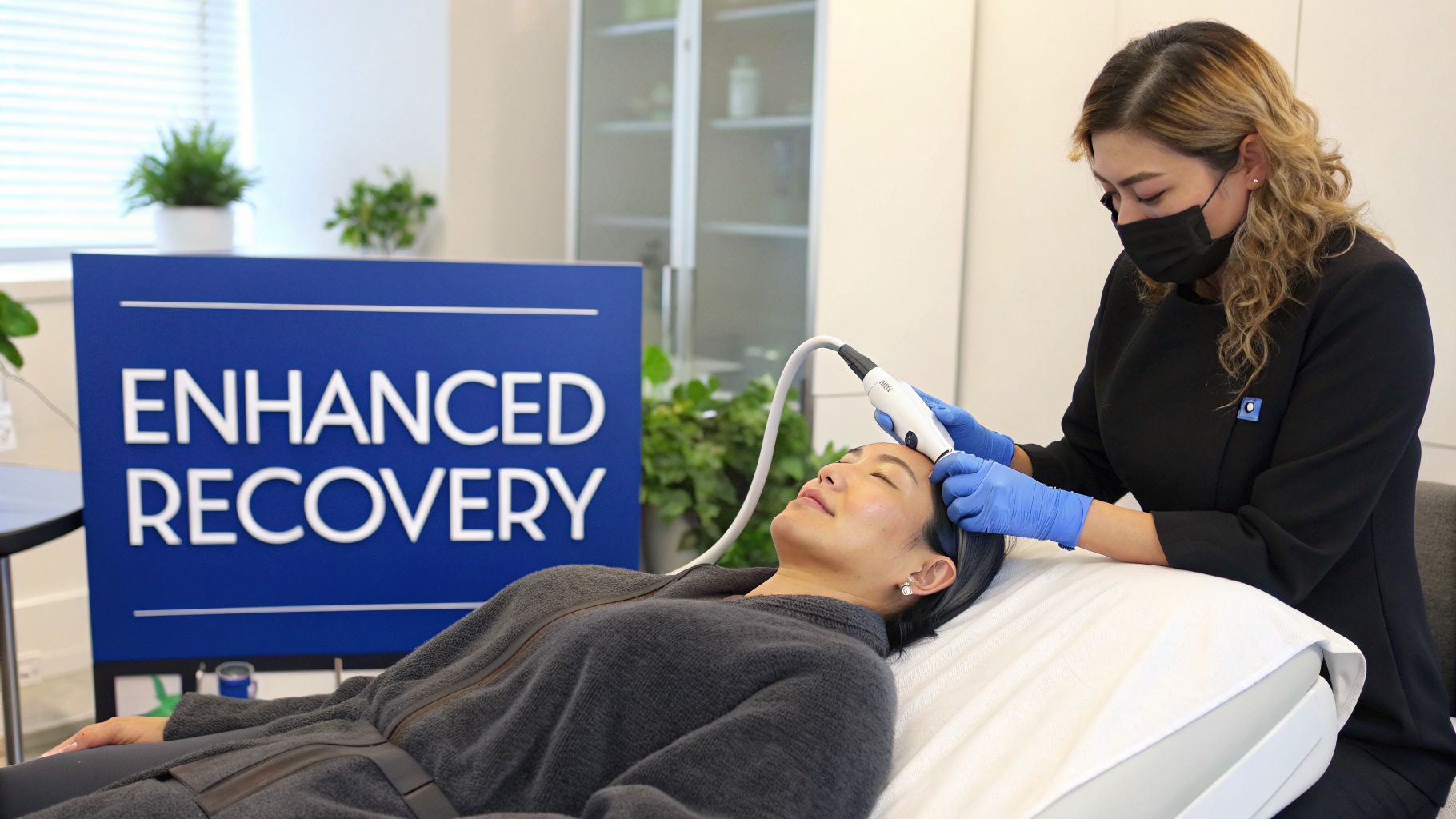
A standalone 2mm microneedling session is a powerful tool for tackling deep scars and stubborn wrinkles. But what if you could take those results to the next level? By pairing this intensive treatment with smart recovery methods, you can shorten downtime, amplify the aesthetic outcome, and transform a single service into a premium, end-to-end client experience.
Think of it this way: a 2mm microneedling treatment is a controlled, powerful inflammatory event. By actively supporting the body's natural healing response, you’re not just waiting for the skin to recover—you're guiding it. This proactive approach is where clinics can shine, offering bundled services that deliver better results and justify a higher price point.
Improving Recovery with Intermittent Vacuum Therapy
One of the most effective pairings is combining deep microneedling with a systemic circulation-boosting treatment like Intermittent Vacuum Therapy (IVT), offered by devices like the Weyergans Vacustyler. While microneedling creates the micro-injuries on the face, the Vacustyler gets the entire body’s circulatory and lymphatic systems working more efficiently to support the repair process.
The Vacustyler gently alternates between negative and positive pressure on the lower body. This is a biophysical process that powerfully stimulates blood flow and lymphatic drainage. The result is a flood of oxygen and nutrients delivered system-wide, including to the facial tissue that’s rebuilding itself post-microneedling.
This combination offers several benefits:
- Reduced Downtime: Better circulation means metabolic waste and inflammation are cleared from the treated area much faster, helping redness and swelling subside.
- Better Results: You’re feeding the newly stimulated skin everything it needs for robust collagen production, which is the goal of the treatment.
- A Premium Client Experience: This isn’t just a facial; it's a comprehensive cycle of correction and restoration that clients will value.
For biohacking centers and advanced medspas, this is a perfect synergy. Deep 2mm microneedling can trigger a 400% increase in collagen and elastin. A 2023 survey showed a 73% preference among dermatologists for RF microneedling at this depth. When you follow that with an IVT session, you're helping the body deliver the raw materials needed to make that healing happen optimally. Find out more about the microneedling products market on ihealthcareanalyst.com.
The Business Case for Bundling Services
Moving from single-session sales to comprehensive treatment packages is a game-changer for any clinic. It shifts the dynamic from a one-off transaction to a long-term partnership in the client's skin health journey. This builds loyalty and increases revenue per visit.
Bundling a corrective treatment like 2mm microneedling with a restorative service like intermittent vacuum therapy creates a high-value package that clients can't easily replicate elsewhere. This differentiation is a powerful tool for client retention.
Start thinking in terms of structured packages. A "Scar Revision & Recovery Program," for instance, could include three 2mm microneedling sessions, each immediately followed by a 30-minute Vacustyler session. This model encourages clients to commit to the full, most effective treatment course and also locks in revenue for your clinic.
When you strategically pair services, you’re doing more than upselling. You’re delivering a superior outcome, and in doing so, building a more profitable and reputable practice. To get a sense of other powerful combinations, exploring the microneedling with PRP benefits for skin rejuvenation is a great place to start.
Integrating 2mm Microneedling into Your Practice
Bringing a 2mm microneedling service into your clinic is a significant move. It is a statement that positions your practice at the forefront of advanced, corrective skincare. Get the planning right, and you’ll add a high-demand, high-value procedure that sets you apart.
The first major decision is choosing the right tool for the job. Your choice will boil down to two paths: classic microneedling pens or the more advanced radiofrequency (RF) microneedling systems.
Choosing Your Device and Training Your Staff
Traditional microneedling pens are the trusted workhorses of our industry. They are effective, come with a lower initial investment, and are fantastic for tackling issues like stubborn acne scars and deep-set wrinkles. Their power lies in the purely mechanical action of the needles, which creates micro-injuries to kickstart the body’s collagen production.
On the other hand, RF microneedling devices are different. They combine physical needle penetration with a dose of radiofrequency energy delivered deep into the dermis. This one-two punch of mechanical and thermal injury results in more significant collagen synthesis and skin tightening. While the initial cost is substantially higher, the superior results often command a premium price and attract a clientele actively seeking the best technology available.
No matter which device you choose, comprehensive training is required for micro needling 2mm procedures. Your team must be certified and completely confident in managing treatment depth, patient safety, and post-procedure care to deliver safe, consistent, and transformative outcomes.
Pricing and Packaging for Profitability
With a clinical-grade service like 2mm microneedling, your pricing strategy needs to reflect the high level of expertise required and the results you deliver. This is not just another facial. You must frame it as a corrective, results-driven treatment program.
Here are a couple of effective models to think about:
- Per-Session Rates: This is a straightforward approach that works well for clients targeting a single, specific issue. It offers flexibility, but it might not encourage the long-term commitment needed to see the best possible results.
- Multi-Session Packages: This is almost always the most effective route. By offering a package of three to five sessions at a slightly reduced overall price, you secure revenue upfront. More importantly, you ensure clients see the treatment course through to completion, which leads to better clinical outcomes and much higher patient satisfaction.
Think about creating a "Scar Revision Program" that bundles three 2mm microneedling sessions with specific post-care products. This gives the client a complete, easy-to-follow solution and creates a predictable and valuable revenue stream for your practice.
Marketing to the Right Clientele
Your marketing needs to be focused. You’re not selling a simple "glow-up" treatment; you are offering a solution to significant skin concerns. Your messaging has to speak directly to the people who will benefit most.
- Clients with Acne Scars: Develop content—blog posts, social media stories, email campaigns—that shows real before-and-after photos of atrophic acne scar improvements. Use language that acknowledges their frustration and clearly presents your service as the effective solution they've been looking for.
- Mature Clients with Deep Wrinkles: Target this demographic with messaging centered on visible skin remodeling and powerful anti-aging. Position 2mm microneedling as a compelling, non-surgical alternative for restoring skin's underlying firmness and smoothing its surface.
By carefully choosing your equipment, investing in training, and deploying smart pricing and marketing, you can successfully integrate micro needling 2mm into your practice. It’s a move that will elevate your service menu and cement your reputation as a leading destination for transformative skin results.
Practical Realities of 2mm Microneedling: Your Questions Answered
Now that we’ve covered the science and strategy behind deep dermal needling, let's get into the practical questions that come up in the treatment room. These are the details that matter for managing client expectations and ensuring a smooth, successful procedure.
What Is the Real Downtime for a 2mm Treatment?
When you’re working this deep, you need to set clear expectations for social downtime. Plan for 3 to 5 days where the client's skin will look and feel like it has a moderate sunburn—noticeably red, a bit swollen, and tender.
While the most intense redness usually fades within a week, that’s just the beginning. The real magic, the deep collagen remodeling, is a process that unfolds over the next several months. That first week is just the initial healing phase.
Is This a Painful Procedure for the Client?
A 2mm microneedling treatment requires a potent topical anesthetic. Because we're reaching the rich network of nerves and vessels in the dermis, client comfort is necessary for a successful outcome.
The key is a liberal application of high-quality numbing cream, left to penetrate for a full 45-60 minutes before you pick up the device. When the skin is properly anesthetized, clients typically report feeling only pressure or a light vibration. Pain should be minimal, if any.
A well-managed numbing process is not just about comfort; it allows the practitioner to perform the treatment at the correct speed and pressure without the client flinching, ensuring a more even and effective outcome.
How Many Treatments Will It Take to Improve Acne Scars?
For persistent, atrophic acne scars, this isn't a one-and-done solution. I generally recommend a series of 3 to 6 treatments to achieve significant, lasting improvement.
Each session needs to be spaced 4 to 6 weeks apart. This is not an arbitrary timeline; it gives the skin the necessary time for the full healing and collagen synthesis cycle to complete before you stimulate it again. The final number of sessions will always depend on the scar's specific type, its depth, and how the client's body responds to treatment.