


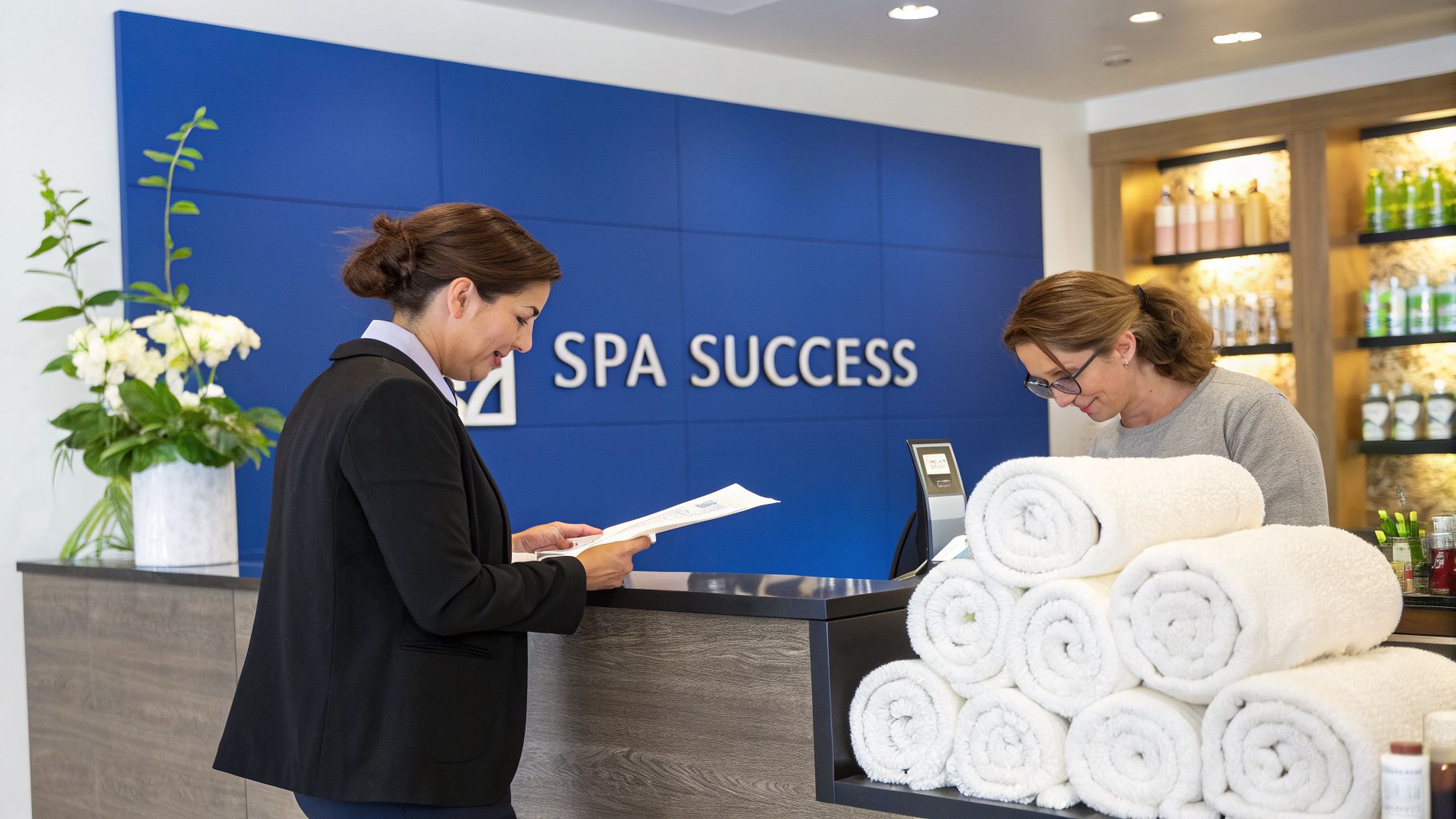
Successfully managing a spa isn’t just about what happens when the doors are open. The real work—the kind that builds a profitable, sustainable business—starts long before your first client walks in. This foundational stage is about getting the plan, the legalities, and the physical space right from day one.
Building a Resilient Foundation for Your Spa Business

Before you fall in love with a location or start picking out decor, you have to get honest about your vision. What kind of spa are you? A high-tech medspa focused on results-driven aesthetic procedures? A quiet wellness retreat built around holistic healing? Or maybe a modern recovery lab for athletes?
This core identity is your true north. It dictates everything—your service menu, your marketing voice, and the exact type of client you want to attract. A medspa’s brand should communicate clinical excellence, while a wellness center needs to evoke calm and serenity.
Define Your Business and Legal Structure
Once your concept feels solid, it's time for the less glamorous but necessary legal work. The biggest hurdle for many aspiring medspa owners is the web of state-level regulations, particularly the Corporate Practice of Medicine (CPOM) laws.
These laws are especially strict for medspas and often mandate that a licensed physician must own the entity providing medical services. For entrepreneurs without an M.D., the most common and compliant solution is the Management Services Organization (MSO) model.
- Physician-Owned Practice: This is the clinical side of the house, owned by a physician, that legally provides the medical treatments.
- Management Services Organization (MSO): This is your company. It’s owned by the non-physician entrepreneur and handles all the business operations—marketing, billing, HR, and facility management—for a fee.
This two-company setup is the industry standard for creating a compliant business that separates clinical practice from business administration. For a deeper look, our guide on how to start a wellness center breaks this down even further.
A common mistake I see is owners trying to cut corners on legal advice. Getting your corporate structure right from the beginning isn't a suggestion; it's essential for protecting your investment and staying clear of serious regulatory trouble. Find a lawyer who specializes in healthcare and spa law in your state.
Craft a Business Plan That Guides Growth
Your business plan isn't just a document for bankers or investors; it's your personal roadmap. This is where you force yourself to translate your vision into hard numbers, from startup costs and pricing to realistic revenue projections.
A strong plan should always include:
- Executive Summary: A powerful one-page pitch of your spa's mission.
- Company Description: Get specific about your niche and your legal MSO structure.
- Market Analysis: Who are your ideal clients, and what is the local competition doing?
- Financial Projections: You need to map out revenue, expenses, and profitability for the first three to five years. Be conservative but confident.
Design a Space for Optimal Flow and Experience
Your spa's physical layout is a silent partner in your business. A good design makes your staff’s job easier and improves the client experience, while a poor one creates constant friction. Think about the client's journey from the second they arrive.
Is the reception area warm and inviting, or chaotic? Are treatment rooms truly soundproof and private? Most importantly, is there a natural flow from check-in to the treatment room, and then to a relaxation lounge or retail area? Getting this right creates the seamless, luxurious feeling clients come back for and makes daily operations for your team a lot smoother.
Designing a Profitable and In-Demand Service Menu

Your service menu isn’t just a list of treatments; it’s the financial engine of your spa. Think of it less as a catalog and more as a carefully curated collection designed to draw people in and drive profitability.
A smart menu balances popular, high-demand services everyone expects with high-margin offerings that boost your bottom line. It's about creating an experience that keeps clients coming back, spending more with each visit, and feeling like they’ve found something special.
Balancing Core Services with High-Margin Innovations
First, you need your "bread-and-butter" services. These are the essentials people search for—facials, massages, and body wraps. They get new clients through the door. The challenge is they often come with lower profit margins because of intense local competition and the high cost of skilled labor.
This is where you get strategic. To succeed in managing a spa, you need to layer in innovative, technology-driven services. Equipment-based treatments, especially those that can run unattended, are a secret weapon for higher margins because they let you serve more people without hiring more staff.
Take a device like the Weyergans Vacustyler. It offers a 20-30 minute session that needs just a few minutes of staff time for setup. This simple addition frees up your trained therapists to focus on the hands-on services that require their expert touch, maximizing your revenue per square foot and per employee hour.
By integrating unattended services, you create new opportunities for high-value packages. A client can receive a Vacustyler session to improve circulation while getting an IV drip, doubling the revenue generated from that time slot and treatment room with little to no extra labor.
This "service stacking" approach is one of the most powerful ways to increase your average ticket without making your operations more complicated.
Structuring Your Menu for Maximum Profitability
Once you have your service mix figured out, it's time to talk pricing. This goes beyond looking at what the spa down the street is charging. You have to know your numbers, inside and out.
The most important step is calculating the cost-per-treatment for every service you offer. This isn't just about the products you use. A true cost breakdown includes:
- Direct Costs: The price of any products consumed during the service like oils, serums, or masks.
- Labor Costs: The therapist's or technician's wages for the entire duration of the treatment block.
- Overhead: A proportional slice of your spa's fixed costs, like rent, utilities, insurance, and marketing.
Once you know this number for each service, you can price with confidence, knowing every appointment is contributing to your financial health.
Building Predictable Revenue with Packages and Memberships
Relying on one-off service sales can feel like a rollercoaster. To build a more stable and predictable business, you need to create compelling packages and membership models.
- Bundled Packages: Group complementary services together and offer them at a slight discount. A "Recovery Pro" package, for instance, might pair a deep-tissue massage with a Vacustyler session. This is a great way to introduce clients to new tech and increase the total value of their visit.
- Membership Tiers: Offer monthly plans that give clients a set number of services or credits. A basic tier could include one facial per month, while a premium tier might offer unlimited access to your recovery tech plus a discount on all other treatments.
These models are fantastic for building client loyalty and generating predictable cash flow, two cornerstones of long-term success.
The spa industry is seeing incredible growth, with U.S. revenues projected to hit a record $22.5 billion in 2026. This boom is fueled by clients who are spending more per visit—an average of $120.30—and are eager to invest in effective, innovative services. Now is the perfect time to introduce tech-driven, high-value packages to capture that demand.
Mastering Your Daily Operations and Team Management

Your spa's brand and menu set the stage, but it’s the people and processes behind the curtain that deliver the experience. Smooth day-to-day management comes down to two connected things: a well-supported team and airtight operational procedures. When these two elements work in harmony, the client experience feels effortless, and your business runs more profitably.
The people you hire are the living embodiment of your brand. From the front-desk coordinator who offers a warm welcome to the licensed therapist performing the service, they define the client's reality. Getting this right is about more than finding skilled hands; it’s about building a team that believes in your mission and feels valued.
Building and Retaining Your A-Team
Finding top talent in the spa industry is fiercely competitive. To attract the best people, you need an offer that goes beyond a simple paycheck. A positive and supportive work environment is often the deciding factor for a high-quality candidate.
Start by crafting clear, detailed job descriptions. Don't just list responsibilities—paint a picture of the culture you're building. During interviews, move beyond technical questions. Ask about their approach to teamwork and client care to see if their values are compatible with yours.
Once they're on board, a structured onboarding process is non-negotiable. This isn't just a day of paperwork; it's their foundation for success.
- Brand and Culture Immersion: Help them understand your spa's unique identity and the specific experience you promise every client.
- Service Protocol Training: Ensure they know the exact steps for every single treatment. Consistency is everything.
- Software and Systems: Get them comfortable with your booking, payment, and client management software from day one.
Keeping your best staff is arguably more important than finding them in the first place. The most profitable spas typically keep their direct pay-to-service-provider ratio in the low to mid-30% range. This structure leaves enough room for competitive pay while also funding benefits and support staff payroll, keeping your total labor costs from spiraling.
Developing Your Operational Playbook
Consistency is the foundation of a five-star client experience. A client should receive the same incredible level of service whether they book on a quiet Tuesday morning or a packed Saturday afternoon. The only way to achieve this is with clear, written Standard Operating Procedures (SOPs).
Think of your SOPs as your spa's official playbook, detailing every key process. This isn't about micromanagement; it's about empowerment. When your team knows exactly what to do in any given situation, they can act with confidence.
An effective SOP doesn't just list steps. It explains the 'why' behind the 'what.' For example, an SOP for client check-in shouldn't just say "Offer the client water." It should explain that this small gesture immediately creates a welcoming and hospitable atmosphere, setting a positive tone for their entire visit.
Your SOP manual should cover every client touchpoint, including:
- The exact script for answering the phone.
- Protocols for greeting clients as they walk in.
- Steps for conducting a thorough, reassuring pre-treatment consultation.
- Procedures for gracefully handling scheduling conflicts or client complaints.
- The process for post-treatment follow-up and recommending retail products without being pushy.
Optimizing Scheduling and Capacity
A constant challenge for any spa manager is balancing staff schedules with fluctuating client demand. Empty treatment rooms are lost revenue, but over-scheduled therapists lead to burnout and a drop in service quality. Modern spa management software is your best tool for mastering this balancing act.
Use your software to dig into the data and analyze booking patterns. Do you have a waitlist every Friday afternoon but empty slots on Wednesdays? This data is gold. It helps you make smarter staffing decisions, like adding another therapist during peak times. It also shows you when to run marketing promotions to fill those quieter periods.
Effective capacity management isn't just about filling the calendar—it's about maximizing your revenue potential every day you're open.
Smart Marketing and Client Retention Strategies

It’s tempting to pour your marketing budget into finding new clients. But every seasoned spa owner learns that acquiring new business is expensive. Real, sustainable profitability comes from keeping the clients you already have.
Smart marketing isn’t about casting the widest net; it’s about building a digital presence that attracts the right people and then creating an experience that turns them into loyal advocates. This all starts with a professional, easy-to-navigate website. Think of it as your digital storefront—it must instantly tell visitors who you are, what you offer, and why they should choose you.
Make sure your website is optimized for local searches. When someone in your town searches for "facials near me" or "body contouring," you need to be at the top of that list.
Building Your Digital Welcome Mat
Your online presence is more than a website. It’s an ecosystem working together to draw clients in. Social media platforms like Instagram are valuable for visually telling your spa's story. Share stunning before-and-after photos (with client permission), quick video tours of your space, and testimonials from happy customers.
Email marketing is another workhorse for driving bookings, but only if you do it right. The goal is to provide value, not just endless sales pitches.
- Segment your list: Don't send the same email to everyone. Target clients based on their past services. For example, a special on body sculpting should go to clients who have shown interest in similar treatments.
- Offer exclusive content: Make your subscribers feel like insiders. Share wellness tips or give them first access to new services before you announce them publicly.
- Automate your campaigns: Set up simple automated emails to welcome new clients, send out a special birthday offer, or gently remind them it’s time to rebook.
These efforts create a consistent, reliable pipeline of new and returning business. For a deeper look into creating a promotional plan, check out these effective marketing strategies for beauty salons.
Shifting Focus From Acquisition to Retention
While attracting new faces is part of the plan, the financial bedrock of your spa is retention. The numbers don't lie: a 5% increase in client retention can boost your profitability by anywhere from 25% to 95%. Loyal clients don’t just bring repeat business; they become your most powerful marketers through word-of-mouth referrals.
The most successful spas I've worked with are obsessed with the post-treatment experience. They don't see checkout as the end of the transaction but as the beginning of the next one. A simple follow-up email asking for feedback shows you care and provides invaluable data for improvement.
Putting a simple loyalty program in place can be a game-changer. This doesn’t have to be complicated. It could be a points system where clients earn rewards for every dollar spent or a "buy five, get the sixth free" model for their favorite service. You're giving them a compelling reason to choose your spa every time.
A good Client Relationship Management (CRM) system becomes your best friend here. It allows you to track client preferences, purchase history, and important dates like birthdays. Using this information to send personalized messages makes clients feel seen and valued, building a powerful community around your brand that will fuel your success for years to come.
Measuring Performance and Planning Your Next Growth Phase
To grow your spa, you have to know your numbers. Many spa owners rely on gut feelings, but effective management means moving beyond day-to-day impressions and focusing on the specific metrics that signal financial health and growth potential.
This data-driven approach separates struggling spas from thriving ones. It gives you the clarity to make smart investments and plan your next steps with confidence, not hope.
Key Performance Indicators That Matter Most
You don't need a massive spreadsheet to get a clear picture. Focusing on a handful of core Key Performance Indicators (KPIs) will tell you about your business's health. These numbers help you understand not just how much money you're making, but how efficiently you're making it.
Here are the essentials every spa owner should watch weekly:
- Client Retention Rate: This is the big one. It’s the percentage of clients who come back for another service within a set time, like 90 days. A high retention rate is the clearest sign of client satisfaction and is always more profitable than constantly chasing new customers.
- Revenue Per Available Treatment Hour (RevPATH): This metric reveals how well you’re generating revenue from your available treatment rooms and staff time. Simply divide your total revenue by the total number of available treatment hours. A rising RevPATH means you’re getting better at maximizing your capacity and pricing.
- Average Treatment Rate: This is the average price a client pays for a single service. Tracking this helps you see the real value of each booking and spots opportunities to guide clients toward higher-value services or packages.
- Cost of Client Acquisition (CAC): How much does it cost to get a new client in the door? Divide your total marketing and sales costs by the number of new clients you gained. Knowing your CAC is critical for making sure your marketing dollars are spent wisely.
A common mistake is focusing only on total revenue. A spa can show high revenue but have dangerously low profitability if its client acquisition costs are through the roof or its treatment rooms sit empty half the day. RevPATH and retention rate tell the true story of your spa’s health.
Projecting Profitability with an ROI Calculator
Before you invest in new equipment like a Vacustyler or add a premium service to your menu, you need a realistic projection of its financial return. This is where an ROI calculator becomes a valuable planning tool. It lets you model different scenarios without spending a single dollar.
An ROI calculator helps you answer tough questions:
- How many sessions a day do we need to sell just to break even on this investment?
- What pricing structure will give us the best profit margin?
- How will this new service impact our overall revenue and staff workload?
This kind of forward-looking analysis turns a potential gamble into a calculated business move. For a detailed guide on building these financial projections, our article on creating a salon business plan layout offers some excellent frameworks.
Let's look at a simple model for a new technology investment. This table shows how you can project potential returns by mapping out different use scenarios.
Sample ROI Calculation for a New Technology Investment
| Metric | Scenario A 4 Sessions Per Day | Scenario B 8 Sessions Per Day |
|---|---|---|
| Price Per Session | $75 | $75 |
| Daily Revenue | $300 | $600 |
| Weekly Revenue (5 days) | $1,500 | $3,000 |
| Monthly Revenue | $6,000 | $12,000 |
| Projected Annual Revenue | $72,000 | $144,000 |
This simplified model quickly illustrates how powerfully use impacts your revenue. Doubling the number of daily sessions doesn't just add a little income—it completely transforms the financial return of the asset.
The global spa industry is forecasted to surge from $114.6 billion in 2026 to $264.9 billion by 2033, showing a compound annual growth rate of 12.7%. This boom presents a massive opportunity for spa managers who are ready to scale. With the average revenue per visit already at $120.30, adding innovative, tech-driven services can dramatically boost your recurring income and overall profitability. As these spa industry revenue statistics show, the time to plan for that growth is now.
Common Questions About Managing a Spa
Even with a flawless business plan, the day-to-day reality of running a spa always throws new questions your way. I’ve been there. Let’s walk through some of the most common hurdles spa owners face and get you some clear, practical answers.
What Are the Most Important Metrics for Spa Profitability?
Total revenue is nice to look at, but it doesn't tell you what's working. To get a true feel for the financial health of your business, you need to look a little deeper.
I always tell owners to obsess over these three numbers:
- Client Retention Rate: This is the big one. It’s the percentage of clients who come back for another service. A high retention rate is your best sign of happy clients and a stable, long-term business.
- Revenue Per Available Treatment Hour (RevPATH): This metric shows how well you're using your most valuable assets—your rooms and your team. If your RevPATH is low, it’s a red flag that you have gaps in your schedule or that your pricing might be off.
- Average Treatment Rate: This is the average amount each client spends when they book a service. Tracking this shows you the real value of every appointment and helps you spot opportunities to package services or suggest valuable add-ons.
Focusing on these three metrics gives you a sharper, more honest picture of what’s actually driving your spa’s success.
How Can I Reduce Staff Turnover in My Spa?
Nothing disrupts your client experience or hurts team morale more than high staff turnover. While good pay is important, the real secret to keeping great people is creating a work environment they don't want to leave.
This goes beyond a paycheck. It means building predictable schedules they can plan their lives around, investing in their skills with continuing education, and trusting them to take care of clients.
When you consistently ask for feedback from your team—and act on it—you’re showing them they are respected professionals. That feeling of being heard and valued is often the number one reason your best employees will choose to stay with you for the long haul.
What Is the Best Way to Price My Spa Services?
Pricing your services shouldn't feel like you're throwing darts in the dark. It’s a strategic balance between your costs, what the market will bear, and the unique value you deliver.
First, you absolutely must know your cost-per-service. This isn’t just about the product used in the treatment; it includes your therapist’s time and a portion of your overhead like rent and utilities. Once you have that number, look at what your direct competitors are charging for similar services.
Use this data to position yourself, but don’t just copy them. If you offer a better experience, more advanced technology, or a more skilled team, don’t be afraid to price your services at a premium. You've earned it.
The medical spa market, in particular, is experiencing incredible growth. Projections show the global spa services market expanding from $104.44 billion in 2026 to $201.25 billion by 2035, with medspas poised to grab significant profit margins. Innovations like the Vacustyler are becoming must-haves for forward-thinking medspas. They allow you to offer science-backed recovery and aesthetic treatments without hiring more medical staff, opening the door to high-volume, recurring revenue packages that clients love. You can explore more about these spa market trends to see how to position your spa for this growth.
Ready to elevate your service menu with a high-margin, unattended technology that clients will love? The Weyergans HighCare US Vacustyler offers a science-backed solution for recovery and aesthetics that can transform your business model. Discover how to calculate your potential return on investment and boost your profitability.