



When we talk about skin health, we often focus on the surface—what we can see and touch. But the real work happens deeper down, in a layer called the dermis. This is the domain of the fibroblast, your skin's master architect and builder.
What are fibroblasts and why do they matter for your skin?
Think of fibroblasts as the dedicated construction crew working within your skin. They are the primary cells responsible for building and maintaining the framework that gives your skin its structure, strength, and resilience.
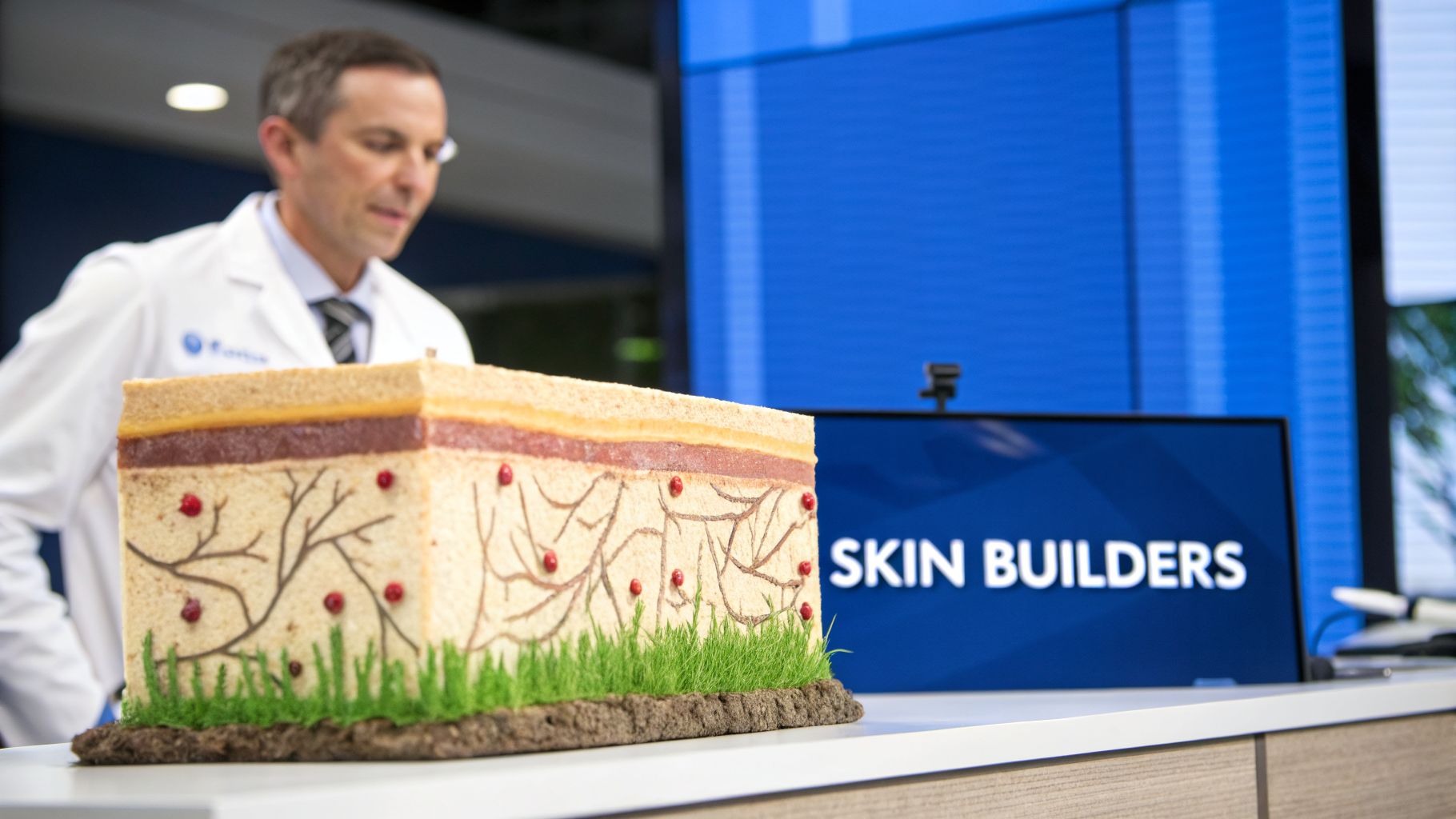
This internal scaffolding is the extracellular matrix (ECM). It’s a complex, interwoven network of proteins that provides the foundation for everything else. The health and productivity of your fibroblasts directly determine how firm and smooth your skin looks and feels.
The skin’s support system
Imagine your skin is a high-end mattress. The soft outer fabric is the epidermis, the part you see. But what gives the mattress its support, bounce, and durability? It's the system of coils and supportive memory foam inside.
Fibroblasts are the factory that produces those inner components. They manufacture collagen and elastin, the two most important proteins for skin integrity.
Collagen provides firmness and tensile strength, acting like the dense, supportive coils in the mattress. Elastin, on the other hand, is the springy material that allows the mattress to compress and instantly snap back to its original shape.
When the fibroblast "factory" is running at full capacity, your skin's support system is robust. As production slows with age or environmental damage, that internal structure weakens, which leads to the visible signs of aging.
The extracellular matrix: more than just scaffolding
The ECM is not a passive structure; it’s a dynamic environment. Fibroblasts do not just build it—they live within it, constantly communicating and responding to signals from their surroundings.
To appreciate the role of these cells, let's look at what they produce. This table breaks down their responsibilities and how each one directly impacts your skin's appearance.
Primary Roles of Dermal Fibroblasts
| Function | What It Means | Effect on Skin |
|---|---|---|
| Synthesizing Collagen | Produces the protein that makes up 75-80% of the skin's dry weight. | Provides structural integrity, firmness, and strength. Prevents sagging. |
| Producing Elastin | Creates the elastic fibers that allow skin to stretch and recoil. | Gives skin its "snap-back" quality, promoting a smooth, taut appearance. |
| Creating Hyaluronic Acid | Generates molecules that attract and hold large amounts of water. | Keeps the skin hydrated from within, leading to a plump, dewy look. |
| Wound Healing | Migrates to injury sites to build new tissue and repair damage. | Helps recovery and minimizes scarring after trauma or procedures. |
As you can see, fibroblasts are central to nearly every aspect of what we consider healthy skin.
When this system functions well, the ECM stays dense and organized, which we see as a firm, smooth complexion. When fibroblast activity declines, the matrix degrades. The result is wrinkles, sagging, and a loss of that plumpness. Understanding this direct link between cellular function and visible outcomes is the first step toward effectively influencing skin health.
The link between fibroblasts, collagen, and skin aging
We all know the story: as the years pass, our skin changes. Fine lines appear, firmness gives way to sagging, and youthful plumpness fades. These are not surface-level concerns. They are the visible evidence of a fundamental shift happening deep within the skin’s dermal layer, and it all comes back to our fibroblasts.
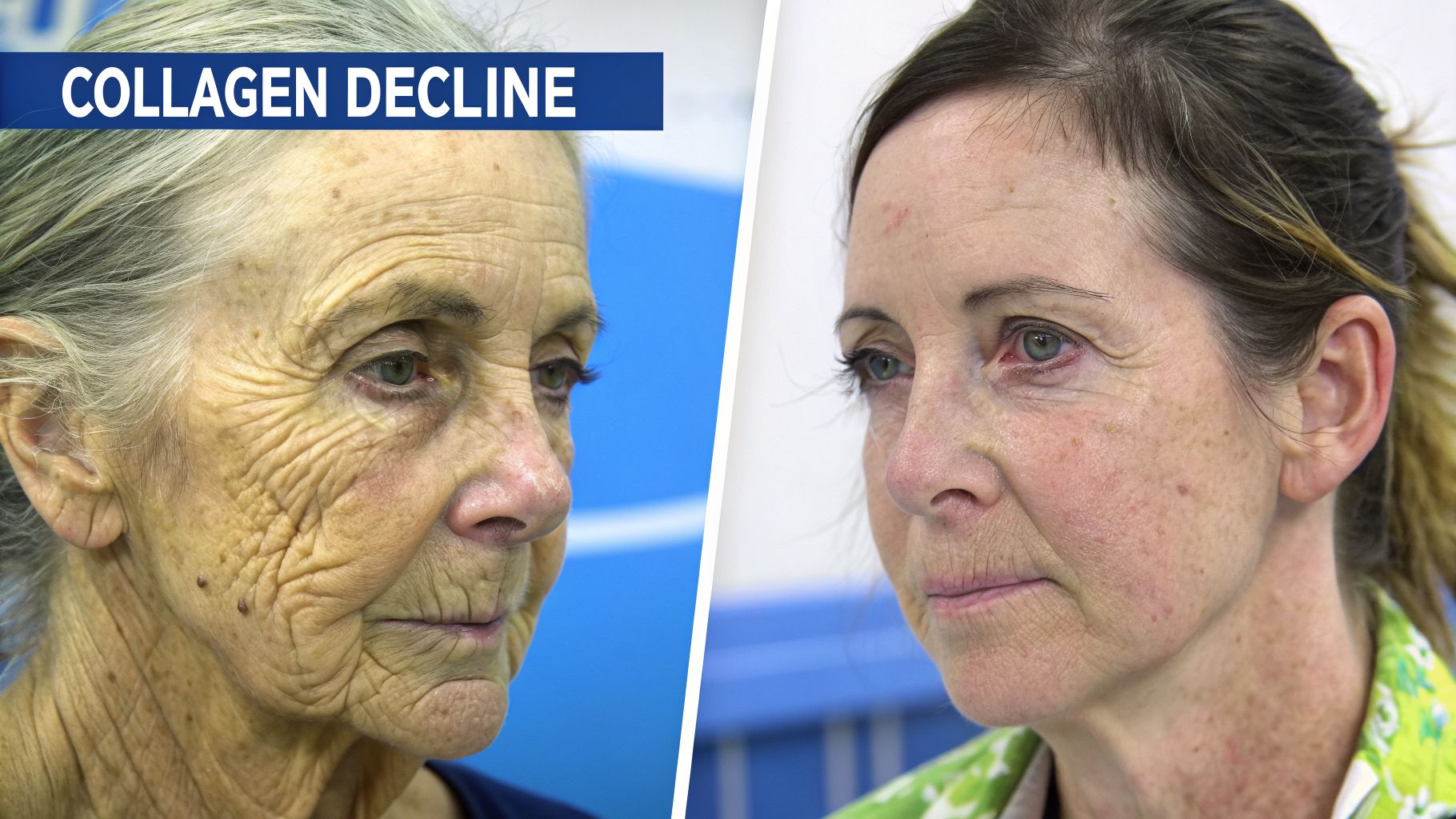
Think of young, healthy fibroblasts as a construction crew, working around the clock to build and maintain your skin’s structural integrity. They produce the collagen that provides strength and the hyaluronic acid that keeps everything plump and hydrated.
As we age, this crew naturally starts to slow down. This biological process, called intrinsic aging, means the cellular machinery is not as efficient as it once was. The result is a steady drop in the production of those structural proteins, weakening the skin’s entire support system from the inside out.
When environmental stress accelerates the process
While intrinsic aging is a fact of life, external factors can speed up the aging process. The biggest culprit for our fibroblasts in skin is ultraviolet (UV) radiation from sun exposure. This is what we call photoaging.
UV rays penetrate deep into the dermis and cause direct damage to your fibroblasts. This injury does more than just slow them down—it can change their job. Instead of building, damaged fibroblasts start producing destructive enzymes called matrix metalloproteinases (MMPs).
These MMPs are like a demolition team. They actively seek out and destroy existing collagen fibers. This creates a cycle where new collagen production is down and the existing structure is being torn apart.
This is why sun-damaged skin often looks years older than protected skin. The effect is cumulative, so the sun exposure you got in your 20s contributes to the state of your skin today.
Studies show how fast this damage can occur. For instance, increasing UVA exposure from 7 J/cm² to 10 J/cm² can trigger a destructive cascade within just 96 hours. In response, fibroblasts increase their output of these MMPs while their ability to make new procollagen I and hyaluronic acid plummets.
From cellular slowdown to visible signs of aging
The connection is direct. When your fibroblast crew becomes less productive—or actively destructive—the scaffolding of your skin begins to fail.
This cellular decline translates directly into the most common signs of aging:
- Wrinkles and Fine Lines: As the collagen network weakens, the skin’s surface collapses into creases and folds.
- Sagging Skin: Without a robust support structure of collagen and elastin, skin loses its fight against gravity.
- Loss of Volume: A drop in hyaluronic acid leads to dehydration, giving the face a hollowed or sunken look.
- Dull Complexion: Slower cell turnover and a disorganized ECM rob the skin of its natural radiance.
Understanding this link is empowering. It reveals that true, lasting rejuvenation is not about treating the surface. It’s about getting to the root of the problem and encouraging the fibroblasts in skin to get back to their primary job: building a healthy, resilient dermal matrix.
This is where modern aesthetic and wellness therapies come in, by finding ways to counteract these aging processes at their cellular source. Certain botanicals are also studied for their supportive properties; you can read about the benefits of Centella Asiatica for skin to see how specific ingredients can contribute.
How fibroblasts drive the skin's natural repair process
When your skin is injured—from a simple cut or a controlled aesthetic treatment—a biological process kicks into gear. Think of fibroblasts in skin as the paramedics and construction crew of your dermal world, always on standby to manage a crisis. Their rapid response to damage is the foundation of how our skin heals itself.
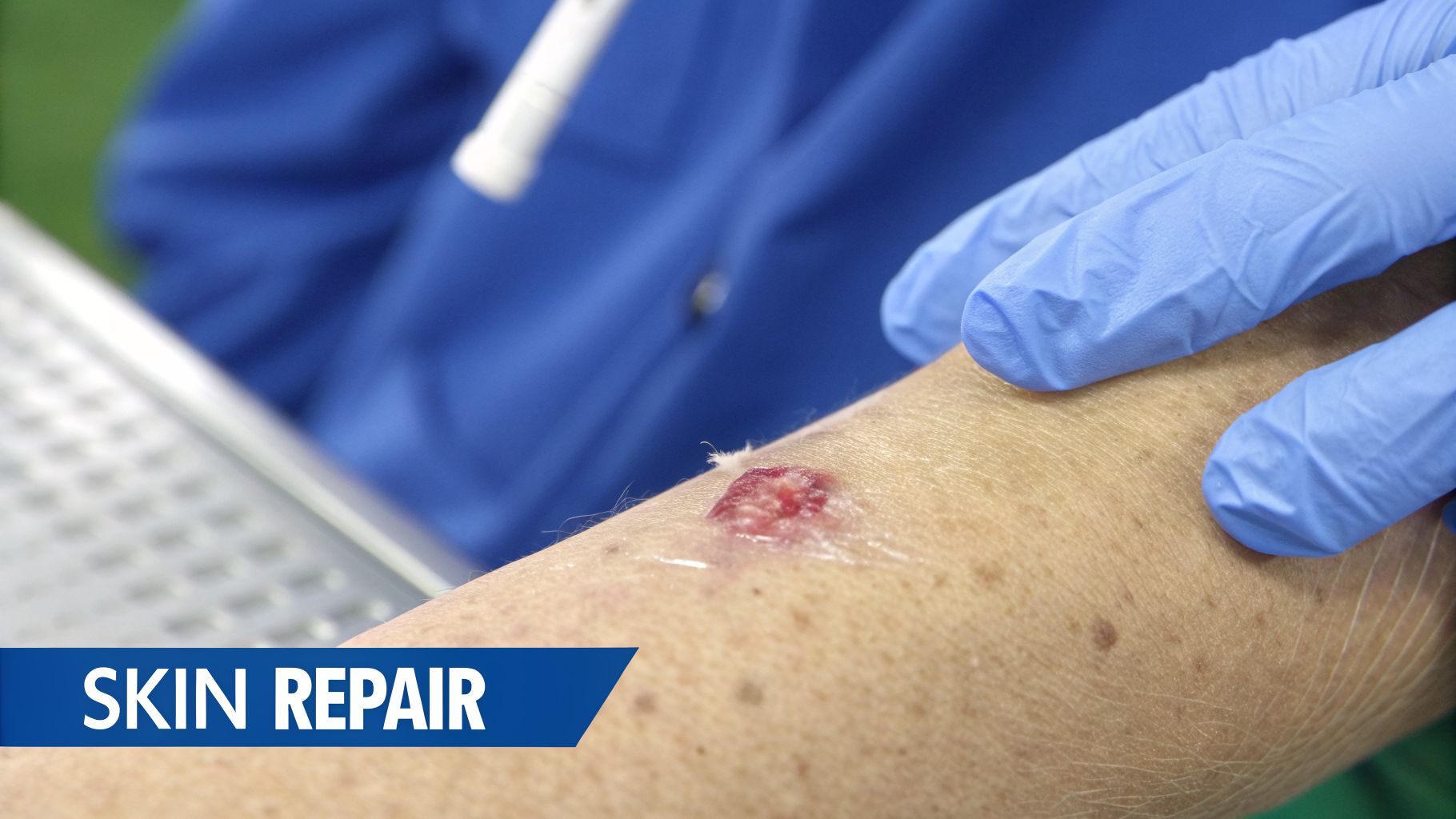
The moment the skin barrier is broken, chemical distress signals are released, sounding an alarm throughout the local tissue. This alarm is the call to action that summons fibroblasts to the site of the injury.
Once they arrive, their behavior shifts. No longer just passive cells handling routine maintenance, they transform into an active repair force. This change triggers a cascade of events designed to close the wound and rebuild the tissue from the ground up.
The phases of fibroblast-led healing
The healing process is not a chaotic scramble; it's a highly organized, multi-stage operation directed by fibroblasts. Each phase serves a specific purpose, ensuring the wound is closed efficiently and the underlying structure is restored.
The first step is fibroblast migration. The cells physically travel through the extracellular matrix to converge at the injury site. Once gathered, they begin to multiply rapidly—a stage known as proliferation—to create a workforce large enough to handle the job.
This organized response is the body's built-in system for self-repair. Fibroblasts first contain the damage, then build a temporary patch, and finally replace it with stronger, permanent tissue.
Following proliferation, these activated fibroblasts, now often called myofibroblasts, get to work. They start churning out large amounts of new collagen. This initial collagen is not the neat, organized latticework of healthy skin; it's laid down quickly to form a functional scaffold, which is what we see as scar tissue.
Harnessing the repair process for rejuvenation
The skin’s natural healing ability is so effective that many modern aesthetic and recovery practices are built around intentionally activating it. By creating controlled micro-injuries, treatments can signal fibroblasts to kickstart a cycle of renewal and rebuilding, which improves the skin's overall quality.
This approach turns a natural defense mechanism into a tool for rejuvenation. Here’s how it works in a few common treatments:
- Microneedling: This procedure uses tiny needles to create thousands of microscopic channels in the skin. Each micro-channel acts as a controlled injury, telling nearby fibroblasts to wake up, migrate to the area, and start producing fresh, high-quality collagen and elastin.
- Laser Resurfacing: Fractional lasers deliver precise beams of energy deep into the dermis, creating zones of thermal injury. Fibroblasts respond to this heat and damage by initiating a healing response, remodeling the entire dermal structure over several months.
- Chemical Peels: By applying a specialized chemical solution, the top layers of the skin are carefully exfoliated. This controlled removal signals to the fibroblasts in the deeper layers that repair is needed, prompting them to generate a fresh, smooth, and more even-toned surface.
In all of these cases, the treatment itself is just the catalyst. The real work is done by your body's own fibroblasts in skin, which dutifully respond to the signal by building a stronger, healthier, and more youthful-looking dermal matrix. Scientists are even exploring compounds that can directly influence this process. For instance, new research shows that certain plant-derived cytokinins can boost the migration and proliferation of human skin fibroblasts, leading to increased protein and collagen production. Discover the details of how these compounds influence fibroblast activity.
Understanding this repair mechanism shows us that effective skin rejuvenation is not just about adding something new. It’s about communicating with the cells we already have and encouraging them to do the job they were designed for. By working with the skin's natural intelligence, we can achieve improvements in its health, texture, and resilience.
The science of activating fibroblasts for skin health
To make a difference in the health and look of our skin, we have to go deeper than surface-level creams. We need to communicate directly with the skin’s cellular factories—the fibroblasts—and signal them to get back to work. Understanding how to "wake up" these cells is the key to seeing real, lasting improvements in skin firmness and tone.
Two powerful, non-invasive methods have emerged for stimulating fibroblast activity: applying gentle physical force through pressure and using specific wavelengths of light. These approaches tap into core biological processes known as mechanotransduction and photobiomodulation.
Let's break down how each one works.
Mechanotransduction: waking up fibroblasts with physical force
Fibroblasts are not just floating passively in the dermis; they are responsive to their physical environment. They can sense mechanical forces like tension, stretching, and compression. Mechanotransduction is the process where these cells convert physical cues into biochemical signals that tell them what to do.
Think of a dormant fibroblast as a factory worker taking a nap. An intermittent vacuum pressure acts like a tap on the shoulder, letting them know it’s time to get back on the assembly line. This physical nudge is all it takes to wake the cell up.
This gentle stretching from negative pressure is a direct signal to the fibroblasts to start producing more collagen and elastin. It's a non-invasive reminder for the skin’s construction crew to get back to their job: reinforcing the skin's structural matrix.
This process is effective because it mirrors the natural mechanical loads that healthy skin is used to. The stimulation reminds the cells to maintain their environment, which over time, leads to a stronger, more organized extracellular matrix.
Photobiomodulation: recharging the cellular batteries with light
Just like plants use sunlight for photosynthesis, our own cells can absorb certain wavelengths of light to power their internal machinery. Photobiomodulation is the term for using specific light energies—especially red and near-infrared light—to stimulate cellular function.
When red and infrared light penetrate the skin, they’re absorbed by the mitochondria inside our cells. Mitochondria are the cell’s powerhouses, responsible for producing adenosine triphosphate (ATP), which is the energy currency that fuels every single cellular activity.
Imagine your fibroblast’s mitochondria are tiny, rechargeable batteries. With age and stress, these batteries start to lose their charge, making the fibroblast sluggish.
Red and infrared light act like a charging station for these cellular batteries. The light energy gives the mitochondria a direct boost, which allows them to produce more ATP. With all this fresh energy, the fibroblast has the fuel it needs to do its demanding job of synthesizing new collagen and elastin.
This energy surge results in:
- Increased collagen production: Energized fibroblasts have the power to build a denser, stronger dermal framework.
- Improved cellular repair: Cells with full batteries can heal and regenerate more efficiently.
- Reduced inflammation: The process helps calm cellular stress, creating a healthier overall environment in the skin.
Together, mechanotransduction and photobiomodulation give us two powerful ways to activate the fibroblasts in skin. One uses a physical cue and the other uses light energy, but both drive the same outcome: encouraging your skin’s natural builders to create a firmer, smoother, and more resilient complexion.
While these non-invasive methods are effective, other techniques like microneedling also aim to stimulate fibroblasts, just through different means. If you're exploring various options, it's smart to understand the safety of each; you might find it helpful to learn about whether at-home microneedling is safe in our detailed guide. By understanding the science, we can make informed choices about how to best support our skin’s health from the inside out.
Using fibroblast science in modern wellness and aesthetics
Knowing the biology of fibroblasts in skin is one thing, but translating that science into real-world results is where the process becomes valuable. The art of activating these cells is no longer stuck in a research lab. Today, it’s the cornerstone of effective, non-invasive treatments in medspas, athletic recovery centers, and longevity clinics.
These modern applications go beyond treating the skin’s surface. Instead, they work by influencing the deep dermal environment to spark visible, lasting change. By stimulating fibroblasts, businesses can deliver clients tangible outcomes for everything from body contouring and skin firming to accelerated muscle recovery.
The business of better client outcomes
For any wellness or aesthetic practice, fibroblast-activating technologies present a powerful value proposition. They are typically non-invasive, demand minimal staff supervision, and offer clients a relaxing experience with zero downtime. This makes them easy to weave into existing service menus or to market as premier anti-aging or recovery solutions.
The real power emerges when you pair these technologies with other services to create synergies. For instance:
- Body Contouring: An intermittent vacuum therapy session before a body sculpting treatment can boost circulation and prime the skin, setting the stage for superior skin tone and texture post-procedure.
- Athletic Recovery: After a grueling workout, combining negative pressure with light therapy can help dial down swelling and muscle soreness. This stimulation signals fibroblasts to kickstart tissue repair, helping athletes get back in the game faster.
- Aesthetic Treatments: Following a procedure, these therapies can support the healing process by encouraging organized collagen remodeling—a process orchestrated by fibroblasts.
By focusing on the cellular mechanics of skin health and repair, you can deliver superior results that justify premium services. This approach creates a direct line between the biology of fibroblasts, your business's return on investment, and the visible outcomes your clients rave about.
Addressing sluggish fibroblasts for enhanced results
Sometimes, fibroblast activity is noticeably impaired. We see this in conditions like melasma, where fibroblasts from affected skin have been shown to grow 34% slower in culture compared to cells from nearby healthy skin. These "sluggish" cells show clear signs of senescence—or cellular aging—which cripples their ability to maintain a healthy dermal matrix.
For aesthetic clinics, these findings are relevant. Technologies that boost circulation and energize fibroblasts, like intermittent vacuum pods with integrated light therapy, offer a direct way to counteract these deficits. By "waking up" these tired cells, treatments can fundamentally improve skin health from the inside out, leading to better outcomes for both aesthetic and recovery clients. To dive deeper, you can also explore our guide on the benefits of infrared light therapy to understand how light specifically energizes these cells.
This science-backed approach empowers providers to address the root causes of poor skin tone and delayed recovery. By stimulating the fibroblasts in skin, your business can offer a more complete and effective service—whether your client is an athlete chasing faster recovery, someone seeking non-invasive body contouring, or a longevity enthusiast aiming for optimal skin health. The immediate, post-session sensation of lightness and refreshment is a bonus that keeps clients coming back.
Your fibroblast questions, answered
Feeling confident about your skin health journey starts with understanding the fundamentals. To help you connect the dots, we've put together some clear, straightforward answers to the most common questions we hear about fibroblasts in skin.
Can I increase fibroblast activity naturally?
Yes. Your daily habits have a direct impact on how well your fibroblasts function. Think of your diet as providing the raw materials for construction—foods rich in vitamin C and antioxidants give these cells the building blocks they need for new collagen. Citrus fruits, leafy greens, and berries are fantastic choices.
Beyond diet, protecting your skin is non-negotiable. Sunscreen is not just a suggestion; a good broad-spectrum formula is one of the most powerful tools you have to shield your fibroblasts from UV damage, which is a primary reason they slow down. Staying hydrated and avoiding smoking are also important for maintaining the healthy dermal environment your fibroblasts need.
How long does it take to see results from fibroblast treatments?
The timeline depends on the treatment itself, your body's unique response, and your consistency. For therapies aimed at boosting circulation, like intermittent negative pressure, you might notice an immediate feeling of lightness right after your first session.
Building new collagen, however, is a more gradual process. Your fibroblasts in skin need time to produce and organize that new structural matrix. For visible changes in skin firmness and texture, you're typically looking at several weeks of consistent treatments. Patience and sticking to the recommended schedule are key.
Are all fibroblasts in the skin the same?
No, and this is where research gets interesting. Modern studies show that our skin is home to several different subtypes of fibroblasts, each with a specialized role. This discovery is a game-changer for why targeted treatments can be so effective.
Some fibroblast populations are dedicated to creating new collagen to maintain the skin’s day-to-day structure. Others are more like emergency responders, programmed to mobilize for wound healing. This specialization means we can design therapies to stimulate the exact fibroblasts needed for either rejuvenation or repair.
This cellular diversity allows for precise, predictable outcomes, whether the goal is smoothing fine lines or helping the body recover more quickly after an injury. By understanding these distinct roles, we can influence skin health on a fundamental level.
Ready to see how activating your body's natural builders can transform your skin health and recovery? The Vacustyler Avantgarde from Weyergans HighCare US uses German-engineered intermittent negative pressure and integrated beauty light to support circulation and energize fibroblasts. Learn how this science-driven approach can elevate your wellness or aesthetic practice.