


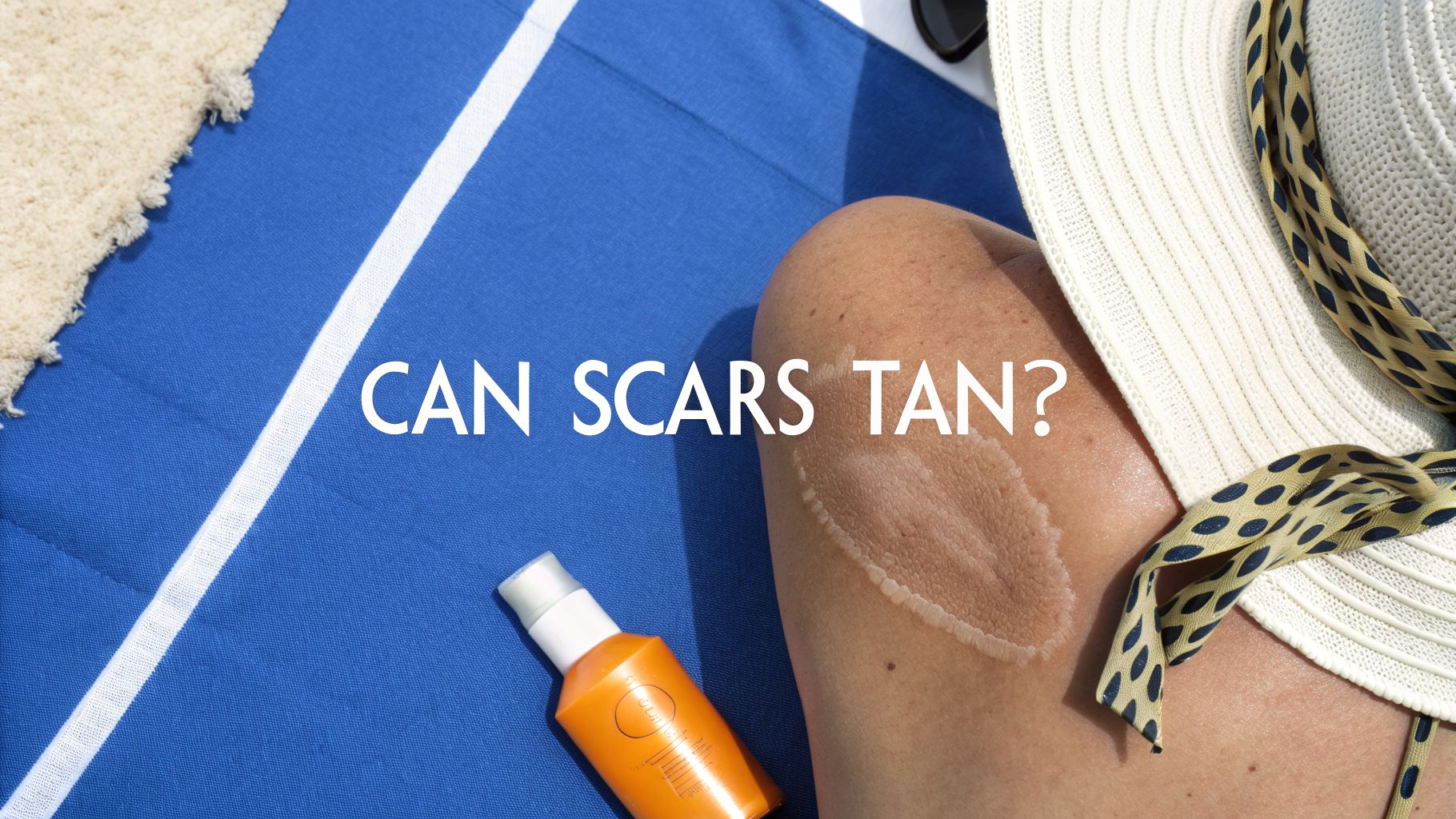
The short answer is no: scars do not tan like normal skin. Scar tissue is the body's emergency repair patch—it's built for speed, not aesthetics. Because of this, it doesn't have the normal cells needed to produce a tan.
Sun exposure almost always makes scars more noticeable. The sun's UV rays can cause them to become much darker (hyperpigmentation) or, in some cases, much lighter (hypopigmentation) than the surrounding skin.
Why scars don't tan like normal skin
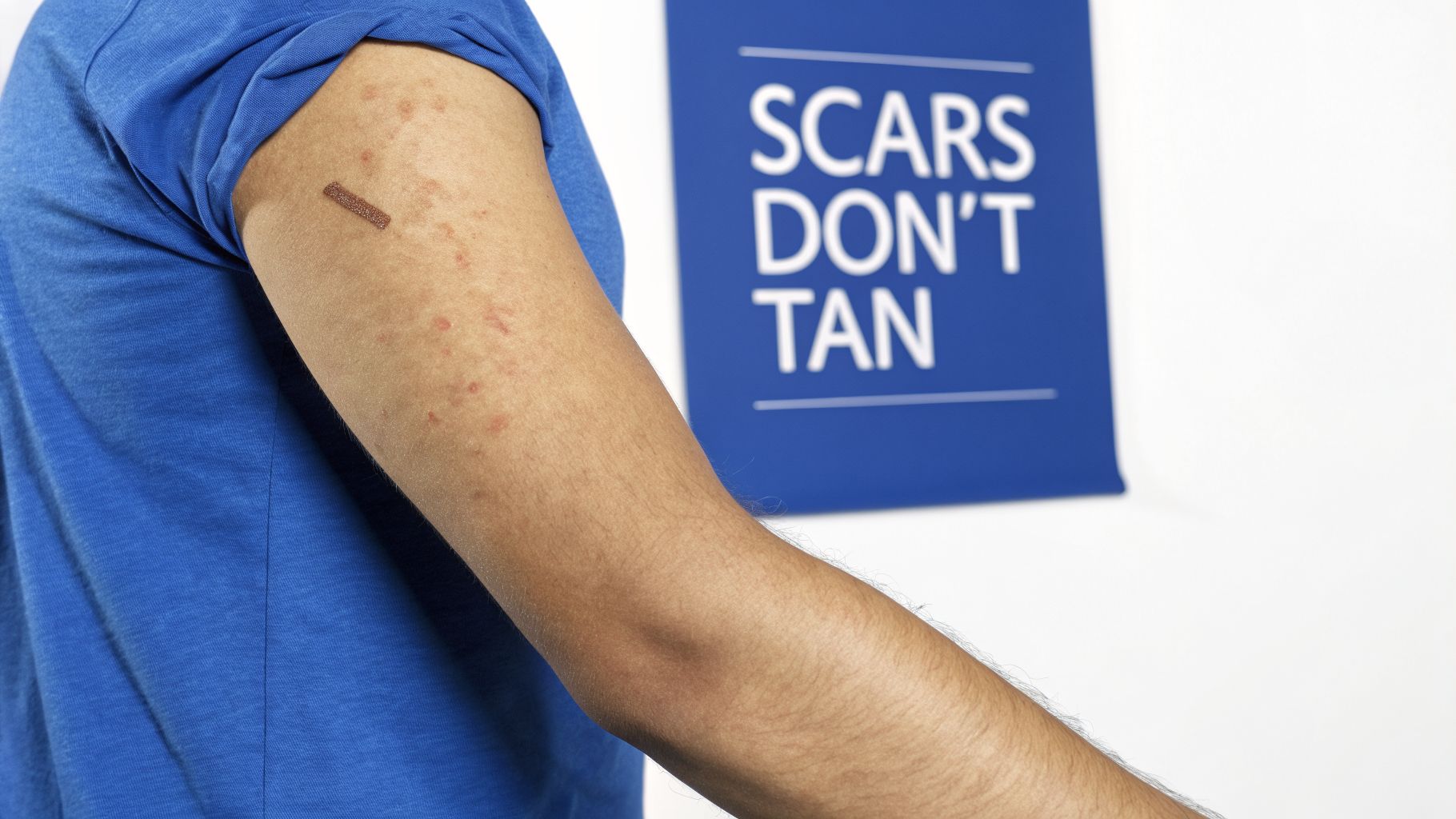
When your healthy skin gets a tan, it's a defense mechanism. Cells called melanocytes produce melanin, the pigment that darkens your skin to shield it from further UV damage. In healthy skin, these cells are organized and ready to work.
Scar tissue is different. When you get injured, your body's priority is to close the wound fast. To do this, it lays down a dense, disorganized mesh of collagen fibers.
This new tissue is missing many of the structures found in normal skin, like hair follicles, sweat glands, and a healthy, even supply of melanocytes. Without those pigment-producing cells, a scar cannot develop a tan.
How skin and scars react to sun
The biological gap between healthy skin and scar tissue becomes obvious in the sun. One develops a uniform color, while the other often becomes permanently discolored and more distinct. Understanding this difference is the first step in effective scar care.
This table breaks down how these two tissues respond.
Normal skin vs scar tissue response to sun exposure
| Characteristic | Normal skin | Scar tissue |
|---|---|---|
| Melanocytes | Evenly distributed and functional. | Few or no functional melanocytes. |
| UV response | Produces melanin, leading to a protective tan. | Often leads to hyperpigmentation (darkening) or hypopigmentation (lightening). |
| Structure | Organized collagen and elastin fibers. | Disorganized, dense collagen fibers. |
| Appearance | Smooth texture with pores and follicles. | Can be raised, flat, or indented; lacks pores and follicles. |
| UV sensitivity | Becomes more resilient with a tan. | Remains highly sensitive and prone to burning and permanent discoloration. |
Because of these differences, asking "can scars tan?" misses the point. The better question is how we can protect this new, fragile tissue from the sun to prevent lasting damage and discoloration.
Why scar tissue reacts differently to sun
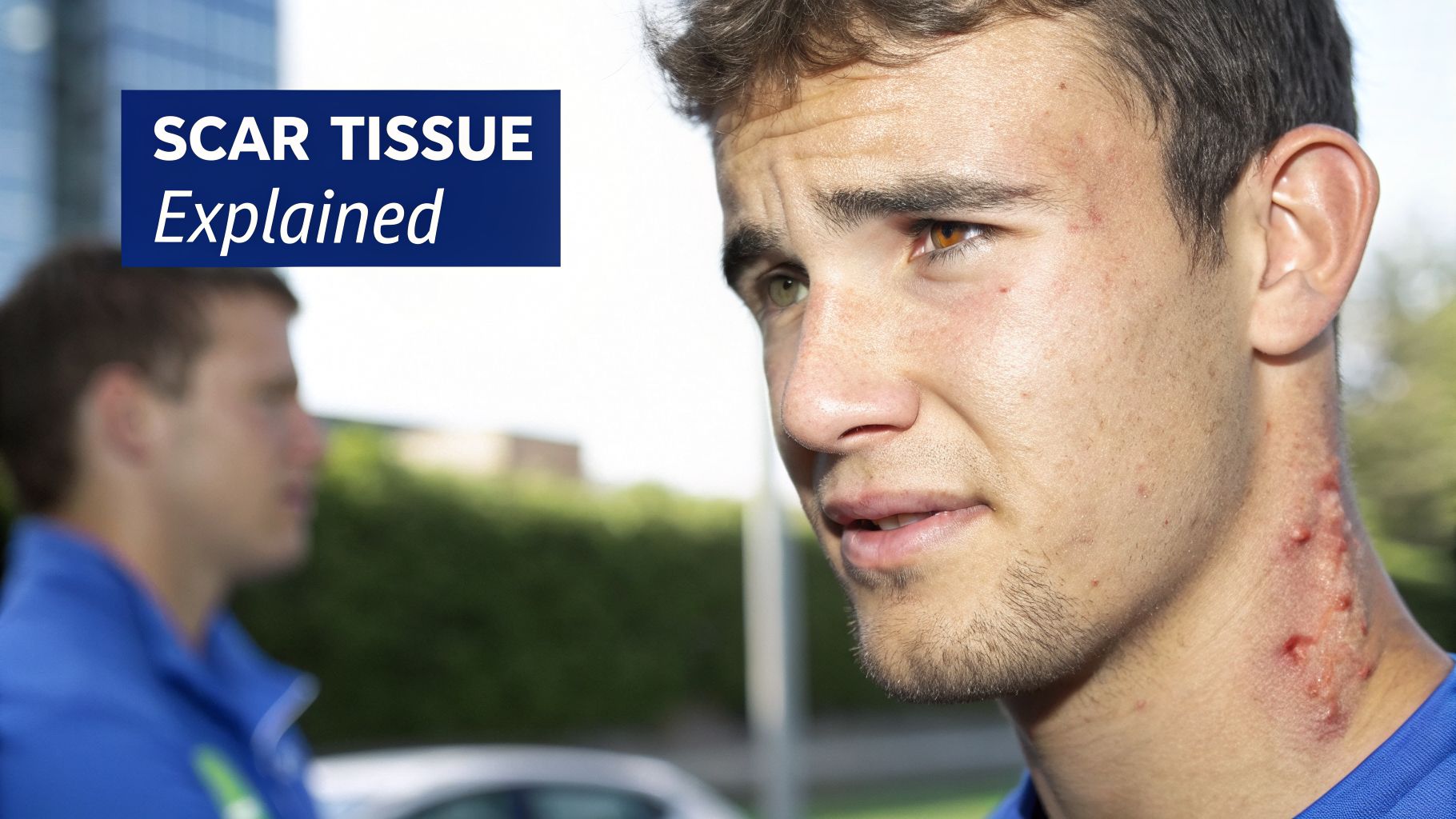
When your skin is injured, your body's priority is crisis management, not appearance. It rushes to close the wound by flooding the area with collagen, creating scar tissue. This process is about function over form, resulting in a patch of skin that's different from what was there before.
Think of it like fixing a hole in a pair of jeans. Instead of re-weaving every thread, you grab the quickest, sturdiest patch you can find. It gets the job done, but the texture and color will never be a perfect match. Your scar is that patch.
This new tissue is a simplified version of your original skin. It often has no hair follicles, sweat glands, or oil glands. It also has a disrupted network of melanocytes—the cells that produce melanin, the pigment that colors your skin and gives you a tan.
The science of scar formation
The real difference is in the collagen. In healthy skin, collagen fibers are arranged in a neat, basket-weave pattern, giving it strength and elasticity. In scar tissue, that collagen is laid down quickly and haphazardly, forming a dense, disorganized jumble.
This rushed construction is why a scar looks and feels so different. It’s also the reason it can’t tan like normal skin. Without a uniform grid of melanocytes, the tissue doesn't have the equipment to produce a consistent color in response to the sun.
Instead of tanning, the few melanocytes in and around the scar can get overstimulated by UV rays. This often causes the scar to get much darker (hyperpigmentation) or, in some cases, lose its color entirely and turn white (hypopigmentation), making it stand out even more.
How location influences scarring
Not all scars are created equal. Where you get injured affects how the skin heals and what the final scar looks like. The skin on your face, for example, is biologically different from the skin on your back or shoulders.
Research from Stanford Medicine revealed that facial wounds produce far fewer of the specific proteins that lead to heavy scar formation. In one study, scientists moved facial skin to the backs of mice and found it still healed better, proving this healing ability is built into the skin itself. You can explore the research on why the face scars less than the body.
This is useful information for both clients and professionals. It helps set realistic expectations, explaining why a scar from a facial procedure might fade well while one on the chest or shoulder could remain more pronounced for much longer.
So, your scar is getting darker… is it tanning?
When you notice a new scar darkening after time in the sun, you might think it’s tanning. What you’re seeing isn't a tan. It’s a different process known as post-inflammatory hyperpigmentation (PIH).
The injury that caused the scar triggered a major inflammatory response. This inflammation acts like a distress signal, sending the pigment-producing cells (melanocytes) in and around the new tissue into a state of panic. In their frenzy, they produce too much melanin in a very concentrated area.
The result isn't an even bronze. You get patchy, dark discoloration that makes the scar stand out. It’s the body’s overzealous attempt to protect a vulnerable area and a lingering sign of the initial trauma. This reaction is often more pronounced in people with deeper skin tones, as their melanocytes are naturally more active.
What makes scar discoloration worse?
The initial injury lights the fuse for PIH, but a few common mistakes can fan the flames, making the dark marks more intense and harder to fade. Understanding these triggers is the first step to controlling your scar's final look.
The biggest culprits are:
- Sun exposure: This is the number one offender. UV radiation is a powerful command for your skin to produce melanin. Exposing a fresh scar to the sun is like pouring gasoline on a fire, telling those already panicked melanocytes to work even harder.
- Picking or irritating the area: Constantly picking at a scab or rubbing a healing scar slows down recovery and creates fresh waves of inflammation. Every time you irritate it, you restart the pigmentation process, making the mark darker and more stubborn.
- Using harsh skincare products: Aggressive exfoliants, potent acids, or alcohol-heavy products can easily irritate fragile new skin. This irritation triggers more inflammation and more hyperpigmentation.
Managing inflammation is the cornerstone of modern scar care. The healing doesn't stop once the wound is closed—it's an ongoing process for many months.
Post-inflammatory hyperpigmentation is a major concern because the initial skin trauma can trigger darkening even without sun exposure. In fact, prevalence studies show that 50.39% of adults with scars report visible redness and 38.41% experience flaking. Both are signs of the active inflammatory processes that drive PIH. You can learn more about how to protect scars from the sun on laroche-posay.sg.
So, can scars tan? The answer is no. Scars don’t get a healthy glow; they are prone to post-inflammatory hyperpigmentation. Protecting them and managing the healing process is the best way to get a good cosmetic result.
How to properly protect scars from the sun
We know scars don't tan—they just get darker and more discolored. So let's talk about what really matters: protecting them. This isn't just cosmetic; it's about safeguarding fragile tissue from long-term damage.
Sun exposure on a fresh scar can trigger permanent hyperpigmentation, essentially "baking in" the discoloration and making it stand out for years. More seriously, scar tissue is more susceptible to developing skin cancer, with squamous cell carcinoma (SCC) being a common concern.
The first year is the most important
A new scar is like wet cement—it's impressionable and still setting. For at least the first 12 to 18 months, that scar is in an active remodeling phase. During this window, it is very sensitive to UV radiation.
Any unprotected sun exposure during this time can set off an inflammatory response, locking in dark pigmentation that may never fully fade. Consistent sun protection from day one is the single best investment you can make in your scar's long-term appearance.
Protecting your scar during this period gives it the best chance to heal as flat and light as possible. While protection is always important, the risk of permanent discoloration drops after this initial healing phase is over.
Your scar protection toolkit
Guarding your scar against the sun is simple once you have the right tools and habits. The goal is to create a physical barrier between that delicate new skin and the sun's UV rays.
Here are the most effective ways to do it:
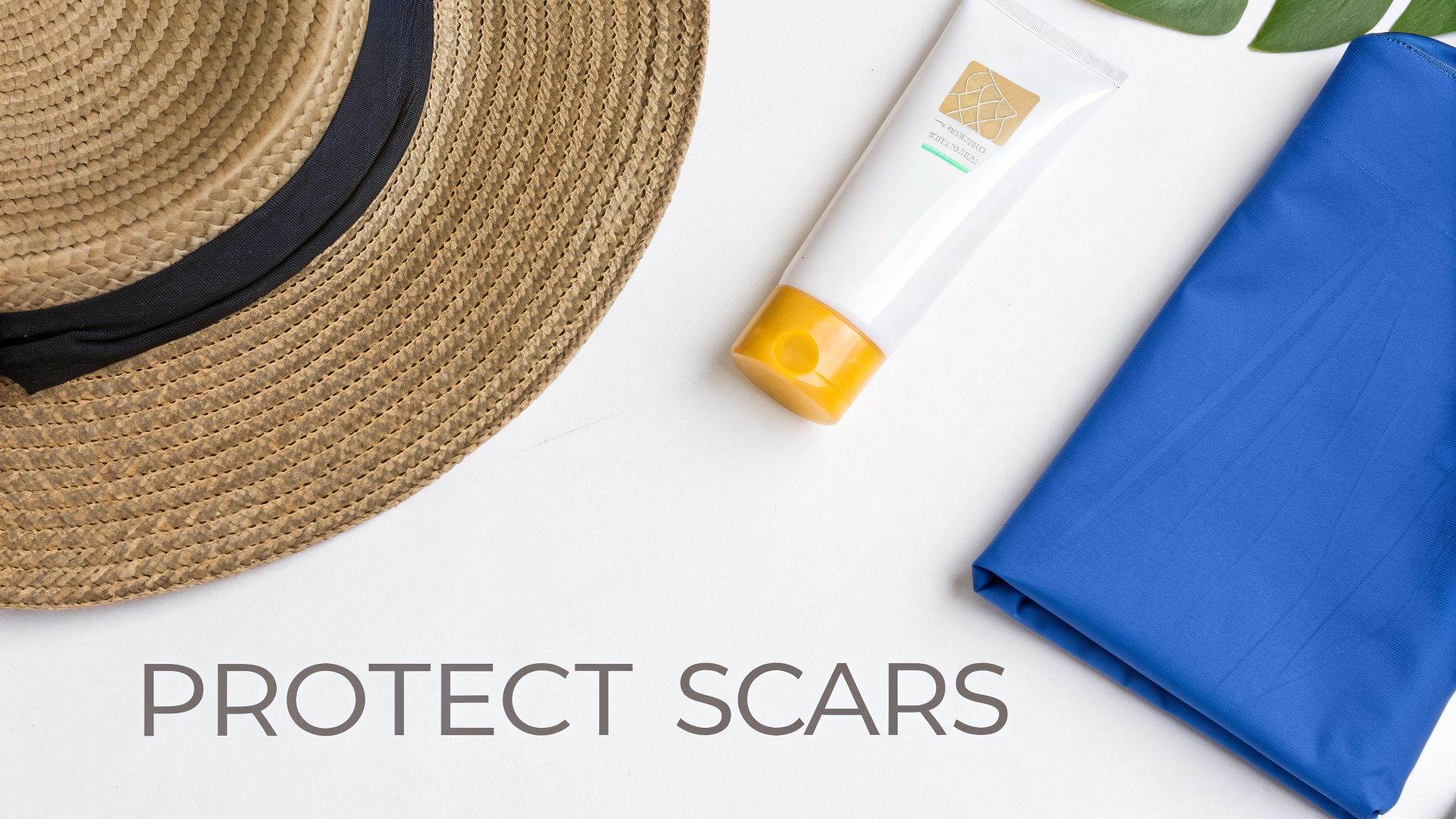
- Broad-spectrum sunscreen: This is your daily line of defense. To prevent discoloration, you need to achieve optimal sun protection with SPF 30 cream. I recommend a mineral-based formula with zinc oxide or titanium dioxide, as these physically block UV rays and are gentler on sensitive new tissue.
- Protective clothing: Never underestimate the power of covering up. UPF (Ultraviolet Protection Factor) clothing is designed to block UV rays and is a great choice for body scars. For scars on your face, a wide-brimmed hat is a must.
- Silicone scar sheets: These are a great two-in-one solution. They hydrate the scar tissue to help it heal flatter, and many now come with built-in UV protection. They create a complete physical block, making sure no sun gets through to the skin.
Remember to reapply your sunscreen at least every two hours, and more often if you’re swimming or sweating. For the most reliable protection, combine these methods—apply sunscreen first, then cover the area with clothing or a scar sheet.
Treatment options for discolored scars
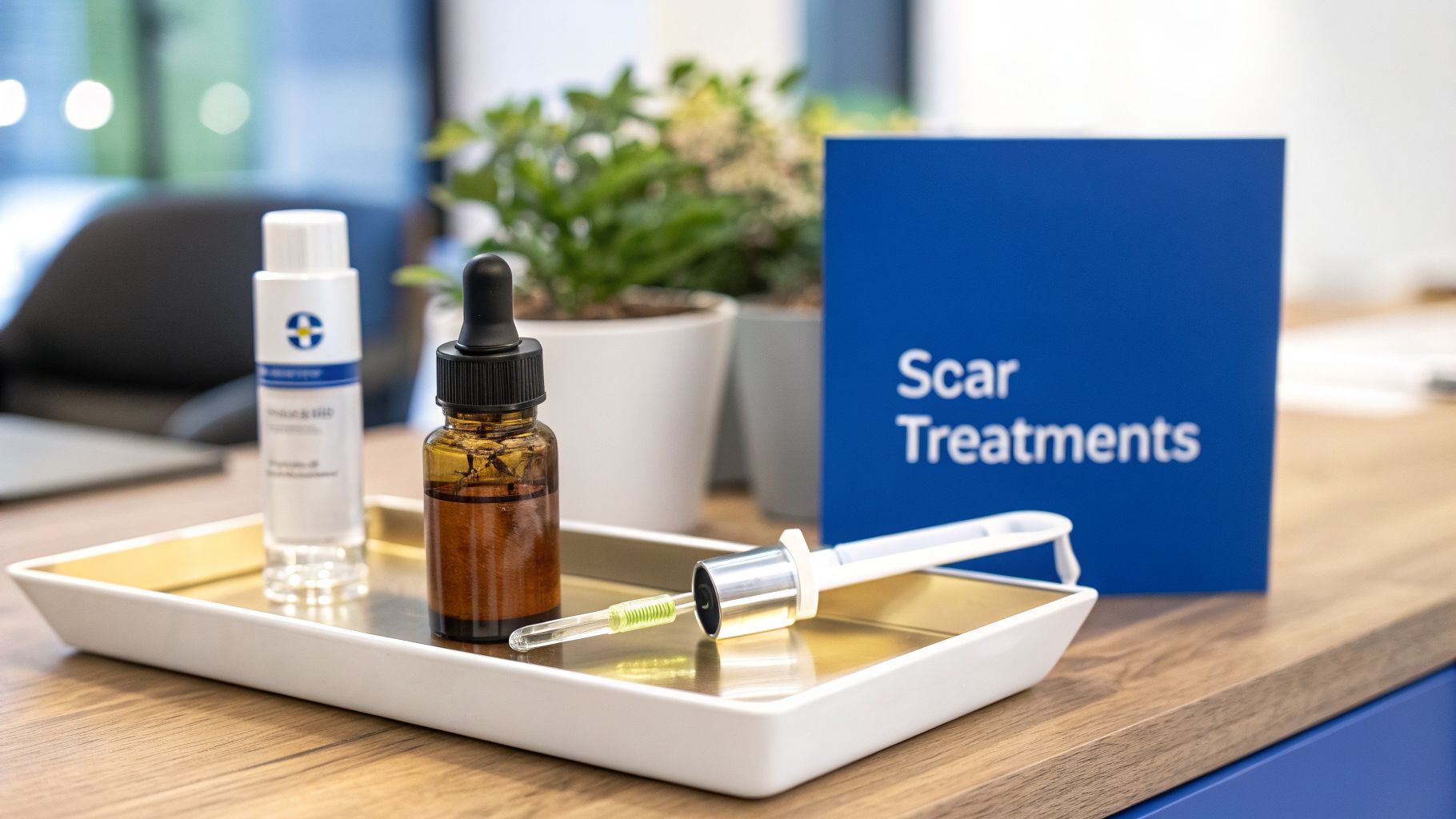
The sun found your scar, and now it’s darker than you’d like. It’s a common issue, and you have plenty of options. Correcting a discolored scar is about combining consistent at-home care with targeted professional procedures. The goal is to fade the color, improve texture, and help the tissue remodel in a healthier way.
Before you start any new routine, especially on a fresh or sensitive scar, it's always smart to talk with a dermatologist or a trusted skincare professional. They can help you build a plan that is both safe and effective for your skin.
Starting with at-home topical treatments
Topical products are your first line of defense for evening out scar discoloration. Think of them as the daily groundwork. They work by gently encouraging cell turnover, shielding the fragile skin, and dialing back the overactive melanin production that causes dark spots.
Patience is key here. These products need consistent, daily use over several months to show results.
Here are some of the most effective ingredients to look for:
- Silicone gels or sheets: This is the gold standard for scar care. Silicone creates a breathable, protective barrier that locks in moisture, creating the perfect hydrated environment for healing. This helps soften the tissue and can reduce both redness and hyperpigmentation over time.
- Vitamin C serums: Vitamin C is an antioxidant that protects delicate scar tissue from daily environmental stressors. It also acts as a brightening agent by interrupting the melanin-making process and supports healthy collagen, which is needed for smooth skin.
- Retinoids: These Vitamin A derivatives speed up skin cell turnover. This helps slough off the discolored surface cells more quickly, revealing fresher skin underneath. Always start with a very low concentration and use it cautiously on scars to avoid irritation.
- Azelaic acid: This is a gentle acid known for its precision in targeting hyperpigmentation. It calms inflammation and directly blocks the enzyme that signals your skin to produce excess pigment.
When to consider professional clinical procedures
When over-the-counter topicals don't deliver the results you want, it might be time to call in professionals. Procedures at medspas and dermatology clinics are more powerful, working on a deeper level to break up stubborn pigment and restructure the scar tissue.
A professional consultation is non-negotiable. An expert can assess your scar, skin type, and discoloration to recommend the right treatment. The wrong procedure can make hyperpigmentation worse.
These are some of the most common and effective clinical options:
- Chemical peels: A skincare professional applies a chemical solution to the skin, causing the top, pigmented layers to exfoliate and peel away. This jumpstarts the growth of new, more evenly toned skin.
- Microneedling: Also known as collagen induction therapy, this procedure uses fine needles to create tiny, controlled micro-injuries. This awakens your body's natural healing response, stimulating new collagen that helps break down old scar tissue and smooth out both texture and pigment.
- Laser therapy: Lasers use focused light energy to target scar tissue with precision. Some lasers shatter pigment particles, which the body then clears away, while others resurface the skin for a smoother, more uniform appearance.
A qualified professional will be your guide, helping you choose the treatment that fits your scar’s needs and your skin goals.
A guide for client education at clinics
How you educate your clients about scar care reflects your clinic's expertise. When a client understands the why behind your advice, they become an active partner in achieving the best outcome. This builds trust, ensures compliance, and leads to better results and client satisfaction.
The conversation often begins with the question: "Will my scar tan?" The simple answer is no. I find an analogy helps here. Explain that scar tissue is like a quick patch on a torn piece of fabric; it closes the gap, but the new material is never the same as the original weave and color. This new tissue lacks the normal amount of pigment-producing cells (melanocytes), so instead of developing a healthy tan, it's prone to permanent darkening from post-inflammatory hyperpigmentation (PIH).
Positioning complementary services
This conversation is a natural entry point for introducing services that support healing. Frame these treatments not as add-ons, but as proactive steps to guide the scar toward its best final appearance.
For example, you can explain how boosting circulation from within provides the building blocks for better healing. Treatments like the Vacustyler use negative pressure waves to stimulate blood flow, which is needed to deliver oxygen and nutrients to repairing tissue.
Other additions to a scar management plan include:
- Red light therapy: Explain how specific wavelengths can calm inflammation and kick-start collagen production. This helps scars heal with a smoother, flatter, and more even texture.
- Microneedling: For older scars, you can discuss how controlled micro-injuries help break down disorganized collagen and trigger the body to replace it with healthier, more orderly tissue.
Creating detailed aftercare protocols
Finally, every client who has a procedure with the potential for scarring—from surgery and deep peels to certain laser treatments—should leave with a detailed, written aftercare plan. This isn't a suggestion; it's a prescription for a better result.
This protocol must emphasize strict sun protection for at least one year. Reinforce this point clearly: sunscreen isn't optional, it's a non-negotiable part of the treatment. Failing to protect a new scar from UV rays is one of the fastest ways to create a permanent, discolored mark that will be much harder to correct later.
Common questions about scars and sun exposure
When it comes to caring for scars, the sun is a huge topic of conversation. There's a lot of advice floating around, and it's easy to get confused. Let's clear up some of the most common questions people have about protecting their healing skin.
How long after an injury should I keep a scar out of the sun?
A new scar is very sensitive. For at least the first 12 to 18 months, you need to be religious about sun protection. This is the healing window when the tissue is actively remodeling.
During this time, UV exposure can trigger a permanent overproduction of melanin, leading to a dark, discolored scar that won't fade. While the biggest risk subsides after that initial period, protecting all of your skin from the sun is a lifelong best practice.
Can a very old scar suddenly change color?
Yes. Even a scar that has looked the same for years can suddenly darken or change. This is usually a response to new or more intense sun exposure.
Other triggers can include hormonal shifts, like those during pregnancy, or even starting certain medications that make your skin more sensitive to light. If you notice an old scar changing in color or texture for no apparent reason, it’s smart to have a dermatologist take a look.
A myth suggests that tanning beds can help blend a scar's appearance. The opposite is true. Tanning beds blast your skin with concentrated UVA rays, which accelerates aging, increases skin cancer risk, and makes scars stand out even more.
What is the best sunscreen for a new scar?
For fresh, healing scar tissue, your best bet is a mineral-based, broad-spectrum sunscreen with an SPF of 30 or higher.
Look for active ingredients like zinc oxide or titanium dioxide. These create a physical barrier on the skin and are less likely to irritate fragile new tissue than their chemical counterparts. Always opt for a fragrance-free formula to minimize any risk of irritation.
For a cosmetic approach, some people find self-tanners helpful in blending the appearance of scars. Our guide on using a self-tanner for stretch marks explores a similar strategy for evening out skin tone safely.
At Weyergans HighCare US, we are dedicated to science-backed methods that support the body's natural healing and recovery processes. Our Vacustyler system enhances circulation, a key factor in delivering the oxygen and nutrients tissues need to repair effectively. Discover how our technology can be a powerful addition to your wellness and aesthetic services at https://weyerganshighcareus.com.