


Deciding between brow tinting and microblading comes down to one question: are you looking for a short-term color enhancement or a long-term structural solution? Brow tinting is a temporary dye that boosts the color of your existing brow hairs, lasting a few weeks. In contrast, microblading is a semi-permanent tattoo that meticulously creates the illusion of new hair strokes, with results lasting one to three years.
Your guide to choosing the right brow treatment
The quest for perfect brows can feel a bit overwhelming with all the options out there. But the choice becomes clearer once you understand what each treatment is designed to do. Think of brow tinting as a non-invasive way to amplify what you already have. It darkens your existing eyebrow hairs, making them look fuller and more defined without changing their shape. It’s a low-commitment option for a subtle upgrade.
Microblading, on the other hand, is cosmetic artistry. It's for reshaping, rebuilding, and redefining your brows from the ground up by depositing pigment into the skin in incredibly fine, hair-like strokes. This technique is the go-to solution for filling in sparse patches, correcting asymmetry, or creating a brow arch where one doesn't exist.
This quick summary compares the key differences in the brow tinting vs microblading debate.
Brow tinting vs microblading at a glance
| Feature | Brow Tinting | Microblading |
|---|---|---|
| Primary Goal | Darkens existing hair for a fuller look | Creates new hair strokes on the skin to build shape |
| Duration | 3–6 weeks | 1–3 years |
| Procedure Time | 15–20 minutes | 2–3 hours |
| Pain Level | None | Mild discomfort (numbing cream is used) |
| Cost | Low ($20–$60 per session) | High initial cost ($400–$800+) |
| Best For | Full but light-colored brows | Sparse, thin, or patchy brows |
Your ideal treatment depends on whether you need to temporarily enhance the brows you have or structurally build the brows you want for the long term.
As you explore professional treatments, you might also find our guide to at-home beauty services useful for complementing your new look. In the sections ahead, we’ll look deeper into exactly what each procedure involves to help you select the perfect fit for your face, lifestyle, and beauty goals.
What is brow tinting?
Brow tinting is a simple, non-invasive treatment that defines your natural brows by darkening the existing hairs. Think of it as a specialized hair color service, but just for your eyebrows.
The whole process is refreshingly quick, usually taking only 15 to 20 minutes. This makes it a popular "lunch break" treatment for anyone with a packed schedule.
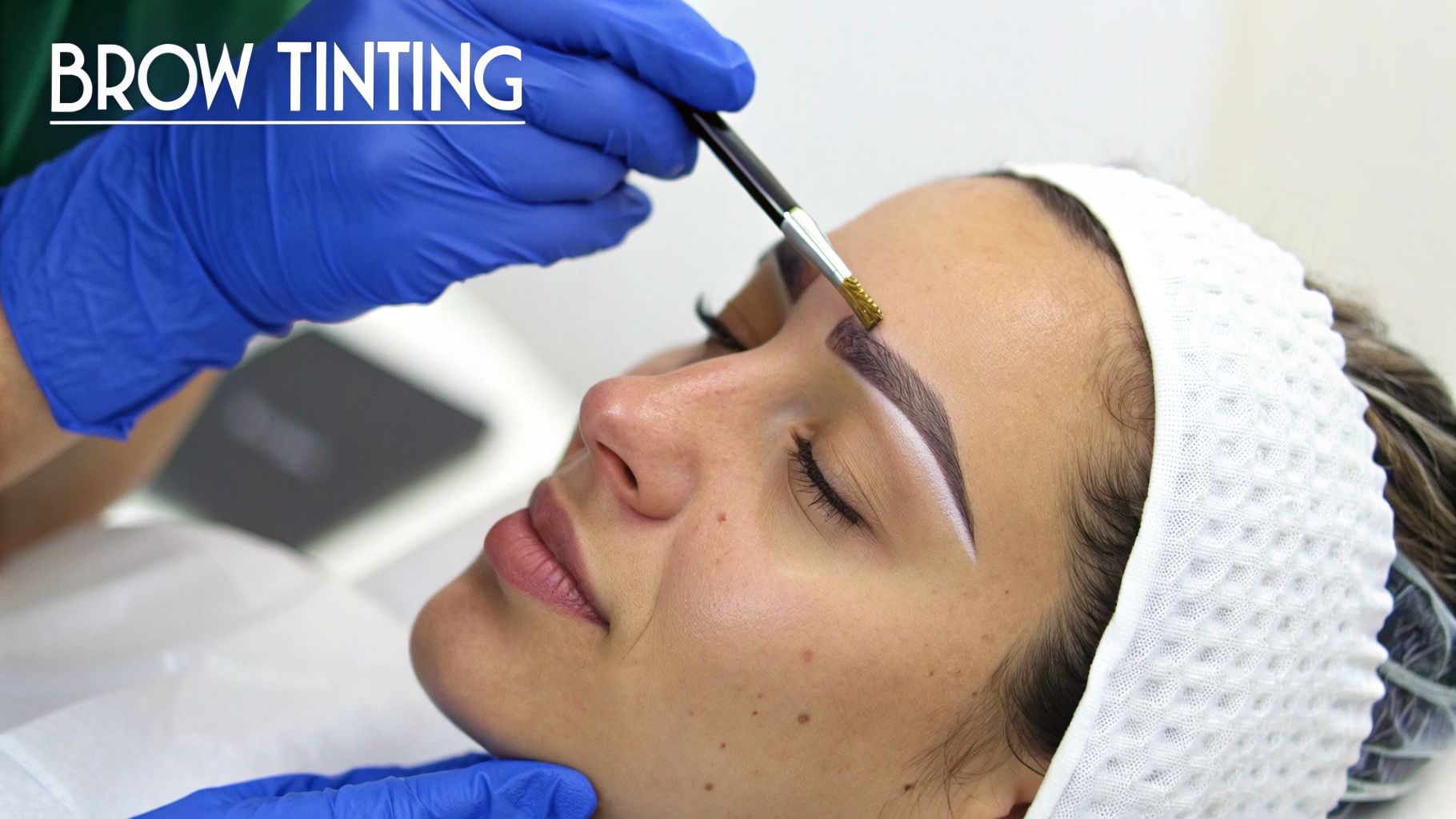
An aesthetician will start by mixing a semi-permanent dye, customizing the shade to either match or go slightly darker than your natural brow color. This custom tint is then carefully brushed onto your brows and left to set for about 10 to 15 minutes before being gently wiped away.
The goal of brow tinting
The main purpose here is to define and amplify the brows you already have. It doesn't create new "hairs" or alter the shape of your brow line in a permanent way.
Instead, the dye coats every single hair, including the fine, almost invisible "peach fuzz" in and around your brows. This simple trick instantly creates the look of thicker, fuller brows.
This service is a great option for people with:
- Naturally light or blonde brows that tend to disappear against their skin.
- Graying eyebrow hairs they want to conceal.
- Already full brows that just need a boost of color and definition.
- A desire to wake up with polished brows, no daily makeup required.
The core difference in the brow tinting vs microblading debate is this: tinting works with your existing hair, while microblading creates the appearance of hair on the skin. Tinting is a surface-level enhancement, not a structural one.
What to expect from the results
Right after your session, your brows will look noticeably darker, more defined, and perfectly uniform in color. The dye also leaves a temporary stain on the skin underneath, which for the first few days gives your brows a sharp, filled-in look, much like you'd get with a brow powder.
But the results aren't permanent. The color on the hairs will typically last for three to six weeks, slowly fading as your hairs go through their natural growth and shedding cycle. The stain on your skin underneath usually washes off within a week.
Maintenance is straightforward. To get the most out of your tint, you’ll want to avoid oil-based cleansers and harsh exfoliants near your brow area. To keep them looking fresh and defined, you'll need to book appointments every month or so, which makes it a low-commitment beauty routine.
How the microblading process works
While brow tinting works on the hair you already have, microblading is a completely different ballgame. This is a form of cosmetic tattooing where an artist doesn't just color your brows—they build them. Think of it as creating the illusion of perfect, full brows where there may be sparseness or gaps.
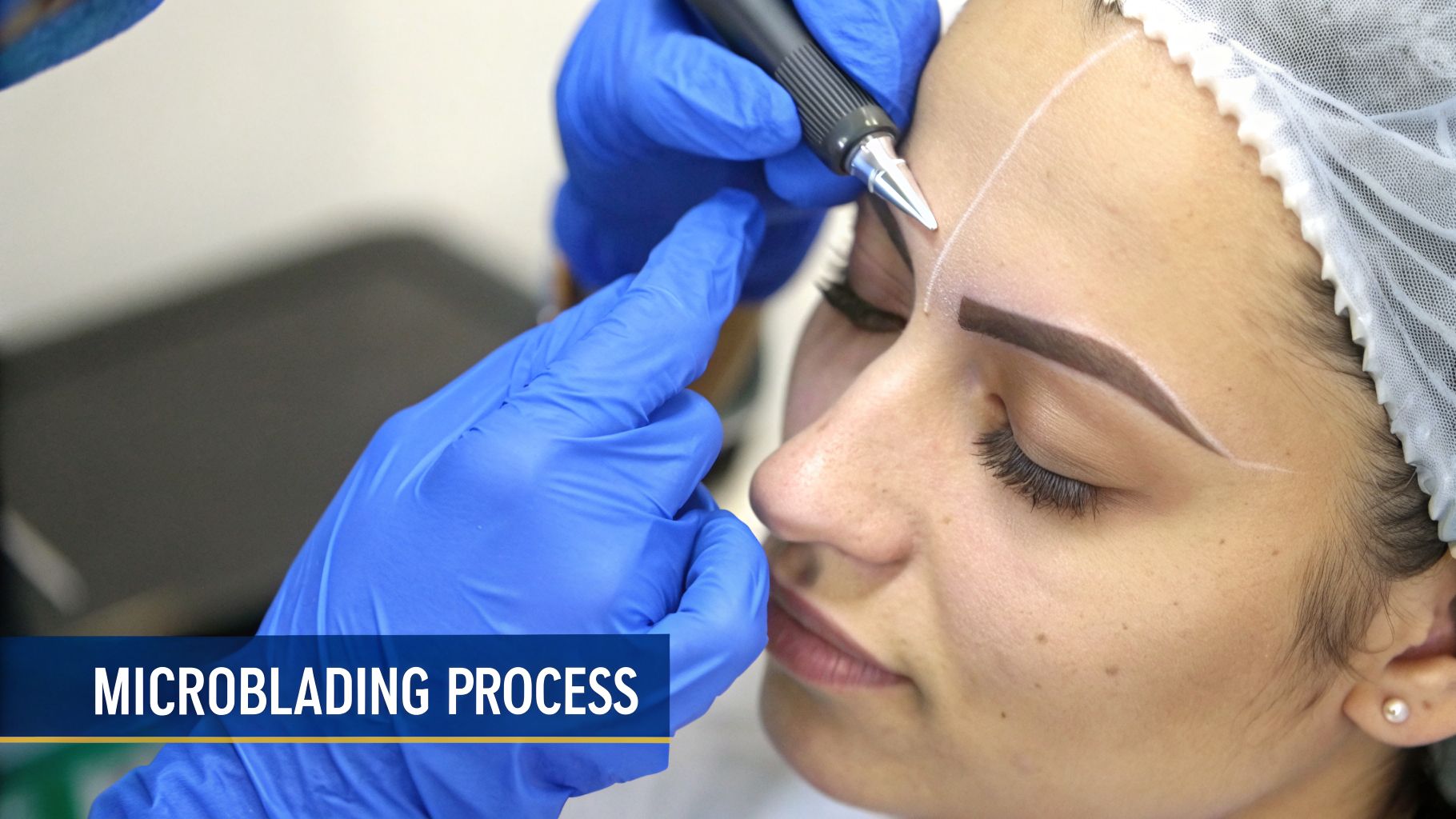
An experienced artist uses a special handheld tool with incredibly fine needles to deposit pigment into the upper layers of your skin. They don't just fill in an area; they draw crisp, individual hair-like strokes that perfectly mimic your natural brow hair. This is a structural solution for anyone dealing with over-plucked, asymmetrical, or naturally sparse brows and wants a lasting fix.
The step-by-step microblading appointment
A typical microblading session is a detailed process that takes anywhere from two to three hours. It's not something to be rushed. This is a close partnership between you and your artist to design brows that you love.
Consultation and Brow Mapping: This is the most important part of the entire appointment. Your artist will talk with you about your goals, study your facial structure, and then draw or "map" your ideal brow shape using a removable pencil. You get the final say and must approve the design before anything permanent happens.
Numbing: Once you've signed off on the shape, a topical numbing cream is applied to the entire brow area. This usually needs about 20-30 minutes to take full effect, ensuring the procedure is as comfortable as possible. Most clients just report a light scratching feeling, not real pain.
Pigment Selection: Your artist will then expertly mix a custom pigment shade. The goal is to perfectly match your natural hair color and complement your skin tone, which is the key to achieving a result that looks real and blends flawlessly.
The Microblading Work: With the handheld tool, the artist gets to work, meticulously etching each individual hair stroke inside the approved brow map. Every stroke is placed with intention, following the natural growth pattern of your hair for an undetectable finish.
A key takeaway in the brow tinting vs microblading discussion is that microblading is a two-part process. The initial appointment lays the foundation, but a follow-up session is essential for perfecting the look.
The required follow-up session
You'll come back for a mandatory touch-up session about six to eight weeks after your first appointment. This is completely normal and necessary. As your skin heals, some of the initial strokes can fade slightly or the color might settle unevenly.
This follow-up is where the artist perfects the final look. They will:
- Fill in any hair strokes that may have faded during healing.
- Fine-tune the shape with minor adjustments.
- Darken the pigment if it healed lighter than desired.
This second appointment is what truly locks in the results, ensuring your new brows last for one to three years. If you're curious about more advanced options, you can learn about the differences between microblading and shading in our other guide. Following the proper aftercare instructions after both sessions is important for great healing and long-term results.
Comparing durability and maintenance schedules
When you’re weighing brow tinting against microblading, one of the biggest questions is about commitment. How long will the results last, and what kind of upkeep are you signing up for? The two treatments couldn’t be more different on this front. One is a quick, temporary boost, while the other is a long-term investment. Your best choice comes down to your lifestyle, your budget, and how you feel about regular salon visits.

The fleeting nature of brow tinting
Think of brow tinting as a temporary color refresh. The semi-permanent dye coats your existing brow hairs and will gradually fade over time, usually lasting between three and six weeks. How long you get depends on your hair's growth cycle, your skin type, and how you care for them afterward. For instance, if you use oil-based cleansers or exfoliate the brow area, you'll find the color fades much faster.
This short lifespan means you’ll need consistent appointments to maintain the look. Most clients come back every four weeks to keep their brows looking defined and fresh. It’s a fantastic option for a specific event, like a wedding or vacation, or for anyone who loves changing up their style without a major commitment.
The long-term commitment of microblading
Microblading, on the other hand, is a semi-permanent solution built for the long haul. After your first procedure and the six to eight-week touch-up, your new, fuller brows will last anywhere from one to three years. This impressive longevity makes it a go-to for busy professionals or anyone who is simply tired of the daily brow pencil routine.
The core difference in maintenance is frequency. Tinting is about consistent, monthly upkeep. Microblading is about an upfront process followed by minimal maintenance for years.
The durability gap is stark. With brow tinting lasting 3-6 weeks, you could be looking at 6-8 appointments per year for a consistent look. Microblading can last for 18-30 months with the right care, only needing a touch-up every 12-18 months. A 2023 survey found that 70% of microblading clients in North America reported higher satisfaction specifically because of the reduced number of follow-up visits compared to tinting. You can read more about the pros and cons of microblading vs brow tinting on Godefroy Beauty.
Over time, the microblading pigment will naturally fade. To keep those hair strokes looking sharp and the color rich, most artists recommend an annual "color boost" or touch-up session. A few key factors can make the pigment fade faster:
- Sun exposure: UV rays are notorious for breaking down pigment, so wearing sunscreen on your brows is a must.
- Skin type: Oily skin types often see pigment fade more quickly than those with dry skin.
- Skincare products: Active ingredients like retinoids or chemical exfoliants (acids) can accelerate fading.
- Lifestyle: Things like frequent swimming or intense, sweaty workouts can also impact how long your results last.
Analyzing the financial investment over time
When it comes to your brows, the money conversation is a big one. At first glance, brow tinting looks like the obvious budget-friendly choice. A single session is affordable, making it a super low-risk way to experiment with a fuller, more defined look.
But that low initial price tag doesn't tell the full story. Because tinting is temporary, maintaining that fresh-from-the-salon color requires a standing appointment in your calendar. This transforms a small one-time cost into a recurring expense that really adds up over a year.
The cumulative cost of brow tinting
Let’s break down the numbers. A single brow tinting session typically runs between $15 and $60. Since the color fades in about four to six weeks, you’ll likely need anywhere from 8 to 12 sessions a year to keep your brows looking sharp.
Do the math, and you’re looking at an annual total of $240 to $720. While it’s spread out, it becomes a consistent line item in your beauty budget.
The upfront cost of microblading
Microblading comes with a much higher initial price, and that number can feel a bit intimidating. The cost for the first procedure usually starts somewhere between $300 and $800. This price almost always includes the six-to-eight-week follow-up session needed to perfect the results.
While the upfront cost is significant, microblading can be more economical over its lifespan. Averaging the initial cost over two years often makes the annual expense comparable to, or even less than, consistent tinting.
After that first year, microblading's long-term value really shines. With results lasting one to three years, the annual cost drops dramatically. In fact, some analyses show microblading can save clients 50-70% in long-term spending compared to frequent tinting. This durability is also a key reason it tends to build higher client retention for studios. For a deeper dive into this financial comparison, discover more insights about brow service costs on nirvanapmu.com.
When you factor in annual touch-ups for microblading—which are less frequent and less expensive than a full new procedure—the cost-effectiveness becomes even clearer. Ultimately, your choice boils down to what fits your financial style best: a small, regular expense or a larger, one-time investment for a result that lasts.
Who is the ideal candidate for each treatment?
Deciding between brow tinting and microblading hinges on two things: the brows you have now and the brows you want long-term. Understanding who each service is designed for makes the choice a lot simpler.
Brow tinting is a wonderful, low-commitment option for anyone who is already happy with their brow shape but just wants more definition and color. It's a completely pain-free process with no real downtime, making it a great entry point for almost everyone, including those with sensitive skin.
The ideal brow tinting client
If you have a decent amount of brow hair that’s just too light, fine, or starting to gray, tinting is the perfect solution. The treatment works by darkening your existing hairs, which immediately creates a fuller and more uniform look without changing the actual structure of your brows.
You are a perfect candidate for brow tinting if you:
- Have naturally good brow density but your hair is blonde, light brown, or gray.
- Want a simple enhancement for a special event or a vacation.
- Prefer a non-invasive treatment with absolutely zero pain or healing time.
- Feel hesitant about committing to a semi-permanent makeup procedure.
The main risk associated with tinting is a potential allergic reaction to the dye, which is why a patch test 24-48 hours before your appointment is a non-negotiable safety step.
The ideal microblading client
Microblading, on the other hand, is designed for those who need to build, reshape, or completely reconstruct their brows from the ground up. It’s the superior choice when you have sparse, patchy, or asymmetrical brows that tinting alone simply cannot fix.
This treatment is the right fit for individuals who:
- Have thin brows from years of over-plucking.
- Experience hair loss in the brow area from medical conditions or aging.
- Want to create a defined arch or extend the tails of their brows for better facial symmetry.
- Desire a long-term solution that frees them from daily brow makeup.
While microblading delivers truly transformative results, it is a much more involved process. It comes with some mild discomfort, managed with topical numbing cream, and requires a healing period of about seven to ten days.
Proper aftercare is absolutely critical to prevent infection, which can occur in 2-5% of cases if post-treatment care is neglected. Despite this, microblading adoption in medspas surged by 25% between 2020 and 2025, a trend driven by the 75% of clients who prefer it for achieving a no-makeup lifestyle. You can learn more about the popularity and risks of these brow treatments on Bitty Beauty.
In the brow tinting vs microblading debate, the amount of existing hair you have is the single most important factor in your decision.
Frequently asked questions
When you're weighing brow tinting against microblading, a few key questions always come up. Let's get you some clear answers so you can feel confident in your decision before you even book an appointment.
Can I get microblading if I have oily skin?
Yes, you can, but it’s important to go in with the right expectations. Oily skin naturally produces more sebum, which can cause the delicate pigment strokes from microblading to soften, blur, or heal with a less crisp appearance over time.
You might also find your results fade a bit faster than someone with dry skin. It’s not uncommon to need a touch-up closer to the 12-month mark instead of the typical 18 months. For this very reason, many artists now guide clients with oily skin toward a "powder brow" or a "combo brow," as these techniques tend to hold their integrity better and deliver a more predictable, lasting finish. The best first step is always a thorough consultation with a seasoned artist who can assess your skin in person.
How do I choose a good microblading artist?
This is the most important step you will take. Finding a skilled, reputable, and safe artist should be your entire focus—not just finding the lowest price. Quality and safety are non-negotiable here.
Look for these four indicators of a true professional:
- Proper Licensing and Certification: They must be licensed and certified in cosmetic tattooing by a recognized authority.
- An Extensive Portfolio of Healed Work: Don't be swayed by photos taken seconds after the procedure. Healed results, taken months later, reveal the artist’s true skill and how the pigment settles into the skin.
- Absolute Transparency on Sanitation: They should be open about their sanitation protocols, including the mandatory use of single-use, fully disposable needles for every client.
- Glowing, Specific Reviews: Look for testimonials that mention the artist's meticulous attention to detail, professionalism, and, most importantly, the beautiful, long-lasting results.
Is brow tinting worth it if my brows are thin?
Brow tinting is incredibly effective if you have a decent amount of brow hair to begin with, even if that hair is very fine or light in color. The treatment works by darkening the hairs you already have, which instantly creates a powerful illusion of more fullness and density.
However, if your brows are genuinely sparse with noticeable gaps or entire sections missing, tinting won't offer much help. The dye needs hair to cling to, and if there's no hair in those spots, there's nothing to color. In that scenario, microblading is a far superior solution because it addresses the core issue by creating new, hair-like strokes directly on the skin to fill in those gaps and build a complete shape from the ground up.
For other skin care insights that can complement your aesthetic treatments, you might find it helpful to learn about what icing your face does from our other guides.