


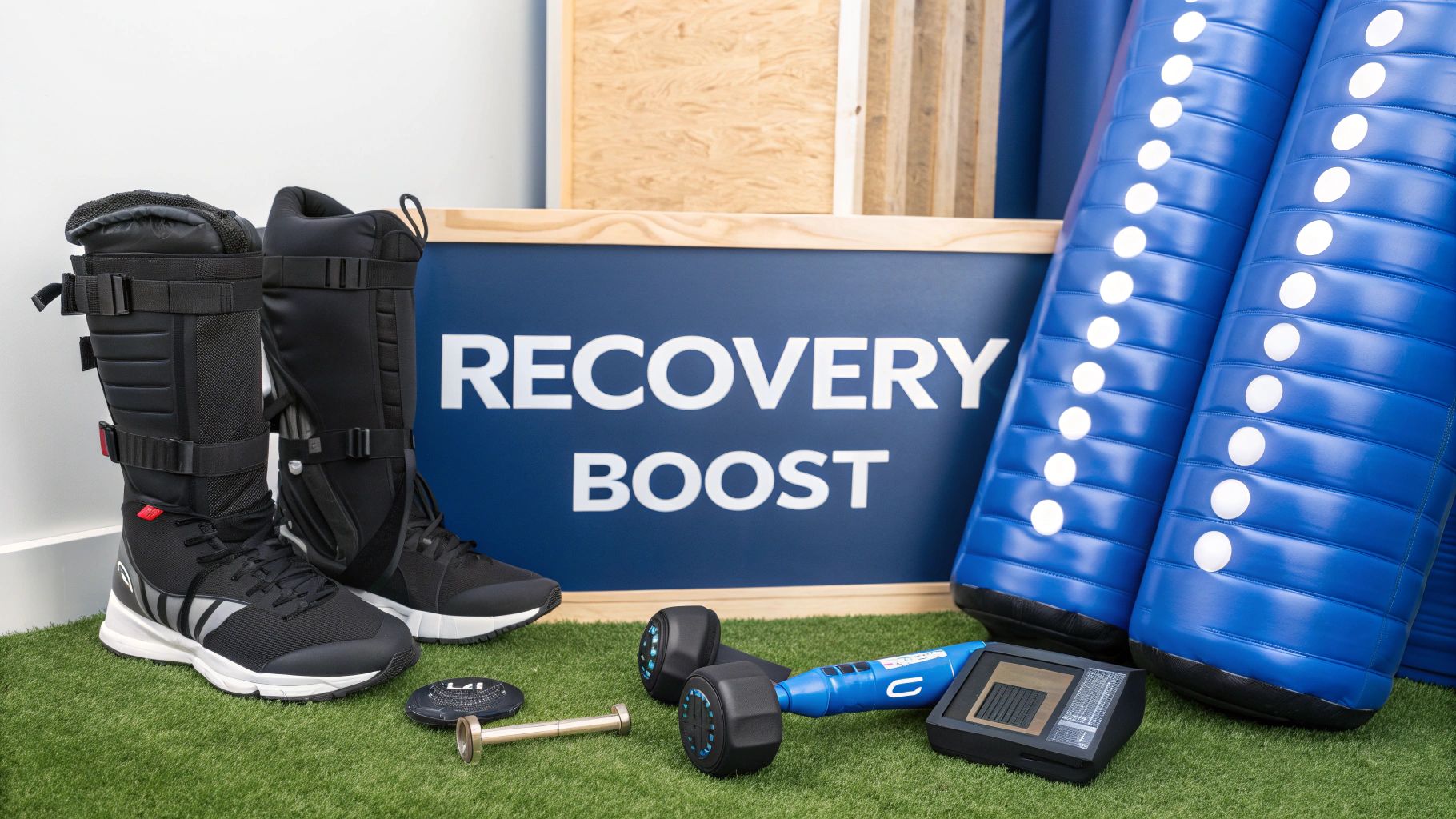
The best recovery tools for athletes run the gamut, from simple foam rollers to advanced tech like pneumatic compression, cryotherapy chambers, and vacuum therapy systems. A smart, balanced approach usually includes a mix of tools—think percussive massage guns for that immediate muscle relief, compression boots to boost circulation, and specialized systems like the Vacustyler Avantgarde for deep lymphatic drainage and accelerated healing. This guide will walk you through the science, application, and business of modern athletic recovery, helping you choose the right tools to gain a competitive edge.
Why Modern Athletes Need More Than Just Rest
In the world of elite sports, the margin between winning and losing is razor-thin. We're talking millimeters and milliseconds. Athletes are pushing their bodies to the absolute limit, which has completely changed the conversation. It's no longer about "how hard can you train?" but "how effectively can you recover?" The ability to bounce back faster and stronger is the new frontier of performance enhancement.
While essential, old-school rest just doesn't cut it anymore. The grueling demands of modern training, competition schedules, and the sheer volume of work require a much more proactive and scientific approach to healing. Passive rest alone is insufficient to counteract the physiological stress athletes endure.
This is where the concept of active recovery has become a total game-changer. Instead of just stopping all activity, athletes are now using specialized tools and protocols to help their bodies heal faster, slash muscle soreness, and show up to the next session ready to perform at their peak. It's less like parking a car in the garage to cool down and more like bringing in a skilled pit crew to refuel, change the tires, and fine-tune the engine—all at once. This strategic approach gives athletes a serious competitive edge, reducing downtime and maximizing their training capacity.
The Rise of Recovery Technology
The intense demand for quicker, more efficient recovery has sparked a massive market for specialized equipment. Just look at the numbers: the global sports recovery technology market was valued at USD 3.1 billion in 2025 and is projected to explode to USD 10.5 billion by 2030. This exponential growth isn't just a fad; it's driven by professional sports teams, university athletic programs, and forward-thinking wellness centers relentless in their search for any possible advantage.
This boom has given us a few key categories of recovery tools that every serious athlete or team should know about:
- Compression Therapies: These are the boots, sleeves, and suits that use air pressure to rhythmically squeeze and release muscles. The goal? To manually flush out metabolic waste products like lactate and reduce swelling.
- Thermal Therapies: This bucket includes everything from ice baths (cryotherapy) to saunas (thermotherapy). One constricts blood vessels to fight inflammation, while the other dilates them to soothe sore muscles and improve blood flow.
- Advanced Modalities: This is where things get really interesting. Cutting-edge systems like intermittent vacuum therapy use negative pressure to dramatically improve circulation and lymphatic flow. This is a critical process for healing that you can learn more about by understanding the role of lymphatic drainage in holistic wellness. These advanced tools work on a deeper physiological level for more profound results.
For the elite athlete, recovery isn't downtime—it's a strategic, non-negotiable part of the training cycle. Skimping on it leads to poor performance, a higher risk of injury, and inevitable burnout.
By integrating science-backed tools, athletes can turn recovery from a passive waiting game into an active, results-driven process. Technologies like the Vacustyler Avantgarde are the perfect example of this shift, offering a powerful, automated way to speed up healing and cut down fatigue in short, targeted sessions. This isn't just about feeling better; it's about redefining how athletes and their support teams manage the entire performance cycle to ensure they're always ready to compete at their peak, day in and day out.
Exploring Top Recovery Modalities for Peak Performance
To figure out the best recovery tools for athletes, it helps to understand how they actually work. From the familiar squeeze of compression to advanced light and vacuum therapies, each modality comes at recovery from a unique angle. Let's break down the most effective options out there, starting with the basics and building up to the more sophisticated tech that's changing the game.
This chart lays out the core pillars of modern recovery, showing how different tools fit into a complete performance strategy.
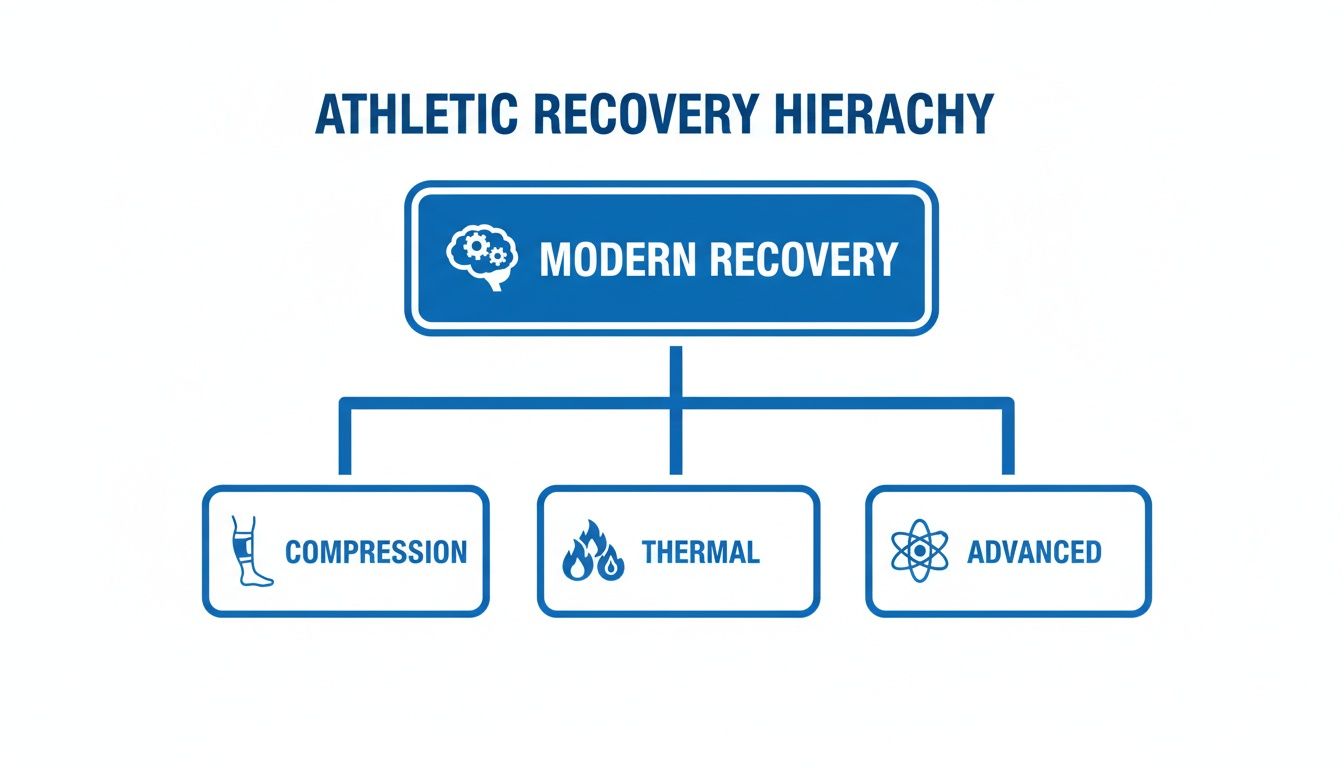
As you can see, a solid recovery plan often layers foundational tools like compression and thermal therapies with more advanced systems designed for a deeper physiological impact. The most successful athletes and teams utilize a combination of these methods to address different aspects of physical stress and repair.
Compression Therapy: Squeezing Out Soreness
Compression therapy is easily one of the most common and accessible recovery methods you'll see. Think of those puffy, futuristic-looking boots athletes pull on after a game. These systems use dynamic air compression—rhythmically inflating and deflating different sections—to apply graduated pressure up the limbs.
Imagine your circulatory and lymphatic systems are a highway network. After a brutal workout, metabolic waste like lactic acid causes a traffic jam, leading to swelling and soreness. Compression acts like a smart traffic control system, methodically pushing that stagnant fluid back toward the body's core where it can be processed and cleared out. This mechanical assistance helps knock down swelling, reduce delayed onset muscle soreness (DOMS), and get rid of that heavy-leg feeling faster than rest alone.
Thermal Therapies: The Power of Hot and Cold
Thermal therapy is all about using temperature to your advantage. It’s a classic tale of two extremes: cryotherapy (cold) and thermotherapy (heat), each with a specific job to do in the recovery process.
-
Cryotherapy: Ice baths and whole-body cryo chambers use extreme cold to constrict blood vessels (vasoconstriction). This process numbs pain signals and slams the brakes on the inflammatory response, making it perfect for immediate post-workout recovery or after an acute injury to minimize tissue damage.
-
Thermotherapy: On the flip side, saunas, infrared saunas, and heat packs do the opposite by dilating blood vessels (vasodilation). This cranks up blood flow to sore muscles, delivering more oxygen and vital nutrients to kickstart repair while helping you relax and loosen up tight connective tissues.
Many athletes swear by a contrast approach, jumping between hot and cold to create a "pumping" action in the circulatory system. This rapid change from vasoconstriction to vasodilation is believed to flush out waste products even faster, combining the benefits of both modalities.
Percussive Therapy: Releasing Muscle Tension
Those massage guns you see everywhere are a form of percussive therapy. They deliver rapid, focused pulses deep into muscle tissue. It's like having a tiny, targeted jackhammer for muscle knots, breaking up adhesions and relieving tension in a way that fingers and elbows sometimes can't. The rapid percussion desensitizes the surrounding area, allowing the device to penetrate deeper without causing discomfort.
These tools are brilliant for zeroing in on specific problem areas like a tight IT band or sore glutes. By driving blood flow to tight spots, they boost mobility, decrease muscle stiffness, and are versatile enough to be used pre-workout to wake muscles up or post-workout to keep soreness from settling in.
Advanced Vacuum Therapy: A Smart Pump for Your Body
Now we're getting into more advanced territory. Intermittent Vacuum Therapy (IVT) takes a completely different, more systemic approach. Systems like the Vacustyler Avantgarde use alternating cycles of negative pressure (vacuum) and positive pressure, essentially acting as an intelligent, external pump for the entire lower-body circulatory and lymphatic systems.
Instead of just squeezing the muscles from the outside like compression, the gentle vacuum phase actively pulls fresh, oxygenated blood into the tissues and capillaries. Then, the positive pressure phase helps push out all the deoxygenated blood and metabolic junk. It’s a powerful, passive therapy that dramatically improves circulation and lymphatic drainage without the athlete having to lift a finger. You can explore the top benefits of IVT for elite athlete recovery to see how it's being used at the highest levels of sport.
This method is so effective because it works with the body's natural systems, giving them a major boost instead of just masking symptoms. It’s a foundational upgrade to the body’s entire clean-up and repair crew, promoting healing from the inside out.
The demand for these kinds of high-efficiency services is exploding. The fitness recovery services market was valued at USD 8.3 billion in 2025 and is on track to nearly triple, hitting a projected USD 26.8 billion by 2035. This shows just how much value athletes and wellness clients place on tools that deliver real, measurable results.
Light Therapy: Healing at a Cellular Level
Red light therapy, also known as photobiomodulation, uses specific wavelengths of light that penetrate the skin to fire up cellular activity. Think of it as jump-starting the tiny energy factories inside your cells, the mitochondria.
When these mitochondria are stimulated by light, they produce more ATP (adenosine triphosphate), which is the body's primary fuel source for all cellular processes. This cellular energy boost helps cells repair themselves faster, reduces oxidative stress, and decreases inflammation. This healing happens at a microscopic level, leading to quicker muscle repair, less inflammation, and even better collagen production for skin and connective tissues. It’s a go-to for athletes focused on deep, comprehensive physiological repair and managing chronic pain points.
To help you sort through these options, here’s a quick side-by-side look at the most common recovery tools.
Comparing the Best Recovery Tools for Athletes
This table breaks down popular recovery modalities, outlining how they work, what they're best for, typical session times, and the main benefit you can expect. It's designed to help you make a more informed choice for your specific needs.
| Recovery Tool | Primary Mechanism | Best For | Typical Session | Key Benefit |
|---|---|---|---|---|
| Compression | Rhythmic air pressure to move fluid | Reducing swelling, post-workout soreness | 20-30 min | Enhanced circulation |
| Cryotherapy | Extreme cold to constrict blood vessels | Acute injury, reducing inflammation post-workout | 3-15 min | Inflammation & pain reduction |
| Thermotherapy | Heat to dilate blood vessels | Muscle stiffness, pre-workout activation | 15-20 min | Increased blood flow & relaxation |
| Percussive Therapy | Rapid, deep-tissue pulses | Targeting muscle knots, relieving tension | 5-15 min | Myofascial release |
| Vacuum Therapy (IVT) | Alternating negative & positive pressure | Systemic circulation, lymphatic drainage, recovery | 30-40 min | Deep circulatory enhancement |
| Light Therapy | Specific light wavelengths to stimulate mitochondrial function | Cellular repair, chronic inflammation, tissue health | 10-20 min | Accelerated cellular healing |
Choosing the right tool often comes down to timing, specific goals (like reducing immediate inflammation vs. long-term tissue repair), and athlete preference. Many of the most effective protocols actually combine several of these modalities to cover all the bases and maximize the recovery process.
How to Choose the Right Recovery Tools
Navigating the crowded market of recovery technology can feel overwhelming. With a constant flood of new options, slick marketing, and celebrity endorsements, how do you sort through the noise to find the best recovery tools for athletes versus the expensive gadgets that are just hype?
The truth is, there's no single "best" tool. The real secret is building a strategic toolkit that aligns perfectly with your specific needs, goals, and resources. The selection process looks completely different for a solo athlete than it does for a professional team or wellness center, each with its own set of priorities. A clear decision-making framework is the only way to make a smart investment that delivers real, measurable results.
For the Individual Athlete
If you're an athlete managing your own recovery, your world revolves around effectiveness, sport-specific application, and budget. You need tools that give you the most bang for your buck and directly attack the unique demands your sport places on your body.
A cyclist, for example, is constantly fighting lower-body fatigue and swelling from hours in the saddle. Their focus would naturally gravitate toward compression boots or a percussive massage gun for their quads and hamstrings. On the other hand, a baseball pitcher might invest in a shoulder-specific compression sleeve or a red light therapy panel to support the soft tissue health in their throwing arm. It’s all about targeted solutions for specific physiological stressors.
Key Takeaway: For individual athletes, the right tool is one that solves a specific, recurring problem. The goal is personal optimization—finding what keeps you healthy, reduces your unique soreness patterns, and gets you back to training faster.
Before you pull out your credit card, ask yourself these critical questions:
- What is my primary recovery challenge? Is it muscle soreness, joint stiffness, inflammation, or just general fatigue?
- Does this tool align with my sport? Will it actually address the muscle groups I hammer the most?
- What is my budget? Is there a more affordable option I can try first to get a similar result?
- Do I have the space and time to use it consistently? A tool that just gathers dust is a wasted investment.
For Teams and Wellness Centers
When you're outfitting an entire facility, the decision-making process gets a lot more complex. The focus shifts from individual aches and pains to broader operational and financial realities. You're not just buying a tool; you're investing in an asset that has to serve multiple users, fit into a larger system, and, ultimately, generate a return.
Key priorities for teams and wellness centers include durability, user-friendliness, client throughput, and return on investment (ROI). A tool that requires constant supervision from a trainer is far less efficient than one offering an unattended, automated session. This is where systems designed for commercial use truly prove their worth by optimizing staff time and facility flow.
Take a device like the Vacustyler Avantgarde. It provides an advanced vacuum therapy session that is almost entirely hands-off. An athlete or client can be set up in minutes and then left to recover for 25-30 minutes, freeing up staff to assist others, analyze data, or manage other operational tasks. This low labor cost, combined with the ability to sell high-margin recovery packages, makes it a powerful business proposition. It solves the need for effective recovery while creating a new revenue stream at the same time.
A Strategic Investment Checklist
Whether you're an athlete or a facility manager, a structured approach ensures you choose wisely. Use this checklist to evaluate any potential recovery tool before you commit.
- Evidence and Efficacy: What scientific evidence actually supports the tool's claims? Look for real studies, whitepapers, or peer-reviewed research that validate its mechanism of action.
- Primary Use Case: Does this tool solve our most common recovery issues or address our most frequent injuries?
- Ease of Use: How simple is it to operate? For facilities, can users manage it themselves with minimal instruction?
- Time Commitment: How long is a typical session? Does this fit efficiently into a pre- or post-training schedule?
- Durability and Support: Is the device built for heavy, daily use? What kind of warranty and customer support does the company offer?
- Return on Investment (ROI): For facilities, can this tool generate revenue or provide a competitive advantage in athlete care and recruitment?
By moving from the "what" to the "how," you can confidently select the recovery tools that make the most sense for your situation. This strategic approach ensures your investment pays dividends, whether in personal performance or business growth.
Building Your High-Performance Recovery Protocol
Having the best recovery tools for athletes is one thing. Knowing how and when to deploy them is what separates the good from the great.
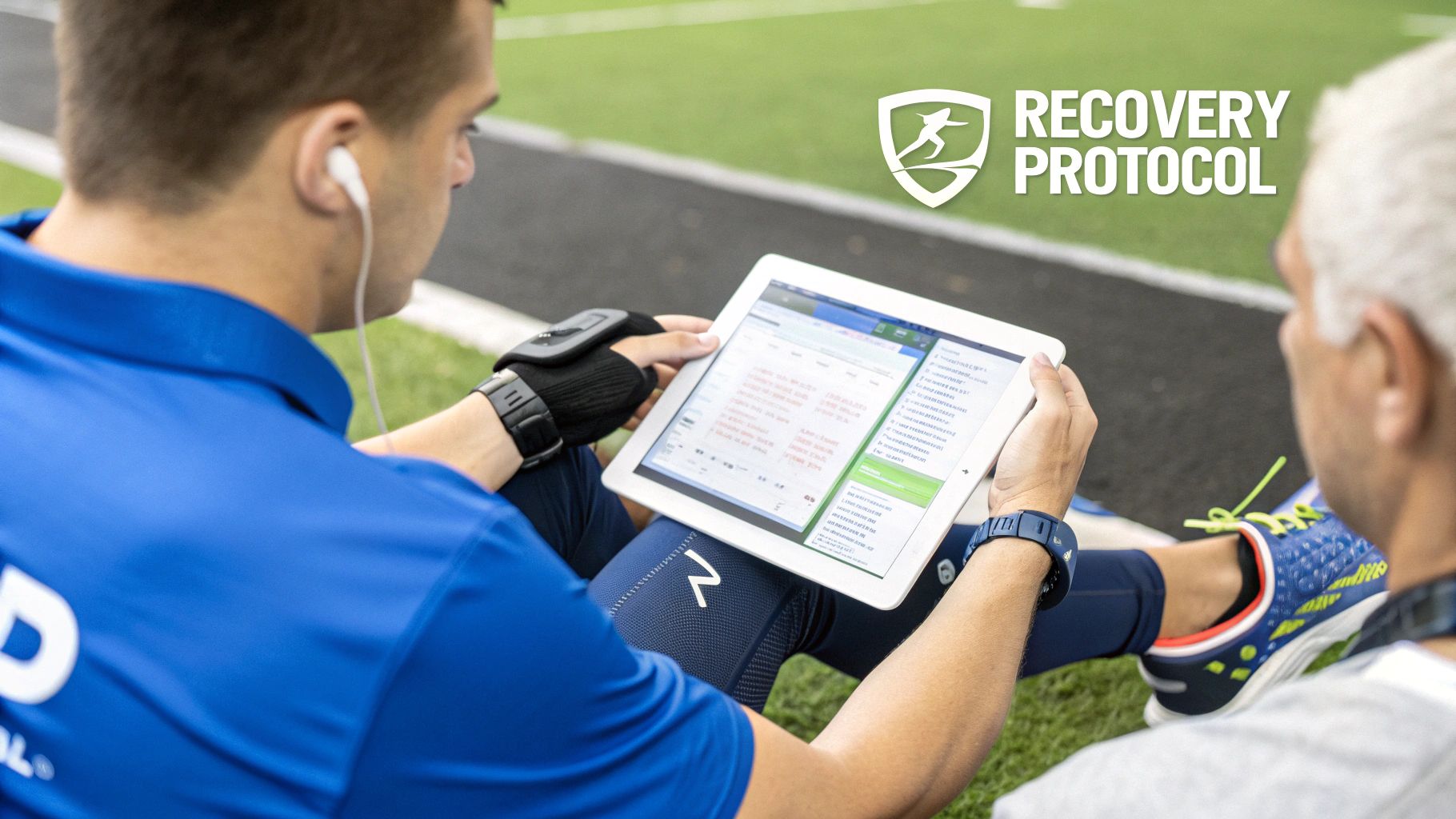
A truly high-performance recovery protocol isn't just a random collection of sessions. It’s a carefully orchestrated strategy, designed to maximize physiological repair and get you back to peak condition faster. This means moving beyond simply using a tool and instead integrating it intelligently into your training cycle, based on intensity, volume, and individual response.
The timing of your recovery sessions is everything. Different modalities are better suited for pre- versus post-workout. A percussive massage gun, for instance, is great for a few minutes before training to wake up key muscle groups, but its real magic happens afterward, breaking up adhesions and dialing down soreness.
Stacking Modalities for Synergistic Effects
The most effective protocols often involve stacking—or layering—different recovery modalities to create a synergistic effect. Think of it like a one-two punch for muscle repair. When you combine them, the results are far more powerful than using any single tool in isolation because you are addressing different physiological systems simultaneously.
A perfect example is pairing localized percussive therapy with a systemic treatment like the Vacustyler Avantgarde. You can use a massage gun to release deep knots in your quads and hamstrings, then immediately follow up with a Vacustyler session. The vacuum therapy amplifies overall circulation, efficiently flushing out the metabolic junk you just broke up. It’s a brilliant combo that accelerates waste removal and floods the entire lower body with fresh, oxygenated blood for enhanced repair.
Other powerful combinations include:
- Cryotherapy + Compression: Hit an ice bath to crush acute inflammation, then follow it up with compression boots to help push out any residual swelling and lymphatic fluid.
- Sauna + Mobility Work: Use the muscle-relaxing effects of heat to achieve a deeper, more effective stretching or foam rolling session. Practices like these are non-negotiable, and you can explore different ways to improve your mobility and flexibility for active recovery.
Personalizing Recovery with Data
Today’s wearable tech gives us an unprecedented look inside the body. Devices from WHOOP to Oura Ring provide daily data on key recovery metrics, transforming your protocol from guesswork into a precise, data-driven science.
By monitoring metrics like Heart Rate Variability (HRV), Resting Heart Rate (RHR), and sleep quality, you can tailor your recovery in real-time. A tanked HRV score, for example, is a clear signal that your body is under stress and needs more support.
This data allows for smart, day-to-day adjustments. If your sleep score is poor, you might prioritize a relaxing, restorative session in the Vacustyler over a more intense modality like a deep tissue massage. If your HRV is high, it could be a green light for a tougher training day—followed by an aggressive recovery protocol to match the increased stress.
The demand for these data-informed, non-invasive solutions is exploding. The market for sports medicine recovery tools is projected to grow from USD 6.69 billion in 2025 to a staggering USD 11.90 billion by 2034. This trend underscores the industry's shift toward effective, science-backed options like the Vacustyler Avantgarde from Weyergans HighCare US. You can see more insights on the expanding sports medicine market on towardshealthcare.com.
Sample Scheduling for Facilities
For teams or wellness centers, managing athlete flow is paramount. An organized schedule ensures every athlete gets what they need without creating bottlenecks in the recovery room. A well-designed workflow maximizes equipment utilization and staff efficiency.
Here is a simple template to maximize efficiency and flow:
| Time Slot | Station 1 (Vacustyler) | Station 2 (Compression) | Station 3 (Percussion/Mobility) |
|---|---|---|---|
| 3:00 PM – 3:30 PM | Athlete A | Athlete B | Athlete C |
| 3:30 PM – 4:00 PM | Athlete D | Athlete E | Athlete F |
| 4:00 PM – 4:30 PM | Athlete G | Athlete H | Athlete I |
This kind of structured approach transforms a recovery room from a chaotic free-for-all into a highly efficient hub of regeneration. It makes sure every piece of equipment is pulling its weight and providing maximum value to the athletes and the organization.
The Business of Recovery and Calculating ROI
For facility owners, athletic directors, and clinic operators, investing in high-end recovery tools is about so much more than just managing muscle soreness. It's a hard-nosed business decision. The right technology directly impacts athlete availability, performance consistency, and, ultimately, your bottom line.
Thinking about this equipment purely in terms of its initial price tag is a classic mistake. The real return on investment (ROI) is far broader. It ripples across an entire organization, turning your recovery room from a simple cost center into a powerful asset that drives both results and revenue.
Fewer injuries mean more athletes are available to practice and compete—a direct link to team success. When your star players are on the field instead of the sideline, your chances of winning increase dramatically. Consistent, elite-level performance starts to become the standard, not the exception.
Beyond Performance: Strategic Advantages
Look past the immediate impact on the field or court. A state-of-the-art recovery facility is a massive magnet for talent. Top-tier athletes now expect access to elite recovery tools, and showcasing a genuine commitment to their well-being can be the deciding factor in attracting that premier recruit.
This kind of investment sends a clear signal: you are dedicated to maximizing their potential and protecting their longevity. It shows that you understand performance is a 24/7 commitment.
On top of that, these tools open the door to entirely new, high-margin revenue streams. Services that were once exclusive to professional sports are now in high demand among a much wider wellness audience. We're talking about weekend warriors, busy executives, and biohackers—all willing to pay for premium recovery. This lets you serve your core athletic population while marketing to a lucrative external market.
A premier recovery setup isn't just an expense; it's an investment in athlete health, a powerful recruiting tool, and a new engine for business growth.
Building Recurring Revenue Models
This is where things get really interesting for businesses. Advanced, automated systems like the Vacustyler Avantgarde are perfectly designed for building sustainable revenue. Because its sessions are almost entirely unattended, labor costs are minimal. That’s a huge win for profitability, as your staff can be deployed for other high-value tasks while the machine generates income.
This efficiency allows you to create some incredibly attractive and scalable service offerings.
Consider these powerful revenue models:
- Monthly Memberships: Offer unlimited or tiered access to recovery tools for a recurring monthly fee. This creates predictable income and fosters client loyalty.
- Session Packages: Sell bundles of 5, 10, or 20 sessions at a discounted rate. This encourages commitment and repeat business while increasing upfront cash flow.
- Performance Tiers: Create premium packages that bundle recovery sessions with other high-value services like IV therapy, personal training, or nutrition coaching.
This model doesn't just generate reliable cash flow; it builds a loyal client base that integrates recovery into their non-negotiable weekly routine, making your facility an indispensable part of their lifestyle.
Forecasting Your Profitability
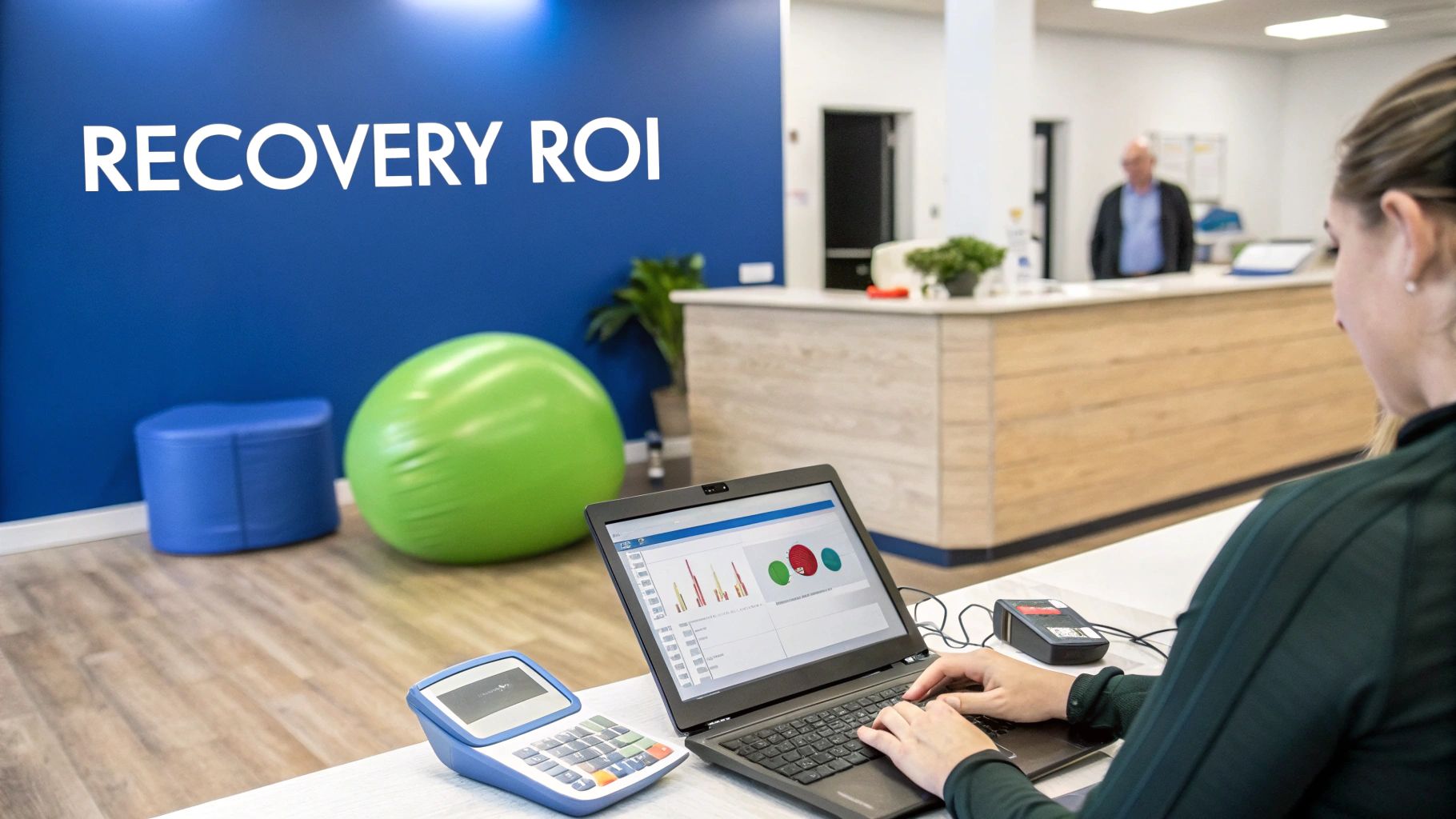
Calculating your potential ROI shouldn't be a shot in the dark. You need real numbers to make an informed business decision. Practical tools are available to help you model your financial success before you make a purchase.
For example, the interactive ROI calculator from Weyergans HighCare US is a game-changer. It lets you plug in your own variables—like what you’ll charge per session, how many clients you expect per day, and your basic operational costs—to get a crystal-clear picture of your profit potential and break-even point.
This data-driven approach takes the guesswork out of the equation. It empowers you to make an informed investment, showing you exactly how adding a high-value, low-labor service can strengthen your business from day one. It proves that the best recovery tools for athletes are also some of the smartest investments you can make for your facility.
The Future of Athletic Recovery
If there's one undeniable truth in the world of athletic performance, it's this: the days of just "resting up" are long gone. Building an elite athlete today demands a strategic, multi-layered plan where recovery is treated with the same intensity and scientific rigor as training itself.
From the simple, effective squeeze of compression boots to the deep circulatory work of advanced vacuum therapy, the best tools are the ones that actively accelerate the body's own healing mechanisms. It’s no longer about waiting for soreness to fade—that’s an outdated approach that leaves huge performance potential on the table.
Instead, a proactive protocol that layers different modalities creates a powerful synergistic effect. You're not just recovering; you're preparing the body for the next challenge with far greater resilience. This is the new paradigm of performance optimization.
The Next Wave of Performance Optimization
So, what's next? The landscape of athletic recovery is getting smarter and more personal. We're quickly moving toward an era where intelligent platforms will analyze real-time biometric data to prescribe the perfect recovery modality at the perfect moment. Imagine a system that reads your HRV and sleep data and automatically suggests a 30-minute Vacustyler session followed by 10 minutes of targeted red light therapy. This completely eliminates the guesswork, ensuring every session delivers exactly what an athlete’s body needs to bounce back.
This shift means the demand for non-invasive, highly effective solutions will only grow, pushing technologies that deliver measurable results without downtime right to the forefront of sports science.
The future belongs to integrated systems that are not just tools, but strategic partners in an athlete's career. These systems will be defined by their ability to deliver consistent results, adapt to individual needs, and provide a clear return on investment.
This evolution is exactly where advanced systems like the Vacustyler Avantgarde come in. It perfectly represents the shift toward smart, automated, and deeply effective solutions that deliver on multiple fronts. For the athlete, it’s a direct line to accelerated physical regeneration. For the facility, it’s a powerful, low-labor service that drives both incredible performance outcomes and strong financial returns.
Ultimately, embracing this future is about giving athletes the power to reach entirely new levels of excellence. By moving beyond old methods and adopting the science-backed technology available today, you’re not just optimizing recovery—you’re investing in the very definition of next-generation performance.
Answering Your Top Questions About Recovery Tools
Diving into the world of athletic recovery can feel overwhelming. With so many tools and technologies available, it’s natural to have questions, whether you're an athlete setting up a home gym or a facility manager making a major investment. We get asked these questions all the time, so we’ve put together some straight-to-the-point answers.
Think of this as your quick-reference guide to cut through the marketing hype and make smart, effective decisions for your recovery strategy.
What Are the Most Essential Recovery Tools for a Home Gym?
For a home setup, simplicity and versatility are king. Your best starting point is a high-quality foam roller and a solid percussive massage gun. These two tools are perfect for tackling the day-to-day muscle soreness and tightness that every athlete deals with. They’re effective, they don’t cost a fortune, and you can easily work them into your daily routine.
Once you’ve got that foundation, consider adding a pair of compression boots. The technology has become much more affordable, and they offer a huge boost to circulation after a tough workout. Starting here gives you a powerful recovery arsenal without overcomplicating things.
The goal for a home gym is maximum impact with minimal complexity. Focus on tools that address the most common recovery needs—soreness and circulation—to build a solid foundation you can always rely on.
How Often Should Athletes Use Recovery Tools?
This really comes down to your training load and the specific tool you’re using. Low-impact tools like foam rollers and stretching aids are great for daily use; think of them as general maintenance for your mobility.
For more powerful modalities like cryotherapy or pneumatic compression, you’ll get the most benefit by using them 2-4 times per week, usually after your most grueling training sessions. With advanced systems like the Vacustyler, a highly effective protocol is often just a 25-minute session two or three times a week. The golden rule is to listen to your body and pay attention to data from your wearables to see what’s working.
Can Recovery Tools Replace Rest Days?
Absolutely not. Let’s be perfectly clear on this: recovery tools are designed to enhance your body's natural healing process, not replace it. They are "rest optimizers," not a substitute for true downtime.
Rest days are completely non-negotiable for both your body and your mind. Your central nervous system needs a break to avoid burnout, and your muscles need uninterrupted time to repair and rebuild. Tools like vacuum therapy and compression simply make that rest time more productive by speeding up the underlying physiological processes. They help you get the absolute most out of every moment of recovery.
Is It Better to Use Heat or Cold for Recovery?
This isn’t an either/or situation—both have distinct, valuable roles in a smart recovery plan. The right choice depends on what your body needs at that moment.
- Cold Therapy (Cryotherapy, Ice Baths): This is your go-to for shutting down acute inflammation and numbing soreness right after a brutal workout or an injury. The cold constricts blood vessels, which is exactly what you want to control swelling.
- Heat Therapy (Saunas, Heat Packs): Heat is for promoting blood flow, relaxing stiff muscles, and improving flexibility. It’s perfect for the days after intense training to help loosen things up and support the repair process.
Many elite athletes get the best of both worlds by alternating between them. They use cold immediately after training for damage control and heat on the following days to encourage muscle repair and relaxation.
Ready to upgrade your facility with a recovery tool that delivers exceptional results for athletes and a powerful ROI for your business? The Weyergans HighCare US Vacustyler Avantgarde offers an automated, science-backed solution that enhances circulation and accelerates recovery.
Discover how the Vacustyler can transform your recovery offerings.