


When you add azelaic acid to your routine, the first question is always: "When will I see a difference?" The answer is that it's a marathon, not a sprint. You can realistically expect to see the first signs of change within 4 to 12 weeks of consistent use. This isn't an overnight miracle worker, but a steady, reliable path to calmer, clearer skin.
What to expect from azelaic acid results
Think of azelaic acid as the quiet workhorse of skincare. It's a dicarboxylic acid, naturally found in grains like wheat and rye, and it tackles acne, redness, and pigmentation all at once. What really sets it apart is its unique ability to be both powerful and surprisingly gentle, making it a go-to for even sensitive, rosacea-prone skin.
Instead of just stripping the skin's surface, azelaic acid works on a deeper level through a few key actions:
- It helps normalize skin cell turnover, preventing the buildup of dead cells that clog pores and cause breakouts.
- It’s a potent anti-inflammatory, which is why it's so brilliant at calming the redness and irritation from both acne and rosacea.
- It selectively targets overactive pigment-producing cells (melanocytes) to fade post-inflammatory hyperpigmentation (PIH) and melasma without lightening your normal skin.
This multi-tasking ability is what makes it such an incredible tool for achieving a more even, balanced complexion without the harshness of some other active ingredients.
Setting a realistic timeline
Patience is probably the most important part of using azelaic acid successfully. Real, lasting change doesn't happen in a few days because the ingredient is working to fundamentally reprogram your skin's behavior. Think of it this way: calming down active inflammation can start showing results in a month or so, but it takes much longer to clear out clogged pores and fade stubborn dark spots that have been there for weeks.
As a rule of thumb, you need to commit to at least three months of consistent, daily use to truly gauge your results. Stick with it—consistency will always beat intensity, especially when you're just starting out.
The concentration you use, whether it’s a 10% over-the-counter formula or a 15% prescription, will also affect the timing. Stronger formulas might get you there a bit faster, but they also come with a higher chance of initial itching or stinging. A great strategy is to start with a lower strength or apply it every other day, giving your skin a chance to acclimate before ramping up.
To help you know what to watch for, here’s a quick guide to the typical timelines we see for different skin concerns.
Azelaic acid results timeline by concern
This table offers a general timeline for when you can expect to see initial improvements and more significant, optimal results for common skin issues.
| Skin Concern | Initial Results | Optimal Results |
|---|---|---|
| Acne & Blemishes | 4-8 weeks | 3-4 months |
| Rosacea Redness | 4-8 weeks | 3-6 months |
| Hyperpigmentation | 8-12 weeks | 4-6 months |
Knowing this from the start helps you set the right expectations and stay the course long enough to see the incredible benefits. Now, let’s get into exactly how azelaic acid achieves these results for each of these specific concerns.
How azelaic acid actually works on your skin
To really appreciate the azelaic acid results you see in the mirror, it helps to understand what’s happening just beneath the surface. This isn't just another acid; it’s a multitasking ingredient that tackles skin concerns from a few different angles.
Think of it as a smart regulator for your skin, gently nudging it back toward a healthier, more balanced state.
At its core, azelaic acid has three main jobs. It’s a keratolytic, an anti-inflammatory, and a tyrosinase inhibitor. That might sound a bit clinical, but the ideas are simple and explain exactly why it works so well for everything from breakouts to stubborn redness.
It normalizes skin cell turnover
One of the biggest culprits behind acne is a process where skin cells don't shed properly. Instead of flaking away, they get sticky, clumping together inside the pore and forming a plug. This is the starting point for blackheads, whiteheads, and eventually, those sore, red pimples.
Azelaic acid acts as a keratolytic, which is just a technical way of saying it helps break down that buildup of dead skin. It gently encourages your skin to shed cells at a normal, healthy pace, keeping pores clear from the inside out. This prevents new clogs from ever forming and helps resolve existing congestion, leading to smoother texture and fewer breakouts over time.
It calms inflammation and redness
Inflammation is what causes the angry, red look of both acne and rosacea. For acne-prone skin, bacteria trapped inside a clogged pore kick off an inflammatory flare-up. With rosacea, the skin's natural "danger sensors" are stuck in overdrive, causing constant redness and sensitivity.
Azelaic acid is a powerful anti-inflammatory. It effectively dials down this over-the-top response, soothing irritation and visibly reducing the redness tied to both inflammatory acne and rosacea. Research confirms it helps regulate the very pathways that cause skin to overreact, making your complexion less reactive in the long run.
This calming effect is often one of the first things people notice. While clearing clogged pores takes patience, the decrease in redness can bring visible relief within just a few weeks, making your skin look and feel much calmer.
It fades dark spots with precision
Post-inflammatory hyperpigmentation (PIH)—those frustrating dark marks that linger long after a pimple has healed—happens when your skin produces too much melanin as a reaction to inflammation. Azelaic acid targets this by acting as a tyrosinase inhibitor.
Think of tyrosinase as the master enzyme that signals your skin to produce pigment. Azelaic acid works like a dimmer switch, specifically targeting and slowing down this enzyme in overactive pigment cells. This is brilliant for two reasons:
- It helps fade existing dark spots left behind by acne or sun damage.
- It does this without lightening your normal, healthy skin tone.
This precise, targeted action makes azelaa_zic acid an excellent choice for evening out your complexion and achieving those clear azelaic acid results, especially if you're prone to marks that stick around for months after a breakout.
Seeing results for acne and clogged pores
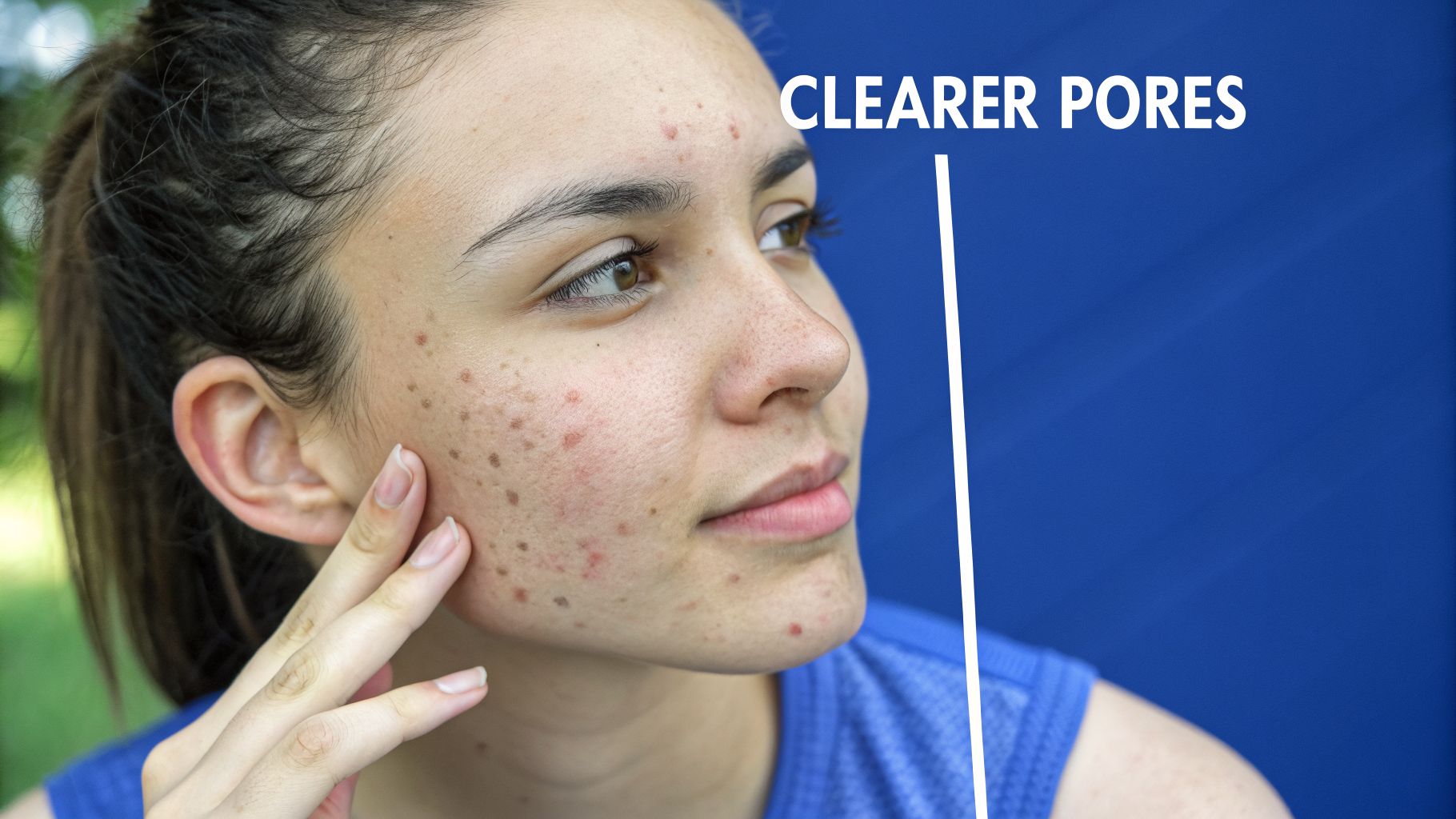
When you're struggling with acne, what you really want is clear, calm skin. Azelaic acid is a fantastic tool for getting there, as it tackles everything from stubborn blackheads and whiteheads (comedones) to those sore, angry pimples. Its power lies in its gentle but incredibly persistent action, making it a reliable choice for achieving long-term azelaic acid results without the harsh side effects of other treatments.
Progress happens in stages. The first thing you'll likely notice is a sense of calm. Because azelaic acid is a potent anti-inflammatory, your skin may start to look less red and feel less irritated within about 4 to 6 weeks. This is the first positive sign that the ingredient is getting to work.
But the real magic—that noticeable clearing of clogged pores and a serious drop in new breakouts—takes a bit more time. True, visible progress for acne often appears after 2 to 3 months of consistent, daily use. This isn't a quick fix; it's about patiently retraining your skin to behave better.
Managing the 'purging' phase
Sometimes, when you introduce an active ingredient that speeds up skin cell turnover, things can seem to get worse before they get better. This temporary uptick in breakouts is often called "purging." It’s happening because the azelaic acid is pushing all that underlying congestion to the surface much faster than it would normally appear.
While frustrating, this phase is actually a good sign that the product is doing its job and clearing your pores from the inside out. This initial breakout period usually happens within the first few weeks and should calm down as you continue to use the product.
Here’s how to navigate it:
- Don't stop using the product unless you’re experiencing severe irritation or a true reaction. Consistency is what will get you through this phase.
- Avoid introducing other new, potent actives at the same time. You don't want to overwhelm your skin.
- Keep your routine simple and supportive. Focus on a gentle cleanser and a quality moisturizer to protect your skin barrier while it adjusts.
Why it's a long-term solution
Azelaic acid offers much more than just a temporary solution. One of its standout benefits is its antibacterial effect against Cutibacterium acnes (the bacteria linked to inflammatory acne). By helping to reduce this bacterial population on your skin, it dramatically lowers the odds of future inflamed pimples showing up.
By tackling three of the four major factors in acne—clogged pores, inflammation, and bacteria—azelaic acid provides a comprehensive approach. It's not just treating existing blemishes; it's actively working to prevent new ones from starting.
This is what makes it such a powerhouse for maintaining clear skin over the long haul. The azelaic acid results you see after three months aren't just about clearer skin right now; they're about building a more resilient, balanced complexion for the future.
Improving rosacea and calming redness
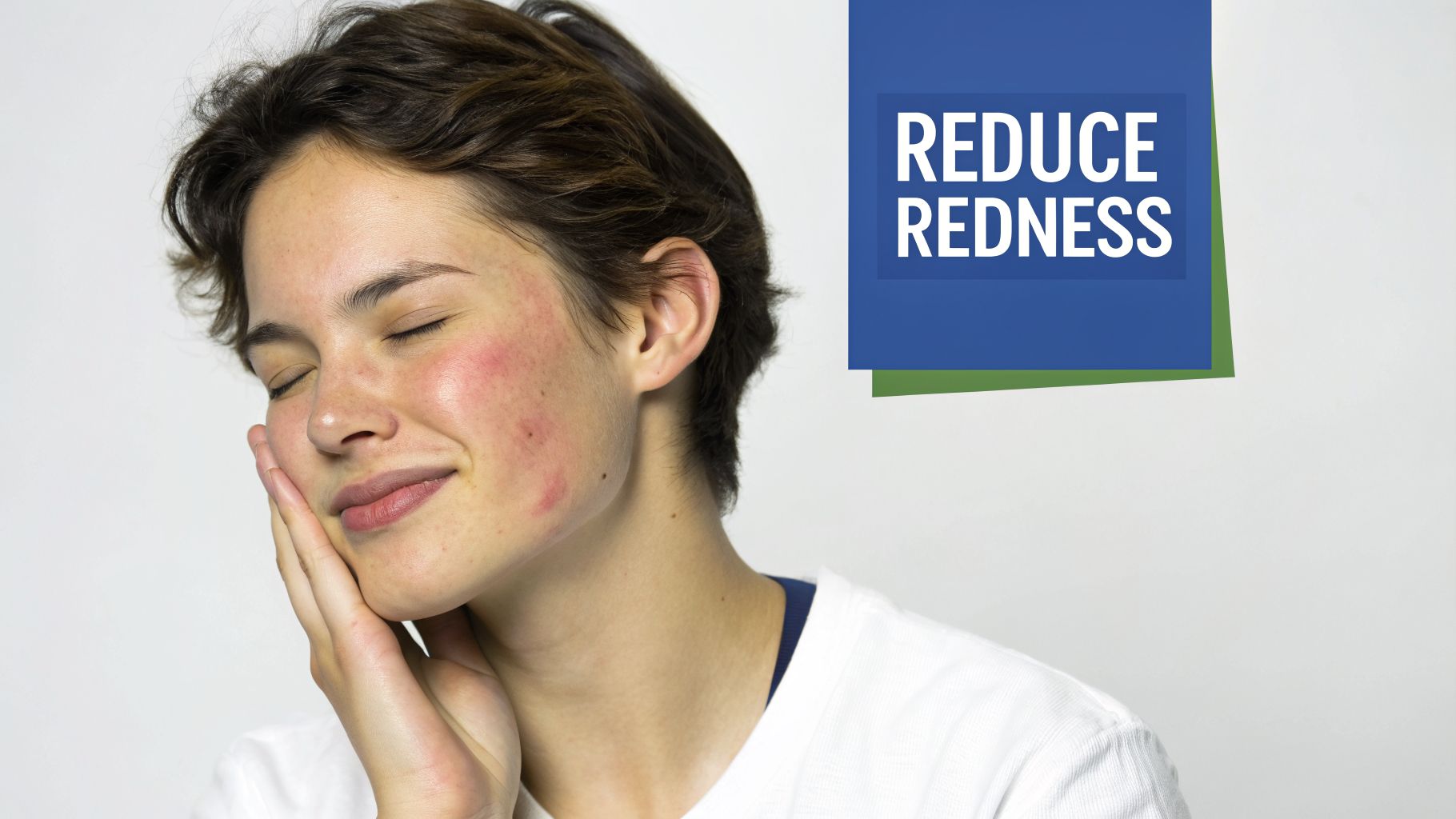
For anyone navigating the challenges of rosacea, dermatologists often consider azelaic acid a first-line defense, and for good reason. It’s incredibly effective at targeting the chronic inflammation that fuels rosacea’s most frustrating symptoms—the persistent redness, bumps, and pustules. The azelaic acid results we see for rosacea are so consistent because the ingredient gets right to the source of the problem.
Imagine your skin’s immune system has an overactive "danger sensor" that’s stuck in the ‘on’ position. Azelaic acid works by gently turning down the volume on that sensor. This helps dial back the skin's inflammatory response to a more normal, balanced level and directly calms the visible signs of a flare-up.
Realistic timelines for rosacea relief
When you start using azelaic acid for rosacea, setting realistic expectations is key. Progress is a marathon, not a sprint, and it usually unfolds in two distinct stages.
First, you’ll likely notice an improvement in the inflammatory bumps and pustules. Many clients report a visible reduction in these papules within 4 to 8 weeks of consistent, daily application. This happens because the acid's anti-inflammatory and antibacterial properties can get to work relatively fast.
The persistent background redness, however, is a bit more stubborn. Fading that characteristic flush takes more time, with significant changes usually becoming apparent after 3 to 6 months. Be patient here; your skin needs this time to fully recalibrate its inflammatory pathways.
Choosing and using the right formula
Azelaic acid is available in different strengths, and picking the right one comes down to your skin's specific needs and sensitivity level.
- Prescription-Strength (15-20%): Powerful formulations like 15% Finacea gel are FDA-approved specifically for treating rosacea. They offer potent, clinically-proven benefits for reducing both inflammatory lesions and overall redness.
- Over-the-Counter (10% or less): These are easier to access and are an excellent starting point. While gentler, they still pack a solid anti-inflammatory punch for milder cases of rosacea or for those with highly sensitive skin.
Because rosacea-prone skin is inherently sensitive, how you introduce azelaic acid matters. Start slowly, applying it just every other day to clean, dry skin. Always follow up with a quality, barrier-supporting moisturizer to head off potential irritation and dryness.
Once your skin has adapted, you can comfortably move to daily use. If you're looking for other ingredients that help calm inflammation, you can learn more about the benefits of Centella Asiatica for skin in our detailed guide. This careful, step-by-step approach is the key to getting the best possible azelaic acid results without compromising your skin's health and comfort.
Fading hyperpigmentation and evening skin tone
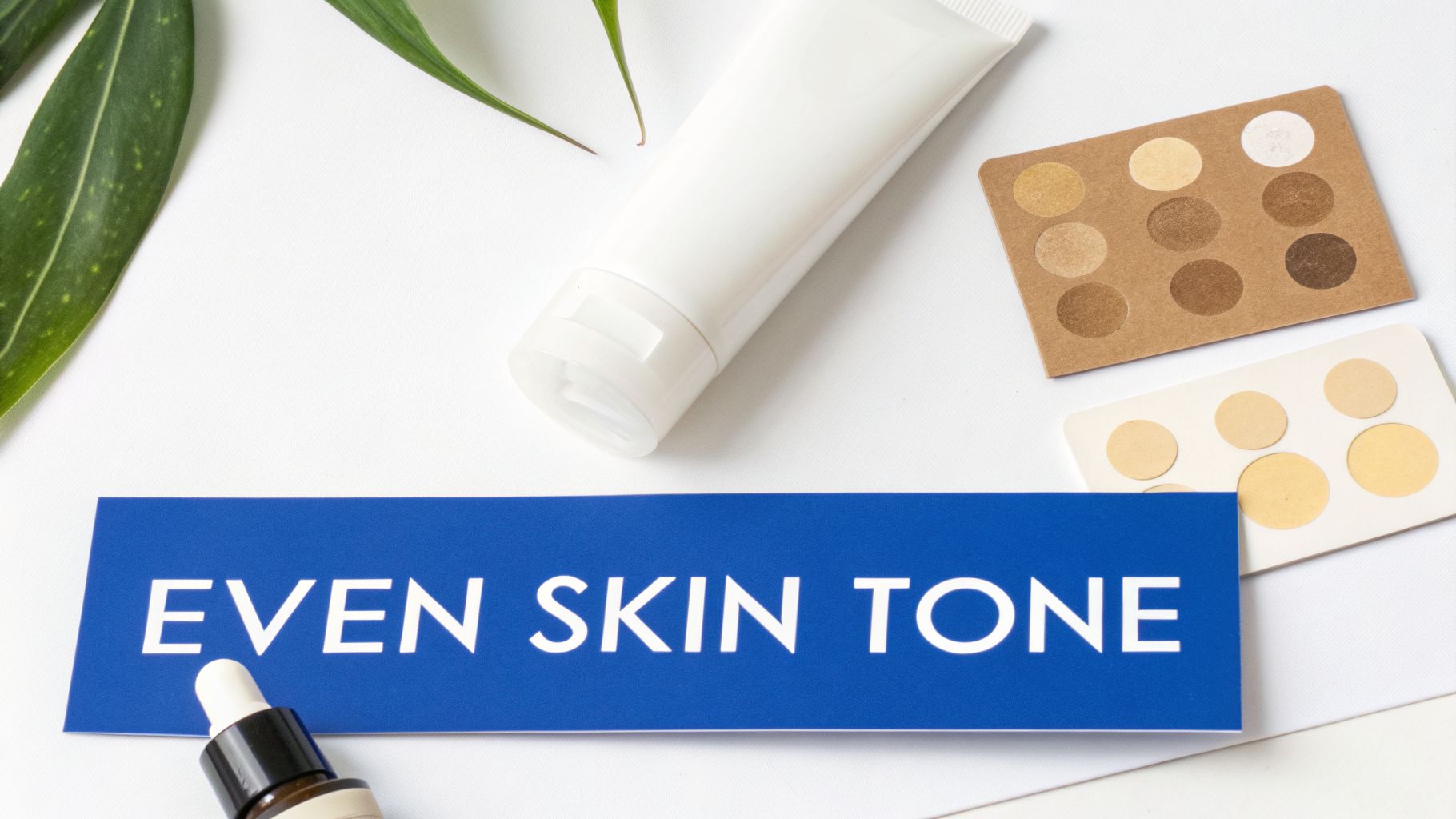
One of the most celebrated azelaic acid results is its power to correct dark spots and create a beautifully uniform skin tone. It’s a fantastic choice for anyone battling the frustrating marks left by old breakouts, sun damage, or hormonal shifts like melasma.
What makes azelaic acid so special is its intelligent approach. It works by specifically targeting overactive pigment-producing cells (melanocytes) while leaving your normal, healthy skin completely alone. This precision makes it a reliable and safe ingredient for all skin tones, especially those more prone to developing hyperpigmentation.
The timeline for seeing brighter, clearer skin
When it comes to fading discoloration, consistency is everything. Azelaic acid works methodically by slowing down the enzyme that creates excess pigment, and this process requires a little patience to see the full payoff.
Most of our clients start noticing an initial fading of dark spots after about 8 to 12 weeks of consistent daily use. For more significant correction and a truly even complexion, you should plan for 4 to 6 months. This gradual improvement is a great sign—it means the acid is working properly to regulate pigment production for long-lasting change.
How it stacks up against other brighteners
The world of skin-brightening ingredients is crowded, but azelaic acid carves out its own unique space by delivering both potency and a gentle touch.
- Compared to Hydroquinone: Azelaic acid is often considered the next best thing to hydroquinone in terms of sheer strength, but it comes with far fewer concerns for long-term use. This makes it a much more sustainable choice for maintaining your results.
- Compared to Vitamin C: While both are incredible antioxidants, azelaic acid more directly inhibits the pigment-producing enzyme, tyrosinase. They actually work beautifully together—Vitamin C protects against new damage while azelaic acid corrects existing spots.
- Compared to Retinoids: Retinoids work by accelerating cell turnover to help shed pigmented skin cells, while azelaic acid works deeper to slow down pigment production at the source. Using both can deliver phenomenal results because their mechanisms are perfectly complementary. For more on how ingredients work together for skin health, you can explore our article on the benefits of Vitamin B for skin.
The genius of azelaic acid is its ability to target only the abnormal melanocytes. It fades the spots you don’t want without lightening the surrounding skin, which is a common risk with other powerful brightening agents.
Sunscreen is not optional
If you want to achieve and maintain your azelaic acid results, daily sunscreen is non-negotiable. Sun exposure is the number one trigger for hyperpigmentation, and without proper protection, you are simply undoing all the progress azelaic acid is making.
Think of it this way: azelaic acid is working hard to clear away the spots, and sunscreen is the security guard preventing new ones from forming. A broad-spectrum SPF of 30 or higher will protect your investment and keep your skin clear, even, and radiant for the long term.
Getting the best results and managing side effects
Getting the most out of your azelaic acid isn’t just about using it—it’s about using it smartly. This ingredient is a true workhorse for the skin, but the right technique is what separates a great experience from a frustrating one.
The golden rule here is to start with a less-is-more mindset. You only need a pea-sized amount for your entire face, applied to clean, dry skin. More product won't deliver faster results; it will just invite irritation. Spread a thin, even layer across the whole area, not just as a spot treatment. Think of it as a global treatment to prevent future issues, not just a patch for current ones.
How to layer azelaic acid
Placing azelaic acid correctly in your routine is refreshingly simple. It goes on after cleansing but before any heavy moisturizers, creams, or oils. This gives the active ingredient a clear path to absorb directly into the skin where it can get to work.
If your skin is on the sensitive side, here’s a pro tip: apply a light layer of your moisturizer before the azelaic acid. This "buffering" technique creates a small barrier that can dramatically reduce stinging and improve tolerance as your skin adapts.
It also plays well with others. You can safely pair it with hydrating ingredients like hyaluronic acid or barrier-supporting niacinamide. When bringing in other powerful actives like retinoids, it's best to alternate their use at first—try azelaic acid in the morning and your retinoid at night. This lets your skin get the full benefit of both without feeling overwhelmed. If you're looking for more exfoliation, our guide on what lactic acid does for the skin is a great next step.
Managing common side effects
It's completely normal to feel some minor effects when you first start using azelaic acid. The key is knowing they are usually temporary and easy to manage.
The most frequent things clients report are mild itching, a bit of stinging, or a tingling sensation right after they apply it. This almost always fades within the first few weeks as your skin gets used to the new routine.
Here are a few simple tips to navigate that initial adjustment period:
- Start Slow: Don't jump into daily use. Begin by applying it every other day for the first two weeks to let your skin acclimate gently.
- Buffer with Moisturizer: As we mentioned, applying a simple moisturizer first is the single best trick to minimize that initial stinging feeling.
- Support Your Skin Barrier: Stick to a gentle, fragrance-free cleanser and use a moisturizer packed with ceramides or peptides to keep your skin calm, hydrated, and strong.
- Don't Over-Exfoliate: Give your other exfoliants—like strong AHAs or facial scrubs—a temporary rest while your skin is getting acquainted with azelaic acid.
If you experience irritation that feels severe or simply doesn't get better after a few weeks, it's always best to stop using the product and check in with a skincare professional.
Common questions about azelaic acid results
Once you've decided to add azelaic acid to your skincare plan, a few practical questions always come up. It's smart to be prepared. Let's tackle the most common ones we hear, so you can feel completely confident about the azelaic acid results you're working toward.
Can I use azelaic acid every day?
Yes, absolutely. In fact, for the best results, it’s designed for daily use. Once your skin has adjusted, most people apply it either once or twice a day.
When you're first starting out, we always recommend taking it slow. Apply it every other day for the first couple of weeks. This simple step gives your skin time to build tolerance and adapt without unnecessary irritation.
What is the difference between 10%, 15%, and 20% azelaic acid?
The percentage directly relates to the formula's strength and its primary job. Think of it like a volume dial—the right setting depends on your specific goal.
- 10% formulas are your go-to over-the-counter options. They are fantastic for refining skin texture, calming general redness, and managing mild breakouts.
- 15% and 20% formulas are typically prescription-strength and pack a bigger punch. A 15% concentration is a clinical standard for treating rosacea and moderate acne. The 20% concentration is often reserved for more stubborn acne and significant hyperpigmentation, like melasma.
Just remember, higher strength means more power, but it also brings a greater chance of initial sensitivity.
Does azelaic acid cause a purge?
It certainly can, and it's a good sign if it does. Azelaic acid works by accelerating your skin's natural cell turnover, which helps push underlying congestion and clogs to the surface much faster than normal.
This can trigger a temporary spike in breakouts, a phase we call "purging." It’s actually proof that the ingredient is actively clearing out your pores from the inside. This typically happens within the first 2 to 6 weeks of use and clears up as you continue the routine.
What ingredients should I avoid when using azelaic acid?
Be mindful, especially in the beginning. It's wise to be cautious when mixing azelaic acid with other potent exfoliants, like high-concentration AHAs, BHAs, or harsh physical scrubs.
While it’s generally considered safe to pair with ingredients like retinoids, niacinamide, and vitamin C, the key is to introduce any new combination slowly. Always watch your skin for any signs of increased redness, stinging, or sensitivity.
At Weyergans HighCare US, we believe in a holistic approach to skin health and wellness. While powerful topicals work on the surface, treatments like the Vacustyler can support circulation and your body's natural recovery processes from the inside out.
Discover how our German-engineered wellness systems can complement your aesthetic goals at https://weyerganshighcareus.com.