


That raw, shiny patch of skin after a wax? That’s not a burn—it's what we call skin lifting. It’s one of the most common, and most misunderstood, side effects of waxing.
What Is Skin Lifting and How Do You Recognize It?
Skin lifting is a mechanical injury, where a very thin, top layer of your skin (the epidermis) gets pulled away along with the wax and hair. It can sting, look overly red, and has a distinct raw or shiny appearance.
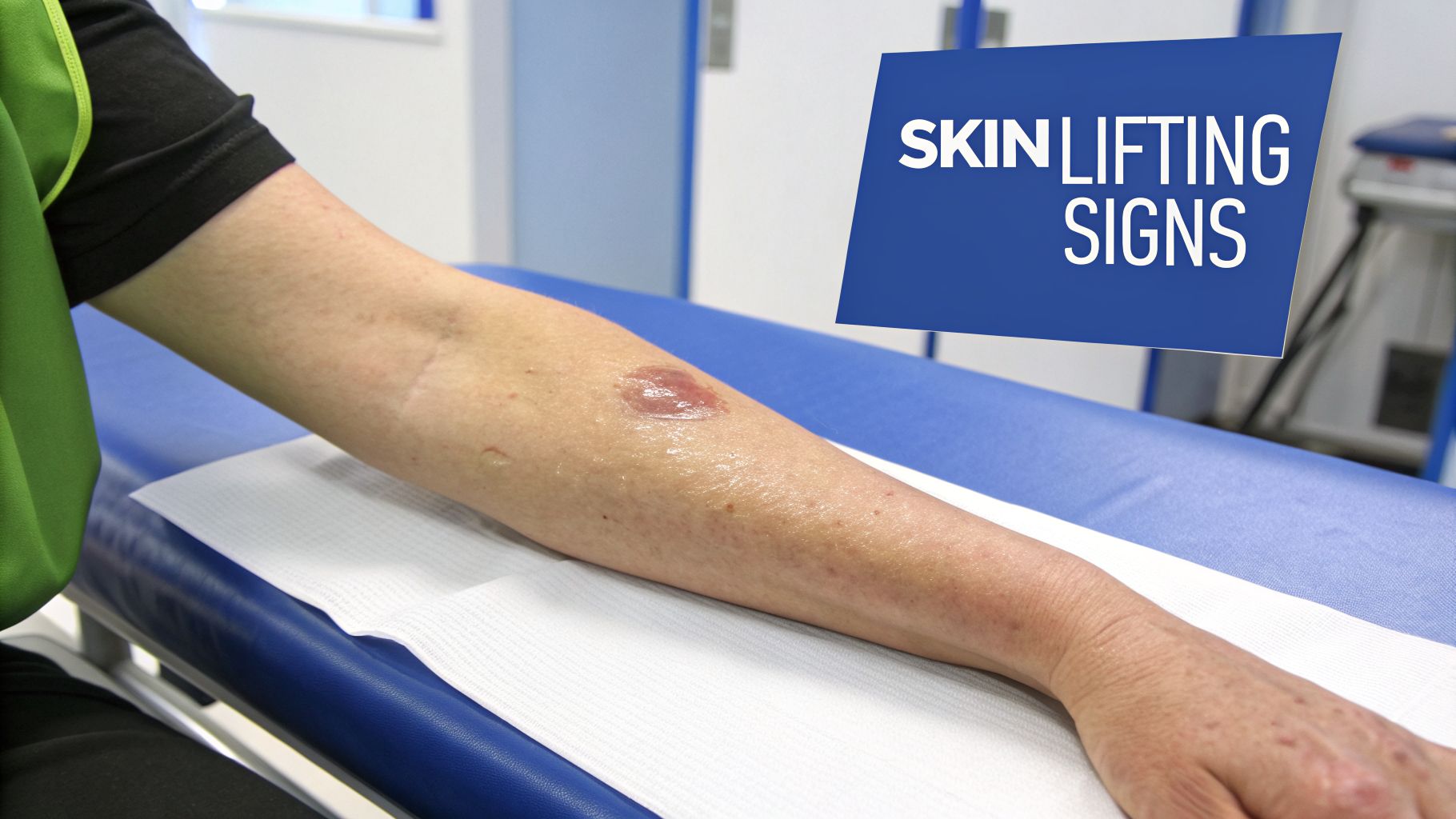
Think of it like pulling a strong piece of tape off a delicate, painted surface. Sometimes, the tape peels a layer of paint right off with it. Waxing can do the exact same thing, especially when the skin is fragile or the technique isn't quite right. The wax bonds too strongly to the skin itself, and when it's removed, it takes that top layer of epidermis along for the ride.
This is a very different injury from a burn. The immediate result is an area that looks raw, almost like a scrape, and feels tender to the touch. In some cases, you might even see tiny pinpoint bleeding where the skin has been compromised.
The Science Behind the Redness
The irritation and redness are classic signs of inflammation—your body's natural response to an injury. Even a perfect wax causes some stress to the skin, but a skin lift triggers a much stronger reaction.
A 2021 study confirmed this, finding that waxing can increase skin redness (erythema) by up to 25% just 30 minutes after a session. The same research noted that waxing triggers a robust immune response, indicating a higher level of skin trauma than other hair removal methods. You can read the full research about these findings to understand the biological impact.
This confirms what we see in the treatment room: waxing is an aggressive process that can easily tip from effective hair removal into an injury like skin lifting from waxing.
Skin Lift vs. Wax Burn
You need to know the difference between a skin lift and a thermal burn from wax that was too hot. A burn feels hot and often blisters, while a skin lift looks more like an abrasion.
Here’s a quick comparison to help you tell them apart.
Skin Lift vs Wax Burn At a Glance
| Symptom | Skin Lifting | Wax Burn |
|---|---|---|
| Appearance | Raw, shiny, looks like a scrape | Red, swollen, may have blisters |
| Sensation | Stinging, tender, raw | Hot, burning pain |
| Cause | Mechanical tearing of the skin | Thermal injury from hot wax |
| Texture | May be slightly damp or weepy | Can be smooth or blistered |
Properly identifying the injury is the first and most important step toward correct aftercare and faster, safer healing.
The Main Causes of Skin Lifting During Waxing
Understanding why skin lifting from waxing happens is the first step toward preventing it. This kind of injury is never random. It’s almost always the result of specific factors that have made the skin’s top layer too weak to handle the pull of the wax.
We can group the root causes into a few areas: things happening on the client's side, the esthetician's technique, product choices, and pre-existing skin conditions that fly under the radar.
Client-Side Factors and Skin Fragility
What a client does in the days and weeks leading up to their appointment has a massive impact on their skin's resilience. Certain medications and popular skincare products can dramatically increase the risk of a lift by thinning the epidermis or weakening the "glue" that holds skin cells together.
The most common culprits include:
- Retinoids: Products like Retin-A, tretinoin, and even over-the-counter retinol serums put cell turnover into overdrive. This leaves the surface layer of the skin thinner and much more fragile.
- Acne Medications: Oral medications such as Accutane (isotretinoin) are famous for causing extreme skin sensitivity and dryness, making any kind of waxing unsafe.
- Chemical Exfoliants: Recent use of strong alpha-hydroxy acids (AHAs) or beta-hydroxy acids (BHAs) can easily compromise the skin barrier, leaving it exposed and vulnerable.
- Certain Antibiotics: Some antibiotics are known to increase photosensitivity and affect overall skin health, which can make it far more reactive to a wax.
This is why it's absolutely necessary for clients to be upfront and disclose their full skincare and medication history before any waxing service begins.
Esthetician Technique and Application Errors
Even on perfectly healthy skin, poor technique can quickly cause a lift. A skilled, experienced esthetician knows how to work with the skin, not against it. But mistakes can and do happen, especially if a practitioner is rushed, distracted, or just inexperienced.
Professional guides often point out that skin lifting from waxing is frequently misidentified as a burn. Analysis from Beauty Image USA shows that client factors like retinoid use can increase lift risk by up to five times. Undisclosed exfoliation also significantly weakens skin adhesion. Discover more insights about preventing skin lifts on Beauty Image USA.
Some of the most common technical mistakes that lead to skin lifting are:
- Not holding the skin taut: If you don't anchor the skin properly before pulling the strip, you're giving it permission to be pulled right up along with the wax and hair.
- Waxing the same area multiple times: Going over the same spot again and again is a recipe for disaster. Each pass strips away protective layers of skin cells, eventually leading to a lift.
- Incorrect pulling angle: The wax strip must be pulled parallel and close to the skin—never upward or away from it. Pulling at a 90-degree angle puts an incredible amount of stress on the epidermis.
- Using wax that is too hot or cold: Wax that's scorching hot can cause a thermal burn. But wax that's too cool or applied too thickly can grab onto the skin itself with too much force, increasing the risk of a lift when it's removed.
Immediate First Aid for Skin Lifting After Waxing
When skin lifts after a wax, the immediate goal is to treat the area like a minor wound—because that’s exactly what it is. The first few minutes are key for preventing further damage and setting the stage for a smooth recovery, so it's important to stay calm and follow a few simple steps.
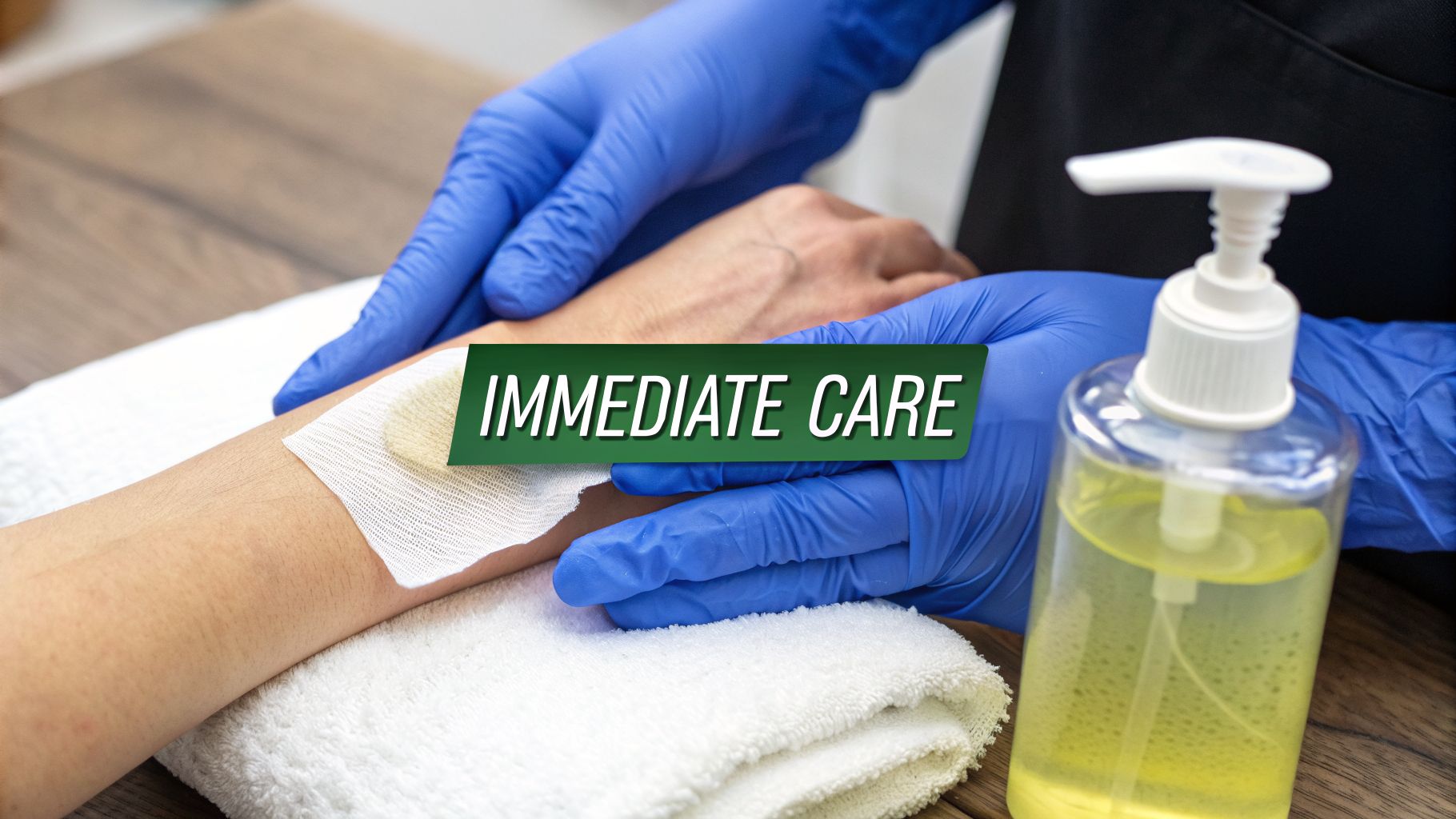
First, gently cleanse the affected area. Use cool water and a very simple, fragrance-free soap to wash away any residual wax or bacteria without causing more irritation. When you’re done, pat the area dry with a clean, soft cloth. Whatever you do, don't rub.
Next, it’s time to calm the inflammation. Applying a cold compress for 10-15 minutes at a time will work wonders to soothe that stinging sensation, reduce redness, and minimize swelling. This simple action can bring immediate and significant relief. For a deeper dive into how cold therapy benefits the skin, you can read our article on what icing your face does.
Protecting the Injured Skin
After cleansing and cooling the area, your next priority is to protect that raw, vulnerable skin. Apply a thin layer of an occlusive ointment like Aquaphor or Vaseline. An antibacterial cream such as bacitracin can also be used. This step creates a moist, protective seal over the wound, which is necessary for preventing scabs from cracking and helping the skin heal with less risk of scarring.
This protective step is absolutely necessary. After providing immediate first aid, the goal is to calm the area and give your skin the perfect environment to repair a damaged skin barrier.
Once you’ve applied the ointment, the best thing you can do is leave it alone. For the next several days, your job is simple: keep the skin clean, moisturized, and shielded from the outside world.
What to Expect During Healing
Healing is a process that requires patience. For the next week or two, you’ll need to be mindful and avoid a few things to let your skin recover completely.
Key Healing Steps to Follow:
- Avoid Sun Exposure: New, fragile skin is incredibly susceptible to sun damage. This can lead to long-term hyperpigmentation (dark spots). Keep the area covered with clothing or, once the skin is no longer raw, a high-SPF mineral sunscreen.
- Skip Harsh Products: Until the area is fully healed, do not use any exfoliants (like scrubs, AHAs, or BHAs), retinoids, or products that contain alcohol or fragrances.
- Let It Be: It might be tempting, but resist the urge to pick at any scabs that form. Picking is the fastest way to invite infection and create a permanent scar.
You can expect the full healing process to take around 7-14 days. Scabs might form within 2-3 days. While scarring is rare, it can occur in about 2-5% of very severe cases. In the medspa industry, understanding how to manage wax-related issues is important, which is why knowing proper first aid for skin lifting from waxing is so important for professionals and clients alike.
How to Prevent Skin Lifting From Happening
When it comes to skin lifting from waxing, the best way to deal with it is to make sure it never happens in the first place. A few simple steps and open communication before your appointment can make all the difference, turning a potentially risky service into a safe, effective, and smooth experience.
It’s all about a partnership between you and your esthetician.
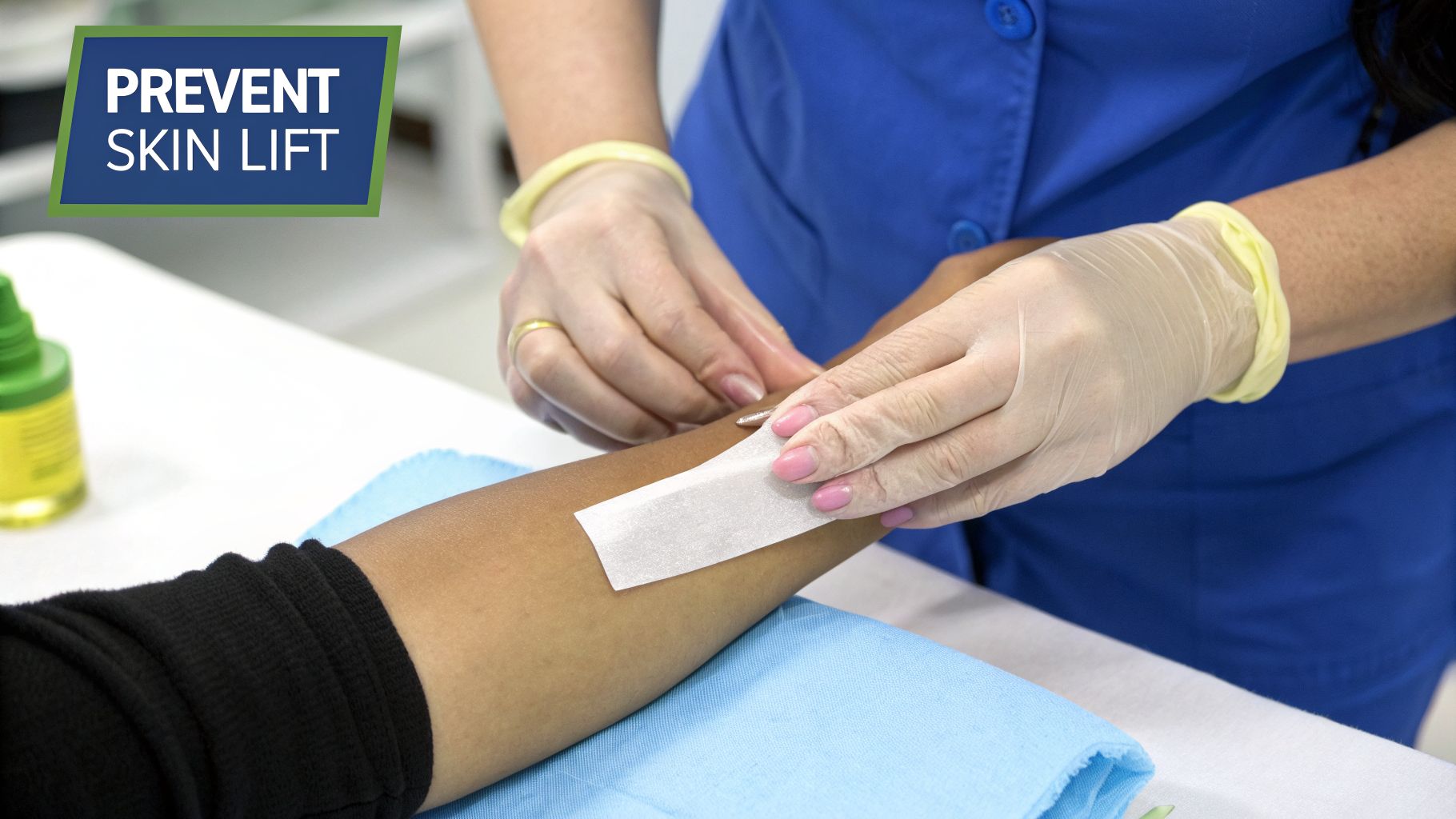
You might be surprised to learn how common this issue is. Professional surveys show that skin lifting from waxing happens in about 8-12% of all sessions. For more delicate areas, that number can climb to a staggering 20% for Brazilian waxes.
Why? The causes range from improper technique to skin that’s been made fragile by certain products. For example, clients using medications like Accutane are 50% more likely to experience a lift because the drug thins the skin. Understanding these factors is the first and most necessary step in avoiding an injury. You can read the complete guide on skin lifting to get a deeper look at the data behind these incidents.
Your Pre-Waxing Safety Checklist
As the client, you are the ultimate expert on your own skin and daily routines. You hold the power to dramatically reduce your risk by preparing properly before you ever step foot in the treatment room.
This simple checklist is your best defense against skin lifting.
| Timeline | Action Item | Reason |
|---|---|---|
| 7-10 Days Prior | Pause Retinoids: Stop all use of Retin-A, tretinoin, retinol, and other retinoid products. | These ingredients increase cell turnover, making your skin thinner and more susceptible to lifting. |
| 48 Hours Prior | Avoid Chemical Exfoliants: Do not use any products containing AHAs or BHAs (like glycolic or salicylic acid). | These acids remove the top layer of dead skin, leaving the fresh skin underneath too vulnerable for waxing. |
| During Consultation | Disclose Everything: Inform your esthetician about all medications and active skincare products you're using. | Honesty is non-negotiable. Your esthetician needs this information to assess your skin and choose the safest approach. |
| Day of Appointment | Arrive with Clean, Dry Skin: Come to your appointment free of any lotions, oils, or deodorants on the area. | This ensures the wax adheres properly to the hair, not to your skin, which minimizes pulling and irritation. |
Following these guidelines gives your esthetician the best possible canvas to work on, setting the stage for a perfect, injury-free wax.
A thorough pre-wax consultation isn't just a formality. It’s a necessary safety step where your esthetician assesses your skin's condition and customizes the service to prevent potential harm. Honesty here is non-negotiable for a safe outcome.
Best Practices for Estheticians
For professionals, preventing skin lifting from waxing is a hallmark of true expertise and client care. Protecting your client’s skin integrity relies on a foundation of sound technique and smart product choices.
Key Professional Techniques:
- Perform a Patch Test: This is non-negotiable for new clients or anyone reporting skin sensitivity. A small patch test quickly reveals how the skin will react to the wax and temperature.
- Choose the Right Wax: Always reach for hard wax when working on sensitive areas like the face, underarms, and bikini line. Hard wax is a lifesaver here—it shrink-wraps the hair and doesn't adhere to the skin itself, making it far safer for delicate zones than soft wax.
- Apply a Pre-Wax Oil: A light application of pre-wax oil creates an necessary protective barrier between the skin and the wax. This simple step ensures the wax grabs only the hair, not the skin.
- Master the Pull: Technique is everything. Always hold the skin taut with your non-dominant hand while pulling the wax strip quickly and parallel to the skin. Never, ever pull upward—this yanks the skin vertically and is a guaranteed recipe for a lift. If you do have a little residue left, it’s important to know how to get wax off skin without scrubbing and causing more trauma.
Supporting Skin Health Beyond Waxing
When the skin lifts after a wax, it's more than just a surface-level injury. That trauma sends a powerful distress signal to your body's immune system, which immediately kicks into gear. This triggers a significant inflammatory response designed to manage the damage and start the repair process.
Just how significant is this response? Research into inflammatory biomarkers tells a clear story. After waxing, the body floods the area with an anti-inflammatory protein called interleukin-1 receptor antagonist (IL-1RA).
Studies have measured a 3.3-fold median increase in IL-1RA concentrations post-waxing—the highest among common hair removal methods. This shows just how hard the body has to work to counteract the trauma. You can discover more insights about these findings on PMC.
This intense biological reaction is a clear sign that aggressive treatments like waxing can push the skin to its absolute limit. It also presents an opportunity to shift the focus toward services that support and restore skin health, rather than just challenging it.
Shifting Focus to Skin Recovery
For individuals who can’t afford the downtime or discomfort of skin lifting—or for medspas aiming to offer truly restorative post-treatment care—non-invasive therapies are the answer. Treatments that improve circulation and lymphatic flow are especially effective, as they can accelerate the healing of compromised skin.
The Vacustyler Avantgarde from Weyergans HighCare US is a perfect example. It uses intermittent negative pressure to gently improve circulation and lymphatic drainage in the lower body. This process helps reduce the swelling and inflammation tied to aggressive treatments and can dramatically speed up recovery time.
Holistic Approaches to Skin Resilience
Beyond immediate aftercare, building long-term skin health is about combining smart lifestyle habits with supportive, non-invasive treatments. Adopting a holistic approach doesn't just heal the skin; it makes it more resilient and less prone to injury in the first place.
Strategies for Stronger Skin:
- Boost Internal Health: What you put into your body has a direct impact on your skin's strength. For instance, you can learn more about the skin benefits of Vitamin D and see how it contributes to skin cell growth, repair, and overall immunity.
- Incorporate Wellness Therapies: True skin vitality comes from a whole-body approach. You might consider exploring treatments that promote deep healing, like understanding the infrared sauna benefits for skin health, which can help boost collagen and promote overall radiance.
- Prioritize Gentle Routines: Always choose skincare products and treatments that work with your skin's natural barrier, not against it.
By shifting the focus from aggressive removal to supportive care, both clients and practitioners can cultivate skin that is healthier, more resilient, and better prepared to handle daily life. This philosophy not only aids in healing but is a powerful preventative measure against future skin issues.
When You Should See a Doctor
Thankfully, most cases of skin lifting after a wax will heal up on their own with some basic care at home. You can expect the raw skin to scab over and fully recover in about a week or two.
But you should know the difference between normal healing and the first signs of a real problem.
Some initial redness, tenderness, and a bit of swelling are all part of the body's normal response to injury. Your focus should be on watching for signs that a bacterial infection is trying to take hold. If that happens, at-home care isn't enough, and it’s time to see a professional.
Red Flags for Infection
Your body is excellent at sending warning signals. If you notice any of these signs, you need to call a doctor or dermatologist right away.
- Pain or Swelling That Gets Worse: The initial soreness should start to fade within a day or two. If the pain intensifies or the area becomes more swollen after 24-48 hours, that’s a major red flag.
- Yellow or Green Pus: Any discolored fluid or pus weeping from the wound is a definitive sign of a bacterial infection that needs medical attention.
- Redness or Warmth That Spreads: A bit of pinkness around the injury is normal. Redness that starts to creep outward or skin that feels hot to the touch means the inflammation is getting worse, not better.
- Fever: This is your body’s system-wide alarm bell. A fever indicates a significant infection that your body is fighting, and it always warrants a call to your doctor.
While a skin lift is a localized injury, a bacterial infection can become a much more serious health issue if you ignore it. Trust your gut—if something feels off or the wound just isn't healing right, getting a professional opinion is always the safest move.
When Healing Stalls
You should also check in with a doctor if the healing process seems to have hit a wall. If a week has passed and the skin is still raw, weepy, or shows no signs of closing up, you may need a little help to get the healing process back on track.
Another good reason for a check-up is if you notice significant hyperpigmentation (dark spots) forming as the skin heals. A dermatologist can recommend treatments to help fade this discoloration and keep it from becoming a long-term cosmetic issue.
Frequently Asked Questions About Skin Lifting
When something like skin lifting happens after a wax, it’s natural to have a flood of questions. The experience can be unsettling, and you want answers, fast.
This section is designed to give you clear, straightforward guidance on the most common concerns. We'll walk through how to heal, what to look for in a professional, and how to make your future waxing experiences much safer.
Can I Wax Again After My Skin Has Lifted?
Yes, you can, but patience is absolutely non-negotiable here. You must give your skin the time it needs to heal completely. We’re talking no lingering redness, no tenderness to the touch, and no visible signs of trauma.
Depending on how severe the lift was, this healing process can take anywhere from one to three weeks. Rushing back into waxing is the fastest way to re-injure the exact same spot. Once you feel your skin is back to normal, your first step should be consulting a highly experienced esthetician—not just booking your usual appointment. They can properly assess the new skin’s integrity and perform a small patch test to see how it holds up before committing to a full service.
Is Hard Wax Safer Than Soft Wax?
For sensitive areas, the answer is a resounding yes. Hard wax is almost always the superior choice for delicate skin, and the reason lies in how it works.
Soft wax adheres to everything it touches: the hair and the top layer of your skin. Hard wax, on the other hand, is engineered to "shrink-wrap" around the hair itself. As it cools and hardens, it creates its own strip that lifts away without aggressively pulling on the skin beneath. This fundamental difference is what makes it the gold standard for areas like the face, underarms, and bikini line, where the skin is thinner and more vulnerable. While soft wax is perfectly effective for larger, tougher areas like legs, hard wax offers a necessary layer of safety where you need it most.
How Do I Know if My Esthetician Is Experienced?
A true professional will always put your skin's safety first and will encourage your questions, not brush them off. Before you even think about booking, dive into online reviews. Look for comments that specifically mention professionalism, a gentle touch, and an obsession with cleanliness.
During your consultation—or even over the phone—ask them directly about their process for sensitive skin.
- Do they default to hard wax for the face and bikini area?
- What kind of pre-wax oil or barrier do they apply?
- What is their official policy for clients who use retinoids or Accutane?
A seasoned esthetician will have confident, immediate answers and will see your questions as a sign of a smart, engaged client. If they seem annoyed, vague, or unsure, consider it a major red flag and find someone else.
What’s the Best Way to Soothe the Pain from Skin Lifting?
The immediate priority is to treat the area like you would any other minor skin wound: calm the inflammation and keep it clean.
The first step is to reduce the initial sting and heat. A simple cold compress held on the area for 10-15 minutes will provide instant relief. Once the skin is dry, apply a very thin layer of a basic occlusive ointment like Aquaphor or a simple antibiotic cream. This creates a protective barrier that keeps the raw skin safe from bacteria and locks in moisture to promote healing.
Steer clear of any lotions or creams loaded with fragrances, exfoliants, or other active ingredients. For the first few days, simple is always better. Just remember: keep it cool, keep it clean, and keep it lightly covered.