


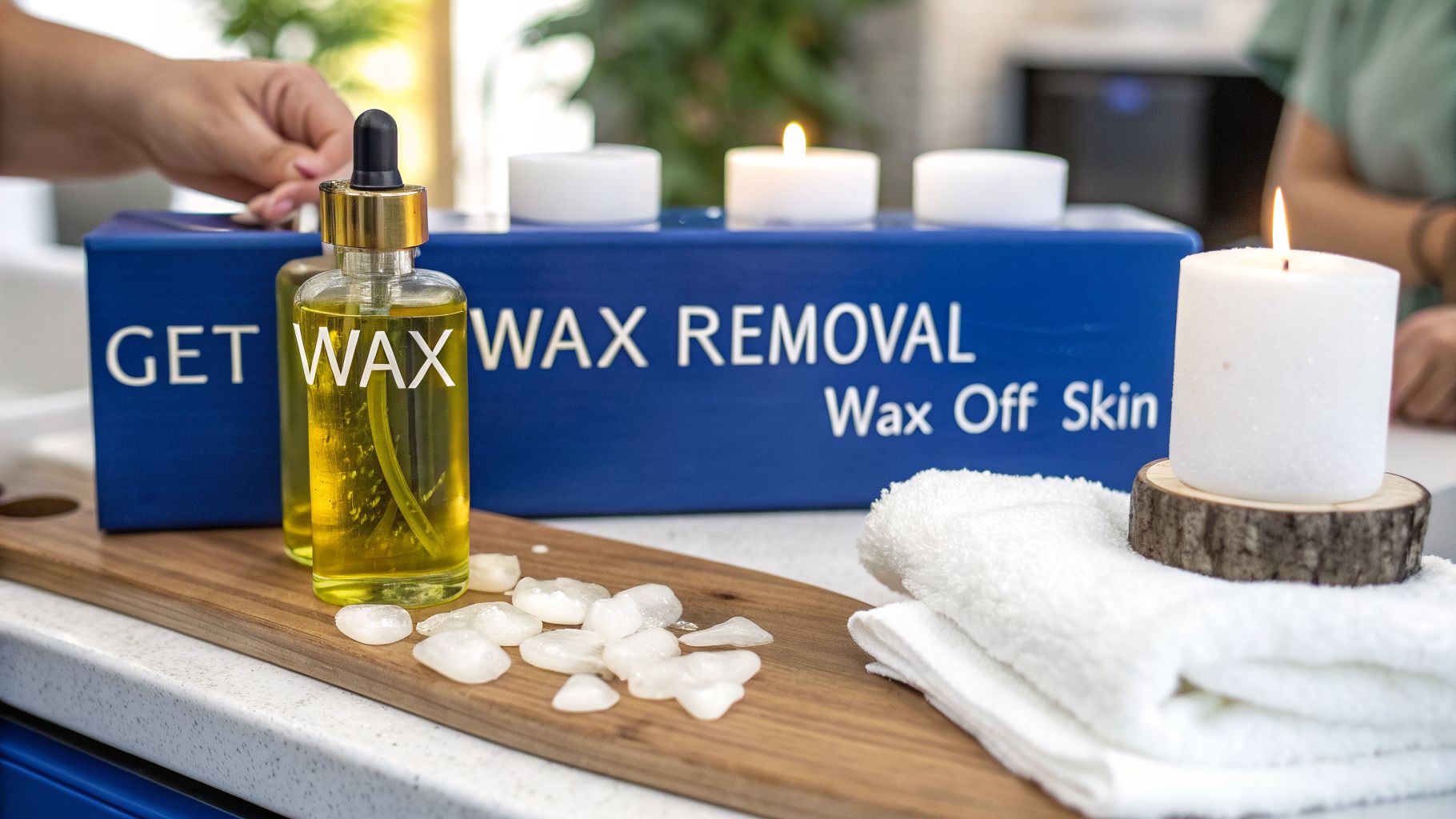
Finished your at-home wax session only to be left with those frustratingly sticky patches? The best way to get wax off skin is sitting right in your kitchen or bathroom cabinet. The secret isn't scrubbing—it's using a simple oil.
Your quick answer for removing sticky wax residue

After waxing, you’re often left with tacky bits of residue that just won't budge with soap and water. This is because most hair removal waxes are oil-based, which means they are hydrophobic—they actively repel water. Trying to scrub the wax off will only leave your skin red, irritated, and still sticky.
The solution comes down to simple chemistry: like dissolves like. Since the wax is oil-soluble, a bit of oil is the perfect solvent to break it down gently. It melts the sticky bonds of the wax, making cleanup effortless.
The best oils for the job
You don't need a fancy, specialized product. Many common household items work perfectly.
- Baby Oil: A classic for a reason. This mineral oil-based product is gentle and effective.
- Coconut Oil: Solid at room temperature, it melts on contact with your skin and is a fantastic moisturizer.
- Olive Oil: A great option you have in your kitchen pantry right now.
- Professional Post-Wax Oils: These are specifically formulated for this task and often include extra soothing ingredients like chamomile or aloe to calm the skin.
The goal is to dissolve the wax, not scrub it off. A gentle massage with your chosen oil is all it takes to lift the residue from your skin, leaving it smooth and clean.
To get started, pour a small amount of oil onto a cotton pad or directly onto your fingertips. Gently massage it over the sticky areas using slow, circular motions. You’ll feel the wax begin to loosen and dissolve almost immediately.
After a minute or so, wipe the area clean with a fresh cotton pad or a soft cloth. This method isn't just effective; it also helps moisturize your freshly waxed skin, which can use the extra care.
Safely handling hot candle wax spills on skin

Spilling hot candle wax on your skin is jarring, and your first impulse is probably to wipe it off. Resist that urge. Wiping hot, liquid wax only spreads the heat around, making a potential burn worse.
The safest first move is to simply wait. Let the wax cool down and harden completely on its own. Most modern candle waxes have a low melting point, so they often solidify quickly without causing real harm. Once it’s hard, you can usually flick it off with a fingernail or peel the entire piece away.
What to do if it burns
If the spill feels hot and you experience pain, you need to shift gears and treat it as a minor burn.
- Cool the Area Immediately: Run the affected skin under cool—not ice-cold—running water for several minutes. This draws the heat out of the skin and provides immediate pain relief.
- Don't Use Ice: Never apply ice directly to a burn, as the extreme cold can cause further skin damage.
- Assess the Burn: After cooling the skin, gently pat it dry. If it’s just a bit red, you can then proceed with removing the hardened wax.
The key is to cool the burn first, then worry about the wax. Trying to force the wax off while the skin is hot and injured can easily tear the skin and worsen the problem.
After the wax is off, a cotton pad soaked in a little oil can help clean up any tiny fragments left behind. Knowing how to get wax off skin safely is important, especially for professionals who deal with sticky residue daily.
The global hair removal wax market hit US$10.19 billion in 2023, and soft wax—by far the stickiest type—accounts for over half of that. This number shows why stubborn residue is such a common complaint, impacting clients and even disrupting the flow of a busy spa day. You can learn more about cooling therapies and what icing your face can do in our related articles.
Why oil is the best way to dissolve hair removal wax

We’ve all been there. After a waxing session, you’re left with that frustratingly tacky film, and your first instinct is to scrub it off with soap and water. It never works.
That’s because most hair removal waxes are resin-based and oil-soluble, meaning water just rolls right off. This is where the simple chemistry principle "like dissolves like" comes to the rescue. Applying oil is the most effective and gentle how to get wax off skin method because the oil molecules effortlessly break down the sticky wax, allowing you to wipe it away without harsh scrubbing.
This approach does more than just clean up; it turns a chore into a soothing aftercare ritual. Your skin is always a bit sensitive after waxing, and a good quality oil can help calm it right down.
Oils that get the job done
You don't need a special product to get the job done. You probably have several great options in your home right now.
- Mineral Oil: This is the main ingredient in baby oil. It’s a fantastic choice because it’s non-comedogenic (meaning it won't clog your pores) and effective at dissolving wax residue.
- Plant-Based Oils: Olive oil from your kitchen, coconut oil from the pantry, or even cosmetic oils like jojoba and sweet almond work beautifully. They also provide deep, natural moisture for your freshly waxed skin.
- Professional Post-Waxing Oils: These are specifically formulated to remove wax residue while soothing the skin. They often contain calming ingredients like azulene or chamomile to help reduce redness and inflammation.
Dealing with sticky residue is a common complaint. In the North American hair removal market, over 50% of people who use soft wax say they struggle with it. For athletes who wax regularly, this residue can interfere with training, since other solvents might irritate already sensitive skin.
My go-to method is simple: I apply a generous amount of my chosen oil directly onto the sticky patches. Let it sit for about 60 seconds. This gives the oil enough time to work its magic and break down the wax.
Next, use your fingers to gently massage the area in small, circular motions. You’ll feel the wax start to loosen and dissolve into the oil.
Finally, take a clean cotton pad or a soft cloth and wipe everything away. The wax lifts off with zero effort, leaving your skin clean, smooth, and moisturized. For an extra touch of calm, choose an oil infused with botanicals like geranium, which can further soothe the skin. To learn more, check out our guide on the many uses of geranium oil for skin.
What to do when you don't have any oil
You've just finished waxing, you're admiring your work, and then you realize it: you're completely out of post-wax oil. It’s a classic scenario. Before you panic or start scrubbing, take a breath. While a good quality oil is the gold standard, you can learn how to get wax off skin using a few common items you probably have lying around.
When you're in a pinch like this, the goal isn't brute force. It's about finding an alternative that can gently soften the wax or has enough emollient properties to dissolve it. The last thing you want to do is irritate your sensitive, freshly waxed skin by rubbing it raw.
Quick oil-free alternatives
If your usual post-wax oil is missing in action, here are a few practical backups I’ve seen work. These methods are perfect for tackling those small, stubborn patches of residue without inviting redness or discomfort.
- Warm Compress: This is the gentlest approach. Soak a clean washcloth in warm—not hot—water. Hold it firmly against the waxy spot for about 30 seconds. The warmth will soften the wax, making it pliable enough to be gently rolled off with your fingertips or the cloth itself.
- Thick Body Lotion: A rich, creamy body lotion or a thick body butter can be surprisingly effective. Many contain just enough oils and fats to break down small bits of leftover wax. Slather a generous dollop on the sticky area and massage it in a circular motion until the wax dissolves, then wipe it clean with a soft tissue.
- Rubbing Alcohol (With Caution): For those tiny, stubborn specks that just won't budge, a little rubbing alcohol on a cotton ball can do the trick. The key here is to apply it very sparingly and only directly onto the wax residue itself, not the surrounding skin.
Be mindful that alcohol is incredibly drying. If you go this route, you must immediately follow up by applying a rich, fragrance-free moisturizer to the area. This is critical for restoring hydration and preventing potential irritation.
Having these backup methods in your back pocket means you're prepared for anything. No matter which one you use, always be gentle and follow up with proper aftercare to keep your skin calm, happy, and smooth.
The aftercare your freshly waxed skin is begging for

Getting that last bit of stubborn wax off your skin is a great feeling, but the job isn’t finished. The 24 hours after a wax are important for keeping your skin calm, smooth, and free from irritation.
Think about it: waxing is more than just hair removal. It’s also a powerful form of exfoliation, stripping away the top layer of dead skin cells and leaving your pores wide open. This leaves your skin vulnerable and sensitive.
Because of this sensitivity, you have to treat the area with a little extra care. The goal is to avoid anything that could introduce bacteria or excess heat to your freshly exposed skin.
Immediate post-waxing care
For the first day after your wax, a few simple rules can make all the difference in preventing redness, bumps, and breakouts.
- Avoid Hot Water: Say no to hot showers, long baths, saunas, and steam rooms. Hot water will only amplify inflammation and make any redness worse.
- Skip the Gym: Sweat is a major culprit for irritating open follicles and causing those little red bumps. Give yourself a rest day.
- Wear Loose Clothing: Tight, restrictive clothes are a bad idea. They trap heat and create friction against already tender skin. Opt for soft, breathable fabrics like cotton to let your skin breathe.
One of the best things you can do right after waxing is to apply a simple, fragrance-free moisturizer or pure aloe vera gel. This single step works wonders to cool the skin, calm redness, and start rebuilding its natural moisture barrier.
This isn't just about comfort—it's a factor in client satisfaction and retention. The global hair removal wax market is projected to reach USD 6.5 billion by 2031, yet sticky residue affects a huge 40-60% of users. In medspas, where the experience is everything, post-wax irritation can cause a 15-25% drop in rescheduling rates, hitting revenue directly. You can learn more about the growing hair removal wax market on alliedmarketresearch.com.
Soothing ingredients for faster recovery
To speed up the healing process, look for products packed with ingredients known for their calming and restorative properties.
Applying a lotion with an ingredient like Centella Asiatica, for instance, can dramatically reduce inflammation and help the skin bounce back much faster. You can learn more about the benefits of Centella Asiatica for skin to see just how powerful it is.
Frequently asked questions about wax removal
Even after you’ve mastered the art of how to get wax off skin, some questions almost always pop up. Getting your technique down pat is the secret to preventing irritation and making every future wax session that much smoother. Let's tackle some of the most common concerns.
Can I just use soap and water?
This is everyone’s first instinct, but it’s a classic mistake. Most waxes for hair removal are oil-based, meaning they are hydrophobic—they repel water.
When you try to scrub that sticky residue with soap and water, you’re just smearing the mess around. You’ll end up with irritated skin and the same amount of wax. The only way to break it down is with an oil-based solution that can dissolve it.
What should I do if my skin is still red?
A little redness right after waxing is normal, but if it sticks around, your skin is asking for some care. The goal is to calm the area, not aggravate it further.
- Apply a cool compress for a few minutes to soothe the heat and inflammation.
- Gently smooth on a lightweight, fragrance-free moisturizer or some pure aloe vera gel.
- Steer clear of tight clothing that will rub against your freshly waxed, sensitive skin.
These simple steps will help reduce that angry red look and allow your skin to recover much more quickly.
Is it okay to just pick the wax off?
I know it’s tempting, but resist the urge to pick or scratch at leftover wax. Your skin is sensitive after a treatment, and your fingernails are a fast track for introducing bacteria into those open hair follicles. This can lead to unsightly bumps or minor infections.
Worse, aggressively picking can tear the top layer of your skin, leaving you with scabs and redness that take far longer to heal than the initial wax irritation.
Always use a solvent, like oil, to gently dissolve the wax. Picking at it is a recipe for skin damage and irritation. It's just not worth it.
How do I prevent wax residue next time?
The best strategy is prevention. That annoying sticky residue usually happens for one of two reasons: the wax was applied too cool, or it was applied too thickly.
Before your next session, check your wax temperature. It should have the smooth, flowing consistency of honey. When you apply it, aim for a thin, even layer. Proper application technique is a game-changer because it gives you a cleaner wax with better hair removal and leaves far less gunk behind to clean up.
At Weyergans HighCare US, we believe recovery and aesthetics go hand in hand. While we focus on advanced circulation and recovery technology, we understand that every step of a beauty or wellness routine matters. To learn how our systems can elevate your client experience, visit us at https://weyerganshighcareus.com.