


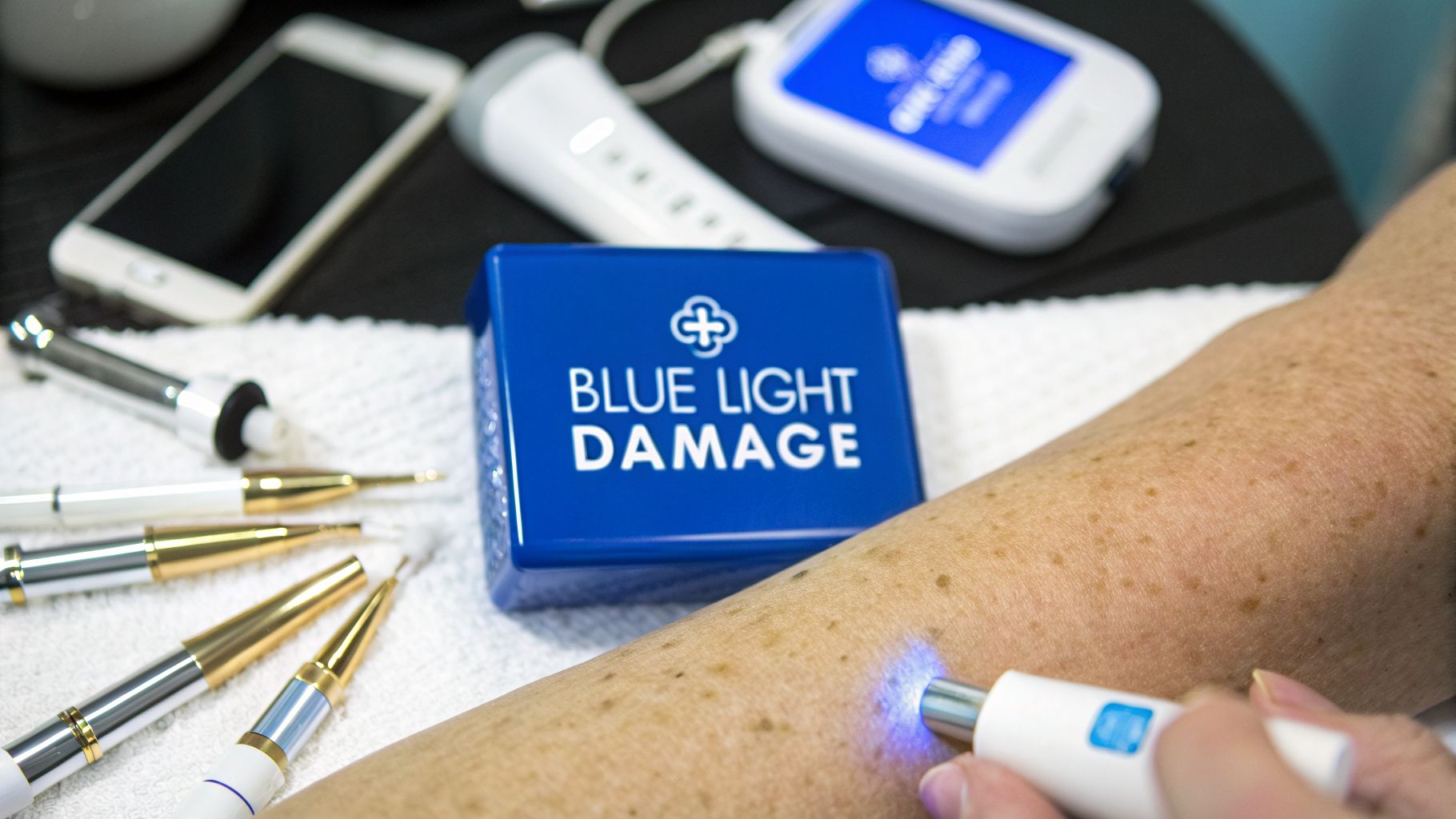
Your clients are diligent about sun protection, but what about the light that’s staring them in the face all day? The glow from their phones, laptops, and tablets is a constant source of blue light, and its cumulative damage is a modern skin reality. This daily exposure is directly linked to the very issues they come to you to fix—fine lines, dullness, and uneven tone—making it a necessary conversation for any forward-thinking clinic.
The Modern Stressor Hiding in Plain Sight
For decades, the skin health conversation has centered almost entirely on UV radiation from the sun. But the world has changed. The average person now spends hours a day bathed in High-Energy Visible (HEV) light—better known as blue light—from digital screens.
Unlike the immediate, obvious damage from a sunburn, the impact of blue light is much quieter. It’s a slow and persistent attack on the skin’s fundamental structures.

This constant exposure kicks off a cascade of free radical activity, creating what we call oxidative stress. Think of it as a low-grade, chronic inflammation that steadily dismantles the collagen and elastin fibers responsible for keeping skin firm, bouncy, and youthful. This process is a primary driver of modern photoaging.
Connecting Screen Time to Your Clients' Skin Concerns
This is where your expertise is invaluable. By connecting the dots for your clients, you can provide a level of education that goes beyond the treatment room. So many people are seeking solutions for problems they don't realize are being made worse by their everyday digital habits. The link is undeniable.
- Premature Aging: Oxidative stress is the engine behind accelerated aging, showing up as fine lines, wrinkles, and a loss of skin density.
- Hyperpigmentation: Blue light has been shown to stimulate melanin production, which can trigger or worsen dark spots and an uneven complexion, a concern particularly for those with deeper skin tones.
- Weakened Skin Barrier: Over time, this exposure can compromise the skin’s natural defense system, leaving it vulnerable to irritation, sensitivity, and further environmental damage.
By bringing the impact of blue light into the conversation, you shift from simply treating symptoms to addressing a root cause of modern skin aging. This immediately positions your clinic as a trusted resource that understands the real-world factors affecting your clients’ skin health today.
When you explain this connection, clients finally understand the value of treatments designed to repair, protect, and build resilience. It naturally opens the door to discussing protective skincare and in-clinic services that actively counteract the effects of their screen-heavy lifestyles. This is how you start offering solutions that truly meet their modern needs.
How Blue Light Gets Under Your Skin (Literally)
For years, we've all been drilled on the dangers of UV radiation. Slather on the sunscreen, stay out of the midday sun—we know the routine. But another part of the light spectrum is quietly making a name for itself in skin damage: High-Energy Visible (HEV) light, or what we all know as blue light.
Unlike the shorter UVB rays that mostly stay on the skin's surface (hello, sunburn), blue light has a longer wavelength. This means it can travel much deeper, pushing past the epidermis and right down into the dermis.
Why does that matter? The dermis is where all the good stuff lives—your skin's entire support structure of collagen and elastin.
The damage from blue light isn't a dramatic, one-time event like a burn. It's more of a slow, creeping process. Think of it as a constant, low-grade hum of stress on your skin cells, one that continually triggers the creation of unstable molecules called reactive oxygen species (ROS).

This never-ending flood of ROS creates a state of oxidative stress. Over time, this stress directly chips away at the collagen and elastin fibers that give skin its bounce and firmness, paving the way for premature aging, fine lines, and sagging.
The Cellular Breakdown Process
But oxidative stress doesn't just attack your skin's structural proteins. It also throws a wrench into the normal function of your skin cells, bogging down their natural repair systems. The skin simply becomes less effective at healing itself from the daily onslaught of environmental aggressors.
When blue light penetrates the skin, it essentially puts cells into a constant state of defense, diverting energy from repair and regeneration to damage control. This cellular exhaustion contributes to a dull complexion and a weakened skin barrier over time.
This deep-down damage is a serious concern. Research has confirmed that blue light in the 400-490nm range dives deeper than UV rays, generating ROS that can degrade collagen and elastin by up to 20%. It doesn't stop there. A 2019 report in the Journal of Cosmetic Dermatology also found that people with high screen time saw a 15% drop in skin hydration, showing just how multifaceted this digital exposure really is.
Why Traditional Sunscreens Aren't Enough
Here's the problem for many of your clients: most traditional sunscreens were built to block UVA and UVB rays, leaving a massive gap in protection against visible light. This is a blind spot, especially for clients who are serious about preventing photoaging and protecting the investment they've made in their clinical treatments.
Understanding this mechanism is necessary. It’s the missing piece of the puzzle for clients who use sunscreen religiously but still see signs of aging. Tackling blue light damage requires a new strategy, one that focuses on both blocking the light itself and neutralizing the oxidative stress it creates. This idea is central to modern skin therapies, including those explored in photobiomodulation.
By educating your clients on this specific threat, you can position advanced services and protective products that offer the complete, 360-degree protection they actually need.
The Connection Between Blue Light and Hyperpigmentation
While the oxidative stress from blue light is known to contribute to fine lines, its impact on skin tone is just as serious. For many clients, particularly those with deeper skin tones, the most frustrating and visible effect of blue light on skin is stubborn, hard-to-treat hyperpigmentation.
This isn’t the same kind of pigmentation that comes from a day in the sun. Blue light triggers a specific cellular reaction that can create dark spots that are more intense and last significantly longer. This is a needed piece of the puzzle for any clinic serious about treating uneven skin tone.

How Opsin 3 Triggers Melanin Production
The mechanism driving this comes down to a special photoreceptor in the skin called opsin 3 (OPN3). You can think of OPN3 as a light-activated switch. When blue light waves penetrate the skin, they flip this switch on, which sends a direct signal to our melanocytes—the tiny factories responsible for producing melanin pigment.
Once that signal is received, the melanocytes kick into overdrive. They start pumping out extra melanin in an attempt to shield the skin from this light-induced damage. The visible result of this protective effort? Dark spots, patches, and a generally uneven complexion.
The key takeaway for clinicians is that blue light isn't just a background stressor; it's an active trigger for pigment production. Clients struggling with melasma or post-inflammatory hyperpigmentation may find their condition worsens with prolonged screen time, even if they are diligent with traditional sunscreen.
This explains why some clients hit a plateau with standard pigmentation treatments. They're addressing the symptom, but they aren't accounting for one of its primary modern-day triggers.
Why Skin Tone Matters
This effect isn't the same for everyone. Hyperpigmentation from blue light is a much bigger problem for individuals with medium to darker skin tones, specifically those in the Fitzpatrick types III through VI range. Their melanocytes are naturally more reactive, which makes them far more susceptible to this kind of pigmentation.
One study found that blue-violet light created dark patches on these skin types that stuck around for a full three months—a persistence that wasn't seen with red light exposure. This drives home the need for targeted protection. You can find more insights on blue light's effect on darker skin tones on wederm.com.
Educating clients on this connection is essential. It paints a more complete picture of what's causing their pigmentation issues and immediately positions your clinic as an authority on modern skin health. This knowledge helps justify protective skincare and specialized treatments designed to manage these very specific concerns.
Beneficial Uses of Blue Light in Clinical Settings
It’s easy to hear “blue light” and immediately think of screen time and skin damage. But that’s only half the story. Not all blue light exposure is created equal, and in controlled clinical settings, specific wavelengths are powerful therapeutic tools.
This is a distinction to make for your clients. The difference isn't the light itself, but the dose and delivery. When harnessed correctly, blue light shifts from a daily stressor to a targeted solution.
The most common and well-understood clinical use for blue light is in the fight against acne vulgaris. The primary culprit behind acne, a bacterium called Propionibacterium acnes (or P. acnes), has a natural weakness. It produces light-sensitive compounds called porphyrins.
When targeted blue light on skin, typically around the 415 nm wavelength, hits these porphyrins, it starts a chemical reaction that creates free radicals. These free radicals destroy the P. acnes bacteria from the inside out—all without harming the surrounding healthy skin tissue. It’s a clean, effective way to reduce inflammation and clear up active breakouts.
Advanced Dermatological Applications
Beyond clearing up acne, blue light is a cornerstone of a more advanced treatment known as photodynamic therapy (PDT). PDT is used to manage serious skin conditions, including psoriasis and even precancerous lesions like actinic keratosis.
With PDT, a special photosensitizing cream is applied to the target area first. After it's absorbed, the blue light is directed onto the skin, activating the cream. This activation creates a highly localized reaction that selectively destroys the targeted abnormal or unhealthy cells. It’s a precise and powerful way to treat specific skin issues while leaving healthy tissue untouched.
The core difference lies in control. Uncontrolled, chronic exposure from screens causes cumulative oxidative stress. In contrast, targeted, clinical doses deliver a specific wavelength for a set duration to achieve a positive biological outcome.
Context is Everything
Understanding both sides of the blue light story positions your clinic as a balanced and knowledgeable authority. It empowers you to educate clients on the real risks of digital exposure while confidently explaining how professional light-based technologies work safely and effectively.
This knowledge builds immense trust. It also creates a natural opening to discuss other light-based therapies in your clinic, helping clients understand that different wavelengths have entirely different jobs.
To round out your understanding of how light energy impacts the skin, our guide on the benefits of infrared light therapy offers a great comparison. Seeing how these therapies differ provides a much fuller picture of how the light spectrum can be used to dramatically improve skin health.
Practical Strategies for Your Clinic to Counteract Blue Light Damage
Educating clients on blue light's impact is about more than just sharing facts—it's about delivering genuine value that makes your clinical results even better. When you weave this conversation into your consultations, you help clients connect the dots between their daily screen time and the very skin concerns they want to fix, like premature aging or stubborn pigmentation.
The conversation doesn't have to be complicated. When you're discussing their lifestyle, simply ask about their daily screen habits. This opens the door to explain how all that exposure contributes to oxidative stress, potentially undermining the progress you're making with their in-office treatments. It's a modern problem that needs a modern solution.

The reality is, many of your clients are completely in the dark about this connection. A 2020 Unilever study found that 64% of people didn't know about blue light's effects. The same research showed that just 30 hours of screen time can ramp up inflammation in skin cells by 40%. You can see how blue light on skin leads to these issues in the full report.
Building a Blue Light Defense Plan
Once you've made that connection for them, you can present a smart, multi-step strategy that blends your in-clinic services with their at-home care. This approach immediately positions your clinic as the go-to resource for total skin health in a digital world.
Here's what that plan can look like:
- In-Clinic Treatments: Frame services that boost circulation and fire up cellular repair as direct countermeasures. Any treatment that calms inflammation and starts collagen production is a perfect fit for helping skin bounce back from the low-grade stress of blue light.
- Topical Antioxidants: This is non-negotiable. Recommend serums and moisturizers loaded with powerful antioxidants to neutralize the free radicals generated by all that screen time.
- Physical Sunscreens: Drive home the importance of broad-spectrum sunscreens, specifically those with physical blockers. They are far better at deflecting a portion of the visible light spectrum.
When you frame your recommendations as a defense against a client’s daily digital life, the value becomes instantly clear. They aren't just buying another product or service; they are investing in their skin's protection and resilience.
Key Ingredients for Topical Protection
Empower your clients by teaching them which ingredients to look for. When it comes to blue light defense, it really boils down to two main categories.
-
Antioxidants to Neutralize Damage
- Niacinamide (Vitamin B3): This is a true workhorse. It helps repair the skin barrier, dials down inflammation, and can even offer some protection against blue light damage. Dive deeper into the versatile role of Vitamin B in skincare in our detailed guide.
- Vitamin C: A classic for a reason. It fights free radicals and brightens the complexion, tackling the dullness that comes from oxidative stress.
- Vitamin E: This is Vitamin C's best friend. It works in tandem to strengthen the skin’s natural defenses and provide photoprotection.
-
Physical Blockers to Deflect Light
- Zinc Oxide: This mineral filter creates a physical shield on the skin's surface, scattering and reflecting both UV and some visible light.
- Iron Oxides: Often found in tinted sunscreens, these compounds are especially good at blocking blue light, making them a top recommendation for anyone worried about hyperpigmentation.
By marrying your professional treatments with a targeted home-care routine, you're providing a complete, 360-degree solution. This strategy doesn't just supercharge client outcomes—it also opens up new opportunities to package services and products, creating reliable new revenue streams for your clinic.
Common Questions About Blue Light and Skin Health
As the conversation around blue light and skin gets louder, it’s natural for clients and clinicians alike to have questions. Getting straight, clear answers is the key to building trust and making sure everyone understands what’s at stake. Here are a few of the most common questions that come up in consultations.
Does Blue Light From Phones and Computers Really Damage Skin?
Yes, but it's a game of accumulation. A single day in front of your laptop won’t cause a visible problem, but the long-term, daily exposure from our devices contributes to skin aging. It's less like a sudden sunburn and more like a slow, steady drip of cellular stress.
Over years, this constant exposure creates a state of oxidative stress in the skin. We have solid research confirming this process actively degrades the collagen and elastin that keep skin firm and bouncy, which is what leads to fine lines and sagging. It can also kickstart or worsen hyperpigmentation—a major concern for anyone with a medium to dark skin tone.
The real problem isn't the intensity of the light in one sitting. It's the thousands of hours we spend in front of screens over the years. That’s what adds up to real, tangible damage.
Is All Blue Light Exposure Bad for My Skin?
No, not at all. It’s all about context and control. In a professional setting, dermatologists and estheticians use specific, controlled wavelengths of blue light as a surprisingly powerful therapeutic tool.
For instance, blue light therapy is a go-to treatment for acne. It works by zeroing in on and eliminating the specific bacteria (C. acnes) that causes breakouts. It’s also a part of photodynamic therapy, used to manage certain skin conditions and even some precancerous spots. The difference couldn't be clearer: chronic, uncontrolled exposure from our screens is damaging, but a targeted, professional application can be beneficial.
How Can I Protect My Skin From Blue Light Damage?
A multi-layered defense is always the best strategy. No single product or habit can do it all, so think about combining a few smart approaches for the most effective protection.
A solid plan looks something like this:
- Use Physical Sunscreens: Start with a broad-spectrum sunscreen that relies on physical blockers. Ingredients like zinc oxide and especially iron oxides are fantastic because they create a physical shield that literally helps deflect and scatter visible light, including blue light.
- Add Topical Antioxidants: Your daily skincare routine needs a powerful antioxidant serum to neutralize the free radicals blue light generates. Look for powerhouse ingredients like vitamin C, niacinamide, and vitamin E. They're brilliant at fighting oxidative stress and helping the skin’s own repair processes.
- Invest in Professional Treatments: Think bigger picture. Services that build up your skin’s overall health and resilience are your best defense against the daily onslaught of screen time. Therapies that boost circulation and kickstart cellular repair, like red and infrared light treatments, are a perfect complement to a defensive homecare routine.
Are Some People More Vulnerable to Blue Light Damage?
Yes, especially when it comes to pigmentation. Anyone with Fitzpatrick skin types III through VI, which covers a wide range of medium to darker skin tones, is far more likely to develop stubborn hyperpigmentation from blue light.
The reason is simple: their skin has a higher concentration of melanin, and the cells that produce it (melanocytes) are more easily triggered by blue light’s specific wavelength. This can result in dark spots and an uneven skin tone that can be frustratingly difficult to treat.
But the oxidative stress that breaks down collagen and elastin affects all skin types. Anyone clocking significant screen time is at risk for premature aging, which makes protective measures a universal concern. Answering these questions directly helps empower your clients, giving them the knowledge they need to protect their skin in our screen-saturated world.
At Weyergans HighCare US, we create advanced solutions to help your clients build resilient, healthy skin from the inside out. Our Vacustyler Avantgarde system uses a combination of intermittent vacuum therapy and red/IR light to support circulation, support cellular repair, and counteract the daily stressors that lead to premature aging.