


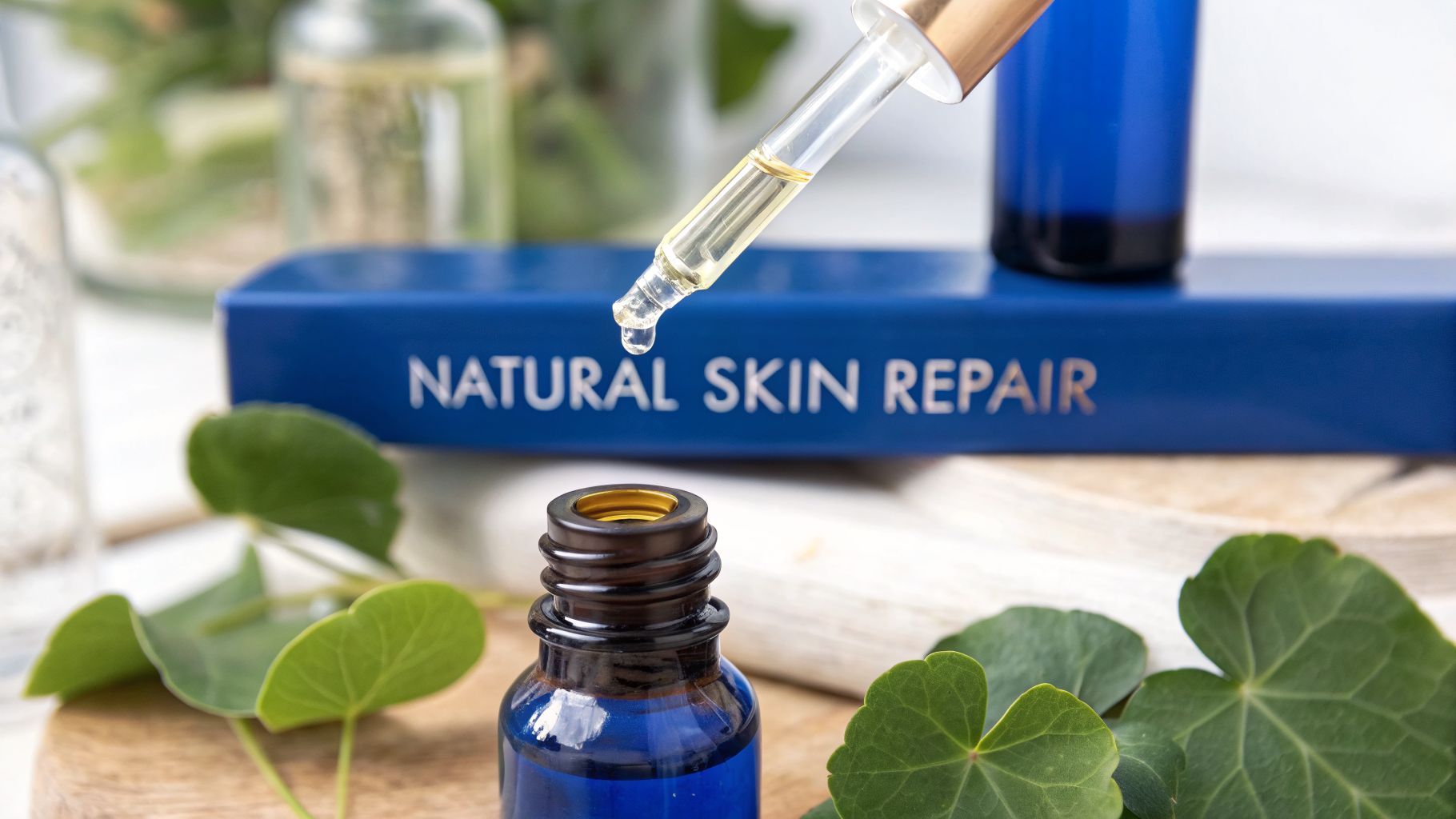
Centella asiatica is a master of soothing, healing, and barrier support. These are its superpowers. This is why it’s become a necessary tool for calming irritation, dialing down redness, speeding up recovery, and boosting skin hydration—making it a staple in both ancient healing traditions and modern clinical skincare.
What is Centella asiatica and why does it matter?

You may know it as Cica, or by its more evocative nickname, Tiger Grass. This perennial herb has been a cornerstone of traditional Chinese and Ayurvedic medicine for centuries. The name "Tiger Grass" comes from the observation that wounded tigers would instinctively roll in patches of the plant to soothe their injuries. Today, science has caught up with this ancient wisdom, validating Cica as a powerhouse ingredient for modern skincare, especially in professional and clinical settings.
For medspas and wellness centers, Centella asiatica is more than just another trendy botanical extract. It is a multitasking problem-solver that directly addresses your clients' most common concerns: sensitivity, inflammation, and the visible signs of aging. It's particularly useful for clients undergoing treatments that temporarily compromise the skin barrier, like microneedling, chemical peels, or laser therapy.
The science behind the soothing
The effectiveness of Centella asiatica comes from a synergistic group of four primary bioactive compounds. These molecules work together to deliver the plant’s skin-calming and restorative benefits.
- Asiaticoside: This compound stimulates collagen production, which is fundamental for maintaining the skin's structure and firmness.
- Madecassoside: A potent antioxidant, this molecule is excellent at reducing inflammation and visibly calming redness.
- Asiatic Acid: This is a key component for strengthening the skin's natural protective barrier and helping to lock in moisture.
- Madecassic Acid: This contributes directly to skin repair and helps soothe irritation triggered by environmental stressors.
By understanding these active components, a practitioner can elevate the conversation with a client. You move from a generic claim of "it's soothing" to a specific, evidence-backed explanation of how it works. This builds client confidence and reinforces the value of your post-treatment care recommendations.
This combination of compounds makes Centella asiatica exceptionally useful for accelerating recovery after a procedure and preparing the skin beforehand. It helps build a foundation of healthier, more resilient skin, which in turn allows your primary treatments to deliver better, more consistent results.
How Cica calms inflammation and repairs the skin barrier

Many effective aesthetic treatments—from microneedling to chemical peels—work by creating a controlled injury to kickstart the skin's renewal process. A common side effect is temporary inflammation: redness, sensitivity, and a weakened skin barrier. This is where Centella asiatica shines, stepping in as the perfect partner for post-procedure care.
Its anti-inflammatory ability comes from its bioactive compounds, especially madecassoside. This molecule acts like a circuit breaker, interrupting the inflammatory signals that cause skin to flush red and feel irritated. By quieting this response, Cica provides immediate relief and helps skin shift from a reactive state to a restorative one much faster. This is one of the most visible benefits of Centella asiatica for skin following a clinical treatment.
Rebuilding the skin's defensive wall
Think of your skin barrier as a sturdy brick wall. The skin cells are the bricks, and the lipids—like ceramides, cholesterol, and fatty acids—are the mortar holding it all tightly together. When this mortar weakens or develops cracks, the entire wall is compromised.
A compromised barrier creates two big problems:
- Moisture Escapes: Water evaporates out of the skin in a process called transepidermal water loss (TEWL). This causes dehydration, tightness, and flakiness.
- Irritants Get In: Allergens, pollutants, and bacteria can easily penetrate the skin, triggering more inflammation and sensitivity.
Centella asiatica is the repair crew for this wall. Its compounds, such as asiatic acid, help stimulate the skin's own production of these lipids. By replenishing the "mortar," it seals the cracks and reinforces the barrier’s integrity. The result is skin that is better at holding onto hydration and defending itself against daily stressors. For another ingredient known for its soothing properties, you can explore the benefits of eucalyptus oil on skin in our guide.
A strong, intact skin barrier is the foundation of healthy skin. It looks better—appearing more hydrated and even-toned—and it functions better, making it more resilient to daily challenges and able to heal efficiently after professional treatments.
Evidence of calming and repair
The clinical data backs this up. A recent study found that using Centella asiatica-infused skincare led to a 76% drop in mean sensitivity scores after just four weeks.
The study measured reductions in irritation, tautness, itching, and redness. It also showed tangible improvements in skin health, including decreased water loss and higher hydration levels at multiple check-ins. You can read the full research about these Cica findings.
This evidence makes it clear: Centella asiatica doesn't just mask sensitivity—it actively rebuilds the skin's defenses. For medspas, this makes it a necessary ingredient for ensuring clients have a comfortable recovery and see the best possible results from their treatments.
Accelerating skin healing and collagen production

Beyond calming, one of the most powerful benefits of Centella asiatica is its ability to actively speed up the skin's healing process. This makes it a star player in post-procedure care, where a quick, effective recovery is the top priority.
The same mechanisms that help heal wounds also deliver impressive anti-aging effects.
The secret is how its bioactive compounds—specifically madecassoside and asiaticoside—interact with the skin's foundational cells. These compounds send direct signals to fibroblasts, which are the "factories" responsible for building the skin's structural framework. They encourage these factories to get to work, helping skin rebuild itself faster after treatments like microneedling or light therapy.
Boosting collagen for firmer, smoother skin
This rapid healing is directly linked to collagen synthesis. Fibroblasts are the exclusive producers of collagen, the protein that gives skin its firmness, structure, and bounce. As we age, these factories slow their production, which leads to fine lines, wrinkles, and loss of elasticity.
Centella asiatica acts like a production supervisor, telling these fibroblast factories to increase their output of Type I collagen. This is the most abundant type of collagen in our skin, making this benefit relevant for any anti-aging protocol.
By stimulating new collagen growth, Centella asiatica helps to rebuild the skin's underlying support structure from the inside out. This translates to visibly smoother skin texture, improved firmness, and a reduction in the appearance of fine lines over time.
This dual-action approach—healing and rebuilding—is what makes this herb so valuable in a clinical setting. It transforms recovery from a passive waiting game into an active phase of skin regeneration. This improves the client’s comfort and elevates the final outcome of the primary treatment. The synergy between a procedure and the right aftercare can lead to more dramatic, longer-lasting results. You can find similar restorative benefits in other modern treatments; for instance, you can learn more about infrared light therapy benefits.
Validated by modern research
Modern research has consistently validated these effects. A 2022 study, for example, reaffirmed Centella asiatica's role in supporting collagen production, which is especially important as our natural synthesis declines with age.
Specific molecules like madecassoside have been shown in labs to directly kickstart collagen synthesis and stimulate cell proliferation. For wellness professionals, this scientific backing provides confidence when recommending Cica-based products for post-procedure recovery and long-term anti-aging plans. You can read the full research about these findings for a deeper dive.
Better hydration and a calmer complexion for breakout-prone skin
Beyond its talent for repair, Centella asiatica brings two more benefits: serious hydration and a gentle touch for breakout-prone skin. These are common concerns we see in the treatment room, from chronic dryness to frustrating adult acne. Cica’s ability to tackle both makes it a true powerhouse ingredient for nearly any client.
Healthy skin starts with a strong, well-hydrated barrier, and Cica is fantastic at reinforcing it. It works by encouraging the skin to produce more of its own hyaluronic acid—that famous molecule that acts like a tiny sponge, holding many times its weight in water. This helps plump the skin from the inside out, smoothing its surface and locking in moisture where it belongs.
A gentle approach to managing acne
For clients who feel like they're in a constant battle with breakouts, Centella asiatica offers a powerful yet soothing solution. Its anti-inflammatory nature gets to work immediately, dialing down the redness and swelling of active blemishes so they look and feel less angry. This calming effect is a welcome relief from harsh, traditional acne treatments that can strip the skin and do more harm than good.
Cica’s work isn’t done once the blemish subsides. It also supports the skin’s healing process, which is key for minimizing the appearance of post-inflammatory hyperpigmentation (PIH)—those stubborn dark spots that can linger for months. This makes it an essential ingredient for clearing breakouts and for achieving a consistently even-toned complexion.
Centella asiatica doesn’t just put out the fire; it helps rebuild afterward. It calms the immediate inflammation of a blemish and then supports the healing process to prevent lasting marks.
The science on this is solid. A meta-analysis pooling data from studies with 875 participants found a significant drop in acne lesion counts. The research confirmed that topical creams and gels with Centella asiatica extract are effective at reducing both inflamed pimples and non-inflamed bumps. In some of the individual studies, clients saw real improvement in as little as eight weeks.
You can dive into the complete meta-analysis of Centella asiatica for acne treatment to see the clinical data for yourself.
It’s this multi-action approach that makes Cica so valuable. It’s not a single-benefit ingredient; it’s a comprehensive support system for skin facing some of its most common challenges.
Integrating Cica into professional skincare treatments

The real value of Centella asiatica in a professional setting isn't just what it does on its own—it's how it improves the treatments you already perform. Its calming and reparative abilities make it the perfect partner for any service designed to create controlled inflammation, like microneedling or peels.
Using a Cica-based product isn't just a nice add-on; it’s a strategic decision. It’s about shortening downtime, making the recovery process far more comfortable for your client, and delivering more impressive results.
Think of it as your secret weapon for post-procedure care. When the skin is raw and compromised after a treatment, applying a Centella asiatica serum or mask immediately goes to work, quieting that inflammatory response. This directly translates to less intense and shorter-lasting redness.
What does this mean for your client? They leave your clinic looking less irritated and feeling more comfortable, which dramatically improves their satisfaction with the entire experience. You’re no longer just sending them home to wait and see—you’re actively guiding their skin through a faster, more efficient healing phase.
Matching the formulation to the treatment
To get the most out of Centella asiatica, you need to choose the right product for the job. The best formulation depends on the treatment you just performed and what the client’s skin needs at that moment.
- Serums: These are my go-to for immediate post-procedure application. After something like microneedling, their light, water-based texture sinks right in, delivering calming actives deep into the skin without clogging or feeling heavy. They layer well under other products, too.
- Creams: A Cica-infused cream is perfect for the follow-up care in the days after a procedure. It provides a more robust barrier to lock in moisture and shield the delicate, healing skin from the outside world. This is also an ideal retail product to send clients home with to support their barrier repair.
- Masks: For an instant dose of cool, soothing relief, nothing beats a Centella asiatica gel or sheet mask. They’re fantastic for finishing off a facial or calming the skin after an aggressive exfoliation, visibly dialing down redness right before your client's eyes.
Don't forget, Centella asiatica is just as brilliant for the body. When paired with skin tightening or body contouring services, a Cica-based body cream helps reinforce skin tone and firmness. Its ability to support collagen production is the perfect complement to these treatments, improving overall texture and appearance.
Practical applications in your clinic
Bringing Cica into your protocols is simple and adds undeniable value. For example, when a client undergoes a procedure for texture and firmness, Cica becomes a necessary part of managing their recovery. We dive deep into this specific pairing in our guide on RF microneedling for stretch marks.
This kind of thoughtful pairing shows clients that you're focused on a complete, holistic approach—one that prioritizes both their results and their comfort.
By strategically using different Cica formulations, you can build out comprehensive treatment protocols that set you apart. It positions your services as more thorough and client-focused, directly tackling the recovery process to ensure the best possible outcomes with the least amount of downtime.
Choosing the right Centella asiatica products
With Centella asiatica showing up in everything from serums to moisturizers, picking the right product can feel like navigating a maze. The good news is this ingredient has an outstanding safety profile. Adverse reactions are rare and typically mild, making it a go-to for clients with sensitive or reactive skin.
But not all Cica products are created equal. As a professional, understanding what to look for on an ingredient label is the key to separating marketing hype from products that deliver real, measurable results. When you're stocking your backbar or recommending retail, the specific extracts and their concentration make all the difference.
Decoding the ingredient label
A high-quality product will often do more than just list "Centella Asiatica Extract." While that's a good start, seeing the specific bioactive compounds listed on the INCI list is even better—it's a sign of a thoughtful, potent formulation.
Look for these key terms:
- Madecassoside: A powerful anti-inflammatory and antioxidant. Its presence tells you the product is serious about calming redness and irritation.
- Asiaticoside: This is the star player for stimulating collagen synthesis, making it non-negotiable for any formula focused on anti-aging or wound healing.
- Asiatic Acid & Madecassic Acid: Think of these as the barrier builders. They are important for supporting overall skin repair and resilience.
A product that isolates and lists these individual compounds is almost always more potent and targeted. It shows the formulator didn't just throw in a generic plant extract; they focused on harnessing the most active components to ensure the product performs as promised.
Concentration matters, too. While brands don't always disclose percentages, a quick scan of the ingredient list can tell you a lot. The higher up these key compounds appear, the more potent the formula is likely to be.
For post-procedure care, a higher concentration is exactly what you want—it provides more immediate soothing and reparative power. This knowledge empowers you to select products that genuinely support your treatments, answer client questions with authority, and ensure the best possible outcomes.
Your Centella asiatica questions, answered
Let's look at some of the most common questions from clients and practitioners when incorporating Centella asiatica into a skincare routine. Getting these answers right helps set realistic expectations and clarifies just how versatile this ingredient is.
How long until I see real results?
This is the big question, and the answer depends on the goal.
Clients often feel an immediate soothing effect, especially if their skin is compromised, irritated, or stressed. It’s that instant "ahhh" sensation of relief and hydration.
For changes like a visible reduction in redness and a stronger, less reactive skin barrier, you'll want to give it more time. Clinical data suggests noticeable improvements kick in within 2 to 4 weeks of consistent, daily use.
If the focus is on texture and firmness—tapping into those collagen-boosting benefits—patience is key. For those kinds of structural improvements, expect to see visible results after about 8 to 12 weeks of dedicated application.
Is Centella asiatica okay for my skin type?
Yes, and this is one of its standout features. The incredible tolerability of Centella asiatica makes it a universal ally for virtually every skin type. It's especially powerful for:
- Sensitive Skin: Its calming compounds are a go-to for dialing down redness and chronic irritation.
- Acne-Prone Skin: It helps take the heat out of inflamed breakouts and supports the healing process, which can minimize the lingering red marks left behind.
- Mature Skin: Its ability to encourage new collagen synthesis helps improve skin density, firmness, and overall texture.
- Compromised Skin: This is where it truly shines. It’s an exceptional supportive ingredient for skin recovering from in-clinic treatments like chemical peels, laser, or microneedling.
As with any new addition to a routine, a quick patch test is always a smart move to be safe.
How can this help my body contouring treatments?
Think of Centella asiatica as the perfect finishing touch for professional body contouring and wellness services. After a treatment designed to boost circulation or smooth skin texture, applying a Cica-based body cream helps lock in the benefits and take the results to the next level.
Its power to promote collagen synthesis and calm inflammation perfectly complements the primary treatment, leading to a better aesthetic outcome. This creates a more complete service that addresses both the contour of the body and the health of the skin, seriously elevating the client's results and overall experience.
By weaving it into your post-treatment body protocols, you can actively improve the skin’s resilience and elasticity. It’s an essential component for any modern wellness center focused on delivering comprehensive, visible results.
At Weyergans HighCare US, we believe in a holistic approach to wellness and recovery. Our Vacustyler Avantgarde system pairs perfectly with advanced skincare ingredients like Centella asiatica to deliver comprehensive results that clients can see and feel. Explore how our technology can elevate your services.