


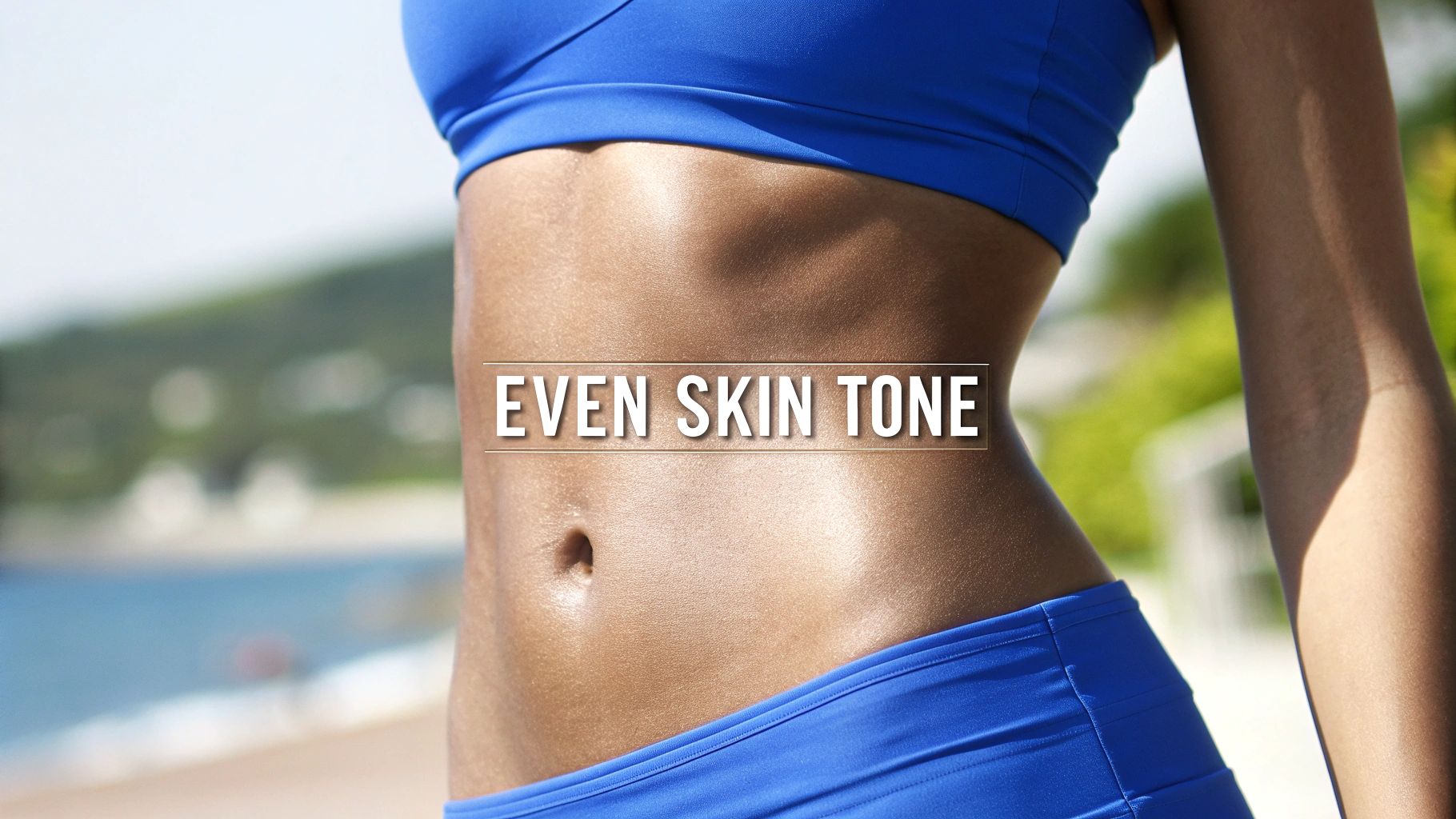
Let’s get straight to the point: a spray tan won't make your stretch marks vanish into thin air, but it does a fantastic job of hiding them in plain sight. It’s one of the most effective, non-invasive ways to achieve a more uniform skin tone, quickly and safely.
Think of it like applying a sheer, tinted filter over your skin. This filter doesn’t change the underlying texture, but it evens out your overall skin tone. The result? The color difference between your stretch marks and the surrounding skin is dramatically reduced, making them far less noticeable. For anyone looking for a temporary confidence boost for a vacation, a special event, or just daily life, a professionally applied spray tan is an incredible solution.
Understanding Coverage Versus Camouflage
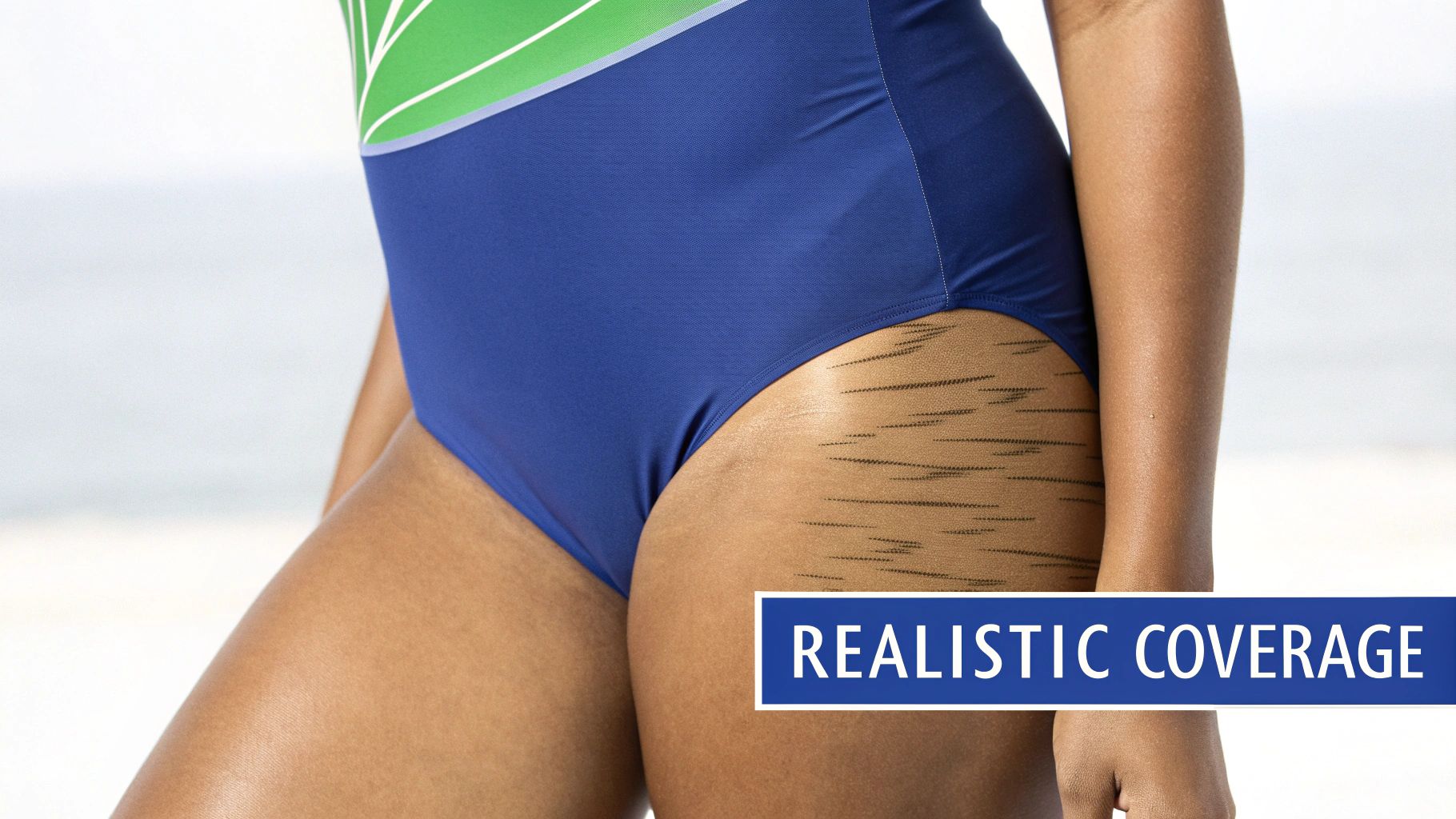
When we talk about whether a spray tan can "cover" stretch marks, it's crucial to set the right expectations. We're really talking about the difference between covering a texture and blending a color. A spray tan is a master of color blending, not a texture filler. Understanding this distinction is key to appreciating how wonderfully effective this treatment can be.
Stretch marks, or striae, are a type of scar tissue that forms when the skin's supportive layers—collagen and elastin—are damaged due to rapid stretching. This can happen during pregnancy, growth spurts, or significant weight changes. These marks often sit a little lower than the rest of your skin and have a distinct texture. No topical solution, spray tan included, can physically fill in those indentations or smooth out the texture. What it can do, however, is work visual magic.
The Power of Blending
So, what’s actually happening when you get a spray tan? The magic is in an ingredient called dihydroxyacetone (DHA). It's a colorless sugar that reacts with the amino acids on the very top layer of your skin—the stratum corneum. This reaction, known as the Maillard reaction, creates a temporary brown pigment called melanoidin, giving you a sun-kissed glow. Importantly, this reaction happens on both your normal skin and the scar tissue of stretch marks.
This process tints everything, creating a much more uniform, golden hue across the entire area. By minimizing that stark color contrast—whether it's the purplish-red of new marks or the silvery-white of older ones—the tan makes them fade beautifully into the background. It's an incredibly effective visual trick that relies on color theory rather than physical alteration.
A spray tan works by creating a 'soft focus' effect on the skin. It doesn't erase the lines, but it makes them significantly less distracting to the eye, giving you a smoother, more even-toned appearance.
This table breaks down how effectively a spray tan can camouflage new (red/purple) and old (white/silver) stretch marks, so you know exactly what to expect.
How Spray Tans Affect Different Stretch Mark Types
| Stretch Mark Type | Common Appearance | How Spray Tan Interacts | Expected Camouflage Level |
|---|---|---|---|
| New (Striae Rubrae) | Red, pink, or purplish lines; may be slightly raised. | The tan darkens both the stretch mark and surrounding skin, significantly reducing the red/purple contrast. | High. Very effective at blending the color for a more uniform look. |
| Old (Striae Albae) | White, silver, or light-colored lines; often slightly indented. | Since these marks lack pigment, they absorb DHA differently. The tan helps tint them, but the texture remains. | Moderate to High. Excellent for color blending, but won't hide texture. |
Ultimately, a spray tan offers fantastic, though temporary, cosmetic camouflage by evening out your skin tone. Its effects typically last for 5-10 days, depending on your skin type and aftercare routine.
According to renowned tanning expert Kimberley Nkosi, who has worked with over 15,000 clients including A-listers, it's one of the best ways to disguise stretch marks. She points out that professionals use barrier creams on scarred areas to prevent them from absorbing too much solution—a common issue with DIY attempts that can lead to streaks. You can get more insights on professional tanning techniques from industry experts.
This makes spray tanning a powerful, temporary boost for anyone looking to feel more confident for a special event, a vacation, or just because.
How Spray Tans Work on Scarred Skin
To really get why a spray tan can make a world of difference for stretch marks, we need to quickly look at the simple science behind that glow. At its heart, a stretch mark (clinically known as striae) is just a type of scar that shows up when the skin’s deeper support layers—collagen and elastin—get damaged from rapid stretching.
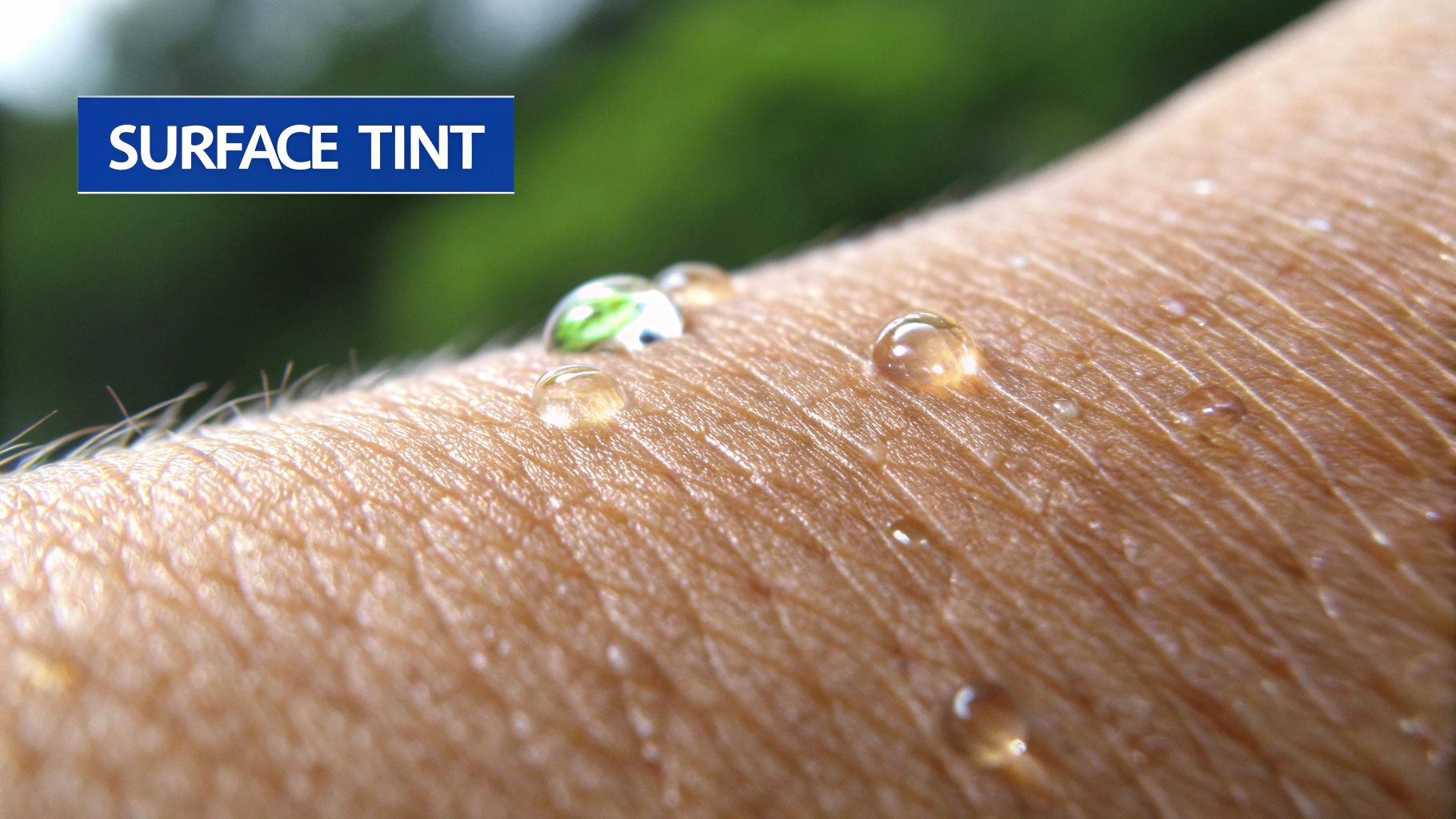
I like to use a simple analogy: think about painting a textured wall versus a perfectly smooth one. The paint will cover the color of both surfaces just fine, but you’re still going to see the bumps and grooves of the texture underneath that fresh coat. A spray tan works on your skin in almost the exact same way. It's a surface treatment that excels at color correction.
The magic ingredient in any sunless tanning solution is dihydroxyacetone (DHA). It's a simple sugar compound that has a unique reaction with the amino acids in the very top layer of your skin, the stratum corneum.
That chemical reaction causes the skin cells to darken, creating that temporary brown tint we call a tan. It's a purely cosmetic effect that colors only the surface of the skin, without needing any UV rays or going any deeper. This is a key benefit, as UV exposure from sun tanning can actually worsen the appearance of stretch marks over time by damaging collagen further.
Color Correction, Not Texture Alteration
Because DHA only interacts with the skin's surface, it tints everything it touches—both your undamaged skin and the scarred tissue of your stretch marks. This is precisely why it’s such a powerful camouflage tool. By creating one uniform color, it dramatically reduces the visual contrast that makes stretch marks so noticeable.
But it's crucial to understand this is all about color. Here’s a clear breakdown of what a tan can and can’t do:
- What it can do: Drastically reduce the color difference, helping red, purple, or silvery-white marks blend right in with your new, even skin tone.
- What it can’t do: Physically fill in the indentations or smooth out the raised texture that’s part of the scar tissue itself.
The secret to a great spray tan is its ability to tint the surface. Think of it as an amazing color-correcting filter for your skin. It doesn't change the physical structure underneath—the texture is still there—but it makes the color contrast practically disappear.
The Role of Skin Porosity
Now, here’s a detail that separates a good tan from a great one: how the scar tissue itself absorbs the tanning solution. Older, silvery stretch marks tend to have less natural pigment and can be less porous than the skin around them. On the flip side, some scarred tissue can be drier and more absorbent. This variability is a major challenge for at-home tanning kits.
This difference in porosity is exactly why getting a professional application is so important. An experienced technician knows how to work with this. They might use a light barrier cream on certain spots to prevent the stretch marks from soaking up too much solution and turning unnaturally dark. They can also adjust their spray gun's distance and flow rate to apply the solution more lightly over these areas.
This kind of controlled, expert application is what creates that seamless, natural-looking blend, turning a simple color tint into truly effective camouflage.
Factors That Determine Your Final Results
So, when you ask, "does a spray tan cover stretch marks?" the honest answer is, "it depends." The final look isn't a simple yes or no; it's a blend of science, skin, and artistry. Several key variables play a huge role in how well the tan camouflages your marks, turning a decent result into a truly seamless one.
Understanding these factors helps you set realistic expectations and see why a professional application is worlds away from a DIY attempt. It’s not just about spraying color—it’s about a technician’s ability to read and adapt to your unique skin.
The Age and Color of Your Stretch Marks
This is probably the single biggest factor. Just like skin, stretch marks change over time, and their age dictates how they'll react to the tanning solution.
- Newer Stretch Marks (Striae Rubrae): These are the red, pink, or purple ones. They're still in an active, inflammatory stage and might even feel a bit raised. Spray tans work beautifully on these. The bronze color effectively neutralizes the reddish tones, helping them blend in almost perfectly. The tanning solution provides a warm, brown overlay that cancels out the cool, red undertones.
- Older Stretch Marks (Striae Albae): These are the marks that have fully healed, settling into a silvery-white or light tone. They often have a slightly indented or crinkly texture. Because they contain little to no melanin, they can absorb the tanning solution very differently from the surrounding skin. With the right technique, a spray tan can add the necessary pigment to these areas, making them match the rest of your skin tone.
Think of it like this: covering a red mark with a brown tint is like using a color-correcting concealer—it’s incredibly effective at canceling out the unwanted tone. Covering a white mark, on the other hand, requires the tan to add color where none exists, which is a bit trickier but absolutely possible with the right technique.
The Technician's Skill and Technique
This is where a professional truly earns their stripes. An experienced technician understands the subtle nuances of working with scarred tissue. They won't just blast an even coat over your entire body; they will strategically adjust their application for a flawless, natural-looking blend.
A pro knows that the drier, more porous tissue of some stretch marks can "grab" the solution, causing it to go darker and look unnatural. To stop this from happening, they use specific techniques, like applying a barrier cream. This is a light, moisturizing lotion applied directly to the stretch marks before the tan. It creates a subtle shield, ensuring the scar tissue absorbs the color at the same rate as the rest of your skin.
Honestly, this one step is often the secret to preventing that dreaded dark-streaking effect that ruins so many at-home tanning jobs. A skilled artist also knows how to feather the spray and adjust their distance from the skin, building color gently over these areas instead of saturating them. This artistic approach ensures the camouflage is undetectable.
Finally, the quality of the tanning solution itself is non-negotiable. Professional-grade formulas are designed for an even fade and are packed with high-quality DHA and moisturizing ingredients that help the tan look like your real skin, only better. Cheaper, off-the-shelf products are far more likely to turn orange or fade in patchy splotches, which will only end up making your stretch marks even more noticeable.
Pre-Tan Prep for a Flawless Finish
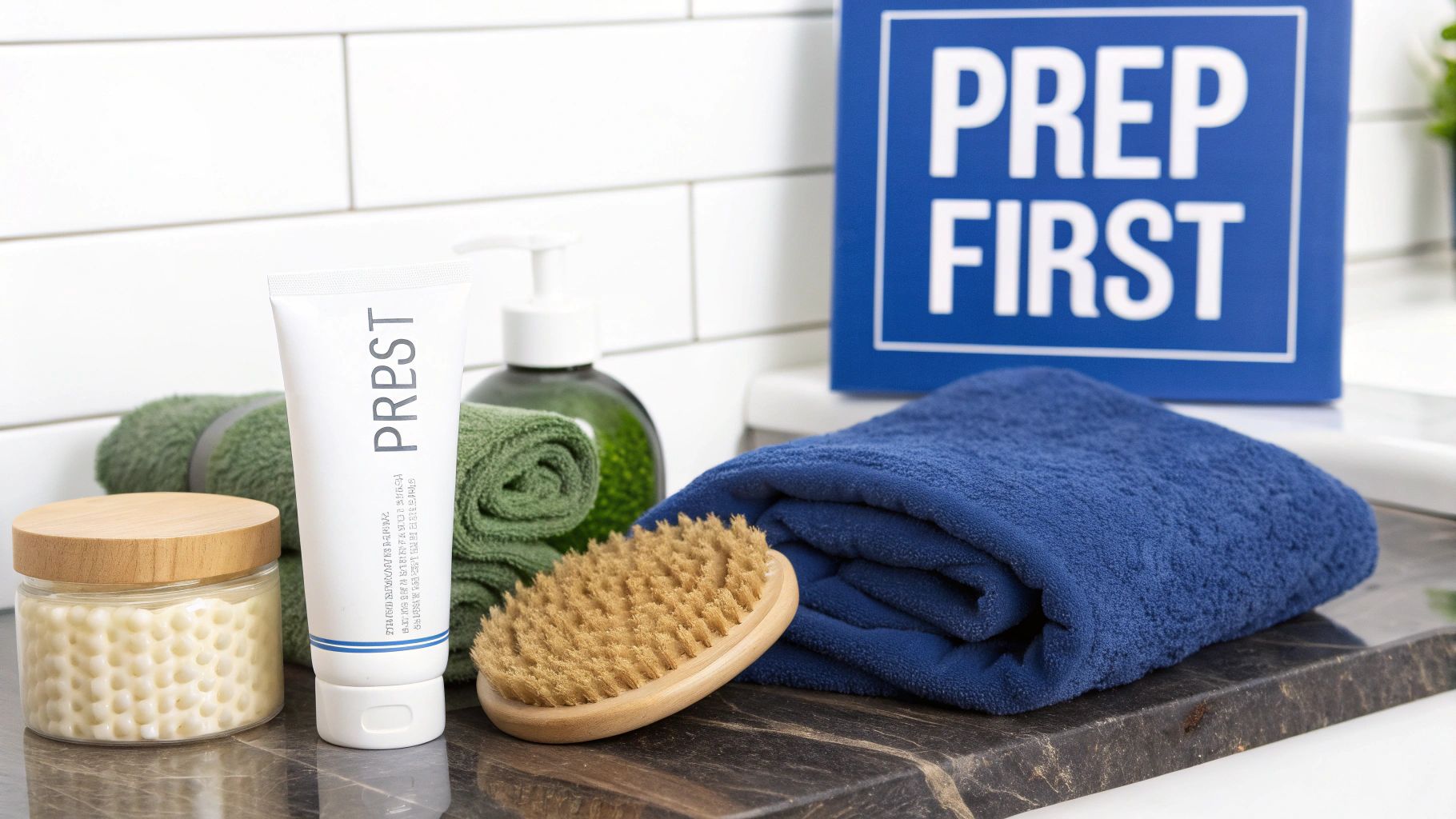
The secret to a flawless spray tan that makes stretch marks practically disappear begins long before you ever step into the salon. Think of your skin as a canvas. The smoother and healthier it is, the more evenly the color will apply and the more natural it will look. Proper prep isn't just a suggestion; it’s non-negotiable for that seamless, sun-kissed glow.
Your prep work should start 24-48 hours before your appointment. This window gives your skin plenty of time to calm down after exfoliation and shaving, which means the tanning solution will adhere perfectly without any irritation. Rushing this process is probably the most common mistake we see, leading to a splotchy application and a shorter lifespan for your tan.
Creating the Perfect Canvas
The single most important step is gentle exfoliation. Grab a non-oily scrub and carefully slough off any dead skin cells. This creates a uniform surface, which is absolutely vital for an even application, especially over the textured skin of stretch marks. A smooth base ensures the tan develops consistently and, just as importantly, fades evenly without becoming patchy. Pay special attention to areas with stretch marks, but be gentle to avoid irritation.
Hydration is the other side of the coin. Start drinking plenty of water in the days leading up to your tan. Skin that's well-hydrated from the inside out absorbs the tanning solution beautifully and helps your color last longer. By the way, if you want to learn more about how hydration and things like Vitamin D impact your skin, check out our guide on the skin benefits of vitamin d.
When the day of your appointment arrives, your skin needs to be a completely blank slate. That means:
- No Lotions or Oils: These create a barrier on your skin, blocking the tanning solution from absorbing correctly.
- No Deodorant: It can react with the formula and sometimes create a weird greenish tint in your underarms.
- No Makeup or Perfume: These products can also interfere with how the tan develops, leaving you with patchy spots.
The Professional Secret: Barrier Cream
For anyone wondering if a spray tan can truly cover stretch marks, the answer often comes down to one professional technique: barrier cream. This is a light, protective lotion that your technician will selectively apply to areas that tend to grab too much color—think knuckles, elbows, and yes, very dry or deep stretch marks.
Barrier cream acts like a primer for your skin's most porous areas. It stops scarred tissue from getting overly saturated and turning darker than the surrounding skin. Getting this right is the key to a truly natural and blended look.
Did you know that stretch marks affect a staggering 50-90% of women? Sunless tanning became the go-to solution because traditional UV tanning can actually make them look worse by breaking down collagen. A perfectly prepped spray tan, on the other hand, can last up to 10 days, effectively disguising scars with a beautiful surface tint. Tanning artists who have worked with thousands of clients swear by prep steps like barrier cream to achieve that soft-focus glow that makes imperfections fade into the background.
Aftercare Tips to Extend Your Tan
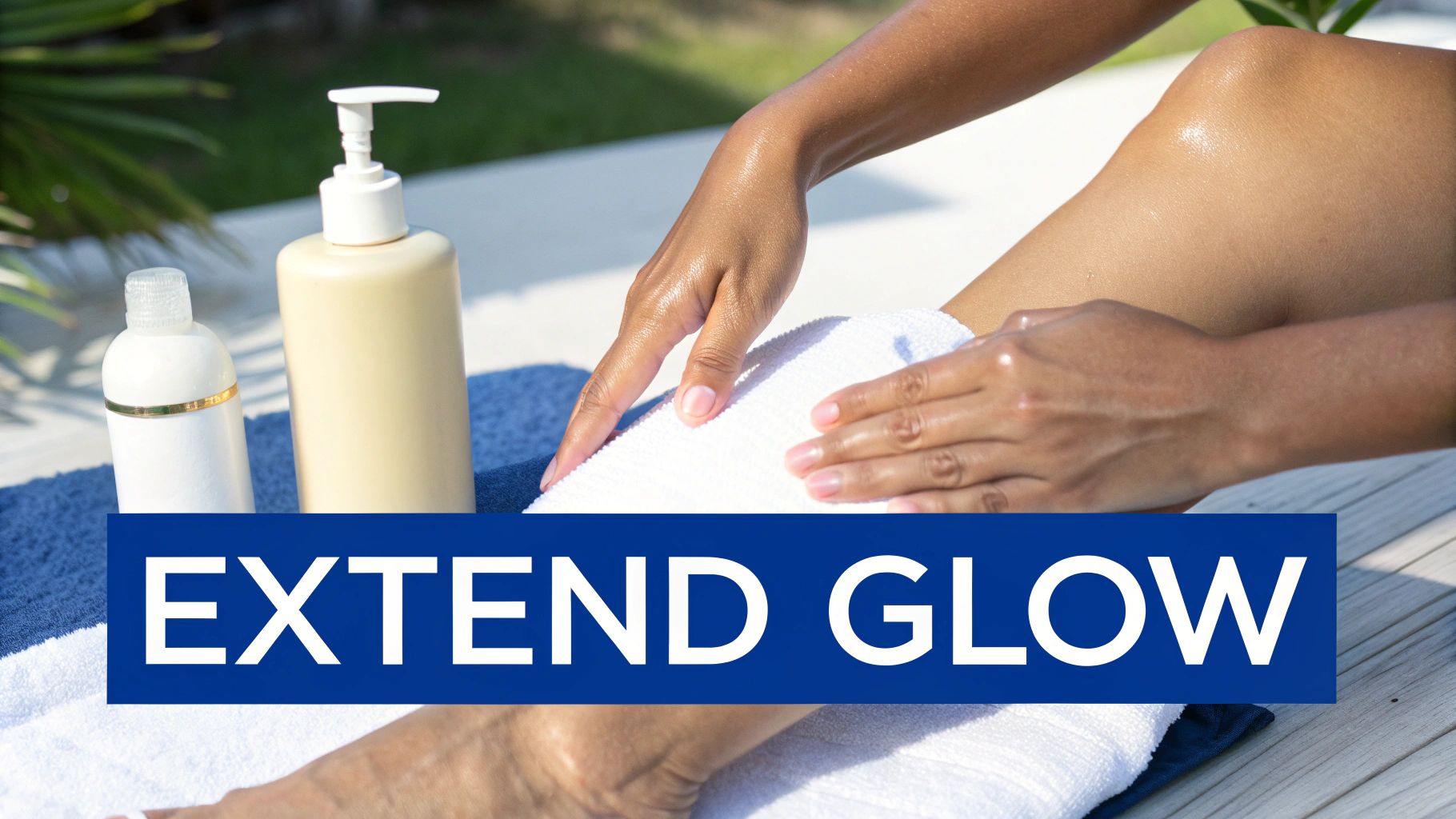
You’ve done it. You have that gorgeous, even glow, and your stretch marks have faded beautifully into the background. Now, the real work begins: preservation. Smart aftercare is everything when it comes to making that tan—and its flawless camouflage—last as long as humanly possible.
The first 8-12 hours are absolutely critical. Think of this as the curing phase. The DHA is busy working its magic, developing that rich color. During this window, you must avoid water at all costs. That means no showers, no swimming, and definitely no sweaty workouts. This initial patience is what allows the color to set deeply and evenly. Wear loose, dark clothing during this time to avoid smudging the tan or staining your clothes.
Your First Shower and Beyond
When it's finally time for that first shower, the mantra is "rinse, don't scrub." Use lukewarm water and just let it run over your skin. You'll see the cosmetic bronzer wash away, which is totally normal. Don't use any soap or body wash during this first rinse. The bronzer is just a color guide for the technician; your real tan has already developed underneath.
Once you’re out, gently pat your skin dry with a soft towel. Whatever you do, don't rub. Aggressively towel-drying is the fastest way to scrub off your new tan, creating patchy spots that can make stretch marks stand out all over again. This one simple habit can add days to the life of your color.
Smart aftercare isn't just about making the color last; it's about preserving the evenness that makes the camouflage so effective. Hydration and gentle handling are your two best tools for keeping stretch marks hidden.
Daily Maintenance for a Lasting Glow
Hydration is your tan’s best friend, period. Dry skin flakes away, and it takes your beautiful bronze color right along with it. To fight this, get in the habit of moisturizing at least once a day with a high-quality, oil-free lotion. For best results, moisturize twice daily—once in the morning and once before bed.
Keep an eye out for products specifically labeled as "tan extenders," as these are formulated to nourish your skin without ingredients that can strip your color. You’ll want to steer clear of products containing:
- Mineral Oil: This is a known tan-killer that can break down the tanning solution.
- Harsh Alcohols: These will dry out your skin in a heartbeat, leading to fading.
- Sulfates: Often found in body washes, these detergents can strip color incredibly fast.
- Exfoliants: Avoid scrubs, AHAs, and BHAs on tanned skin.
By adopting this simple routine, you’re not just saving your tan; you’re promoting healthier skin. Well-hydrated skin provides a much better canvas for your next tan, ensuring every application looks its absolute best. For a deeper dive, our complete guide on how to make spray tans last longer is packed with even more pro tips to keep your results looking flawless.
Alternative and Complementary Treatments
While a spray tan is a fantastic cosmetic fix, it’s best to think of it as one of many tools in your aesthetic toolkit. For anyone looking for different or more permanent solutions for stretch marks, there are several effective options out there. Understanding the whole picture empowers you to choose the right strategy for your personal goals.
A spray tan is perfect when you want an immediate, non-invasive confidence boost. But if you’re exploring other ways to manage the look of stretch marks, you can look into everything from cosmetic camouflage to clinical treatments. Each approach has a different job, from temporary cover-ups to long-term improvements in your skin.
Exploring Your Options
Your choice really comes down to your goals—whether it’s flawless coverage for a special event or a gradual improvement in skin texture over time.
Professional Body Makeup: For high-definition, waterproof coverage, nothing beats professional body makeup. When applied by a skilled makeup artist, it can completely hide stretch marks for a day or two. This makes it a go-to for weddings, photoshoots, or any other big event. Brands like Dermablend specialize in high-pigment formulas that can cover tattoos, scars, and stretch marks without transferring onto clothes.
Medical Tattooing (Camouflage): This is a more permanent approach where a specialist tattoos flesh-toned pigments directly into the stretch marks. The idea is to blend the scar tissue with the surrounding skin, making it far less visible in the long run. It requires a highly skilled practitioner to match the skin tone perfectly and can be an excellent long-term solution for stable, white stretch marks.
Clinical Skin Treatments: For those who want to improve the actual texture and structure of the skin, clinical procedures can deliver incredible results. Treatments like laser therapy and microneedling work by jumpstarting collagen production deep within the dermis. Over a series of sessions, this process helps rebuild the skin from the inside out, making stretch marks shallower and less noticeable. You can learn more about how these powerful procedures work by exploring information on RF microneedling for stretch marks. These treatments address the root cause of the texture, offering lasting improvement.
Think of it this way: a spray tan is like a beautiful, tinted veil that evens out color, while clinical treatments are like repairing the fabric underneath. One gives you an immediate visual upgrade, while the others work to change the material itself.
At the end of the day, a spray tan remains a wonderful and accessible option for quickly and safely minimizing the appearance of stretch marks. Knowing it can be paired with other treatments allows you to build a completely personalized approach to feeling your absolute best.
A Few Common Questions, Answered
Let's clear up some of the most common questions that pop up when people think about spray tanning over stretch marks. Getting straight answers helps you walk into your appointment feeling confident and knowing exactly what to expect.
Will My Stretch Marks Get Darker Than My Skin?
This is the number one concern, and for good reason. The short answer? They can, but they absolutely shouldn't if you're in the hands of a pro.
Scar tissue, especially from older and more faded stretch marks, can be a bit drier and more porous than the rest of your skin. Think of it like a sponge—it can soak up more of the tanning solution if left unchecked. This can lead to the marks looking darker or more pronounced than the surrounding skin, which is the opposite of the desired effect.
But a skilled spray tan artist knows this and has a simple fix. They'll apply a light barrier cream directly to your stretch marks before the tan ever touches your skin. This one simple step ensures the area tans evenly with the surrounding skin, giving you a seamless, natural-looking finish. It’s this kind of detailed technique that really separates a professional service from a DIY kit.
How Long Will the Coverage Last?
The beautiful camouflage effect you get from the tan will last for the life of the tan itself. For most people, that's somewhere between 5 to 10 days.
The exact timeline comes down to a few things: your skin's unique exfoliation cycle, how well you prepped before your appointment, and—most importantly—your aftercare routine. People who exfoliate naturally faster or have oilier skin might see their tan fade sooner.
Following the right post-tan care is your best bet for making that gorgeous glow last. That means moisturizing daily with a tan-friendly lotion and steering clear of harsh soaps or exfoliants that can strip the color away too soon. Proper hydration is the key to a slow, even fade.
A medium shade is often the sweet spot for camouflaging stretch marks. A tan that's too light might not provide enough color to effectively minimize the contrast, while a very dark tan can sometimes draw attention to the texture of deeper marks.
A great technician will work with you to pick a custom shade that perfectly complements your natural skin tone. The goal is always to create the most flawless blend possible, leaving you with a glow you absolutely love.
At Weyergans HighCare US, we believe in combining aesthetic solutions with advanced wellness technology. While a spray tan offers a beautiful temporary solution, our Vacustyler Avantgarde system supports enhanced circulation and skin tone from within, complementing your aesthetic goals for long-term confidence. Explore how our science-backed approach can elevate your medspa or clinic's offerings at https://weyerganshighcareus.com.