


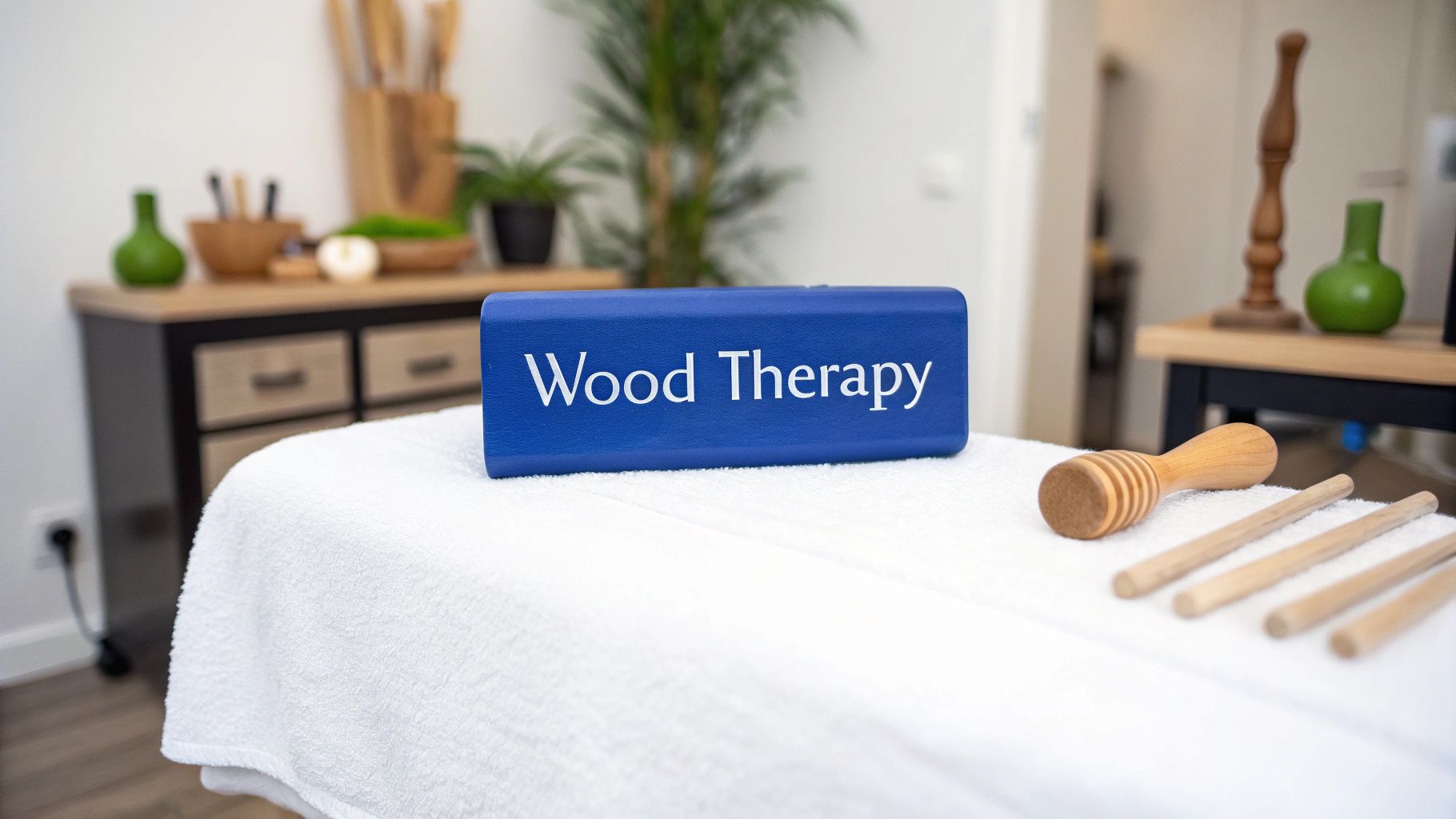
Wood therapy is a non-invasive massage technique that uses a collection of specially shaped wooden tools to break down fat, smooth skin, and kickstart lymphatic drainage. Think of it as a manual body contouring method designed to go after the visible signs of cellulite by applying deep, targeted pressure that helps remodel fatty tissue and improve circulation from the inside out. This comprehensive guide will explore everything from its ancient origins to its modern application in aesthetic medspas, providing a deep dive into why this treatment has become a go-to for clients seeking natural, effective cellulite reduction.
What Is Wood Therapy and How Does It Work
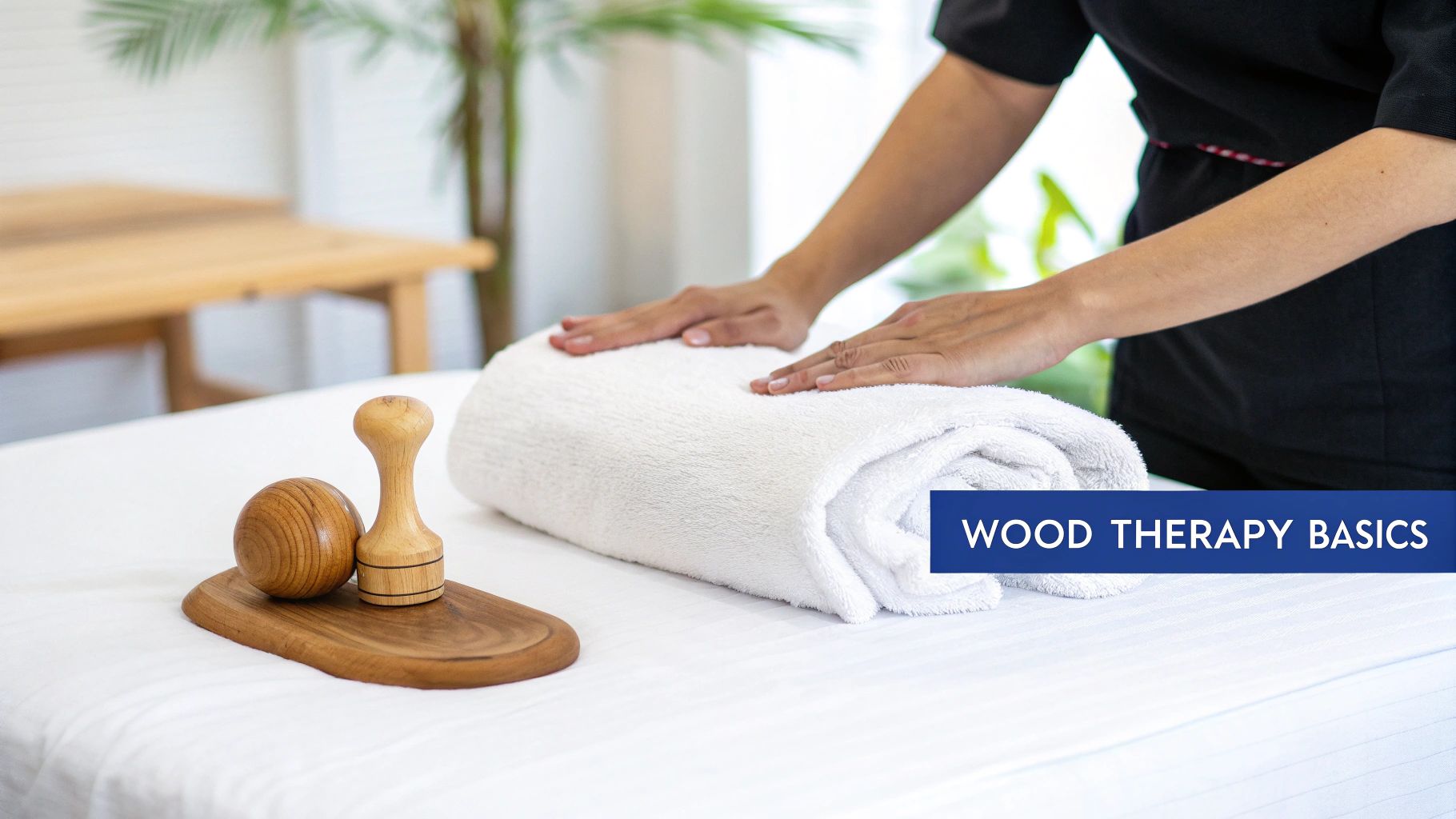
Often called Maderoterapia, wood therapy is much more than a simple massage—it’s a strategic body sculpting technique. The magic is in the anatomically designed wooden instruments, which allow the therapist to apply intense, targeted pressure to areas prone to cellulite, like the thighs, buttocks, and abdomen. The entire process is designed to manually manipulate and restructure the subcutaneous tissue where cellulite forms. The core principle revolves around using these tools to deliver a deeper, more consistent pressure than manual massage alone could ever achieve, effectively targeting the underlying causes of cellulite.
Imagine trying to smooth out a lumpy mattress. You can’t just press on it with your hands; you need firm, consistent pressure to break up the clumps and redistribute the filling. The wooden tools in wood therapy act in a similar way, giving the therapist the leverage needed to break down stubborn fat deposits and loosen the tight, fibrous bands that pull the skin down and create those characteristic dimples. This mechanical action is what sets it apart from more superficial treatments.
The Core Mechanics of Action
The effectiveness of wood therapy for cellulite comes from a powerful combination of mechanical actions that work together to improve the skin's appearance and the health of the underlying tissue. Each session sets off a cascade of positive physiological responses, creating a multi-faceted attack on cellulite. The synergy of these actions is what delivers visible, lasting results.
The primary goal is to stimulate the lymphatic system—the body's natural detoxification network. By improving lymphatic drainage, the treatment helps flush out the excess fluid and toxins that can make cellulite look much worse.
To put it simply, here’s a quick breakdown of how wood therapy’s core actions deliver the outcomes your clients are looking for. Each tool and technique has a specific purpose, contributing to the overall contouring and smoothing effect.
Wood Therapy At a Glance: Core Actions and Outcomes
| Mechanism of Action | Primary Tool Type Used | Targeted Outcome |
|---|---|---|
| Mechanical Breakdown of Adipose Tissue | Grooved and knuckled rollers | Disrupts and softens localized fat deposits, making them easier for the body to process. |
| Deep Circulatory Stimulation | Smooth sculpting paddles and rollers | Boosts blood flow, delivering more oxygen and nutrients to skin cells for improved tone and health. |
| Lymphatic System Activation | Contoured paddles and suction cups | Encourages the movement of stagnant lymph fluid, reducing water retention and puffiness. |
| Stretching of Fibrous Septae | Specialized sculpting and contouring tools | Lengthens the tight connective tissue cords that cause dimpling, creating a smoother skin surface. |
This targeted approach delivers several key benefits for medspas looking to offer effective, non-invasive body contouring solutions:
- Breaks Down Adipose Tissue: The firm pressure from rollers and sculpting tools helps break apart localized fat deposits, making them easier for the body to naturally process and eliminate. This process, known as lipolysis, is stimulated mechanically.
- Stimulates Deep Circulation: Enhanced blood flow brings more oxygen and nutrients to the skin and underlying tissues. This promotes cellular repair and dramatically improves skin tone, elasticity, and overall health.
- Activates the Lymphatic System: Specific, directional strokes encourage the movement of lymph fluid. This reduces water retention and puffiness for a smoother, more contoured look, effectively detoxifying the treated areas.
- Stretches Connective Tissue: The tools work to lengthen and relax the fibrous septae—those connective tissue cords responsible for cellulite dimples—resulting in a visibly smoother skin surface. This is one of the most direct ways to address the root cause of the dimpled appearance.
By framing it this way, you can position wood therapy not just as another wellness treatment but as a results-oriented service that directly addresses one of your clients' most persistent aesthetic concerns. It provides a tangible, physical solution to a complex structural problem.
The Ancient Roots of Modern Body Sculpting
To truly grasp the power of wood therapy, it’s important to see it for what it is: not just another social media trend, but a time-tested practice with roots stretching back centuries. Its journey from ancient healing arts to modern body sculpting is a fascinating one, and sharing this story with your clients builds incredible trust in a method that is both natural and proven. The longevity of this practice speaks volumes about its efficacy and alignment with the body's natural functions.
The practice of using wooden tools for therapeutic massage isn't new. In fact, its story begins thousands of years ago in traditional Chinese medicine, where practitioners used wooden instruments to stimulate the body's energy flow, or 'qi,' as far back as 2000 BCE. From there, the technique spread across Asia and the Middle East. By 500 BCE, records show it was being used in places like Persia to improve muscle tone and circulation. You can dig deeper into the history of wood therapy and its aesthetic uses on Healthline.com. These ancient cultures understood the power of manipulating soft tissue to promote health and vitality, a principle that remains at the core of Maderoterapia today.
From Eastern Medicine to European Aesthetics
As these methods migrated west, their purpose began to shift. The real turning point came in 19th-century France, where the practice was brilliantly adapted for aesthetic goals. European practitioners saw its incredible potential for tackling fluid retention and the bumpy appearance of cellulite—a concern that affects an estimated 80-90% of women after puberty. This adaptation was a key moment in the history of non-invasive body contouring.
This evolution was crucial. It moved the use of wooden tools from a purely wellness-focused practice to a targeted cosmetic treatment. Yet, the core principle never changed: using anatomically shaped instruments to manipulate tissue, boost circulation, and encourage the body’s own natural processes. The focus became more refined, targeting specific aesthetic outcomes rather than general well-being.
Wood therapy’s longevity comes from its simple but powerful idea: using natural materials to work in harmony with the body's own systems. It’s the perfect bridge between ancient wisdom and modern aesthetic goals.
This historical context is a powerful tool for any medspa. It allows you to frame wood therapy for cellulite not as a gimmick, but as an evolved, non-invasive solution with a rich, credible history. It reassures clients that they are choosing a treatment with a long lineage of success.
The Colombian Refinement
The most significant leap forward for modern wood therapy happened in Colombia in the 1990s. This is where therapists and artisans took the ancient concepts and perfected them specifically for body contouring. It was during this time that the specialized toolsets we use today were developed, with each piece meticulously crafted to fit different curves and areas of the body, maximizing both comfort and effectiveness.
The Colombian technique, known as Maderoterapia (literally "wood therapy"), standardized the protocols for achieving aesthetic results. Practitioners systematized the specific strokes, sequences, and pressures required to effectively:
- Break down adipose tissue with geometrically shaped rollers.
- Sculpt and define the waistline using contoured sculpting boards.
- Improve lymphatic drainage with specialized suction cups.
- Smooth the skin’s surface with smooth rolling pins.
This refinement turned a traditional art into a precise, results-driven science. It’s this Colombian system that serves as the foundation for the wood therapy services you see in leading aesthetic clinics all over the world today, offering a proven framework for tackling one of beauty's most stubborn challenges: cellulite. This modern standardization ensures consistent, repeatable results for clients.
The Science Behind Targeting Cellulite with Wood
To see how wood therapy gets those visible results, we have to look deeper than the skin's surface. The technique isn't just a massage; it's a strategic, mechanical process designed to remodel the very structures causing that dimpled look. It physically alters the subcutaneous environment to create a smoother appearance.
Imagine your skin is a smooth sheet pulled taut over underlying tissue. Cellulite is like tiny wrinkles or puckers in that sheet. You can’t just gently brush over it and expect it to smooth out. You need firm, consistent pressure to essentially "iron out" the creases from below. The specialized wooden tools act as that iron, physically restructuring the tissue for a smoother finish.
This whole approach is designed to kick off a chain reaction of positive physiological changes, right from the very first session. The body responds to the controlled mechanical stress by increasing blood flow, activating cellular repair, and improving lymphatic efficiency.
Step 1: Warming and Preparing the Tissue
Every good wood therapy session starts with preparation. The therapist uses smooth, contoured wooden tools to apply broad, gentle pressure, warming up the treatment area. This isn't just about making the client comfortable—it's a critical first step that prepares the tissue for more intensive work.
This initial warming action gets the circulation going, bringing a fresh supply of oxygen and nutrients to the skin and underlying fat. More importantly, it makes the tissue more pliable and ready for the deeper, more intensive work that follows. This preparation phase ensures the subsequent steps are more effective and comfortable for the client.
Step 2: Breaking Down Fibrous Bands and Adipose Tissue
Now we get to the heart of the treatment. Using grooved rollers and other textured tools, the therapist applies deep, rhythmic pressure directly over the cellulite. This physical force is designed to manually break apart the tight, fibrous septae—those are the connective tissue cords that pull the skin downward, creating the dimples.
At the same time, this intense pressure helps soften and disrupt the stubborn pockets of fat trapped within these fibrous compartments. By tackling both the fat and the bands holding it in place, the treatment gets right to the structural cause of cellulite. The goal is to physically loosen the tethers and smooth the fat layer.
The real power of wood therapy lies in its ability to manually disrupt the very architecture of cellulite. By breaking down fibrous bands and softening fat deposits, it paves the way for a smoother, more uniform skin surface.
The whole process is methodical, targeting specific problem areas with tools shaped to fit the body’s natural curves, ensuring that every contour is addressed effectively. This precision is key to achieving a sculpted look.
Step 3: Accelerating Lymphatic Drainage and Flushing
Once the tissue has been broken up, the focus shifts to cleanup. The body's lymphatic system is its natural waste disposal network, but it often becomes sluggish, leading to fluid retention that makes cellulite look even worse. Wood therapy provides a powerful boost to this system.
Using special wooden suction cups and sculpting paddles, the therapist performs precise, directional strokes. These movements guide stagnant lymph fluid and metabolic waste toward the major lymph nodes to be flushed out. This has two key effects:
- Lifts Connective Tissue: The suction from the cups gently lifts the skin, creating space and encouraging better fluid movement. This also helps to further stretch the fibrous septae.
- Promotes Toxin Removal: It speeds up the removal of excess fluids and toxins that were released from the tissue during the breakdown phase, reducing inflammation and puffiness.
This final step is essential for reducing the puffiness and swelling that contribute to a lumpy appearance, leaving behind a more sculpted and toned look. It’s the finishing touch that ensures the mobilized waste is efficiently removed from the body.
While large-scale clinical trials are still emerging, practitioner data is compelling. A 2023 survey of 1,200 clients across US and European medspas found that 68% reported visible cellulite smoothing after a series of 10-15 sessions. They attributed this success to the technique's unique ability to break down those fibrous bands. Considering that cellulite affects up to 85% of women between the ages of 20 and 50, this approach addresses a huge market. You can find more details on the history and application of Maderoterapia here.
By combining these three distinct phases—warming, breaking down, and flushing—wood therapy offers a comprehensive, non-invasive strategy for tackling the appearance of cellulite.
Integrating Wood Therapy into Your Service Menu
Successfully adding wood therapy for cellulite to your menu is about more than just buying the tools. It’s a strategic move that demands a smart approach to packaging, pricing, and how you talk to your clients. Get this right, and you’ll not only boost your revenue but also build the kind of trust that keeps clients coming back for the full journey. A well-integrated service becomes a cornerstone of your body contouring offerings.
The first piece of the puzzle is session timing. A solid wood therapy session needs about 50 to 60 minutes. This gives you enough time to properly warm up the tissue, get into the intensive sculpting work on key areas like thighs and buttocks, and wrap up with those crucial lymphatic drainage strokes. It's the sweet spot between an effective, thorough treatment and an appointment that fits neatly into a busy day. Rushing the process will only compromise the results.
Designing Effective Treatment Protocols
If there’s one secret to getting real, visible results with wood therapy, it’s consistency. A single session feels great—clients often leave feeling lighter with smoother skin—but lasting change comes from a cumulative effect. You have to kickstart the body’s response with an intensive phase to create meaningful structural changes.
For new clients, the best bet is a starting package of sessions scheduled 2 to 3 times per week. This frequency is vital. It continuously stimulates the lymphatic system and breaks down that fibrous tissue before it can settle back into its old habits. Once they've completed this initial push, you can ease them into a maintenance plan designed to preserve their results.
Managing client expectations is paramount. Frame wood therapy not as a one-time fix, but as a progressive treatment program. Explain that the results build over time, much like a fitness routine, to encourage commitment to a full series.
This kind of upfront honesty prevents disappointment and positions your clinic as a true partner in their body contouring goals. For a broader look at different modalities, you can explore our guide on non-invasive body treatments.
Crafting Compelling Service Packages
Selling one-off sessions is a missed opportunity. Structured packages are far more effective. They secure upfront revenue, dramatically improve client retention, and, most importantly, ensure clients stick around long enough to see the significant results they’re paying for. Packages demonstrate a commitment to the client's outcome.
Here are a few package models that just work:
- The Introductory Series (10 Sessions): This is the perfect starting point for most people. It's a serious enough commitment to produce visible improvements in skin texture and cellulite.
- The Transformation Package (15 Sessions): For clients dealing with more stubborn cellulite or those who want more dramatic contouring, a 15-session package gives you the extended time needed to deliver those top-tier results.
- The Maintenance Plan (4 Monthly Sessions): Once they’ve finished an initial series, offer a recurring monthly or bi-monthly package at a preferred rate. This is how you help them protect their investment and keep their results long-term.
Your pricing needs to reflect the value of a specialized, hands-on therapy. The global buzz around wood therapy for cellulite is part of a massive consumer shift toward natural, non-invasive body contouring. This market is on track to hit $2.5 billion in yearly revenues by 2026, a growth fueled by a 90% consumer preference for non-surgical options. With sessions typically priced between $75 and $150, the profit margin potential is significant.
Creating Powerful Treatment Combinations
Wood therapy is fantastic on its own, but its true power is unlocked when you pair it with complementary technologies. By combining its manual sculpting benefits with other modalities, you can design signature protocols that deliver faster, more impressive outcomes and command a premium price.
One of the most powerful pairings is with systems designed to supercharge circulation and lymphatic flow, like the Vacustyler. The Vacustyler uses intermittent negative pressure to amplify the circulatory boost you started with wood therapy, dramatically improving the body's ability to flush out toxins and shed retained fluid. This creates a potent synergy: the wood therapy breaks down the tissue, and the Vacustyler accelerates the cleanup process. The result? Superior skin smoothing and contouring that sets your services apart from competitors who only offer standalone treatments.
Wood Therapy Versus Other Cellulite Treatments
When guiding clients toward their ideal body contouring solution, it’s essential to know how wood therapy for cellulite stacks up against other popular treatments. This isn't about finding a single "best" option, but about strategically choosing the right tool for the job. By comparing its unique, hands-on approach with other methods, you can build powerful, customized protocols that deliver incredible results and cater to individual client needs.
Wood therapy’s core strength is its intense, mechanical manipulation of tissue. It's a deeply physical process where the therapist manually breaks down fibrous bands and remodels adipose tissue, making it fundamentally different from treatments that rely on gentler, more systemic effects or energy-based devices.
Wood Therapy vs. Manual Lymphatic Drainage
Manual Lymphatic Drainage (MLD) is a feather-light massage technique focused entirely on encouraging the natural flow of lymph fluid. The primary goal is to reduce swelling and fluid retention by gently guiding stagnant fluid toward lymph nodes. It's incredibly effective for detoxification and easing puffiness.
However, MLD doesn't directly tackle the structural causes of cellulite—the hardened fat deposits and tight fibrous septae. It is not a sculpting treatment.
- Wood Therapy: Actively breaks down the architecture of cellulite through deep, targeted pressure. It forcefully stimulates both the circulatory and lymphatic systems.
- Manual Lymphatic Drainage (MLD): Gently coaxes the lymphatic system to improve fluid flow. It’s more of a flushing and detoxifying treatment than a sculpting one.
Think of it this way: MLD is like gently clearing a slow-moving stream of leaves, while wood therapy is like using a rake to break up the dense, compacted soil underneath. One is for clearing, the other is for restructuring.
Wood Therapy vs. Cupping Therapy
Cupping therapy uses suction to lift the skin and the underlying connective tissue. This lifting action creates space, boosts blood flow, and can help release the fibrous bands that cause dimpling. It shares a common goal with wood therapy—disrupting the structures that create cellulite.
The main difference is the direction of force. Cupping pulls tissue upward (negative pressure), whereas wood therapy pushes downward and rolls across it (positive pressure). While both can work, wood therapy offers a more intensive, sculpting action over larger surface areas, making it perfect for comprehensive body contouring on the thighs and buttocks. Some practitioners find the combined push-pull effect of using both methods yields superior results.
Wood Therapy vs. Advanced Systems Like Vacustyler
This is where manual artistry meets technological efficiency. Advanced systems like the Vacustyler use intermittent negative pressure therapy to dramatically enhance circulation and lymphatic drainage from the outside in. A session in the Vacustyler pod creates a powerful vacuum effect that pulls blood into the lower body before releasing it, effectively "training" the vascular system and promoting widespread detoxification.
Wood therapy excels at the manual breakdown of stubborn tissue, while technological systems like the Vacustyler excel at the systemic flushing and circulatory enhancement required for cleanup. The synergy between the two is undeniable.
Pairing these treatments creates a best-of-both-worlds protocol. The wood therapy session acts as the "sculpting" phase, manually breaking apart cellulite structures. The Vacustyler session that follows serves as the "flushing" phase, using advanced technology to speed up the removal of released toxins and fluids. This combination can lead to faster, more pronounced, and longer-lasting results than either treatment could achieve alone. You can discover more about how this technology works by exploring our overview of vacuum therapy for cellulite.
To help you and your clients decide on the best approach, this table breaks down how each non-invasive treatment stacks up.
Comparing Non-Invasive Cellulite Treatments
| Treatment | Mechanism | Best For | Typical Session | Synergy Potential |
|---|---|---|---|---|
| Wood Therapy | Deep mechanical pressure to break down fat and fibrous bands. | Clients seeking intense, manual body sculpting and visible texture improvement. | 50–60 minutes | High. Pairs extremely well with technologies that enhance fluid removal. |
| Manual Lymphatic Drainage | Gentle, rhythmic strokes to stimulate lymph flow. | Reducing fluid retention, puffiness, and post-procedure swelling. | 45–60 minutes | Moderate. Excellent for pre- and post-treatment support. |
| Cupping Therapy | Negative pressure (suction) to lift connective tissue. | Targeting localized areas of dimpling and releasing tight fascia. | 30–45 minutes | Moderate. Can complement wood therapy by targeting specific adhesions. |
| Vacustyler System | Intermittent vacuum pressure to boost systemic circulation. | Enhancing overall leg contouring, detoxification, and athletic recovery. | 20–30 minutes | Very High. Amplifies the results of manual therapies by accelerating cleanup. |
Ultimately, choosing the right treatment comes down to the client’s specific goals, the type and severity of their cellulite, and their preference for manual versus technology-assisted therapies. By understanding these key differences, you can confidently recommend wood therapy as a powerful standalone service or as the cornerstone of an integrated, multi-modal body contouring program that truly sets your clinic apart.
Ensuring Client Safety and Optimal Aftercare

Delivering incredible results with wood therapy for cellulite isn't just about the technique itself. It’s built on a bedrock of safety and attentive client care. Getting your protocols right protects your clients’ well-being and cements your clinic's reputation for professionalism and expertise. Client trust is your most valuable asset.
That all starts with a thorough, non-negotiable consultation. Before a single tool is picked up, a detailed client assessment is absolutely critical to flag any potential issues and ensure every session is both safe and effective. This is also your chance to set realistic expectations and walk them through the aftercare plan, making them an active participant in their treatment journey.
Identifying Key Contraindications
While wood therapy is a safe, non-invasive treatment for most healthy people, it’s definitely not a one-size-fits-all solution. The deep pressure and intense circulatory stimulation can be risky for clients with certain health conditions. A failure to screen properly can lead to adverse outcomes and damage your reputation.
Screening for these contraindications is essential:
- Active Skin Conditions: Never treat areas with open wounds, active infections, eczema, or psoriasis. It will only cause more irritation and could spread infection.
- Varicose Veins: You should avoid applying direct, deep pressure over prominent varicose veins to prevent pain or damage to the vessel walls.
- Blood Clotting Disorders: Clients with a history of deep vein thrombosis (DVT) or those taking anticoagulant medication (blood thinners) are not suitable candidates for this treatment due to the risk of dislodging a clot.
- Recent Surgery: It's best to wait until the client is fully healed and has received clearance from their doctor before performing wood therapy near any surgical sites. A minimum of 6-8 weeks is a standard guideline.
- Pregnancy: Wood therapy is generally not recommended during pregnancy, especially around the abdomen and lower back, due to the deep pressure and circulatory stimulation.
- Uncontrolled Hypertension: Clients with high blood pressure that is not medically managed should avoid treatments that significantly impact circulation.
- Cancer: Clients currently undergoing cancer treatment should not receive this therapy without explicit consent from their oncologist.
A professional's first duty is to do no harm. Taking just a few minutes to review a client's health history demonstrates a commitment to safety that builds immense trust and ensures a positive, risk-free experience from start to finish.
This careful, upfront approach minimizes risk and confirms that wood therapy is truly the right choice for each individual client.
Guiding Clients Through Post-Treatment Care
The work isn’t finished when the session ends. What a client does afterward is what transforms a good treatment into a fantastic result. You’ve mobilized a lot of fluid and metabolic waste, and the body needs a little help to properly flush it all out. Effective aftercare is a shared responsibility.
Educating clients on these simple post-treatment steps empowers them to maximize and maintain their results long after they've left your clinic. Provide them with a printed or digital handout for easy reference.
Essential Aftercare Instructions:
- Hydrate, Hydrate, Hydrate: This is the big one. Instruct clients to drink plenty of water over the next 24-48 hours. This is critical for helping the lymphatic system process and eliminate everything that was stirred up during the treatment. Aim for at least 2-3 liters.
- Encourage Light Activity: A brisk walk or some gentle stretching can give lymphatic circulation an extra boost. Advise against strenuous exercise on the same day, but light movement is highly beneficial. You can learn more about how movement supports the benefits of lymphatic drainage massage in our detailed article.
- Recommend a Healthy Diet: Advise clients to steer clear of heavy, processed foods and too much salt right after their session. This helps prevent fluid retention and supports the body’s natural detox process. A clean, anti-inflammatory diet complements the treatment.
- Listen to Their Body: Some mild tenderness or redness is perfectly normal, but significant bruising or pain is not. Make sure clients know to call you if they experience anything unusual. This open line of communication is vital for client safety and satisfaction.
By providing this clear guidance, you extend your professional care beyond the treatment room. You become a trusted partner in their wellness journey, and that’s what keeps them coming back.
Common Questions About Wood Therapy
Anytime a powerful body contouring treatment starts gaining traction, clients and practitioners alike are going to have questions. Getting these answers straight from the start is key to building trust and setting realistic expectations for the amazing results wood therapy for cellulite can deliver. Being prepared with clear, confident answers positions you as an expert.
Here are the straightforward, no-nonsense answers to the questions we hear most often.
How Long Until I See Results?
This is the big one, and the answer is all about consistency. While many clients feel lighter and say their skin feels smoother after just one or two sessions, visible changes to cellulite take time. It's a lot like starting a new fitness routine—the real magic happens when you stick with it. The cumulative effect is what creates lasting change.
Most professionals recommend starting with a series of 10 to 15 sessions, ideally scheduled two or three times a week. You'll typically see significant improvements in skin tone and dimpling after the first month. For those truly optimal, long-lasting results, a full two-to-three-month program is the gold standard, followed by monthly maintenance sessions to keep the skin looking its best and prevent regression.
Is Wood Therapy a Painful Procedure?
Wood therapy should feel like an intense, deep-tissue massage—invigorating, but not painful. A well-trained therapist knows how to listen to your body and will constantly adjust the pressure based on your comfort and the specific area they're working on. Communication during the session is key.
It's completely normal to feel a little tenderness, especially in the first few sessions or on areas with really dense, stubborn cellulite. Some temporary redness is also normal; it's just a sign of increased circulation. What isn't normal is significant pain or heavy bruising—that's a red flag that the technique is being applied improperly.
Making this distinction is crucial for ensuring every client has a positive and comfortable experience. A skilled practitioner will always work within the client's tolerance level.
Can Wood Therapy Be Combined with Other Treatments?
Absolutely. In fact, wood therapy is at its most powerful when it's part of a bigger plan. Its ability to manually break down stubborn tissue pairs perfectly with technologies that boost circulation and lymphatic flow, creating a comprehensive approach to body contouring.
Think of it as a one-two punch. For instance, pairing wood therapy with a system like the Vacustyler creates an incredible synergistic effect.
- Wood Therapy: Does the heavy lifting, manually breaking down the fibrous bands and fatty tissue creating the cellulite.
- Vacustyler: Steps in right after, using intermittent negative pressure to rapidly flush out all the released metabolic waste and excess fluid, amplifying the detoxification process.
This kind of combination gets clients to their goals faster, with more dramatic and longer-lasting improvements in both skin texture and overall leg contouring. It's the ultimate strategy for delivering premium results.
At Weyergans HighCare US, we focus on science-backed technologies that amplify the results of hands-on therapies. Learn how the Vacustyler can elevate your body contouring services and set your practice apart by visiting https://weyerganshighcareus.com.