


Launching a wellness center that truly connects with people involves four crucial elements: finding your unique place in the market, crafting a rock-solid business plan, choosing services that deliver real results and high returns, and building a brand people instinctively trust.
This guide is your real-world blueprint, designed to walk you from that initial spark of an idea to a successful grand opening. We'll dive deep into each stage, providing the detailed insights necessary to transform your vision into a long-form success story, ensuring your center is built on a foundation strong enough to thrive in a competitive market.
Your Blueprint for a Modern Wellness Business
Opening a wellness center today isn't just about passion—it's about stepping into a booming, sophisticated market. Success demands a sharp, strategic approach that treats wellness as the serious business it has become. This isn't just about offering services; it's about creating a comprehensive ecosystem of health that meets the modern consumer's high expectations.
The good news? The consumer mindset has shifted dramatically. People are actively seeking out preventative health, advanced recovery, and ways to optimize their performance, creating massive opportunities for well-planned facilities. This isn't about chasing fads. It's about building a sustainable business grounded in genuine market demand and smart operations. A long-form approach to your business plan and market strategy is essential to capture the nuances of this evolving landscape.
Think of this guide as your roadmap, cutting through the noise to give you actionable, in-depth advice for every step of the journey, ensuring you build a pillar of wellness in your community.
Understanding the Market Opportunity
The scale of the wellness industry is almost hard to comprehend. The global wellness services market was valued at a staggering USD 6.8 trillion in 2024—that's nearly four times the size of the entire global pharmaceutical industry. This isn't a niche market; it's a fundamental component of the modern economy.
Here in the U.S., where this movement is strongest, health and wellness spas alone brought in USD 22.9 billion in 2025 revenue, showing a powerful 9.3% growth rate over the last five years. You can learn more about the wellness market's impressive growth to see the full picture.
This data tells a critical story: you aren't just opening a small local shop. You are tapping into a major economic force. Understanding these macro trends is the first step in positioning your center for long-term growth and relevance. The market is not just growing; it's diversifying into hyper-specific niches, from biohacking and longevity clinics to mental wellness sanctuaries and corporate wellness hubs.
Key Takeaway: A successful wellness center is built on two pillars: a genuine passion for helping people live better and a sharp, data-driven business strategy that ensures your vision is profitable and built to last.
To give you a clear overview of the journey ahead, here's a high-level look at the essential stages we'll cover in this guide.
Key Stages of Launching Your Wellness Center
| Stage | Core Focus | Key Outcome |
|---|---|---|
| Market Research & Niche | Identifying your ideal client and analyzing the competition. | A clear, underserved target market to build your brand around. |
| Business Planning & Legal | Creating a financial roadmap and establishing your legal entity. | A fundable business plan and a legally sound operational structure. |
| Service & Equipment Selection | Choosing high-ROI services and technologies with low overhead. | A profitable service menu that meets client needs and maximizes revenue. |
| Marketing & Client Acquisition | Building a compelling brand and outreach strategy. | A steady stream of new and returning clients. |
Each of these stages is a critical building block for a thriving wellness center. We'll explore each in detail to provide the depth needed for a comprehensive, long-form business strategy.
A Framework for Success
To turn your vision into a profitable reality, we'll dive deep into the essential pillars of a strong launch and sustainable growth. This blueprint is all about practical steps, not abstract theories, giving you a clear path forward.
- Market Research and Niche Identification: We'll show you how to pinpoint your ideal client and truly understand the competitive landscape. This involves not just looking at direct competitors but also understanding adjacent industries that vie for your target audience's time and money.
- Business Planning and Legal Setup: You'll learn to create a plan that attracts funding and establishes a solid legal foundation for your business. We will touch on fundraising strategies, from traditional loans to angel investors interested in the wellness space.
- Service Menu and Equipment Selection: The focus here is on choosing high-ROI services and technologies that keep your overhead low and your profits high. This section will delve into the financial modeling of equipment acquisition, comparing leasing vs. buying.
- Marketing and Client Acquisition: We'll cover how to develop a brand that resonates deeply with your target audience and drives consistent business. We'll explore advanced digital marketing funnels and community-building tactics beyond basic social media posting.
By mastering these core areas, you'll be ready to build a wellness center that doesn't just meet client expectations—it exceeds them.
Finding Your Niche and Crafting a Solid Business Plan

Your vision for a wellness center needs a rock-solid foundation before it can become a reality. It all starts by carving out your specific place in what is often a very crowded market. The hard truth? You can’t be everything to everyone. Trying to do so is one of the fastest ways to get lost in the noise.
The most successful wellness centers I’ve seen are built around a crystal-clear, well-defined audience. Are you going after elite athletes who need rapid recovery to stay at peak performance? Or do you see a massive opportunity with busy corporate professionals who are desperate for effective stress relief? Maybe your passion is in aesthetic wellness, helping clients feel incredible through non-invasive treatments.
This one decision will steer every single choice you make from here on out—from the services you offer to the very look and feel of your facility. It defines your marketing language, your pricing strategy, and even the type of staff you hire.
Conducting Meaningful Market Research
Before you spend a single dollar, you need to become an expert on your local market. I’m not talking about a few generic online searches. This is about gathering specific, actionable intelligence that gives you a genuine competitive edge.
Start by digging into local demographics. Look at census data, local business reports, and even community forums on social media. Is your area filled with young families, affluent retirees, or a booming population of young professionals? This data is your compass, pointing you directly toward unmet needs. Use tools like the Small Business Administration (SBA) website and local chamber of commerce reports to gather this data.
Next, it’s time to size up the competition. Don't just make a list of who they are—figure out what they aren't doing. Go to their websites, read every review you can find (both positive and negative), and maybe even book a service to experience their client journey firsthand. Look for the gaps in their service menus, pricing structures, and overall brand experience. Are they technology-focused or more traditional? High-end or budget-friendly?
For example, you might find several local spas offering standard massages but notice none are providing advanced recovery tech. That’s a potential opening. Or, if you see competitors focusing on high-end, one-off treatments, you might find your sweet spot with a more accessible, membership-based model built around consistent wellness routines. This detailed competitive analysis will be a cornerstone of your business plan.
Identifying Your Unique Value Proposition
Your Unique Value Proposition (UVP) is the simple, powerful statement that explains exactly why a client should choose you over anyone else. It’s where your target audience’s needs and what your center does exceptionally well intersect.
Here are a few examples of how different niches create a powerful UVP:
- For the Performance Athlete: "We provide elite recovery technology that slashes downtime and optimizes physical performance, helping you train harder and compete at your absolute best."
- For the Stressed Professional: "Our center is an urban sanctuary offering efficient, science-backed treatments to reset your mind and body in under an hour."
- For the Aesthetics-Focused Client: "We specialize in non-invasive solutions like lymphatic drainage support that enhance natural beauty and promote holistic well-being without any downtime." If that sounds interesting, you can explore the benefits of lymphatic drainage massage to see its appeal.
A strong UVP isn't just a catchy slogan. It's the core promise that guides your entire business, from your marketing campaigns to your employee training. It instantly answers the client's biggest question: "What's in it for me?"
Building a Business Plan That Works
Think of your business plan as more than just a document for potential investors; it's your strategic roadmap. It forces you to think critically about every piece of your operation, from the financials to your marketing strategy. A lender will want to see that you've done your homework. A comprehensive, long-form plan should include an executive summary, company description, market analysis, organization and management structure, service or product line, marketing and sales strategy, and detailed financial projections.
Your plan must detail your financial projections with realistic, data-backed assumptions. You need to show exactly how you’ll generate revenue and manage expenses for the first three to five years. This is where being able to articulate the ROI of specific technologies becomes absolutely critical. Include a break-even analysis, cash flow statements, and a balance sheet.
For instance, a biohacking studio’s plan might project high client turnover with lower-priced, membership-based services. That financial model would emphasize the recurring revenue from technologies that require minimal staff supervision. It should detail the lifetime value (LTV) of a member versus the customer acquisition cost (CAC).
In contrast, a traditional medspa's plan would likely show higher revenue per client but a lower overall volume. Its projections would focus on the profitability of specialized, provider-led treatments. Be ready to explain exactly how a piece of equipment, like a recovery pod, will pay for itself and start generating profit. This kind of detailed financial storytelling builds confidence and makes your vision feel not just achievable, but smart.
Designing a High-Margin Service Menu
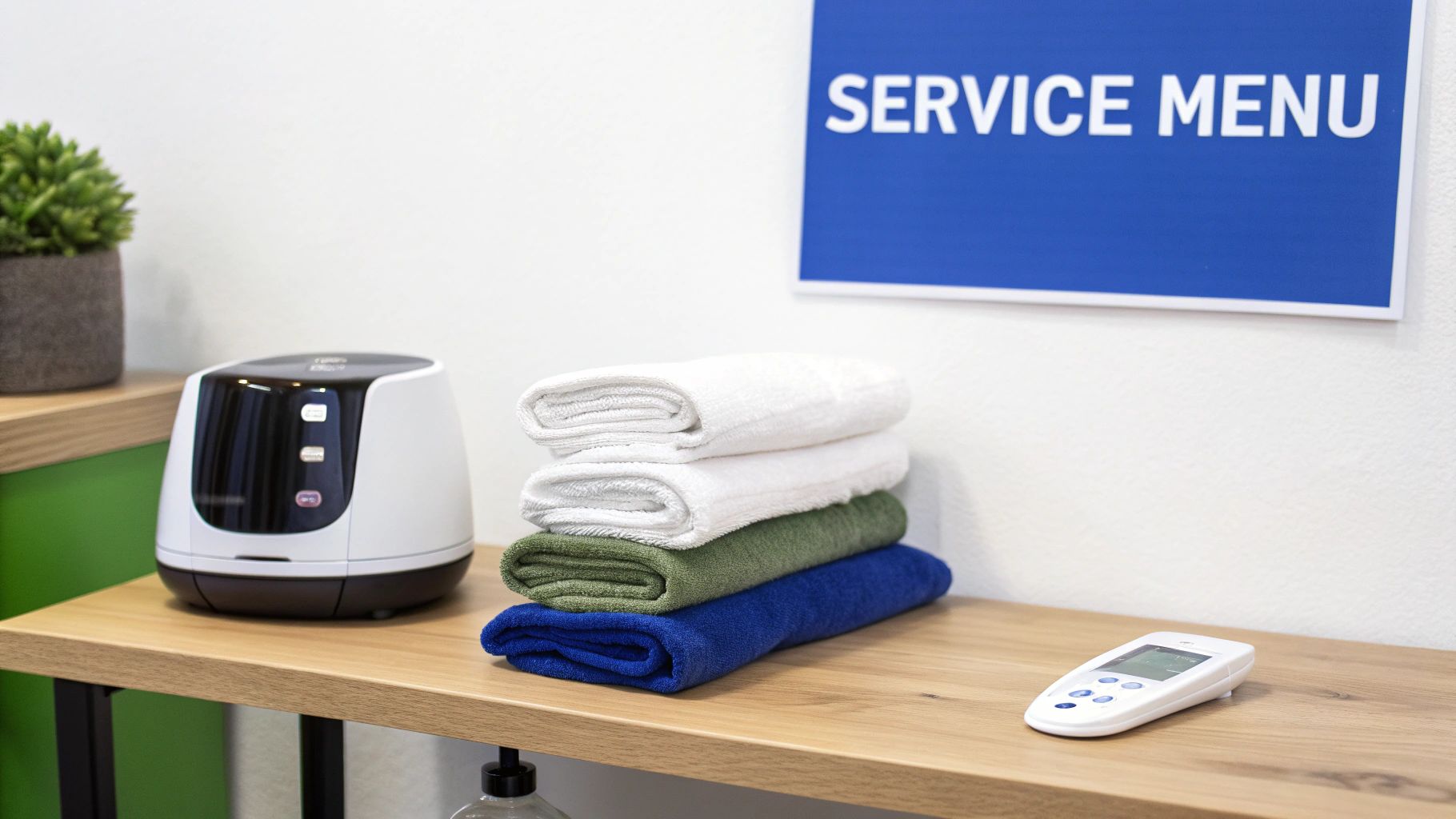
Your service menu is the engine of your wellness center. A thoughtfully designed menu does more than just list what you offer; it drives profitability and builds a foundation for long-term success. The real secret is to move beyond purely labor-intensive models and build a scalable, technology-driven offering.
This is how you maximize revenue without having to proportionally increase your staffing costs. The right equipment choices open the door to high-margin, low-overhead services that can become the financial backbone of your entire operation.
Shifting to a Technology-First Model
Traditionally, wellness services have been one-to-one. This model directly ties your revenue to your staff's availability, which creates an obvious ceiling for growth. By incorporating unattended or minimally supervised technologies, you shatter that dependency. It's a fundamental shift in how you should think about your business.
Take a device like the Vacustyler Avantgarde. It delivers a deeply relaxing, 20-minute session that requires almost no staff involvement. While a client is in the Vacustyler, your team is free to assist other clients or handle different operational tasks. That kind of efficiency is the key to scaling. This model allows one staff member to oversee multiple clients simultaneously, drastically increasing revenue per employee hour.
After 2020, consumer priorities cemented wellness as a huge part of the global health spend. With the wellness market now valued in the trillions, success often depends on offering high-ROI services that can turn a facility into a profitability hub with just 10-15 daily sessions. To better understand these market dynamics, you can explore detailed insights on the growing wellness economy.
This isn't about replacing the human touch—it's about supplementing it. By automating certain recovery and aesthetic services, you create a powerful and steady stream of recurring revenue. This hybrid model, blending high-tech automation with high-touch personal services, often represents the most profitable and future-proof approach for a modern wellness center.
Creating High-Value Service Packages
Standalone services are fine, but bundled packages are where you truly boost your average ticket price and deliver more comprehensive results for your clients. The art is in pairing services that logically complement each other, creating a true wellness journey rather than just a single appointment.
Think about how different modalities can work together to amplify client outcomes. This kind of strategic bundling makes your center the obvious one-stop shop for holistic well-being.
Here are a few real-world examples of smart service pairings:
- The Recovery Pro Package: Combine a cryotherapy session to tackle inflammation with a Vacustyler session to promote circulation and lymphatic flow. This one-two punch helps athletes and active individuals feel like they're recovering faster and more completely.
- The Detox and Glow Bundle: Pair an IV hydration drip with a red light therapy session. The IV drip provides essential nutrients from the inside out, while red light therapy works to improve skin tone and texture from the outside in.
- The Ultimate Contouring Experience: For clients focused on aesthetics, you could offer a package that includes a session with a non-invasive body contouring device, immediately followed by a Vacustyler treatment to support the body’s natural clearing processes. You can learn more about how to structure these types of non-invasive body treatments for maximum client satisfaction.
These packages aren't just about upselling; they're about creating a superior client experience that delivers visible, tangible results they can feel. They also encourage clients to try new services they might not have booked on their own.
Structuring Memberships for Recurring Revenue
One-off services are great for getting new people in the door, but memberships are what build a predictable, stable revenue base. A well-structured membership program turns occasional visitors into a loyal community. The key is building tiers that offer clear value and encourage people to come back again and again.
Your technology-driven services are the perfect anchor for these memberships. Because they have such low operational costs, you can offer them at an attractive monthly rate while still maintaining incredibly healthy profit margins.
Here’s a sample membership structure you could easily adapt:
| Membership Tier | Core Services Included | Additional Perks | Ideal For |
|---|---|---|---|
| Foundation | 4 Vacustyler Sessions per Month | 10% off all other services | Clients seeking regular maintenance and circulation support. |
| Optimize | 8 Vacustyler & 4 Red Light Sessions | 15% off services, one monthly guest pass | Individuals focused on consistent recovery and skin health. |
| Elite | Unlimited Access to All Unattended Tech | 20% off services, priority booking, two guest passes | Athletes or clients committed to a full biohacking lifestyle. |
This tiered model makes your services accessible to a wider range of clients and gives them a clear path to upgrade as they become more invested in their wellness journey. It transforms your business from a place people visit into an essential part of their lifestyle. Furthermore, this recurring revenue model significantly increases the valuation of your business should you ever decide to sell.
Handling Legalities and Designing Your Space
You’ve done the research and crafted the perfect service menu. Now it’s time to build the actual framework of your wellness center. This is where the dream starts to become a tangible reality, and it hinges on two crucial things: getting your legal foundation right and designing a space that feels both welcoming and incredibly efficient.
Frankly, this is the part many entrepreneurs rush through in their excitement. But nailing these details is what separates a great idea from a sustainable, protected business. A solid legal structure shields you from liability, while a thoughtful layout directly shapes the client experience and your day-to-day workflow.
Let's get the essential paperwork out of the way first.
Navigating the Legal Essentials
The legal side of opening a business can feel intimidating, but it's manageable when you break it down into a simple checklist. These steps aren't just suggestions; they are non-negotiable for protecting your personal assets and ensuring you're operating above board from day one. I always recommend consulting with a lawyer and an accountant who specialize in small businesses—their expertise is worth every penny.
First up is registering your business. The structure you choose—like an LLC, S-Corp, or something else—has major implications for your taxes and personal liability. For most new wellness centers, an LLC is a great starting point because of its simplicity and the protection it offers. Your lawyer can advise on the best structure for your specific situation and long-term goals.
Next, you have to get all the necessary licenses and permits. This is where it gets hyper-local, varying widely by state and city. You'll typically need a general business license, any required professional licenses for your staff (like massage therapists or estheticians), and possibly specific health department permits. Don't forget zoning permits and a certificate of occupancy for your physical location.
Finally, insurance is your safety net. You’ll need general liability insurance for any slips or falls on your property and professional liability insurance (often called malpractice insurance) to cover you against claims related to the services you offer. Consider workers' compensation insurance as soon as you hire your first employee.
The Legal Checklist for Your Center
To keep it all straight, here’s a clear breakdown of the legal tasks on your plate.
- Business Registration: Lock in your legal structure (e.g., LLC, S-Corp) and file the paperwork with your state. This is what officially makes your business a separate legal entity.
- Federal Tax ID Number (EIN): You'll need an Employer Identification Number from the IRS before you can hire anyone or even open a business bank account. It's a quick online application.
- Professional Licensing: Make sure you and every service provider on your team hold the correct, up-to-date state certifications and licenses. Keep digital and physical copies of everything on file.
- Liability Insurance: Get quotes for both general and professional liability policies. A good insurance broker can help you find coverage specifically designed for the wellness industry.
- Health and Safety Compliance: Get intimately familiar with your local health codes and OSHA requirements. This ensures your center meets every standard for cleanliness, safety, and accessibility.
Designing a Functional and Inviting Space
Once the legal framework is in place, you can dive into the fun part: designing the physical environment. The layout and feel of your wellness center are a massive part of your brand. It directly influences how clients feel from the moment they walk through the door.
A great design isn't just about looking good; it's about creating an effortless workflow for your staff and a seamless, relaxing journey for your clients.
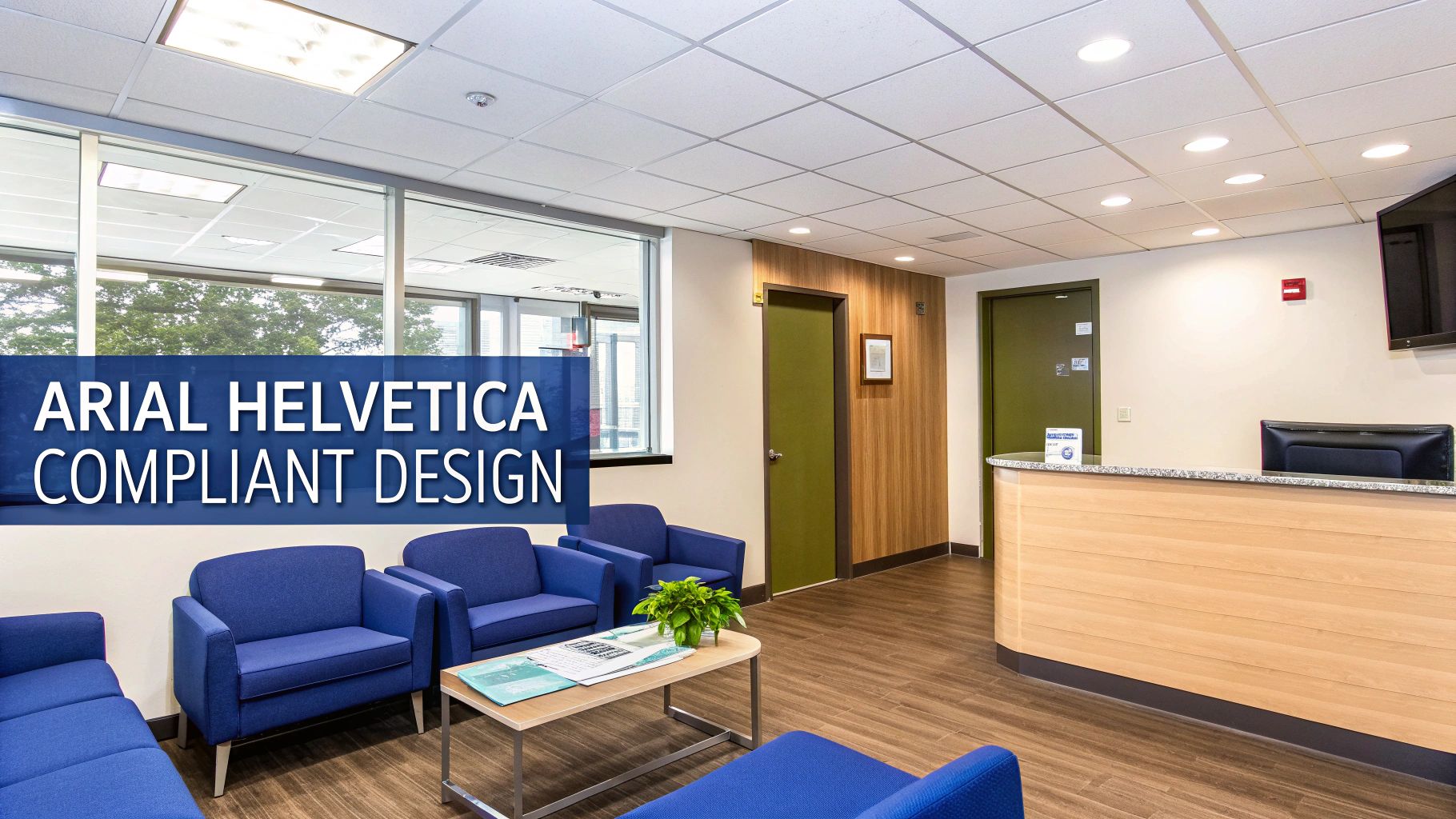
Start by mapping out the reception area. This is your first impression. It needs to be clean, organized, and perfectly reflect your brand's vibe. Comfortable seating and a welcoming front desk set a positive tone for the entire visit. Think about the sensory experience: calming music, a subtle signature scent, and soft lighting can make a huge difference.
From there, think critically about client flow. How will a client move from the entrance to a changing room, then to a treatment area, and finally back to the front? The path should feel natural, intuitive, and private. I recommend creating dedicated zones for different services—for instance, quiet, low-lit rooms for relaxation treatments versus more open, bright areas for recovery tech. This helps manage the energy and sound levels throughout the space.
Smart equipment placement is also key to getting the most out of your floor plan. For larger devices like the Vacustyler, thoughtful placement can create a serene, private experience for clients seeking treatments like vacuum therapy for cellulite reduction, all while ensuring your staff can operate efficiently. Consider electrical and plumbing needs early in the design phase to avoid costly retrofitting later.
Expert Tip: Before you commit to any layout, use painter's tape on the floor to mark out where your large equipment and furniture will go. It’s a simple trick that lets you physically walk the space and visualize traffic flow before you spend a dime.
Building Your Brand and Getting Your First Clients
With your space designed and your services locked in, it’s time to shift gears to the exciting part: building a brand and welcoming your first clients. This isn’t just about running a few ads. In the wellness world, it's about creating a story and a presence that genuinely connects with the people you want to help. Authenticity and trust are your most valuable assets.
A strong brand does more than list your services—it communicates why you do what you do. Your story needs to immediately highlight what makes your center different. Are you the go-to spot for elite athletic recovery? A peaceful urban retreat for holistic balance? This core narrative is the foundation for every piece of marketing you create, from your website copy to your social media posts.
Creating a Strong Digital Footprint
Think of your website as your digital front door. It needs to be clean, easy to navigate, and optimized for local search. When someone in your town searches for "wellness center near me," you absolutely have to show up. Make sure your services, pricing, and the unique experience you offer are crystal clear from the moment they land on the page. Invest in professional photography and videography to showcase your space and services authentically.
Beyond your website, social media is where you build your community. Forget about chasing viral trends. The goal here is to consistently share valuable content that establishes you as a trusted expert and builds a loyal following.
Focus on sharing things like:
- Real Client Stories: With their permission, feature testimonials or brief stories about how your services have helped people. Real results are your best advertisement. Video testimonials are particularly powerful.
- Educational Content: Post short, digestible tips about wellness, the science behind your tech, or recovery strategies. Be the resource they turn to. Consider writing longer-form blog posts that you can repurpose into smaller social media snippets.
- Behind-the-Scenes Glimpses: Show off your beautiful space, introduce your team, and make your center feel approachable. People connect with people.
This strategy turns your social media from a simple billboard into a valuable resource, which is far more powerful for long-term growth.
Leveraging Strategic Partnerships for Growth
One of the fastest ways to build credibility and attract new clients is through smart local partnerships. You want to connect with other businesses that serve a similar clientele but aren't direct competitors. This creates a powerful referral network where everyone wins.
Start by reaching out to:
- Local Gyms and Fitness Studios: Offer their members an exclusive introductory rate for recovery services. You could even host a "Recovery Day" event at their location.
- Chiropractors and Physical Therapists: Position your center as a complementary service that can support and accelerate their patients' treatment plans. Provide them with informational brochures to give to their patients.
- Corporate Wellness Programs: Create special packages for local companies looking to offer meaningful wellness perks to their employees. This can provide a significant and steady stream of clients.
These relationships give you a warm introduction to potential clients who already trust the person referring them. A simple referral program—where both the referrer and the new client get a small discount—can be incredibly effective at getting this flywheel spinning.
When you build a network of trusted partners, you're not just marketing to individuals—you're tapping into entire communities. A single strong partnership with a local athletic club could bring in dozens of ideal, high-value clients.
Designing Irresistible Introductory Offers
Your initial offers are designed to do one thing: get people through the door to experience what makes your center special. The goal isn't to make a huge profit on this first visit, but to create a "wow" experience that makes them eager to come back.
Avoid generic, boring discounts. Instead, create high-value introductory packages that showcase a core part of your service menu.
For example, you could offer:
- The "Recovery Reset": A package including one cryotherapy session and one Vacustyler session for a special introductory price.
- The "First-Timer Intro Pack": A bundle of three sessions for one of your key technology services, priced to encourage commitment and let them feel real results.
The key is to give them a real taste of the benefits they can achieve. After they've had that amazing introductory experience, your team should be ready to explain your membership options, showing them an affordable path to continue their wellness journey with you. This strategy is all about converting that curious first-timer into a loyal, long-term member of your community.
Attracting those first clients requires a multi-channel approach. While all marketing has value, some channels are simply more effective than others when you're just starting out. Focusing your limited time and budget on the right platforms is critical for gaining early momentum.
Here’s a breakdown of the most common channels and where they shine.
Comparing Marketing Channels for a New Wellness Center
| Marketing Channel | Ideal for Reaching | Potential ROI | Key Tactic |
|---|---|---|---|
| Local SEO & Website | People actively searching for wellness services in your area. | High | Optimizing your site for keywords like "recovery center [Your City]" and getting listed on Google Maps. |
| Social Media (Instagram/Facebook) | Building a community and showcasing your brand's personality. | Medium | Consistently posting client testimonials, educational content, and behind-the-scenes videos. |
| Local Partnerships | Tapping into established, trusted client bases. | Very High | Creating referral programs with gyms, chiropractors, and corporate wellness managers. |
| Email Marketing | Nurturing leads and retaining existing clients. | High | Sending out a weekly newsletter with wellness tips, special offers, and new service announcements. |
As you can see, a combination of local SEO and strategic partnerships will likely give you the biggest bang for your buck early on. Social media and email marketing are fantastic for building loyalty and keeping your community engaged over the long haul. A balanced approach will set you up for sustainable success.
Frequently Asked Questions About Starting a Wellness Center
Embarking on the journey of opening a wellness center naturally brings up a lot of questions. We get it. Here, we’ll tackle some of the most common queries we hear from entrepreneurs just like you, giving you the straight answers you need to move forward with confidence.
How Much Capital Do I Really Need to Start?
This is the big one, and the honest answer is: it varies wildly. You could be looking at anywhere from $50,000 for a small, specialized studio to well over $500,000 for a large, multi-service facility. The final number really comes down to your location, how much renovation is needed, and the specific equipment you decide to bring in.
Instead of getting fixated on one number, your first move should be to break down the projected costs into clear categories. This will give you a far more realistic budget.
- Real Estate: Think lease deposit, the first few months' rent, and any funds for construction or cosmetic updates. This is often the largest upfront cost.
- Equipment: This will be a huge chunk of your budget. It covers everything from high-tech devices to treatment tables and the basics. Research financing and leasing options to preserve cash flow.
- Legal & Licensing: You'll need to set aside funds for business registration, attorney fees, local permits, and any professional licenses.
- Initial Marketing: Your launch isn't going to promote itself. Budget for your website, grand opening events, and initial ad campaigns. A good rule of thumb is 10-20% of your first-year revenue goal.
- Operating Capital: This is critical. Have at least six months of operating expenses in the bank. This safety net covers payroll, rent, and utilities while you're still building your client base.
What Are the Most Common Mistakes to Avoid?
Over the years, we've seen new wellness center owners make the same few missteps that can really stunt their growth. Knowing what these are from the get-go gives you a serious advantage.
One of the biggest mistakes is trying to be everything to everyone. If you don't define a specific niche, your marketing message gets watered down and simply won't connect. Another common pitfall is underestimating the power of a rock-solid business plan. This isn't just a document for the bank; it's your roadmap for making smart decisions every single day.
Finally, too many owners fail to build a strong recurring revenue stream. They get caught up in one-off service sales instead of creating predictable income through memberships, which is the key to long-term stability. A fourth mistake is under-budgeting for marketing. A beautiful center with great services is useless if no one knows it exists. Marketing should be an ongoing, non-negotiable expense.
Pro Tip: Don't let your passion for wellness overshadow the fundamentals of business. A truly successful center is the perfect marriage of an incredible client experience and sharp, disciplined financial management.
How Do I Set My Prices Competitively?
Pricing your services is both an art and a science. It's about more than just covering your costs—it's about communicating the real value you provide.
Start by doing your homework. A thorough analysis of your local competitors will give you a baseline understanding of what the market will bear for similar services. Create a spreadsheet to compare their offerings, package deals, and membership prices.
But don't just copy them. You have to factor in what makes you different. If you’ve invested in superior technology or created a more luxurious, private experience, your prices absolutely should reflect that. Dig into the numbers and calculate your true cost-per-service, accounting for equipment amortization, staff time, and any consumables. Your price needs to cover all that and still leave a healthy profit margin.
A great strategy is to offer tiered packages and memberships. This approach gives your most loyal clients better value while creating that all-important predictable revenue for your business. It's a far more stable model than just waiting for the phone to ring for individual bookings. Test introductory offers to gauge price sensitivity, but be careful not to devalue your core services.
Ready to equip your new wellness center with technology that delivers exceptional client results and a strong return on investment? The Vacustyler Avantgarde from Weyergans HighCare US is engineered to be the profitable, low-overhead cornerstone of a modern service menu.