


In the high-stakes world of elite sports, the difference between winning and losing often comes down to milliseconds. Red light therapy gives athletes a real competitive edge by acting as a biological "recharge" for the body's cells, helping them recover faster, train harder, and lower the risk of game-changing injuries. It's a non-invasive method that’s quickly becoming a go-to strategy for peak performance, leveraging precise light wavelengths to unlock the body's natural healing and energy production capabilities.
Discover the Unseen Competitive Edge
The real game is often won during recovery. While intense training builds strength and skill, the body’s ability to repair and rebuild is what truly separates top performers from the rest of the pack. Traditional recovery methods like stretching, ice baths, and proper nutrition are essential, but many athletes are now looking for an advantage that works on a deeper, cellular level to outpace the competition. This is a fundamental shift from simply managing fatigue to proactively enhancing the body's recovery mechanisms.
This is where red light therapy, also known as photobiomodulation (PBM), enters the picture. It’s not some complicated medical procedure; it's a strategic, scientifically-backed tool for optimizing the body’s own natural healing processes, making it a cornerstone of modern athletic preparation and rehabilitation.
Supercharge Your Body's Recovery Engine
Think of red light therapy as a support system for your cells. It uses specific wavelengths of light—typically in the red (630-660 nm) and near-infrared (810-850 nm) spectrum—to stimulate cellular activity, much like sunlight nourishes a plant. For an athlete, this process provides a tangible return on investment in their most valuable asset—their body. The targeted light energy penetrates deep into tissues, activating key biological pathways that are crucial for recovery and performance.
This cellular boost translates directly into several key on-field benefits:
- Accelerated Recovery: Bounce back faster from intense workouts and competitions, reducing downtime significantly.
- Reduced Inflammation: Calm the inflammatory response that leads to soreness and stiffness, allowing for more consistent training.
- Enhanced Performance: Prime muscles for peak output right before training or competition, improving strength and endurance.
- Injury Resilience: Strengthen tissues at a cellular level to better withstand the grueling demands of sport and reduce the likelihood of strains.
In competitive sports, a single injury can derail an entire season. Statistics show that 43% of athletes suffer at least one injury per season, often leading to an average of 17 days of lost training time. A landmark pilot study showed that 830 nm LED phototherapy significantly sped up return-to-play times for university athletes with musculoskeletal injuries—with no adverse events reported. Learn more about these groundbreaking athletic findings and how they're changing the game for recovery.
By addressing recovery at the cellular source, athletes can move beyond simply managing symptoms. They can build a more resilient, responsive, and powerful physical foundation, giving them the ability to push boundaries and consistently perform at their best when it matters most. This is the unseen advantage that defines modern athletic excellence.
How Red Light Unlocks Cellular Energy
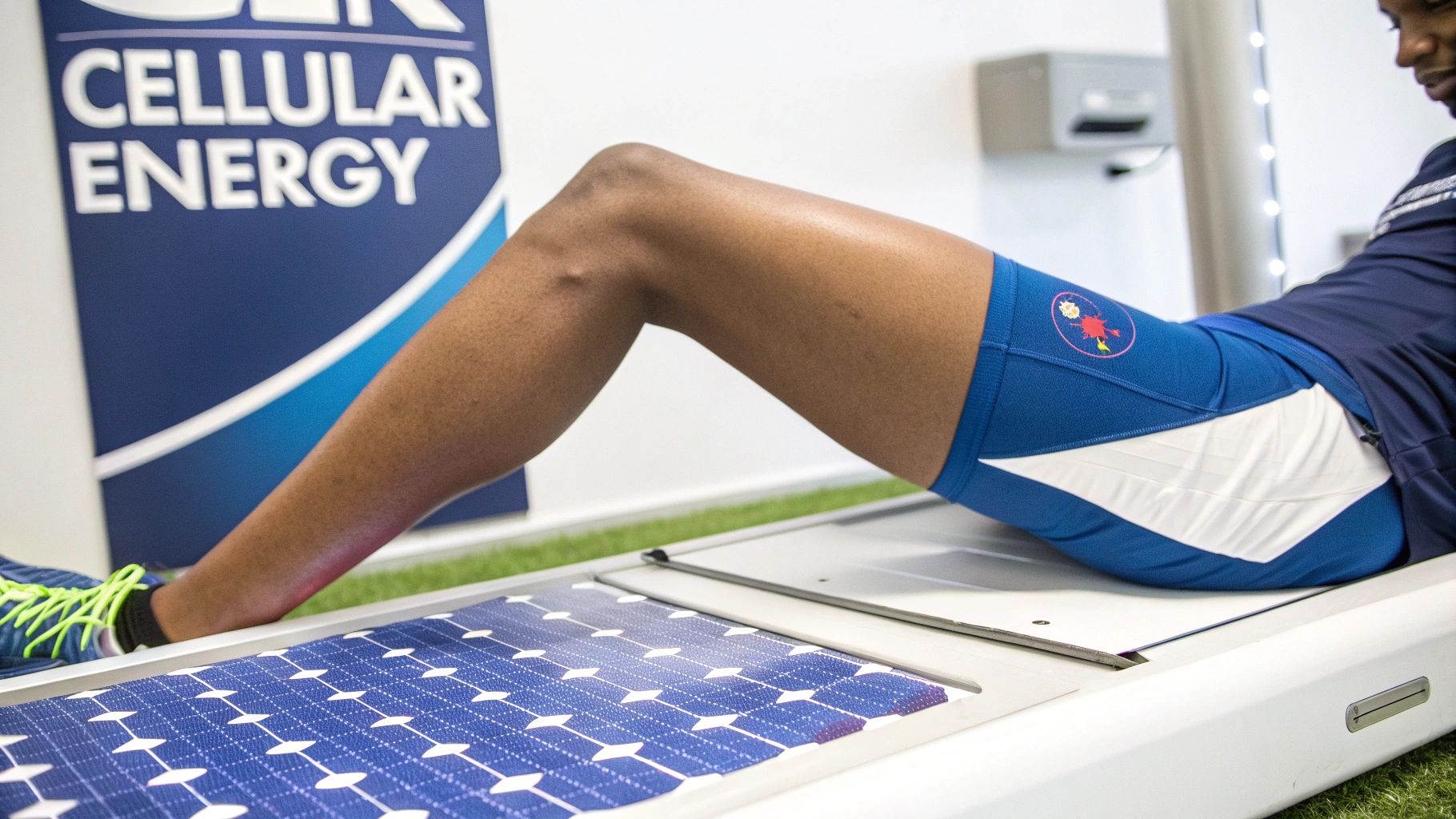
To really get how red light therapy for athletes works, we have to zoom in—way in, to the microscopic level. Every single muscle contraction, burst of speed, and moment of endurance is powered by trillions of tiny engines inside your cells. These are called mitochondria. They are the powerhouses responsible for generating the energy currency of the body.
The main job of these mitochondria is to produce Adenosine Triphosphate (ATP), which is basically the high-octane fuel for every biological process in your body. From repairing muscle fibers to firing nerve signals, ATP makes it happen. But when an athlete pushes hard, the demand for ATP goes through the roof, and tired or stressed mitochondria can’t always keep up. This energy deficit is what leads to fatigue, slower recovery, and increased vulnerability to injury.
This is where red light therapy comes in. It acts as a direct catalyst, jump-starting cellular energy production right where it’s needed most and restoring the energy balance necessary for optimal function.
Supercharging Your Cellular Engines
What’s special about specific wavelengths of red and near-infrared light is their ability to penetrate deep past the skin, reaching muscle and connective tissues. Unlike the broad spectrum of sunlight, which contains UV and other potentially harmful rays, these targeted wavelengths are absorbed by a specific molecule inside the mitochondria called cytochrome c oxidase.
When this molecule absorbs that light energy, it kicks off a chain of positive biochemical reactions. One critical effect is that it helps displace nitric oxide from the mitochondria, allowing oxygen to bind more effectively. This dramatically improves the efficiency of the cellular respiration process. Think of it as hitting the turbo button on your mitochondria, allowing them to churn out ATP far more efficiently.
Your cells are like tiny solar panels. When you expose them to the right kind of light, they absorb that energy and convert it into usable power. Red light therapy is that optimal light, directly recharging your body's batteries at the most fundamental level.
This massive boost in cellular energy is the foundation for everything else. When your cells have more fuel in the tank, they can do their jobs—repairing, rebuilding, and protecting—at an elite level, leading to faster recovery and improved physical output.
Opening the Highways for Recovery
More ATP is a huge piece of the puzzle, but it’s not the whole story. Red light therapy also has a powerful effect on circulation because it promotes the release of nitric oxide, a natural vasodilator. This simply means it helps widen blood vessels, which immediately improves blood flow to the areas being treated.
For any athlete, better circulation is a game-changer for both performance and recovery. It means more oxygen and critical nutrients get delivered to hard-working muscles, while metabolic waste products like lactic acid—the stuff that causes fatigue and soreness—are flushed out more effectively.
It's like upgrading a city's congested side streets to a multi-lane superhighway. Nutrients and repair crews get where they need to go faster, and waste is hauled away with incredible efficiency, dramatically speeding up the entire recovery timeline. This improved microcirculation is key to reducing inflammation and muscle soreness.
Calming Inflammation at the Source
Intense training always causes micro-trauma to muscle fibers, and that triggers an inflammatory response. A little bit of inflammation is a normal, necessary part of healing. But chronic or excessive inflammation stalls recovery, leads to persistent pain, and opens the door to injury.
Red light therapy helps the body manage this response effectively. By boosting cellular energy and improving circulation, it gives your system the resources to handle inflammation properly. The therapy helps dial down oxidative stress—a harmful imbalance that damages cells—and supports the specialized cells (like macrophages) that clean up damage and kickstart the repair and regeneration process. To go deeper on this, you can learn more about the science behind infrared light therapy benefits in our other guide.
This calming effect is crucial for athletes who need to bounce back quickly between training sessions or competitions. It doesn’t just mask the pain; it gets to the root of the cellular stress causing it, paving the way for a faster and more complete return to peak condition.
Win the Battle Against Muscle Soreness and Fatigue
Anyone who trains seriously knows the feeling all too well—that deep, lingering ache that settles into your muscles a day or two after a tough workout. This is Delayed Onset Muscle Soreness (DOMS), and for decades, it's been seen as an unavoidable price for pushing your limits. But what if you could dramatically shrink that painful recovery window and get back to peak performance faster?
This is exactly where red light therapy provides a game-changing advantage. It works by going straight to the source of muscle fatigue and soreness: the microscopic damage and inflammation happening deep inside muscle tissue after you train hard. This isn’t about just numbing the pain; it’s about actively speeding up your body’s natural repair cycle from the cellular level up, allowing for quicker adaptation and strength gains.
By tackling the root cause, red light therapy gives athletes the ability to train harder and more often, without being sidelined by the crippling effects of overtraining. It creates a powerful, sustainable edge over competitors still grinding through days of stiffness and pain, ultimately leading to greater long-term progress.
Targeting Micro-Tears and Inflammation
When you push yourself in a workout, you create tiny micro-tears in your muscle fibers. This is a good thing—it’s the stimulus for muscle growth and how you get stronger. In response, your body sends in a cleanup crew to clear out the damage and start rebuilding. While this inflammatory response is essential, when it lingers too long, it causes the prolonged soreness and stiffness of DOMS.
Red light therapy acts like a highly effective manager for this cellular repair crew. It boosts circulation to help flush out inflammatory byproducts more quickly, while also giving your cells the ATP energy they need to rebuild damaged fibers faster and stronger than before. This enhanced repair process means less time feeling the debilitating effects of a hard session.
This targeted approach helps restore balance to the area, cutting down the time you spend feeling sore and allowing for a much quicker return to full function. Athletes consistently report feeling "fresher" and less "beaten up" after their toughest sessions, which has a profound psychological and physical benefit.
Think of a workout as making a mess in your cellular workshop. Red light therapy doesn't just sweep the dust under the rug; it equips your cleanup crew with better tools and more energy, so they can repair the damage and organize the space for the next big project in record time.
Reducing Key Markers of Muscle Damage
The impact of red light therapy isn't just something you feel; it's something you can measure in your blood. After intense exercise, levels of an enzyme called creatine kinase (CK) shoot up. High CK levels are a clear biochemical sign of muscle damage and are directly tied to how bad your DOMS feels and how long recovery will take.
This is where the science gets really compelling. Red light therapy has been shown to consistently reduce not only the sensation of soreness but also these biochemical markers of damage. Multiple studies have shown significant reductions in DOMS and lower CK levels in athletes who used light therapy compared to placebo groups. As one University Hospitals review confirms, athletes using red light therapy simply recover faster from strain. You can read the full research on the specific findings on DOMS reduction and see how it impacts these recovery markers.
Gaining Your Competitive Training Advantage
Bringing down CK levels and DOMS has a direct, practical impact on an athlete’s ability to perform consistently. When you can bounce back in 24-48 hours instead of 48-72, you unlock several critical advantages that compound over time:
- Increased Training Frequency: You can hit the same muscle groups again sooner, safely, leading to faster strength and skill development.
- Improved Training Quality: Starting your next workout with less fatigue and soreness means better form, higher intensity, and more productive reps from start to finish.
- Enhanced Consistency: Fewer days are lost to debilitating soreness, creating a more reliable and effective training schedule over an entire season, which is key to long-term athletic development.
This accelerated recovery is especially crucial for the lower body, which takes a beating in most sports. By speeding up repair in major muscle groups like the quads, hamstrings, and calves, athletes maintain their explosive power and endurance. For a closer look at this, check out our guide on using red light therapy for legs to maximize lower-body recovery.
Ultimately, winning the battle against soreness is how you win the war of attrition over a long, competitive season. It's about sustainability and peak readiness.
Enhancing Performance and Building Injury Resilience
While faster recovery is a game-changer, the true power of red light therapy is unlocked when athletes move from a reactive to a proactive mindset. This isn’t just a tool for fixing damage after it's done. It’s a powerful method for priming the body for peak output and building a more durable, injury-resistant foundation, making it a critical component of pre-habilitation.
By weaving photobiomodulation (PBM) into pre-workout routines, athletes can tap into new levels of strength, power, and endurance, giving them an edge from the very start of a competition or training session.
Using red light therapy for athletes before training is like giving your muscles a targeted warm-up at the cellular level. As we've covered, the light boosts ATP production and increases circulation. When you do this before you train, your muscles start the workout with more energy on tap and better oxygenation from the very first rep.
This pre-conditioning effect helps you push back the wall of fatigue. Your muscles are simply better prepared to handle the metabolic stress of intense exercise, letting you go harder for longer and achieve a higher quality of work during your session.
Priming Muscles for Peak Power Output
Think of your muscles as an engine. A cold engine sputters and struggles to perform, but a properly warmed-up one delivers immediate, efficient power. Red light therapy acts as that pre-emptive tune-up, making sure your cellular machinery is firing on all cylinders right from the get-go.
This translates directly into real-world performance gains. Research suggests that pre-exercise PBM can lead to measurable improvements in:
- Maximal Strength: Athletes often see a tangible increase in the total weight they can lift or the force they can produce.
- Muscular Endurance: The ability to crank out more reps before hitting failure is significantly enhanced, crucial for both strength and endurance sports.
- Power and Speed: Better muscle activation and energy availability fuel more explosive, powerful movements, impacting everything from sprint times to jump height.
This is no small thing. In sports where a fraction of a second or one extra rep is the difference between winning and losing, starting with your muscles already optimized is a massive competitive advantage that can't be overlooked.
Building Armor Against Common Injuries
Beyond the immediate performance boost, the most valuable long-term benefit is building a more resilient body. Athletic careers aren't just defined by talent; they're defined by the ability to stay healthy and on the field, season after season.
Red light therapy helps build a kind of biological armor against the relentless wear and tear of elite training. It strengthens tissues from the inside out by stimulating collagen synthesis—the process that keeps muscles, tendons, and ligaments strong and healthy. Stronger, more pliable connective tissues are far less likely to suffer the strains and sprains that sideline athletes and disrupt training continuity.
By consistently keeping inflammation in check, you also prevent the chronic, low-grade inflammation that weakens tissues over time and leads to common overuse injuries like tendonitis. It helps keep your body in a state of balance and readiness, prepared to handle intense physical demands without breaking down.
By making tissues stronger and keeping inflammation in check, red light therapy helps fortify the body against the intense demands of training. It's not just about healing faster; it's about getting injured less often in the first place, ensuring greater career longevity.
Strategically applying PBM across the entire training cycle—before, during, and after activity—allows you to meet different physiological needs as they come up, from performance readiness to deep recovery and tissue repair.
Here’s a simple breakdown of how to think about timing your sessions for maximum impact.
Applying Red Light Therapy Across Your Training Cycle
| Application Timing | Primary Mechanism of Action | Key Athletic Benefit |
|---|---|---|
| Pre-Workout or Competition | Increased blood flow (vasodilation), enhanced ATP production in mitochondria. | Improved muscle activation, delayed onset of fatigue, potential increase in power and endurance. |
| Post-Workout or Competition | Reduced inflammatory markers, accelerated cellular repair, decreased oxidative stress. | Faster muscle recovery, significant reduction in DOMS, minimized downtime between sessions. |
| During Injury Rehabilitation | Stimulation of collagen synthesis, enhanced circulation to damaged tissue, pain modulation. | Accelerated healing of sprains and strains, reduced scar tissue formation, and a quicker return-to-play. |
This complete approach transforms red light therapy from a simple recovery gadget into a core pillar of a modern athlete's performance and health strategy. It’s an investment in both today’s results and a long, successful career.
Implementing Red Light Therapy in Your Training Program
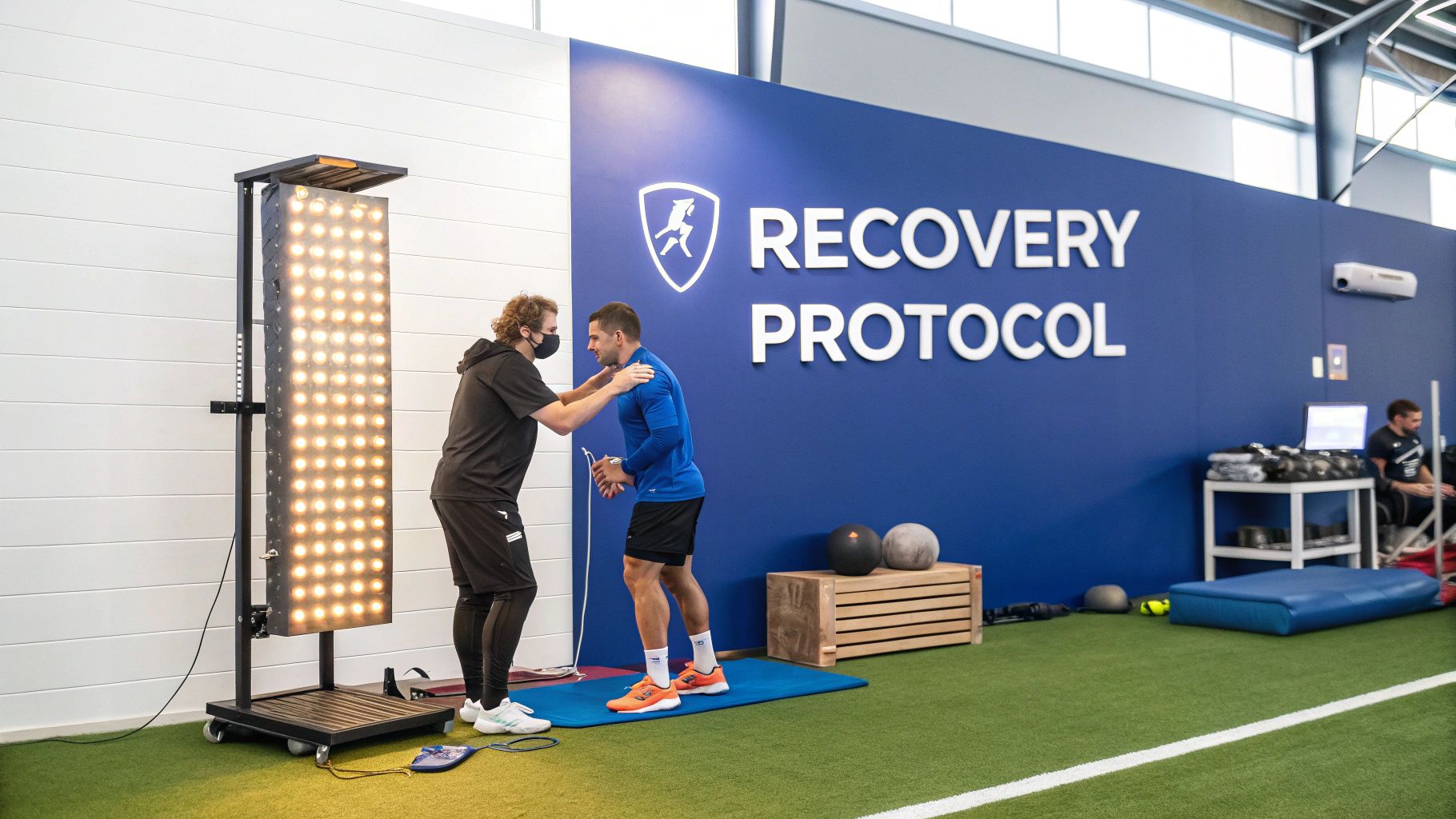
Understanding the science is one thing, but putting it into practice is where the real magic of red light therapy for athletes happens. Integrating this technology isn't about just flipping a switch; it requires a smart, strategic approach. It’s all about nailing the timing, duration, and frequency to hit specific athletic goals, whether that's peaking for a competition or recovering from a grueling training block.
This roadmap is for the athletes, coaches, and facility owners looking to build a system that delivers consistent, measurable results. Let's move from theory to application and discuss how to make PBM a seamless part of any serious athletic program.
Establishing Effective Treatment Protocols
The first step is figuring out the "how" and "when." While every athlete is different, a solid body of research gives us proven protocols that are a fantastic starting point. Remember, consistency is far more important than intensity—a regular, well-timed schedule is the key to unlocking the cumulative benefits of photobiomodulation.
A typical session, whether for a specific area (like a sore shoulder) or the full body, usually lasts between 10 to 20 minutes. That's the sweet spot for light energy to penetrate tissues and trigger a therapeutic response without overdoing it.
For general wellness and recovery, a frequency of 3 to 5 times per week is the standard recommendation. During periods of intense training or injury rehabilitation, daily sessions may be beneficial.
Timing Your Sessions for Optimal Results
When you use the therapy is just as crucial as how often. To get the most out of it, your red light sessions should align with your training schedule to either prep your body for peak performance or fast-track its recovery.
- Pre-Workout Application: Think of a 10-15 minute session before training as a cellular warm-up. It boosts blood flow and primes the mitochondria for energy production, which can lead to better muscle activation, increased power output, and help you push back fatigue during your workout.
- Post-Workout Application: A 15-20 minute session after training is the classic recovery play. This timing immediately gets to work on exercise-induced inflammation, reduces oxidative stress, and kickstarts the cellular repair processes that minimize muscle soreness and rebuild tissue.
For facility owners, this dual-purpose application is a game-changer. You can market sessions as both a performance-priming tool and a recovery accelerator, effectively doubling the opportunities to engage with athletes throughout their training week.
Creating Synergistic Recovery Stacks
Red light therapy is a powerhouse on its own, but its effects are amplified when combined with other recovery tools. By "stacking" treatments, you can target different physiological systems at the same time, creating a comprehensive recovery experience that athletes can truly feel. This holistic approach yields superior results compared to using any single modality alone.
This integrated approach doesn't just improve outcomes; it allows facilities to design premium, high-value service packages that attract and retain clients.
Example Recovery Stacks:
- The "Flush and Repair" Stack: Combine a red light therapy session with intermittent vacuum therapy or compression boots. The compression helps flush out metabolic waste and lymphatic fluid, while red light follows up by delivering the energy needed for deep cellular repair.
- The "Inflammation Control" Stack: Pair a red light session with cryotherapy. Use cryotherapy first for a systemic anti-inflammatory response and pain relief, then follow with red light to target specific areas and promote healing and tissue regeneration at the cellular level.
- The "Nutrient Boost" Stack: For the ultimate recovery protocol, schedule red light therapy right after an IV therapy session. The IV drip supplies the essential vitamins, minerals, and amino acids, and the increased circulation from red light helps deliver those nutrients more efficiently to the cells that need them most.
These combinations offer a more complete and effective solution. Many facilities find success by exploring the best recovery tools for athletes and building packages that deliver clear, tangible results.
The Business Case for Athletic Facilities
For athletic departments, medspas, and wellness centers, adding red light therapy is simply a good business decision. It’s a high-margin, low-overhead service that directly answers a massive need for a dedicated clientele: faster recovery and better performance. It represents a significant upgrade to any facility's service offerings.
Positioning photobiomodulation (PBM) as a premium service is easy. The technology is backed by hard science and is already used by elite athletes and professional sports teams, which gives it instant credibility and appeal. By creating tiered memberships or packages, you can build a reliable, recurring revenue stream.
A simple pricing model could look something like this:
| Service Tier | Description | Potential Price Point |
|---|---|---|
| Single Session | A drop-in option for new clients to try the service or for targeted treatments. | $40 – $60 |
| Recovery Package | A bundle of 10 sessions at a discounted rate, encouraging repeat business. | $350 – $500 |
| Unlimited Membership | Monthly access for dedicated athletes and clients seeking maximum benefits. | $150 – $250 / month |
This structure serves different levels of commitment and creates a clear pathway to upsell clients from single sessions to long-term memberships. A successful rollout always combines effective protocols for the athlete with a smart business strategy for the facility.
Frequently Asked Questions About Red Light Therapy
Even with all the science, it's normal to have some practical questions before adding a new tool to your training regimen. Making an informed decision is the first step to getting the most out of red light therapy for athletes. Here are straightforward answers to the most common queries we hear from athletes, coaches, and facility managers.
Our goal is to clear up any confusion and show you exactly how this technology can fit right into your existing performance and recovery programs, providing a safe and effective edge.
How Long Does It Take to See Results
Many athletes feel an immediate difference—things like reduced muscle tightness or a sense of warmth and better blood flow—after just one session. That's the first sign it's working by improving local circulation.
But the real magic is cumulative. You'll likely notice a real drop in delayed onset muscle soreness (DOMS) within the first 2-3 sessions. For the bigger wins in strength, endurance, and faster injury healing, you'll want to stick to a consistent protocol of 3-5 sessions per week for 2-4 weeks to see clear, measurable improvements as your cells adapt and become more efficient.
The key takeaway is this: while some effects are immediate, the true power of red light therapy comes from consistency. You're progressively building a more resilient and efficient cellular environment over time.
Is Red Light Therapy Safe for Acute Injuries Like Sprains
Yes, photobiomodulation is actually a great tool for acute soft tissue injuries. Unlike ice, which can constrict blood flow, red light therapy gets right to work reducing inflammation, boosting circulation to the damaged area, and giving cells the energy they need to repair, which can seriously accelerate healing.
By targeting the underlying biology, it helps shorten the recovery timeline for common athletic injuries like sprains and strains. Of course, it’s not a replacement for a proper medical diagnosis from a doctor or physical therapist. It should always be used as part of a complete treatment plan supervised by a qualified professional.
What Is the Difference Between Red Light and a Sauna
While both are fantastic recovery tools, they work in completely different ways. Saunas (including infrared saunas) use heat (thermal energy) to warm your entire body, making you sweat, relaxing muscles, and increasing circulation systemically. Their primary mechanism is heat stress.
Red light therapy, on the other hand, is non-thermal. It uses very specific wavelengths of light that penetrate your tissues to be absorbed directly by your mitochondria. This is a targeted biological effect that stimulates cellular energy production (ATP) in a way heat simply can't. Think of a sauna as a general relaxation and detoxification tool, and red light as a precision instrument for cellular optimization and tissue repair.
Can You Do Too Much Red Light Therapy
Absolutely. When it comes to red light therapy, more is not always better. Its effectiveness follows a principle known as the biphasic dose response. This just means that both too little light (not enough of a dose) and too much light (an oversaturated dose) can be ineffective or even counterproductive, as excessive light can increase oxidative stress.
The goal is to deliver the perfect therapeutic dose to kickstart cellular function without overwhelming it. That’s why sticking to recommended protocols—usually 15-20 minute sessions, several times a week—is so important. Using it for hours at a time won't give you extra benefits and is definitely not recommended. Following manufacturer guidelines is crucial for safety and efficacy.
Ready to give your athletes the ultimate recovery advantage? The Weyergans HighCare US Vacustyler Avantgarde combines German-engineered vacuum therapy with the power of red light to accelerate recovery, enhance circulation, and optimize performance. Discover how this innovative system can generate new revenue streams and keep your team at the top of their game. Explore the Vacustyler today.